TL;DR
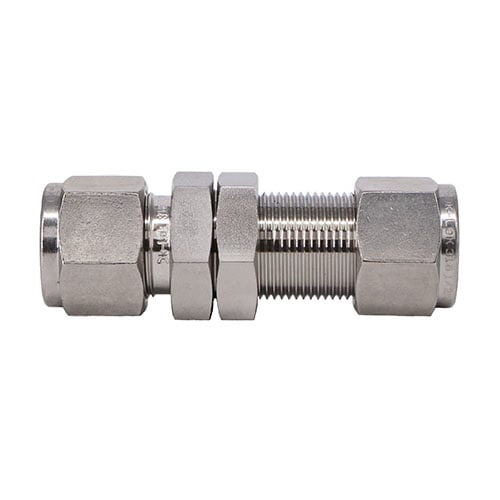
- VCR uses a metal gasket between two polished gland faces. VCO uses an elastomer o-ring.
- VCR handles toxic, corrosive, and pyrophoric gases. VCO handles inert and non-corrosive gases at lower cost.
- VCR gaskets are usually single-use nickel. VCO o-rings reuse for many cycles before replacement.
- Both achieve helium leak rates around 4 x 10⁻⁹ std cm3/sec when correctly installed.
- Choose by gas service first, cost second. Wrong choice contaminates the system or fails to seal at UHP rates.
Why ultra-high-purity needs its own connection style
Standard compression fittings seal against pressure. They do not seal against helium leak rates required in semiconductor process gas delivery. The leak rate gap is enormous: a perfectly installed double-ferrule compression fitting holds pressure but lets atmosphere in at rates that would contaminate a chip-fab deposition chamber within hours.
VCR and VCO connections close that gap. Both use polished gland faces and a designed sealing element (metal gasket for VCR, elastomer o-ring for VCO). When installed to spec, both hit helium leak rates around 4 x 10⁻⁹ std cm3/sec — three to four orders of magnitude tighter than a standard compression fitting.
VCR — what to know
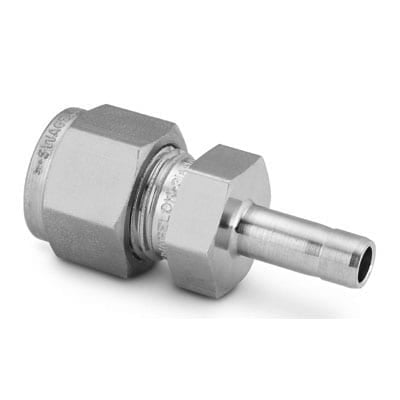
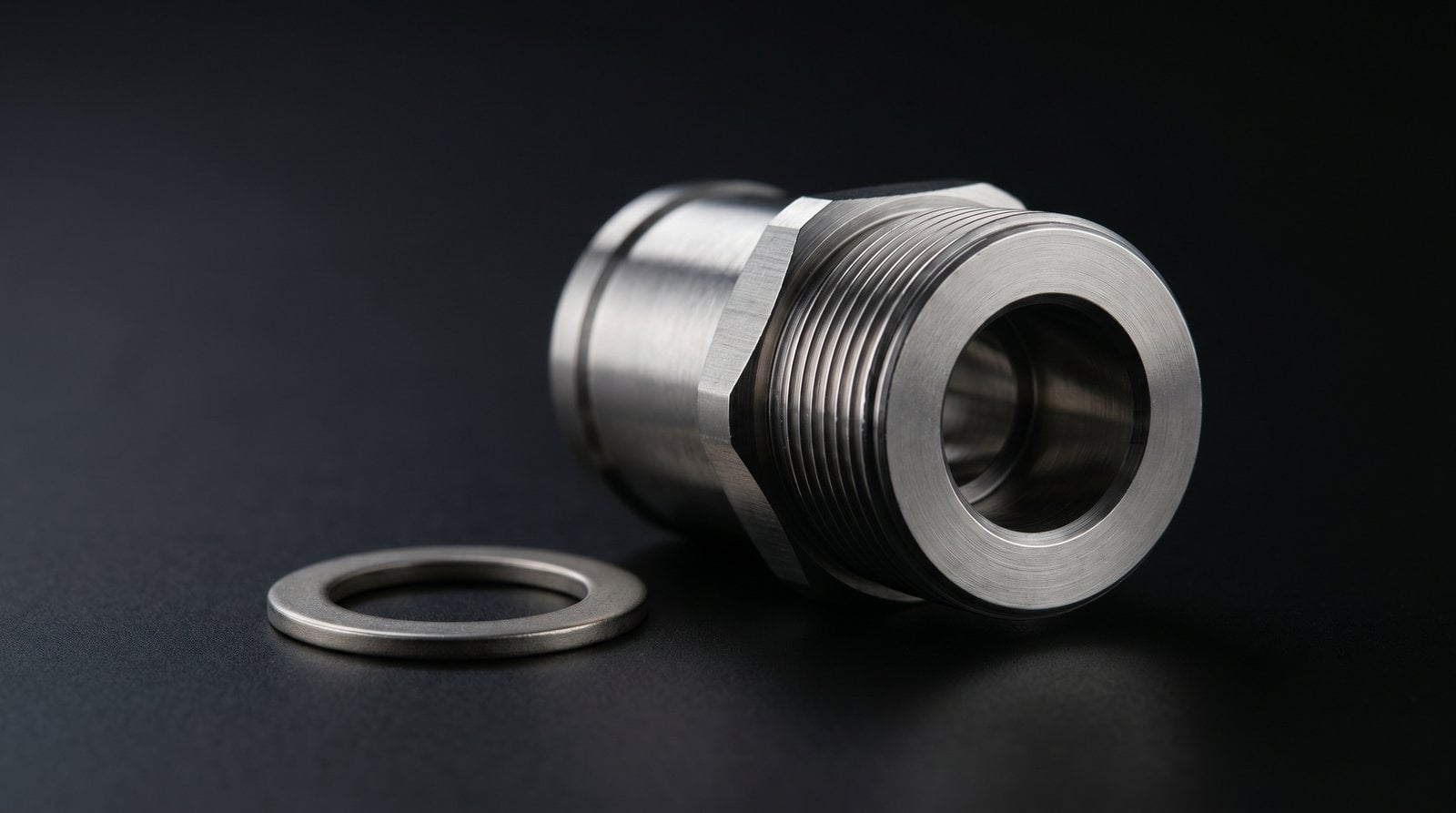
- Construction: Two threaded glands with polished sealing faces. A soft metal gasket (typically nickel) sits between them. Tightening drives the gland faces into the gasket, which deforms to create the seal.
- Gasket material: Nickel 200 is the default. 316L stainless is reusable in less critical service. Copper and silver-plated stainless cover specialty applications.
- Service envelope: All gas services including toxic (chlorine, hydrogen chloride, ammonia), corrosive, pyrophoric (silane), and high-purity inert.
- Reuse: Nickel gaskets are single-use. Replace at every break.
- Cost: Higher than VCO. The gasket adds material cost, and the gland faces require fine machining.
VCO — what to know
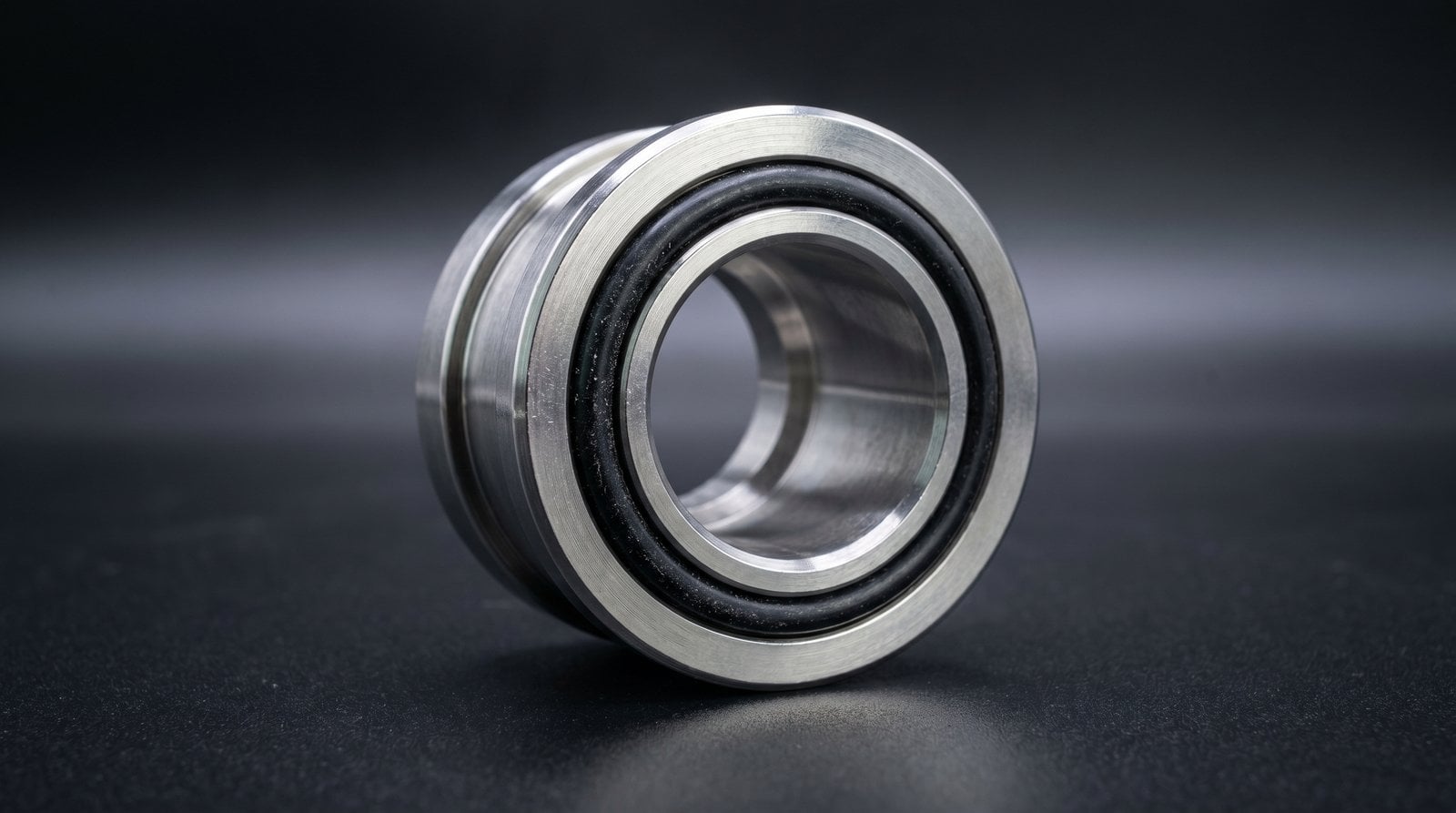
- Construction: Two threaded glands with polished sealing faces. An elastomer o-ring sits in a groove on one face.
- Seal material: Viton (FKM) is the default. Buna-N for non-aggressive gases. Kalrez or Chemraz for aggressive service. EPDM for some specialty applications.
- Service envelope: Inert and non-corrosive gases. Verify the elastomer is compatible with the gas before specifying.
- Reuse: O-rings reuse for many cycles before replacement. Inspect for nicks, swelling, or compression set at each disassembly.
- Cost: Lower than VCR. The o-ring is inexpensive and the gland faces require less stringent finish.
The decision tree
- Is the gas toxic, corrosive, or pyrophoric? Use VCR with nickel gasket.
- Is the gas inert (nitrogen, argon, helium) at high purity? VCO is fine. VCR works if budget allows and you want the tighter spec.
- Is the connection going to be broken frequently? VCO. Reusable o-ring saves time and material on each cycle.
- Is the service temperature above 200°F? Verify elastomer compatibility. Viton goes to 400°F. For higher service, VCR with metal gasket is the safer call.
- Is the leak rate spec below 1 x 10⁻⁹ std cm3/sec? VCR with nickel gasket. The metal-to-metal seal hits the tighter rate consistently.
Common service applications
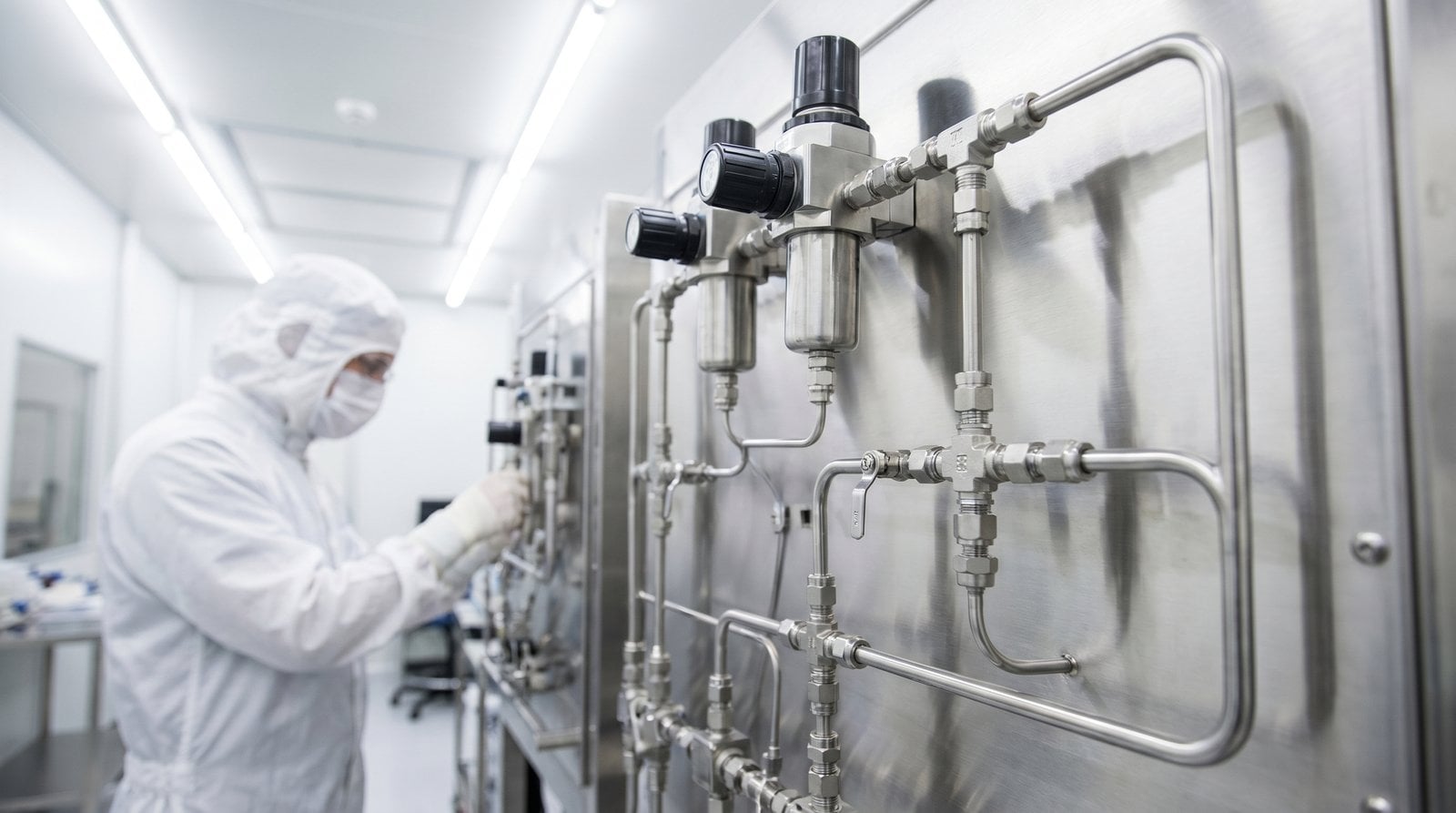
- Semiconductor process gas delivery: VCR throughout. Silane, ammonia, arsine, chlorine, hydrogen chloride all run VCR with nickel gaskets.
- Bulk specialty gas distribution: VCR on critical lines, VCO on lower-purity utility runs.
- Pharmaceutical bioreactor gas: VCR or VCO depending on the gas. Inert gas typically VCO. Steam or sterilant service requires VCR.
- Lab gas chromatograph: VCR for carrier gas, VCO for vent lines.
- Mass spectrometer inlet: VCR for the sample line. The leak rate spec demands metal-to-metal sealing.
- Vacuum chamber service: VCR. Elastomer outgassing kills the vacuum spec.
Installation common mistakes
- Reusing VCR gaskets. Nickel takes its set on first use. Second use leaks at UHP rates.
- Over-torque on VCR. Deforms the gasket past its working range. Use a torque wrench at the manufacturer’s published spec — never feel.
- Wrong elastomer for VCO. Viton on ammonia melts. EPDM on hot oil swells. Always verify the elastomer against the fluid AND the temperature.
- Skipping the cleanliness step. Particulates between the gland faces and the gasket cut the seal. Clean before every reassembly.
- Mixed surface finishes. A 5 Ra tube run with a 10 Ra gland face creates a particulate generator. Match finishes across all wetted surfaces.
What goes on the spec sheet
For new UHP installations, the spec sheet should include:
- Connection style: VCR or VCO
- Body material: 316L stainless low-sulfur for orbital weld
- Surface finish: 5 Ra electropolished (or 3 Ra for critical lines)
- Gasket material: Nickel 200 for VCR, Viton/Kalrez/Chemraz for VCO
- Helium leak rate spec: typical 4 x 10⁻⁹ std cm3/sec
- Cleanroom packaging requirement
- Lot traceability and mill certification
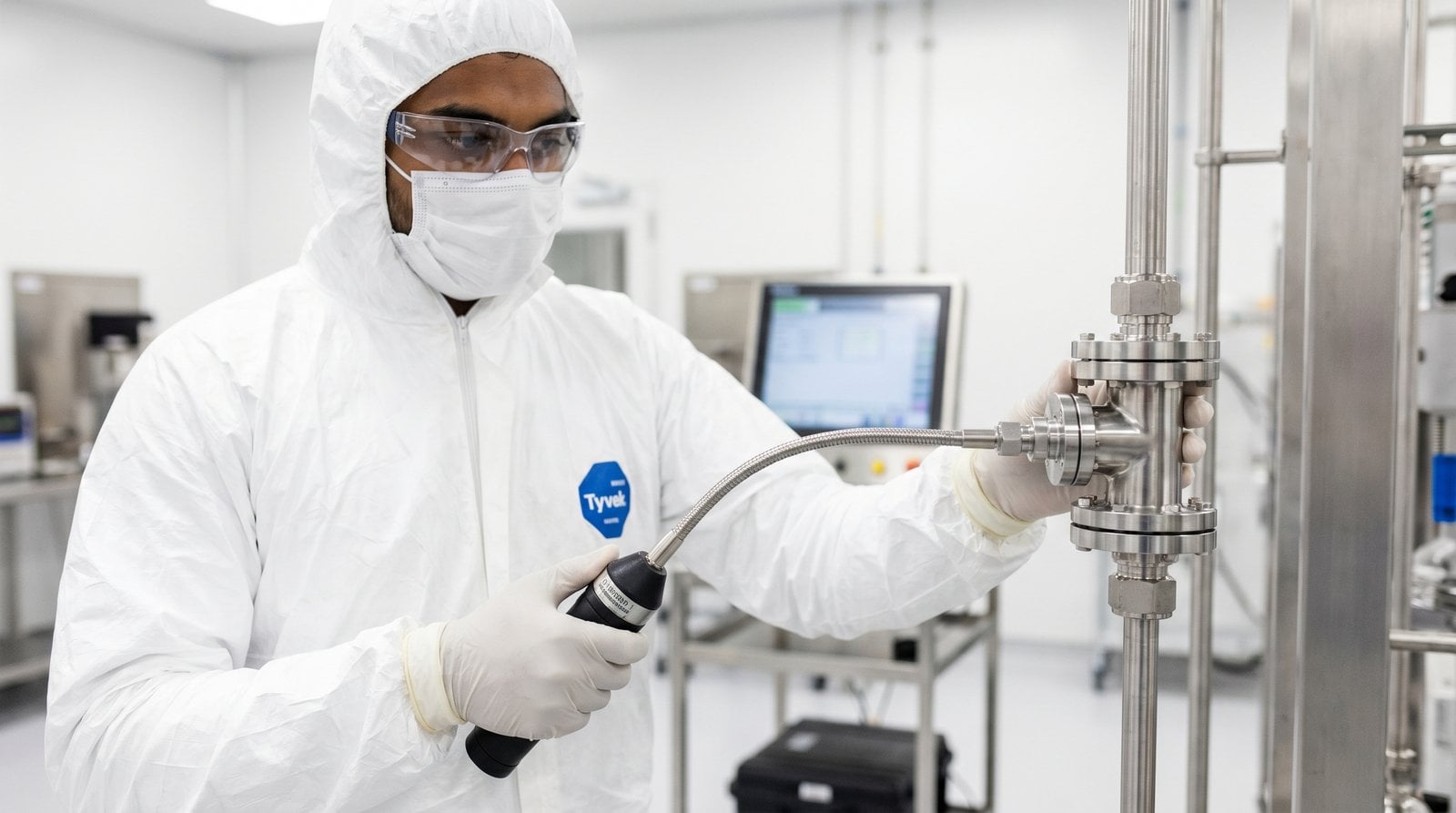
Need to spec VCR or VCO for semiconductor or pharma service? Read the UHP resource guide or call Collins-Oliver. Swagelok and Parker UHP components, cleanroom packaged with full certifications.