

TL;DR
- Oil and gas service runs tube fittings hard: hydrogen sulfide exposure, high-pressure hydraulic control lines, instrument process taps, and offshore corrosion-resistant runs.
- NACE MR0175 / ISO 15156 governs sour-service material selection. Specify the certified material at the order line.
- 316L stainless covers sweet-service instrumentation. Sour service runs Inconel 625, Duplex 2205, or Hastelloy depending on partial pressure of H2S.
- Collins-Oliver stocks the brands oil and gas buyers specify: Swagelok, Parker, Hy-Lok, SSP, and DK-Lok. Same-day shipping on in-stock items.
- The right fitting for an oil and gas line answers three questions: pressure rating, sour-service certification, and end-connection compatibility with the existing system.
What “tube fittings for oil and gas” actually covers
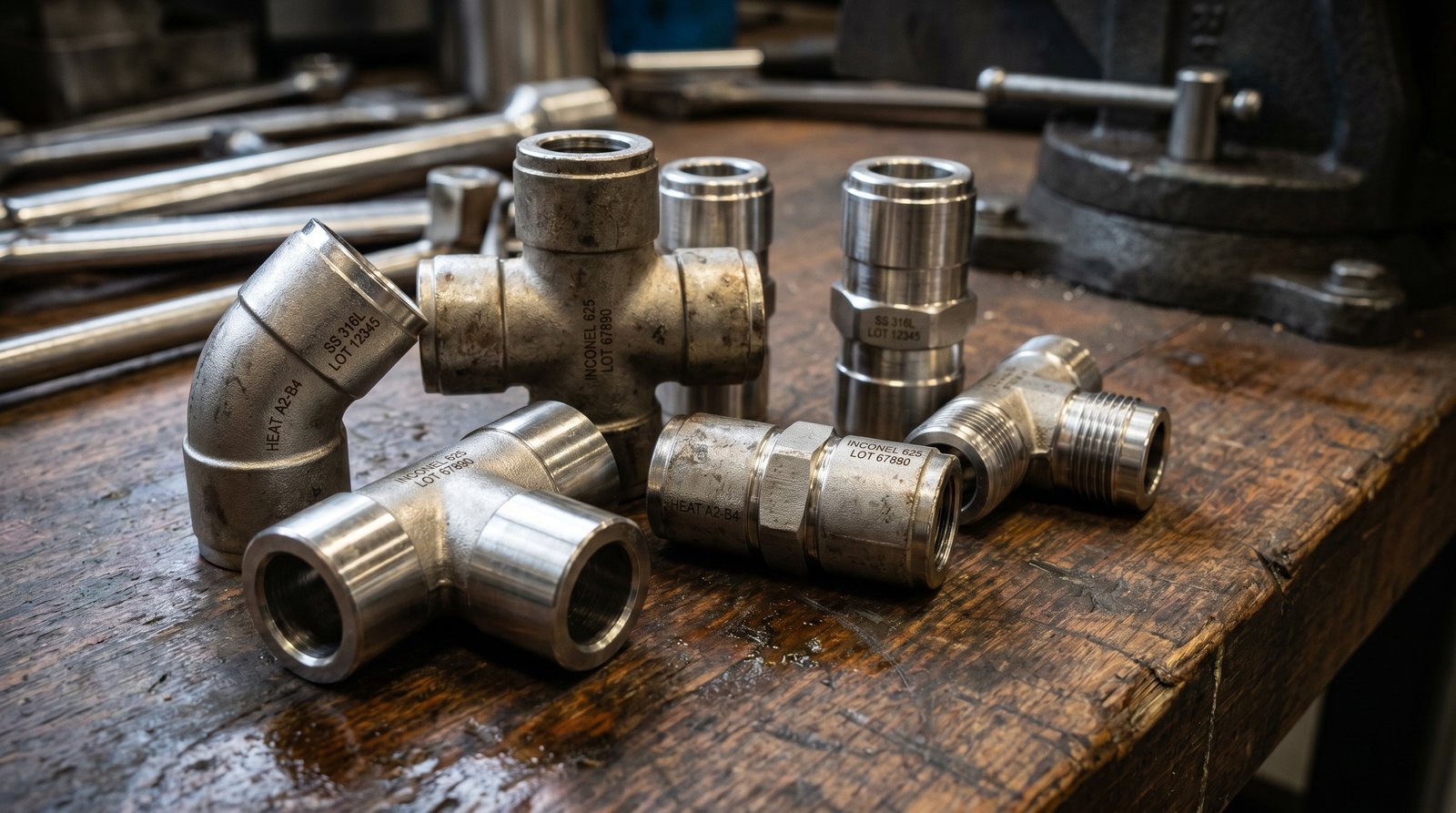
The category spans every fitting used between the wellhead and the refinery gate: hydraulic control lines on subsea trees, instrument process taps on separator vessels, pneumatic lines to actuator panels, sample lines on lab-test loops, and the tens of thousands of small-bore connections inside skid packages and process modules. Most are 1/4″ through 1″ OD tube.
The work is unforgiving. Sour service eats unprotected metallurgy. High-pressure hydraulics blow out under-spec fittings. Offshore salt environment corrodes anything cheaper than the right alloy. Get the material wrong and the fitting fails at the worst possible time — typically a planned turnaround that suddenly extends two days.
Material selection — the conversation that matters most
- Sweet service, onshore: 316L stainless, double-ferrule compression. Standard, well-stocked, broad-vendor support.
- Sweet service, offshore: 6Mo stainless (Alloy 254 SMO, Avesta 254) or Duplex 2205. The atmospheric chloride exposure eats 316L pitting resistance over time.
- Sour service, low H2S partial pressure: 316L NACE-certified, with hardness verification on the back ferrule. Confirm the certified hardness on the mill certification.
- Sour service, high H2S partial pressure: Inconel 625 or Hastelloy C-276. Body, nut, and both ferrules in the same alloy.
- Cryogenic service: 316L impact-tested to -325°F. Verify the impact test data on the certification.
Pressure ratings that match real oil and gas service
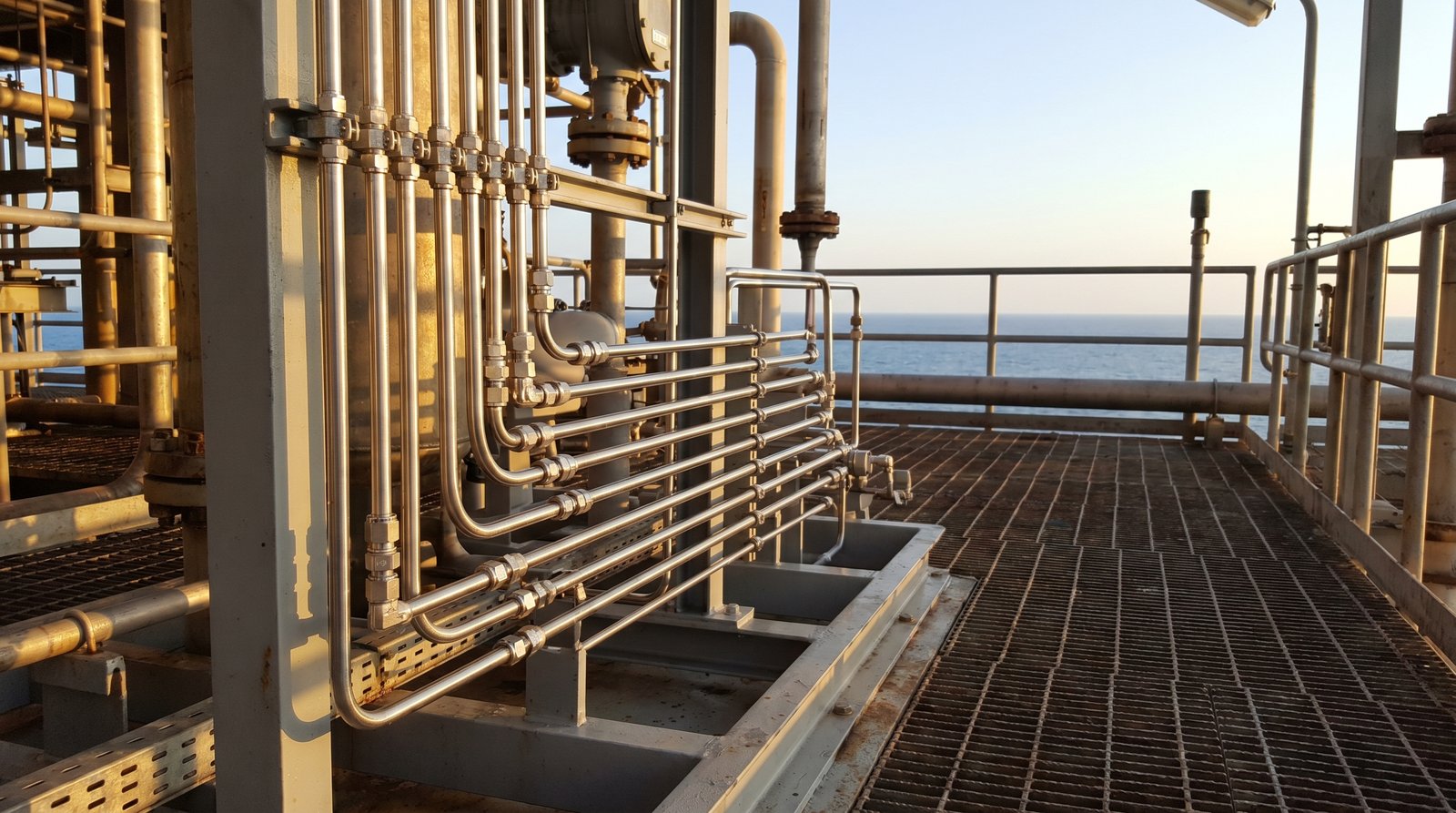
Standard double-ferrule compression fittings in 316L rate to 6,000+ psi at ambient. High-pressure series step to 15,000 psi for hydraulic control lines on subsea systems. The bottleneck is not usually the fitting body — it is the tube. Verify tube pressure rating against the fitting before ordering.
For services above 15,000 psi (acid stimulation, frac control panels, deep well intervention) the standard double-ferrule design hands off to specialty cone-and-thread or autoclave-style fittings. Different category, different supplier base.
NACE MR0175 / ISO 15156 — what to verify
- Material grade matches the standard’s accepted list for the H2S partial pressure in service.
- Mill certification shows the chemical composition and the hardness range.
- Hardness is below the NACE-published maximum for the alloy (typically HRC 22 for 316L sour service).
- Heat-treatment record matches the alloy specification.
- The supplier provides the certification at the order line — not on request after delivery.
Common applications across the value chain
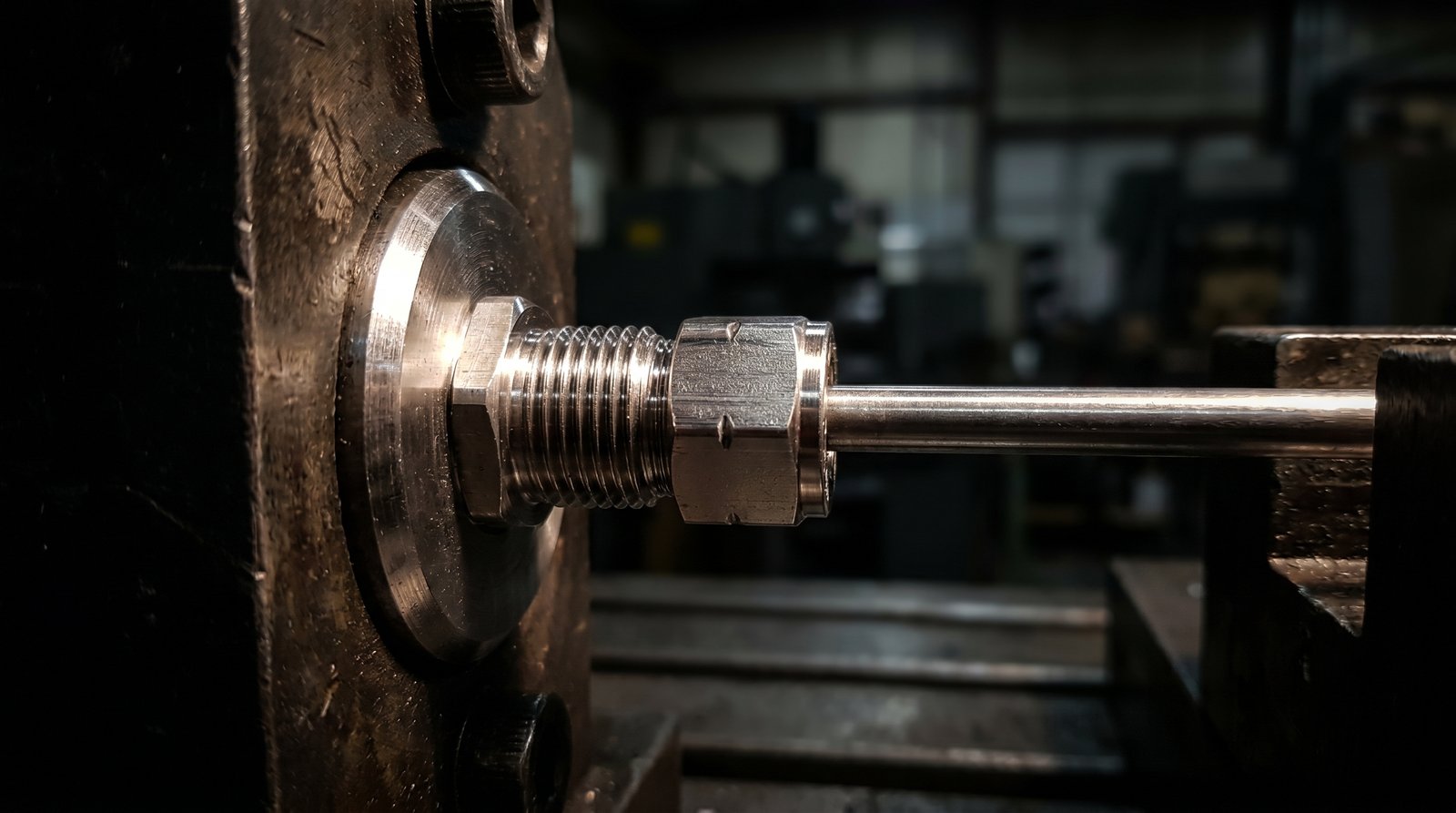
- Upstream wellhead control panels: 316L or Inconel hydraulic control lines, 1/4″ OD, 6,000-15,000 psi.
- Subsea production: Inconel 625 control-line fittings, qualified to API 17D, double-pressure tested.
- Separator instrumentation: 316L process taps with double block-and-bleed manifolds.
- Pipeline pig launcher/receiver: High-pressure carbon-steel and stainless taps with NACE certification on every component.
- Refinery hydrocracker: Inconel or Hastelloy on high-temperature lines, 316L on cooler stages.
- LNG plant: Cryogenic-rated 316L with impact-test certification.
- Petrochemical reactors: Hastelloy or Inconel for aggressive process chemistry.
Brand coverage in oil and gas
- Swagelok is the dominant specification on instrumentation panels, sample systems, and process taps. Deep variant coverage, broad NACE-certified material range.
- Parker A-LOK and CPI are the dominant specification on hydraulic control lines and high-pressure utility work. Inventory depth supports same-day fulfillment on standard sizes.
- Hy-Lok serves the Korean-spec offshore market and project sites where the EPC specified Hy-Lok at award.
- DK-Lok covers similar territory at competitive pricing.
- SSP handles supplementary coverage where the primary brand is out of stock or the variant is unavailable.
Common mistakes that cost real money
- Ordering 316L without the NACE certification line on the purchase order. Standard 316L fittings may not meet the hardness requirement for sour service.
- Mixing imperial and metric in the same hydraulic loop. The OD looks close. The seal does not develop. The line leaks under thermal cycling.
- Specifying a brand at design and substituting at procurement. Cross-brand substitution requires fitting-body changes, not just ferrule swaps.
- Skipping the visual inspection on delivery. Damaged ferrules from shipping fail leak testing in the field. Catch them before installation.
- Reusing fittings from a decommissioned skid on a new high-pressure service. The ferrules have already taken their set. Specify new fittings for new pressure ratings.
Frequently asked questions
What does NACE MR0175 require for tube fittings in sour service?
The standard governs material selection and hardness limits for components exposed to H2S. Each component (body, nut, both ferrules) must be a certified alloy at the certified hardness. Standard 316L often does not qualify — order NACE-certified specifically.
Which alloy should I specify for offshore service?
6Mo stainless or Duplex 2205 for atmospheric exposure. Inconel 625 or Hastelloy C-276 for sour service. 316L works onshore in dry environments but corrodes under offshore chloride exposure.
Can I mix Swagelok and Parker in an oil and gas hydraulic line?
No. Brand-mix at the ferrule level fails leak testing. Each manufacturer’s ferrule and body geometry differ. Stay within one brand per fitting.
What pressure rating do subsea control lines need?
15,000 psi is standard for deepwater subsea control. Some intervention systems run higher. The fitting, the tube, and the connection method must all rate above the system maximum.
Do oil and gas fittings need to be heat-coded?
Each lot is heat-coded. For NACE service, the heat code traces back to a specific mill certification. The certification must be available with the order.
What is the difference between sweet and sour service?
Sweet service contains low partial pressures of H2S or none. Sour service contains H2S above the NACE threshold. Sour service requires certified materials, hardness limits, and traceable supply chain.
How fast can Collins-Oliver ship oil and gas fittings?
Same-day pickup at our Baton Rouge facility on in-stock items. NACE-certified materials available on the standard lines. Specialty alloys ship within 1-3 days from depot stock.
What brands do you stock for oil and gas?
Swagelok, Parker (A-LOK and CPI), Hy-Lok, DK-Lok, SSP, and Tylok. Coverage spans 316L, Duplex 2205, Inconel 625, Hastelloy C-276, and Monel 400.

Need oil and gas tube fittings today? Call Collins-Oliver or browse our tube-fitting inventory. Swagelok, Parker, Hy-Lok, SSP, and DK-Lok in NACE-certified materials — same-day pickup, no minimum order.