

TL;DR
- 304 stainless covers general-service tubing. 316 and 316L step up corrosion resistance for chemical and marine environments.
- 316L has lower carbon than 316 — the L grade is mandatory for welded and high-temperature service to prevent chromium-carbide precipitation.
- Seamless tubing handles high-pressure service. Welded tubing handles general-service runs at lower cost.
- Match the alloy to the fluid, the temperature to the published derating curve, and the tube hardness to the fitting requirements.
- Collins-Oliver stocks 8,391 pieces of stainless tubing across 36 SKUs covering 304, 316, and 316L in standard imperial sizes.
The selection question that drives most orders
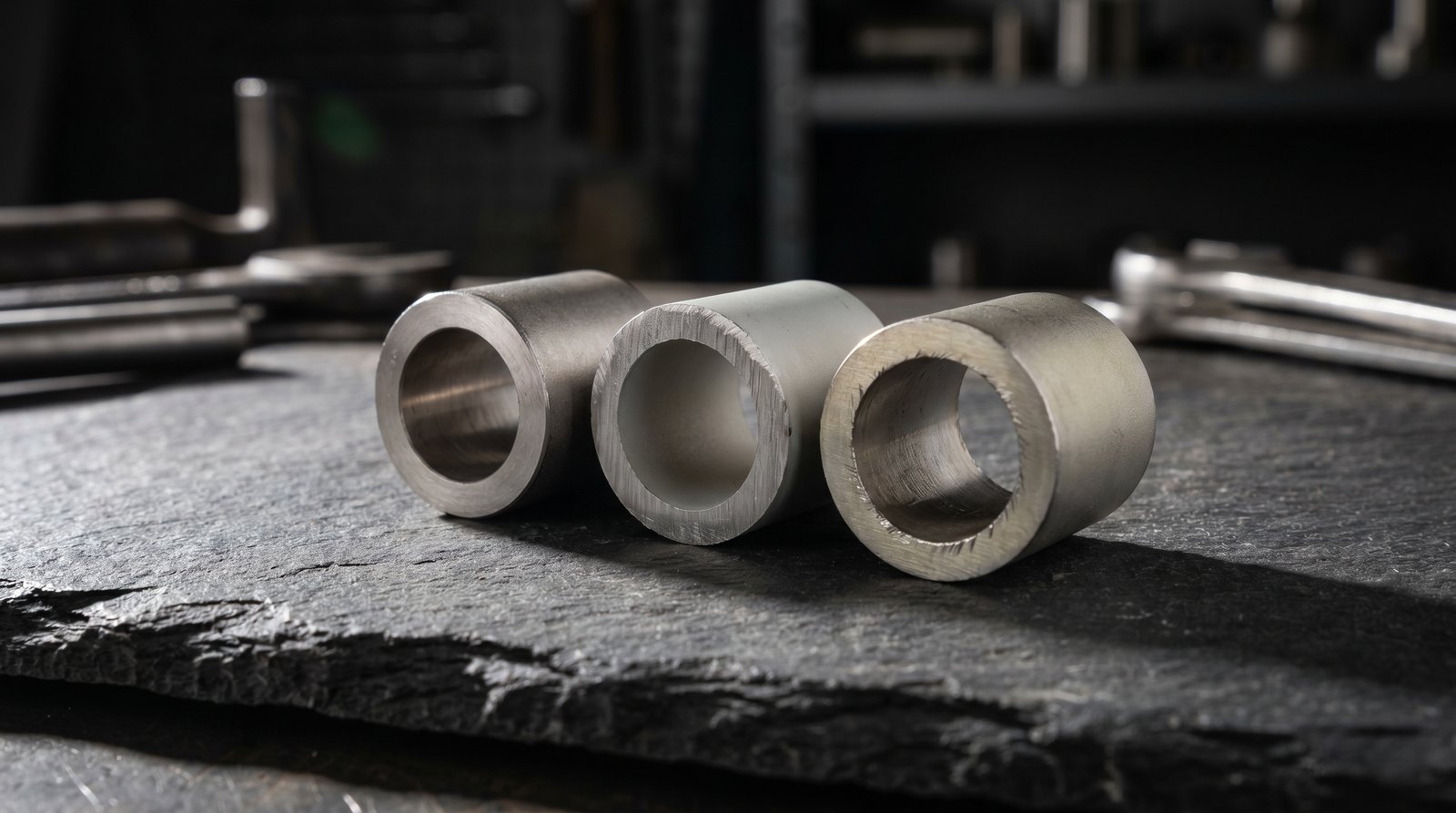
Most tubing orders boil down to one question: what does this line carry, and where does it run? Answer that and the alloy choice usually narrows to one of three: 304, 316, or 316L. Every other decision — seamless vs welded, hardness, finish, certification — flows from those two answers.
304 is the default for most general-service work: instrument air, lube oil, fuel oil, cooling water, dry process gas. 316 adds molybdenum for better resistance to chlorides and many process chemicals. 316L drops the carbon further to prevent welding and high-temperature degradation. The cost step from 304 to 316L runs roughly 30-50% but the lifetime cost favors 316L on any chemical or marine service.
304 vs 316 vs 316L — the practical differences
- 304 stainless: 18% chromium, 8% nickel, 0.08% maximum carbon. General-service workhorse. Handles freshwater, instrument air, fuel oil, lube oil, and most non-chloride chemistry.
- 316 stainless: 16% chromium, 10% nickel, 2% molybdenum. The molybdenum step gives much better pitting resistance against chlorides, seawater, and many process chemicals.
- 316L stainless: Same chemistry as 316 with carbon capped at 0.03% (vs 0.08% on standard 316). The lower carbon prevents chromium-carbide precipitation during welding and at sustained temperatures above 800°F.
When to specify L grade
- Any tubing that will be welded — including orbital welding for UHP service.
- Sustained service temperatures above 800°F.
- Sour service (NACE-certified L grade specifically).
- Cryogenic service — impact-tested 316L holds toughness to -325°F.
- Any service where the lifetime cost of a corrosion failure exceeds the alloy upgrade cost.
Seamless vs welded tubing
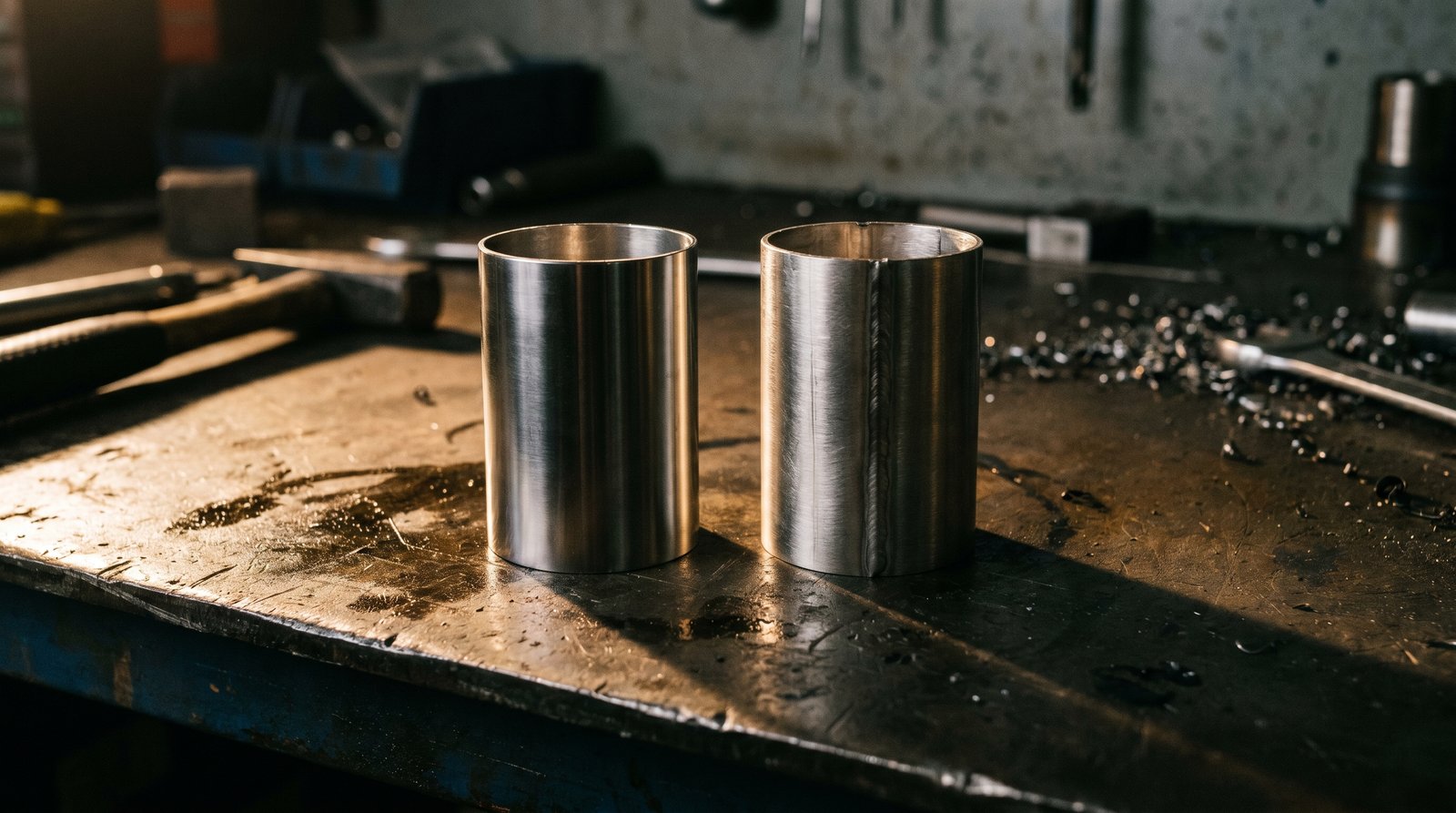
- Seamless tubing is drawn from a solid billet. No weld seam. Higher cost. Higher pressure rating. Required for the highest-integrity service.
- Welded tubing is rolled from flat strip and seam-welded longitudinally. Lower cost. Lower pressure rating at the seam. Adequate for most general-service work.
- Welded and drawn (WD) tubing is welded then drawn through a die to homogenize the wall. Better than welded, less expensive than seamless. Common compromise for medium-pressure service.
For instrumentation lines under 6,000 psi at ambient temperature, welded tubing typically works. For high-pressure hydraulic lines, sour service, or high-vibration service, seamless is the safer call.
Surface finish — what to specify
- Mill finish (10-20 Ra): Standard general-service tubing. Adequate for most non-critical work.
- Mechanically polished (5-10 Ra): Improved corrosion resistance, suitable for chemical service.
- Electropolished (3-5 Ra): Required for UHP semiconductor and pharmaceutical service.
- Pickled and passivated: Removes scale and surface contamination. Standard for new installations on chemical service.
Hardness — the spec that drives fitting compatibility
Compression fittings require the tube to be softer than the ferrule. The standard requirement: tube hardness below Rockwell B 90 (or equivalent HV 200). Annealed tubing meets this comfortably. Cold-drawn hardened tubing does not — the ferrule cannot bite, the seal does not develop, and the fitting leaks under pressure.
Always specify “fully annealed” on the purchase order. Verify the hardness on the mill certification. For high-pressure or critical service, request a hardness test on each lot.
Material certifications that matter
- Mill test report (MTR): Chemical composition, mechanical properties, heat number, mill identification. Standard on all stainless tubing orders.
- NACE MR0175: Required for sour service. Verifies hardness within NACE limits.
- ASTM A269/A312/A213: Standard tubing specifications. A269 for instrumentation, A312 for pipe, A213 for boiler/heat-exchanger.
- 3.1 certification: European EN 10204 standard, equivalent to MTR with stricter traceability.
- Pressure test: Confirms the tube held the specified test pressure. Standard on welded and high-pressure tubing.
Industries and the alloy each runs
- Oil and gas: 316L for instrumentation, sour-service certified. Inconel 625 for high-H2S and offshore.
- Chemical processing: 316L for general process. Hastelloy or Inconel for aggressive chemistry.
- Power generation: 304 for cold service, 316L for mid-temperature, Inconel 600/625 for hot.
- Pharmaceutical: 316L electropolished, with documented surface finish and cleanliness.
- Semiconductor: 316L low-sulfur electropolished, cleanroom packaged.
- Food and beverage: 316L sanitary, mirror finish, 3-A certified.
- Aerospace: 304 and 316L with specific aerospace certifications (AMS).
Common ordering mistakes
- Ordering 304 for chloride service. The chloride attacks the alloy. Pitting follows in months.
- Ordering 316 instead of 316L for welded service. Welding standard 316 precipitates chromium carbides at the heat-affected zone, opening the door to intergranular corrosion.
- Skipping the hardness check. Cold-drawn tube too hard for the ferrule causes leak failures on first pressure test.
- Mixing wall thicknesses in one run. Different wall thicknesses change the OD precision and may cause ferrule-set mismatch.
- Not specifying annealed condition. The mill defaults to cold-drawn unless told otherwise.
What Collins-Oliver stocks
Standard imperial sizes (1/8″ through 1″ OD) in 304, 316, and 316L. Seamless and welded options. Standard 0.020″ through 0.083″ wall thicknesses. Custom cut to length on request. Same-day shipping on in-stock items.
For specialty alloys (Inconel, Monel, Hastelloy, Duplex 2205), depot stock ships within 2-5 days. Mill orders for non-standard combinations run 4-12 weeks.
Frequently asked questions
What is the difference between 304 and 316 stainless tubing?
316 adds 2% molybdenum to the 304 chemistry. The molybdenum gives much better resistance to chlorides, seawater, and many process chemicals. 304 covers general service. 316 covers chemical and marine environments.
Do I need 316L or is 316 acceptable?
316L is required for welded service and for sustained temperatures above 800°F. The lower carbon prevents chromium-carbide precipitation. For most modern applications, 316L has displaced standard 316.
What is the difference between seamless and welded tubing?
Seamless tubing is drawn from a solid billet, no weld seam, higher cost, higher pressure rating. Welded tubing is rolled from strip and seam-welded longitudinally, lower cost, suitable for most general-service work under 6,000 psi.
What hardness should I specify for tube fitting installation?
Below Rockwell B 90 (HV 200 equivalent). Fully annealed tubing meets this. Cold-drawn hardened tube does not — the ferrule cannot bite and the fitting leaks under pressure.
What is the maximum temperature for 316L tubing?
Continuous service to 1,200°F is published. Pressure rating derates significantly above 800°F. Sustained service above 1,000°F should consider Inconel 600 or 625.
Can I weld 304 stainless without losing corrosion resistance?
Not reliably. Welding standard 304 (carbon 0.08% max) precipitates chromium carbides at the heat-affected zone. Use 304L (low carbon) for any welded service.
What certifications come with Collins-Oliver tubing orders?
Mill test report on every order. NACE certification on request. ASTM A269, A312, A213 compliance as specified. 3.1 European certification on request.
How fast can Collins-Oliver ship stainless tubing?
Same-day pickup at our Baton Rouge facility on in-stock items. Custom cut-to-length and specialty alloys ship within 2-5 days from depot stock.

Need stainless tubing today? Call Collins-Oliver or browse our tubing inventory. 304, 316, 316L in seamless and welded — same-day pickup, no minimum order.