

TL;DR
- Hose fittings connect flexible rubber or braided hoses. Tube fittings connect rigid metal tubing.
- If your line bends without bending the metal, you need a hose fitting. If your line holds its own shape, you need a tube fitting.
- Hydraulics, fuel transfer, and mobile equipment lean on hose fittings. Instrumentation, process control, and high-purity systems run on tube fittings.
- Collins-Oliver carries tube fittings (Swagelok, Parker, Hy-Lok, SSP) and pipe fittings in stainless, brass, and exotic alloys with same-day shipping nationwide.
- The wrong fitting fails fast. Match the fitting to the line, not the other way around.
The short answer

You need a hose fitting when the line on either end is flexible. You need a tube fitting when the line is rigid metal tubing. The names sound interchangeable, and plenty of buyers ask for one when they actually need the other. The hardware does not forgive the mix-up.
A hose fitting crimps, swages, or threads onto a flexible hose. A tube fitting compresses around the outside of a metal tube and seals against vibration, pressure, and thermal cycling. Different geometry, different sealing mechanism, different failure modes.
How to tell which one you need
- Pick up the line. If you can flex it with your hands, it is a hose. If you bend it permanently with a tube bender, it is rigid metal tube.
- Check the OD. Tube is sized by outside diameter (OD): 1/8″, 1/4″, 3/8″, 1/2″, up through 1″ and metric equivalents. Hose is sized by inside diameter (ID) and dash size.
- Look at the system. Hydraulic power units, mobile equipment, and fuel transfer lean on hoses. Instrumentation panels, sample lines, gas chromatographs, and process loops run on tubing.
- Read the spec sheet. System schematics and P&ID drawings name the part by function. “Hose assembly” means a hose fitting on each end. “Tube run” means tube fittings.
Where the confusion comes from
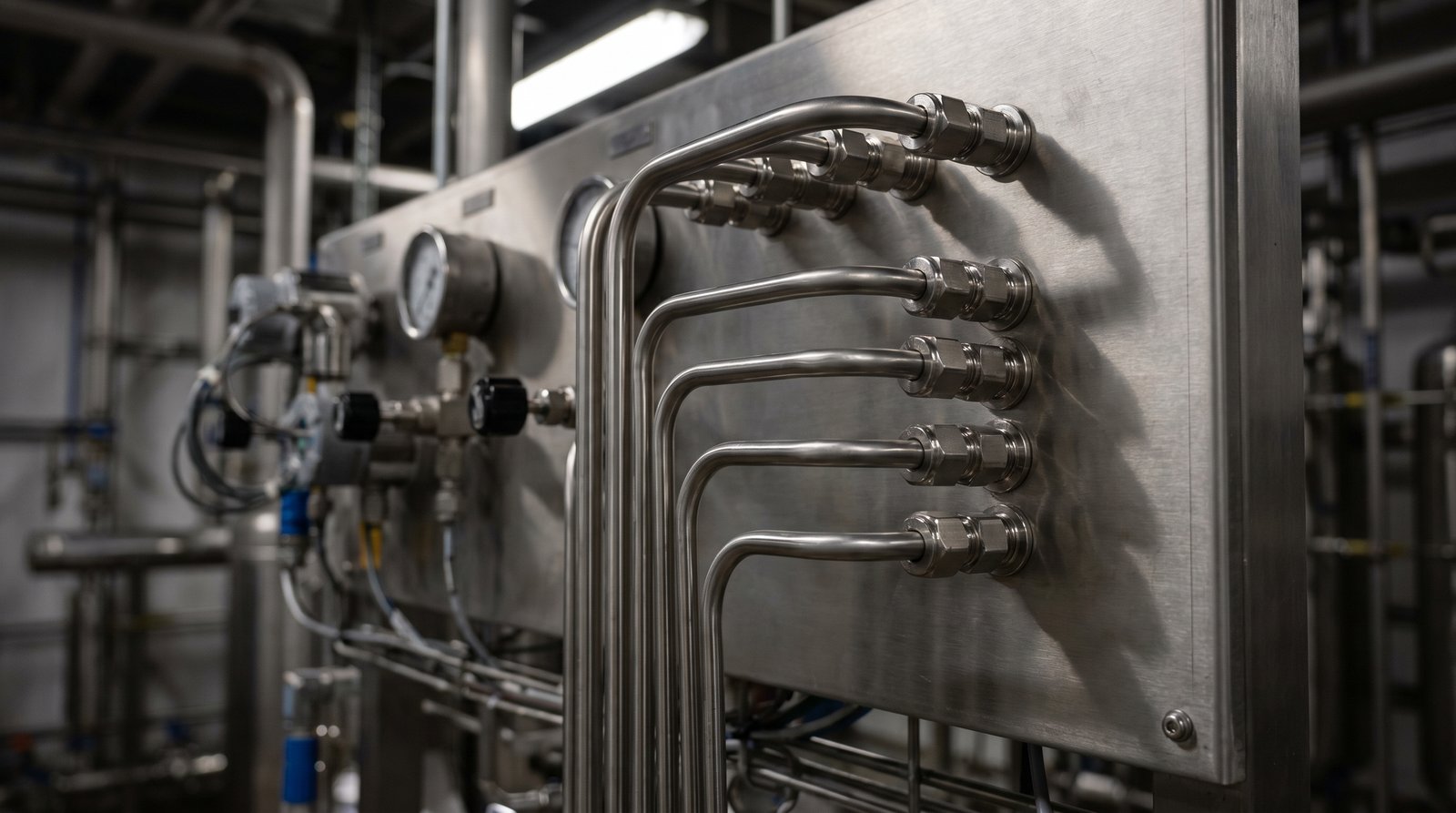
Three patterns drive most of the mix-up:
- Plant slang. Some shops call everything a “hose” because the first line they install on any new system is a flexible hose. The habit sticks even when the rest of the run is rigid tube.
- Crossover adapters. Hose-to-tube adapters exist because real systems mix both. Buyers searching for that adapter sometimes land on hose-fitting pages by accident.
- Search engines. Google and AI search engines lump the terms together. A “hose fitting” search regularly surfaces tube-fitting results and the other way around. You can validate by reading the part number, not the page title.
What Collins-Oliver actually stocks
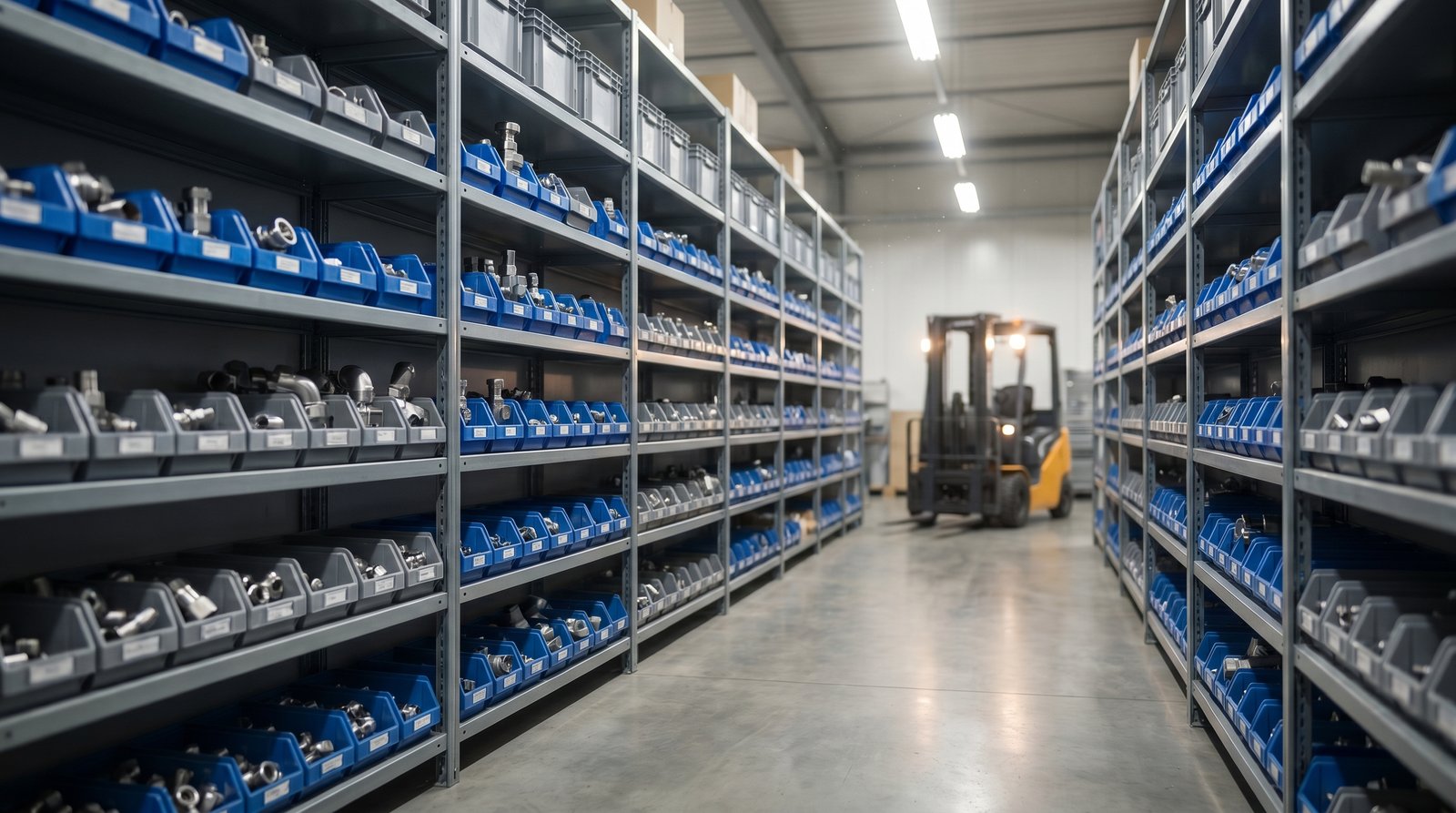
Our inventory runs heavy on rigid-line hardware. The depth lives in tube fittings (compression, double-ferrule, bite-type, push-to-connect, ultra-high-purity VCR and VCO), pipe fittings (NPT, BSP, metric, JIC, SAE flare), tubing (304, 316, 316L, Inconel, Monel, Hastelloy), and valves (ball, needle, check, gate, butterfly). Same-day pickup, nationwide shipping, no minimum order.
Hose-side work routes to specialty distributors who build hose assemblies. When a customer needs a tube run that interfaces with a hose somewhere down the line, the right product is a hose-to-tube adapter. We carry those.
The fastest way to spec the right part
- Identify the line type at each connection point: rigid tube or flexible hose.
- Confirm the size by OD (tube) or ID + dash (hose).
- Match the brand and series the rest of the system runs on. Mixing brand ferrules in the same fitting fails leak testing — Swagelok and Parker compression fittings do not interchange at the ferrule level even when the OD matches.
- Check the pressure and temperature rating against the operating envelope, not just the steady-state condition.
- Confirm material compatibility with the fluid. 316L stainless for most chemical service, Monel for seawater, Inconel for high-temperature steam.
Common mistakes
- Swapping ferrules across brands. A Swagelok ferrule will not seal correctly in a Parker fitting body. The geometry differs even when the OD reads the same.
- Re-using compression fittings on the wrong tube material. A fitting seated once on stainless tube should not be re-seated on plastic or aluminum. The ferrule has already taken its set.
- Ordering by ID when the fitting is sized by OD. Tube fittings reference the outside diameter of the tube. Always.
- Treating a hose fitting like a tube fitting. Hose ends are not rigid. They flex, they pulse, they crawl under pressure. The fitting needs a crimp or barb, not a compression ring.
- Skipping the leak test. Every new compression fitting gets a pressure check before the system runs. No exceptions.
Industries where this matters most
Oil and gas, chemical processing, power generation, semiconductor, pharmaceutical, food and beverage, and lab instrumentation all run rigid tube. Hydraulic power, mobile equipment, fuel transfer, and pneumatic tooling lean toward hoses. Most plants run both, just in different sections of the same site. Knowing which is which keeps the leak count low and the cycle time short.
Frequently asked questions
What is the difference between a hose fitting and a tube fitting?
A hose fitting attaches to flexible hose using a crimp, swage, or barbed end. A tube fitting attaches to rigid metal tubing using a compression ring (ferrule) that seals against the tube’s outside diameter. The two are not interchangeable.
Can you put a tube fitting on a hose?
No. A tube fitting needs a rigid outside diameter to seal against. Hose walls flex and the ferrule will not hold pressure. You need a hose fitting or a hose-to-tube adapter built for the transition.
What sizes do tube fittings come in?
Imperial tube fittings cover 1/16″ through 2″ OD in standard increments. Metric covers 2 mm through 50 mm. Collins-Oliver stocks the full range across Swagelok, Parker, Hy-Lok, SSP, and other major brands.
Why can I not mix Swagelok and Parker ferrules?
The ferrule angles, taper profiles, and back-ferrule designs differ across brands. A Swagelok ferrule placed in a Parker body will not develop a consistent seal under pressure or vibration. Stay within one brand per fitting.
What is a hose-to-tube adapter?
It is a fitting with a hose end on one side and a tube end on the other, used to transition between flexible and rigid line. We carry these in stainless, brass, and other materials across all common sizes.
Does Collins-Oliver sell hose fittings?
Our primary product lines are tube fittings, pipe fittings, valves, and tubing. We carry hose-to-tube adapters for crossover applications. For full hose assemblies, we point customers to specialty hose distributors.
How fast can I get a tube fitting shipped?
Same-day pickup at our Baton Rouge facility on in-stock items. Nationwide shipping with no minimum order. Most orders ship the same day they come in.
Which brand do you recommend for industrial fluid systems?
Whichever brand the rest of the system already runs on. Mixing brands at the ferrule level fails leak testing. If you are starting fresh, Swagelok and Parker both deliver high-integrity performance across the full pressure range.

Need a specific tube or pipe fitting today? Call Collins-Oliver or browse our catalog. With over 19,000 part numbers and 1,000,000+ pieces ready to ship, the part you need is usually already on the shelf.