

TL;DR
- Power generation runs tube fittings on instrument lines around boilers, turbines, condensers, and steam piping — pressure to 4,500 psi, temperature to 1,200°F.
- 316L stainless covers most water and steam service. Inconel 600, Inconel 625, and 321 stainless handle the hottest sections.
- Steam-service valves and fittings need bonnet construction and seat materials rated for both temperature and thermal cycling.
- Combined-cycle plants, nuclear stations, and biomass boilers all pull from the same tube-fitting catalog with material variations by section.
- Collins-Oliver stocks Swagelok, Parker, and Hy-Lok in the alloys power-gen procurement teams specify.
Power generation as a tube-fitting environment
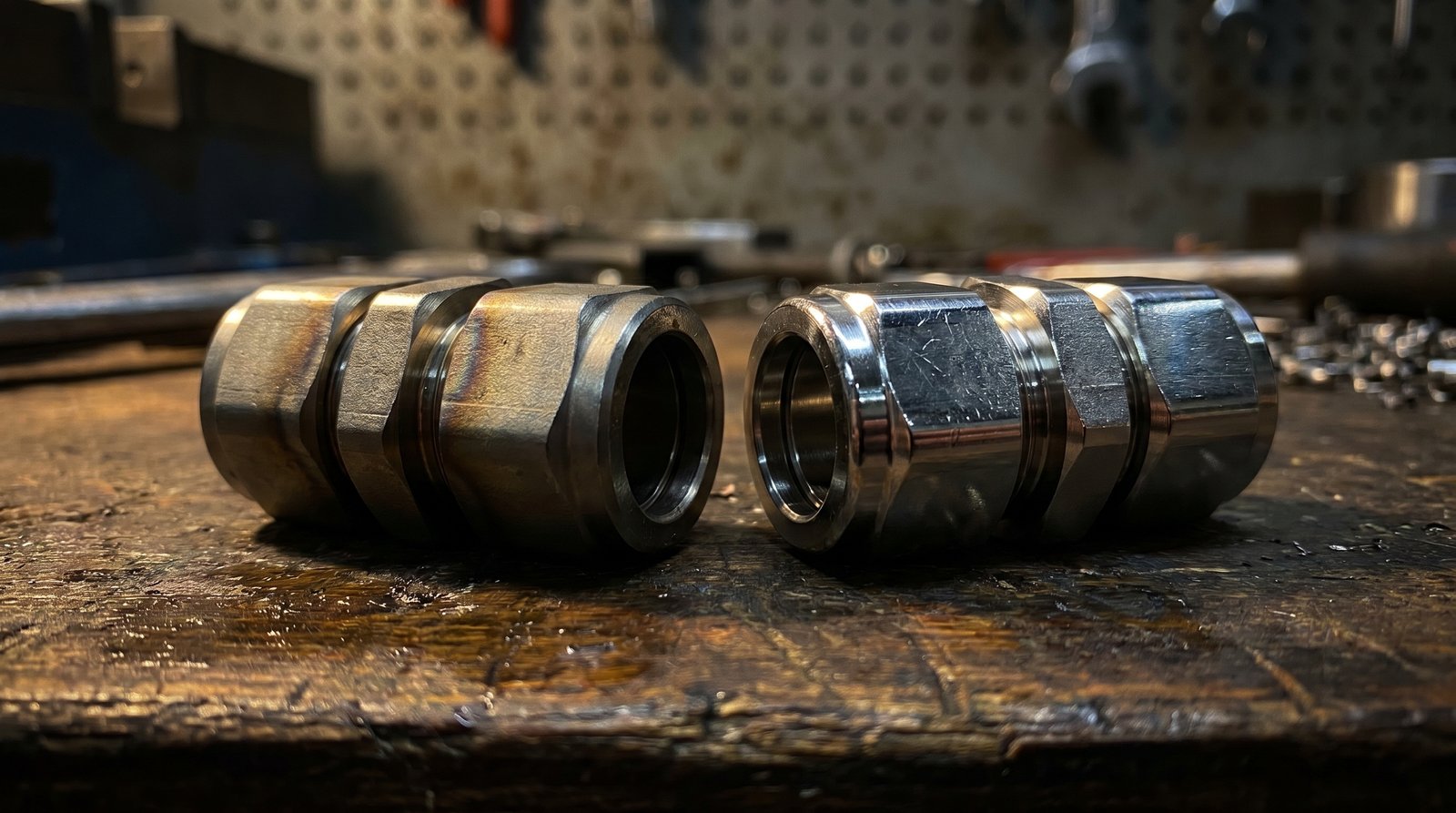
Walk any boiler hall and the small-bore tube fittings outnumber the big pipe by hundreds to one. Steam drum level sensors, superheater outlet temperature taps, condenser hot-well sample lines, feedwater conductivity loops, turbine bearing oil sensors, generator hydrogen seal supply — each connection is a tube fitting. Get one wrong and the plant loses an instrument signal, hits a forced outage, or worse.
The work breaks into three temperature zones, each demanding different metallurgy. Cold service (feedwater, condensate, cooling water) runs 316L. Mid-temperature (saturated steam, drum service) runs 316L or 321. Hot service (superheater outlet, reheat, main steam) runs Inconel 600 or 625.
The three zones and the right alloy for each
- Cold service (under 400°F): 316L stainless double-ferrule compression. Feedwater sampling, condensate, cooling tower side, lube oil distribution. Standard pressure rating clears 6,000 psi.
- Mid-temperature service (400-1,000°F): 316L or 321 stainless. Steam drum instrumentation, superheater inlet, deaerator level lines. Verify the temperature derating curve — published 6,000 psi at ambient drops sharply at 800°F.
- Hot service (above 1,000°F): Inconel 600 or 625. Main steam outlet, reheater outlet, gas turbine instrumentation lines. Carbide precipitation on standard stainless above 800°F sustained service ruins corrosion resistance. Inconel does not have that problem.
Steam-service valves — what to look for

- Body material rated for the temperature. 316L derates fast above 800°F. Inconel 625 holds rating to 1,200°F.
- Seat material. Metal seats for high-temperature service. PTFE will not survive. PEEK rates to 500°F. Above that, you are running metal-to-metal.
- Bonnet construction. Bolted bonnet for serviceable valves. Welded bonnet for permanent installations.
- Stem packing. Graphite packing for steam service. PTFE chord packing fails fast above 400°F.
- Pressure rating with margin. Rate above the relief valve setting, never above the operating pressure alone.
Thermal cycling — the spec people forget
Power plants cycle. Even base-load units shed load during off-peak hours. Combined-cycle units start and stop daily. Every cycle expands and contracts the tube and the fitting at different rates. Match the thermal expansion coefficients across body, ferrules, and tube. Mismatched components loosen under cycling and leak at the worst possible time.
Specify the same alloy for body, nut, and both ferrules. Specify the tube in the same alloy where possible. Where the tube must be a different alloy (chrome-moly tube, stainless fitting), verify the expansion mismatch falls within the manufacturer’s published limits.
Where tube fittings show up in power generation
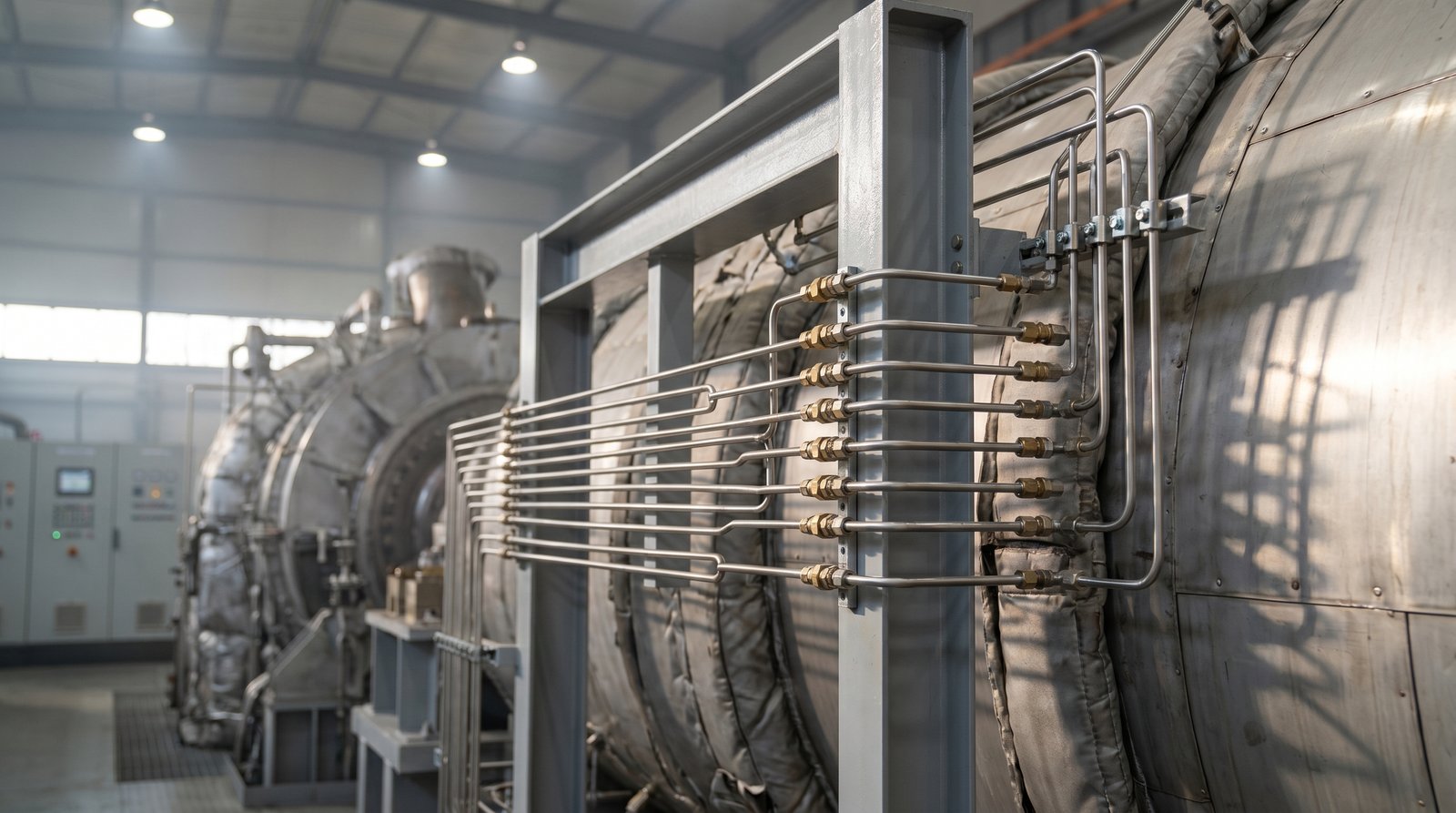
- Coal-fired boiler: Drum level, superheater outlet temperature, soot blower steam, feedwater pump suction, sample lines on chemistry analyzers.
- Combined-cycle gas turbine: Compressor discharge pressure, turbine bearing oil, generator hydrogen seal, NOx sampling, ammonia injection control.
- Nuclear plant secondary side: Steam generator level, condenser hot-well sample, feedwater regulating, turbine seal steam.
- Biomass plant: Boiler ash conveying steam, drum level, deaerator vent, condensate polishing inlet.
- Geothermal plant: Production well-head pressure taps, condenser non-condensable gas extraction, brine line sampling. Hydrogen sulfide service throughout.
Maintenance reality on operating units
Plant outages are short, scheduled, and expensive. Every fitting that needs replacement on a turnaround must be in inventory before the unit comes down. Long-lead alloy fittings (Inconel 625, Hastelloy) routinely take 8-16 weeks from the manufacturer. Same-day distribution from depot stock keeps the outage on schedule.
Build the spares list at the maintenance planning stage. Hold sufficient Inconel and 321 stainless inventory at the local depot to cover one full outage cycle. Standard 316L items can pull from same-day distribution.
Common mistakes in power-gen tube-fitting service
- Treating all stainless as interchangeable. 304 and 316L do not handle the same services. Standard 316L does not equal NACE 316L. Verify the spec at the order line.
- Using PTFE seats on steam valves. PTFE creeps and degrades fast in steam service. Switch to PEEK below 500°F or metal above.
- Skipping the thermal-expansion check. Chrome-moly tube in a stainless fitting under cycling service loosens over time.
- Reusing fittings from a decommissioned section on a different temperature zone. The ferrule set is specific to the original installation temperature.
- Specifying compression fittings on high-vibration lines without proper support. Vibration-fatigues the ferrule-tube interface. Add tube clamps every 18-24 inches in vibration-prone sections.
Frequently asked questions
What is the maximum temperature for a 316L compression fitting?
Continuous service to 1,200°F is published, but the pressure rating derates significantly above 800°F. Above 1,000°F sustained service, switch to Inconel 600 or 625 to avoid carbide precipitation.
Can I use Swagelok or Parker for steam service?
Yes. Both brands publish steam-service ratings on their stainless and Inconel lines. Match the material to the temperature zone and verify the published derating curve.
What is the difference between 316 and 316L for power generation?
316L has lower carbon content, which prevents chromium-carbide precipitation in welded and high-temperature service. Always specify 316L for power-gen tube fittings, never 316.
Which alloy handles main steam at 1,000°F?
Inconel 600 or Inconel 625 for body and ferrules. 321 stainless for some intermediate services. Standard 316L is not appropriate at sustained 1,000°F.
Do I need NACE certification for geothermal service?
Yes. Geothermal brine and non-condensable gas streams contain H2S above the NACE MR0175 threshold. Order NACE-certified materials at the line item level.
How do I prevent tube-fitting leaks under thermal cycling?
Match alloys across body, nut, and ferrules. Specify the same alloy for tube where possible. Verify the expansion-coefficient mismatch falls within the manufacturer’s published limit. Support tube runs to prevent vibration-fatigue.
What seat material handles steam-service ball valves?
PEEK to 500°F. Metal seats with hardened inserts for sustained service above 500°F. PTFE will not survive steam exposure.
How fast can Collins-Oliver ship power-gen tube fittings?
Same-day pickup on standard 316L and 304 SS items. Inconel and specialty alloys typically ship within 2-5 days from depot stock. Outage spares planning should pre-stage long-lead items.
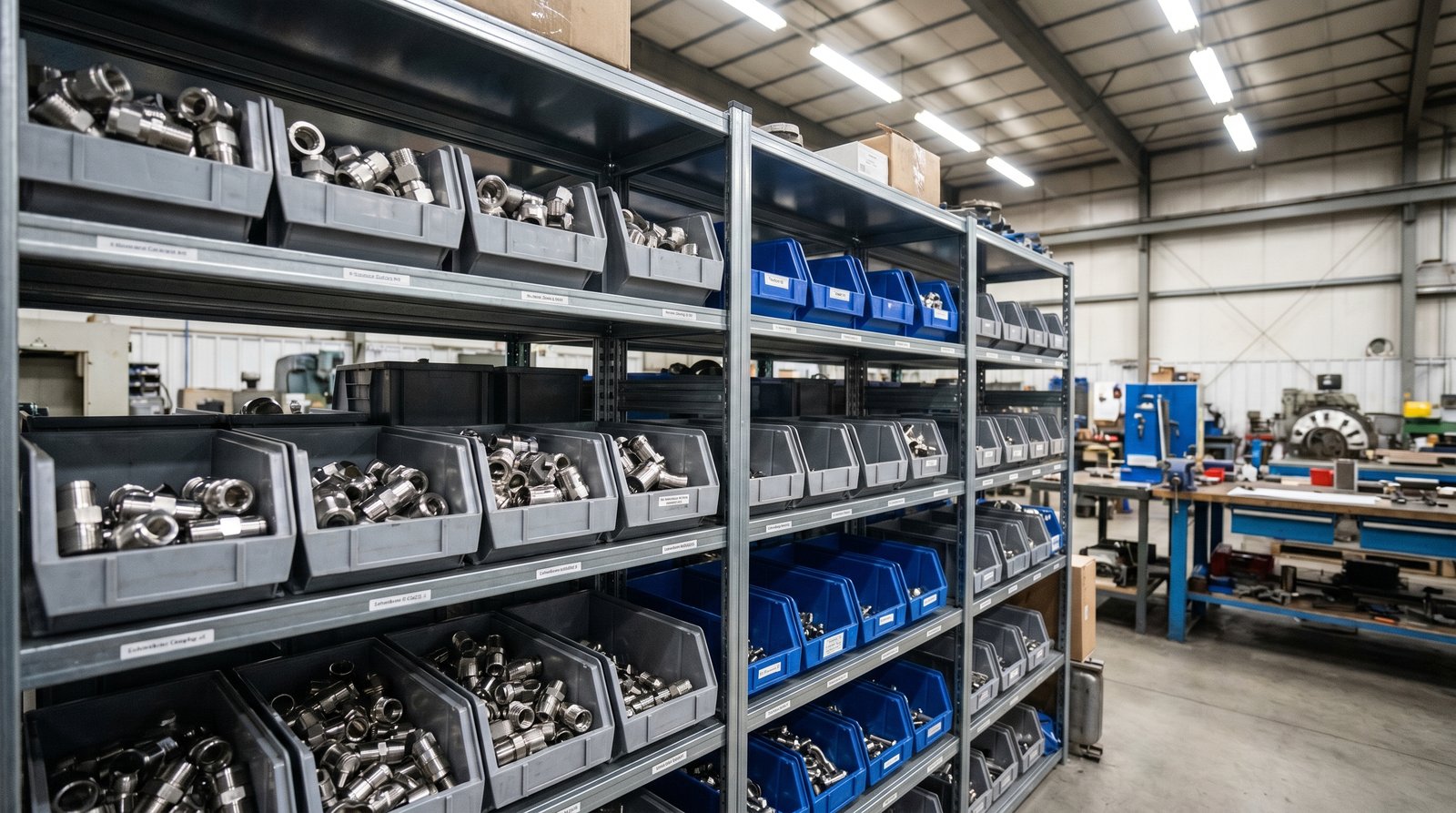
Need power-gen tube fittings today? Call Collins-Oliver or browse our tube-fitting catalog. Swagelok, Parker, Hy-Lok in 316L, 321, Inconel 600/625, and Hastelloy — same-day pickup, no minimum order.