
TL;DR
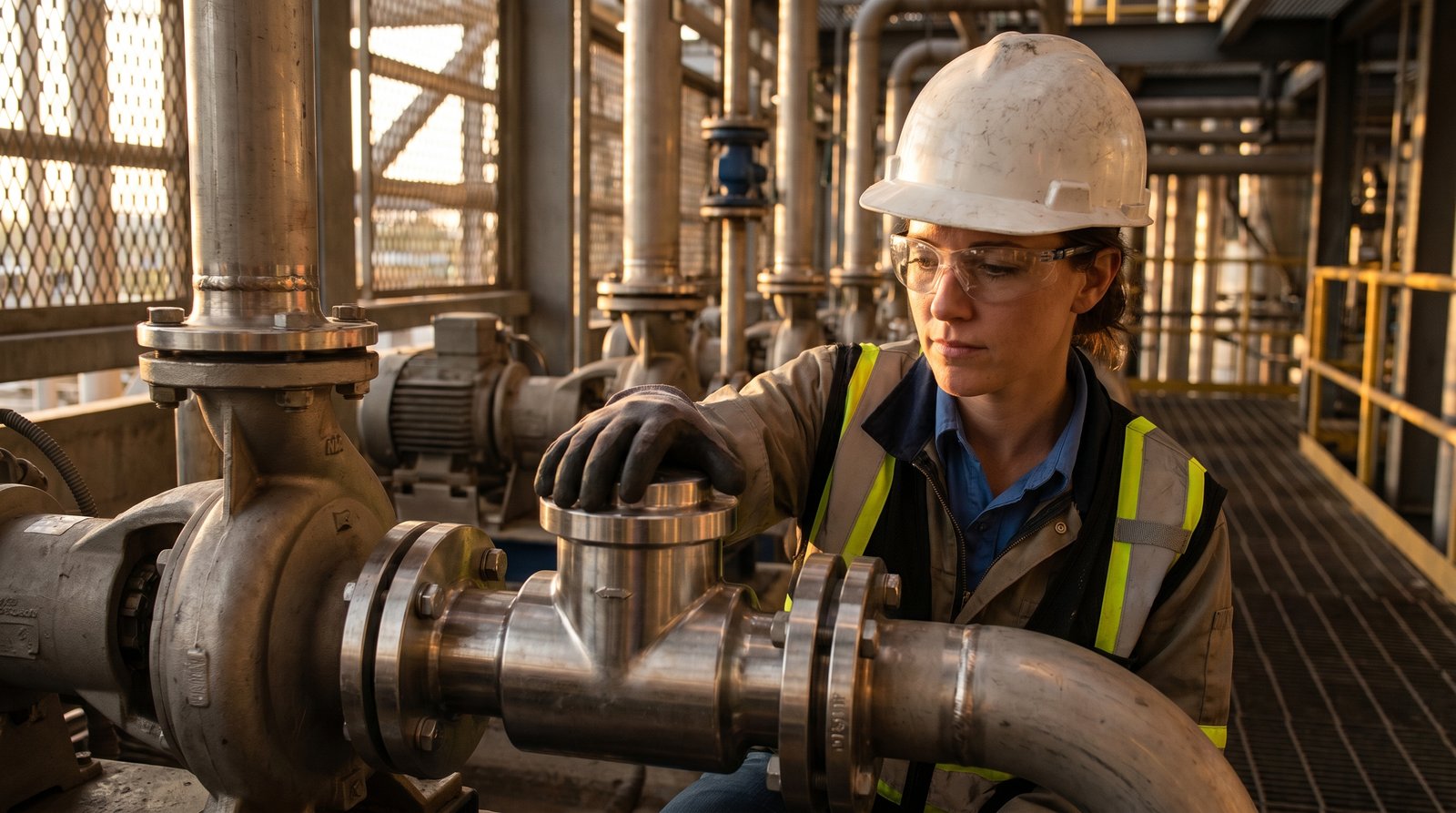
- Check valves stop reverse flow. They open under forward pressure and close instantly when flow reverses.
- Five common designs: poppet, ball, swing, disc, and diaphragm. Pick by service, cracking pressure, and acceptable pressure drop.
- Backflow into a pump, compressor, or sample line damages equipment and contaminates fluid. A correctly sized check valve prevents both.
- Collins-Oliver stocks Swagelok and Parker check valves in stainless steel, with same-day shipping nationwide.
- Cracking pressure, flow capacity (CV), and material compatibility drive the spec. Get all three right or the valve underperforms.
Why check valves earn their place in industrial systems
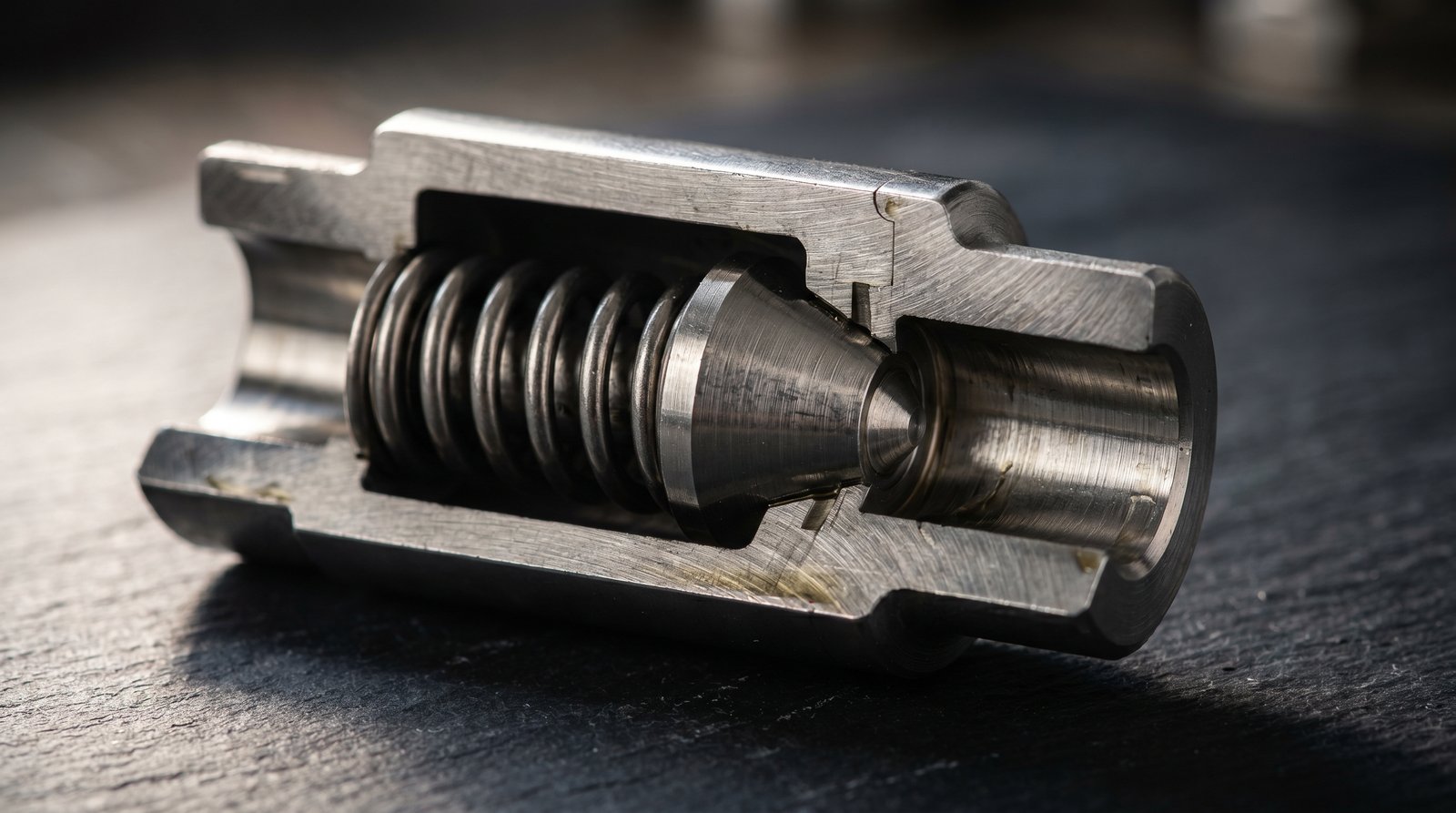
A check valve is a one-way gate. Forward flow lifts the closure element (poppet, ball, disc) off its seat and lets fluid pass. Reverse flow drops the element back onto the seat and seals. No actuator, no signal, no human input — the fluid itself does the work.
You need a check valve anywhere reverse flow does damage: discharge of a positive-displacement pump, downstream of a compressor, on the return leg of a parallel system, or upstream of any instrument that contamination would destroy. Skip the check valve and the next failure costs more than the valve, the labor, and the downtime combined.
The five common designs
- Poppet check. Spring-loaded poppet against a tapered seat. Compact, reliable, low cracking pressure. The default choice for instrumentation and sample lines.
- Ball check. Free-floating or spring-assisted ball against a seat. Simple, low cost, good for low-pressure water and air. Less precise than a poppet.
- Swing check. Hinged disc that swings open under forward flow. Best for large-bore pipe service, low pressure drop. Slower closure — risk of water hammer.
- Disc check (silent or non-slam). Disc with a spring-assisted return, oriented in-line. Closes before flow fully reverses, eliminating water hammer.
- Diaphragm check. Elastomer or polymer diaphragm flexes to allow forward flow, returns under reverse pressure. Used in slurry, dirty water, and CIP service where solids would jam a poppet.
How to spec a check valve

- Define the cracking pressure. Spring-loaded poppets crack at 1/3 psi to 100 psi. Match the cracking pressure to the lowest expected forward pressure. Too high and the valve chatters. Too low and reverse flow leaks through.
- Size the body to the line. Cv must clear the maximum forward flow without choking. Most data sheets publish Cv per body size.
- Verify the material against the fluid. 316L stainless covers most chemical service. Brass for clean water and instrument air. Hastelloy and Monel for aggressive process chemistry.
- Confirm the orientation. Some checks are bidirectional in mounting (any orientation works), others require horizontal or vertical-only installation. Always check the data sheet.
- Match the connection style. Compression for tube, NPT for pipe, weld for permanent installation, sanitary clamp for hygienic service.
Cracking pressure — the spec people get wrong most often
The cracking pressure is the minimum forward differential that opens the valve. Too high and the upstream pump cycles harder than needed. Too low and the valve trickles backward when forward pressure drops below the spring rating.
Standard poppet checks ship at 1/3 psi, 1 psi, 3 psi, 10 psi, 25 psi, or higher. Instrument lines pull from the low end. Pump-discharge service runs 5-25 psi to prevent reverse flow during pump turn-down. Hydraulic accumulator service runs 100+ psi.
Where each design fits

- Sample and instrument lines: Swagelok or Parker poppet check. Tight cracking pressure, compact body, low Cv loss.
- Pump discharge under 200 psi: Spring-loaded ball or poppet check.
- Pump discharge over 200 psi: Heavy-duty poppet or disc check with hardened seat.
- Pipe service over 2″: Swing check or silent disc check, depending on water-hammer tolerance.
- Slurry, CIP, or solids-bearing fluid: Diaphragm check.
- Compressor discharge: Hardened-seat disc check rated for the pulse frequency of the compressor.
Common mistakes
- Installing a check valve backward. The arrow on the body points in the direction of forward flow. Backward installation jams the valve closed under all conditions.
- Oversizing the body. An oversized check throttles at low forward flow, chatters under pulsing flow, and erodes the seat from repeated tap-down.
- Wrong cracking pressure. Reading the line pressure instead of the differential. A 100 psi line with a 10 psi differential needs a check rated below 10 psi, not 100.
- Ignoring the orientation requirement. Vertical-flow-only checks installed horizontally never reliably seat.
- No upstream strainer in solids-bearing service. The first piece of grit jams the poppet open. Install a strainer or switch to a diaphragm check.
Maintenance reality
Check valves are the most-forgotten valves in any plant. Inspect at every system shutdown. Replace the spring at any sign of corrosion or fatigue. Replace the seat at any pitting. A check valve that has run 5 years without inspection is overdue.
Symptoms of a failing check: forward flow chatters or hisses, downstream gauge drifts during pump-off cycles, upstream pressure falls slowly when the system should be sealed.
Frequently asked questions
What is the difference between a check valve and a ball valve?
A check valve closes automatically against reverse flow. A ball valve requires a manual or actuator-driven quarter-turn to close. Check valves are reactive. Ball valves are operator-controlled.
What does cracking pressure mean?
Cracking pressure is the forward differential pressure that opens the valve. Below it, the spring holds the closure element shut. Above it, the valve passes flow.
Can a check valve fail open?
Yes. Debris under the seat, broken spring, corroded poppet — any of these can leave the valve stuck open. Reverse flow then runs unrestricted. Routine inspection catches it before it becomes a system failure.
Do check valves need maintenance?
Yes. Inspect at every shutdown. Replace spring at any corrosion. Replace seat at any pitting. Even silent service deserves a look every year.
Which design has the lowest pressure drop?
Full-port swing checks have the lowest pressure drop, followed by silent disc checks. Poppet and ball checks add more restriction because the closure element sits in the flow path.
Can I install a check valve in any orientation?
Only if the data sheet says so. Many ball and disc checks require vertical-flow installation. Some poppets are omnidirectional. Always confirm before installing.
What seat material handles 400°F service?
PEEK seats handle 500°F. PTFE rates to 400°F. For sustained high-temperature service, metal seats with hardened inserts are the answer.
How fast can Collins-Oliver ship a check valve?
Same-day pickup at our Baton Rouge facility on in-stock items. Nationwide shipping with no minimum order. We carry 76 Swagelok stainless and 43 Parker stainless check-valve SKUs.
Need a check valve today? Call Collins-Oliver or browse our valve inventory. Swagelok and Parker poppet, ball, and disc checks — same-day pickup, no minimum order.