
TL;DR
- Needle valves give fine flow control by driving a tapered stem into a matching seat.
- Parker, Swagelok, and Hoke each dominate a different slice of the market — Parker on inventory depth, Swagelok on breadth, Hoke on precision and high-purity service.
- Pick by service: instrumentation lines and sample isolation favor Swagelok or Hoke. Hydraulic and pneumatic throttle work runs Parker.
- Collins-Oliver stocks all three brands across stainless, brass, and exotic alloys, with same-day shipping nationwide.
- Match the stem geometry to the fluid and the pressure rating to the system high point, not the nominal.
What a needle valve actually does
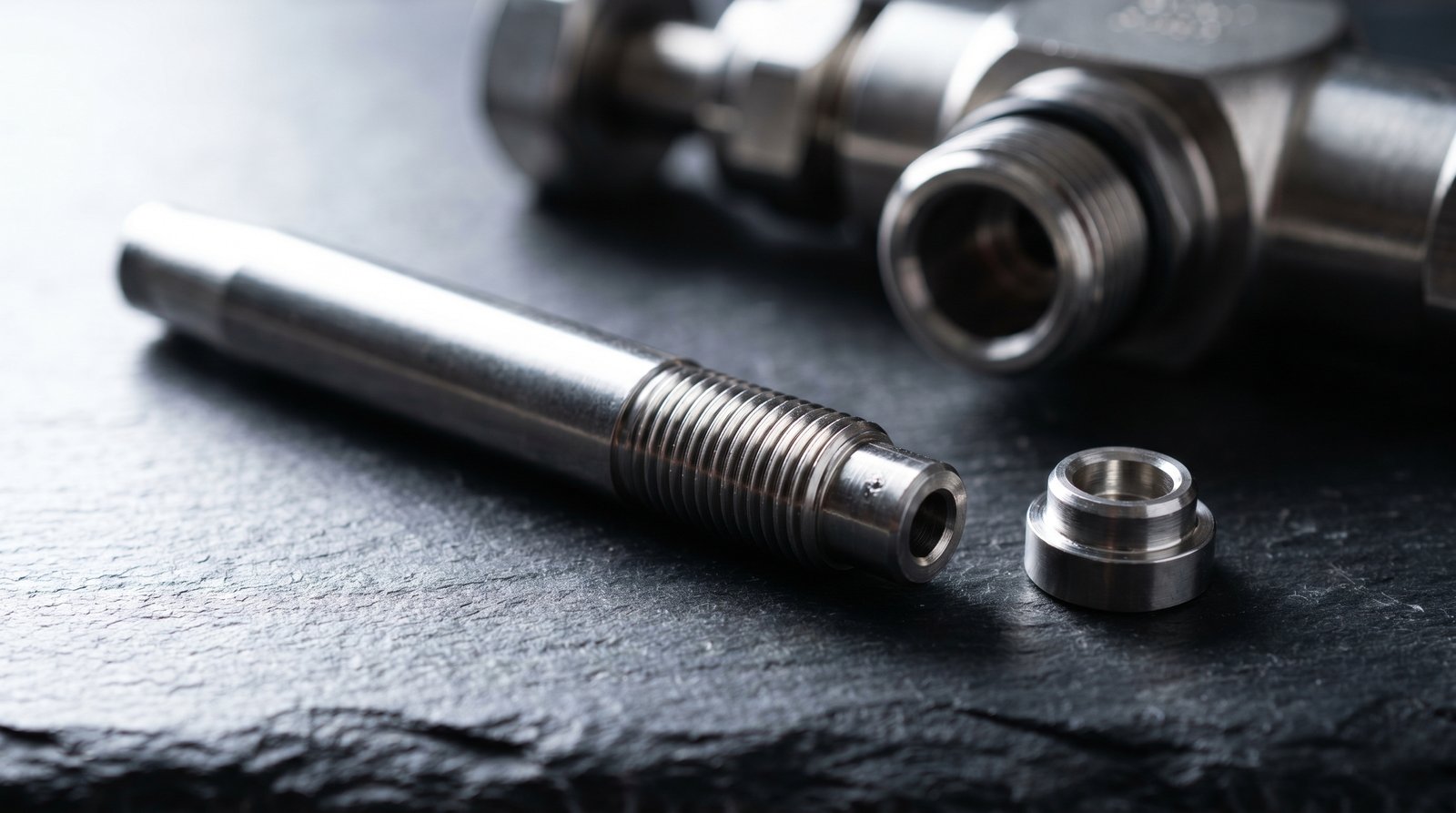
A needle valve uses a long, tapered stem that screws into a precise seat. The smaller the gap, the smaller the flow. That gives you fine, repeatable throttling — much finer than a ball valve or a gate valve. The trade-off is flow capacity. Needle valves run at relatively low CV. You buy them for control, not throughput.
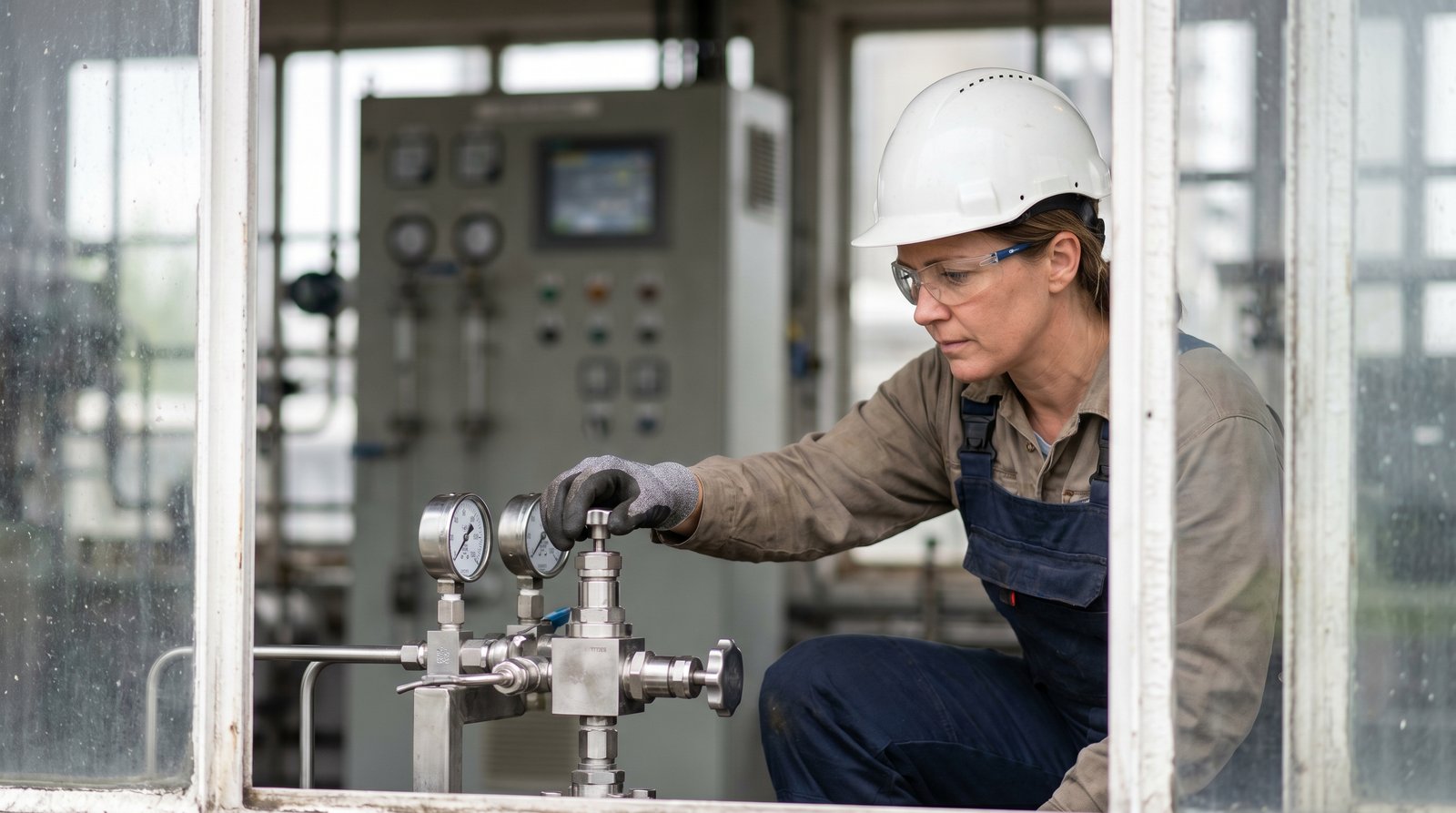
You see needle valves on gauge isolations, sample lines, calibration ports, pressure regulator vents, hydraulic bleed circuits, and instrumentation drain points. Anywhere the operator needs to dial flow precisely, the needle valve earns its place.
Parker vs Swagelok vs Hoke at a glance
- Parker. Heavy on stock depth. 3,000+ stainless needle-valve pieces in our warehouse, with strong coverage of hydraulic and pneumatic configurations. The 6A and HNV series are the workhorses.
- Swagelok. Broadest variant coverage. 100+ SKUs across the 1V, 1VS, and SS-1RS series. Strong on instrumentation panels, integral bonnet, and screwed-bonnet designs.
- Hoke. Specialty precision. Best fit for low-flow sample isolation, vacuum-rated service, and high-purity gas applications. Tighter machining tolerances, finer stem profiles.
How to pick the right one
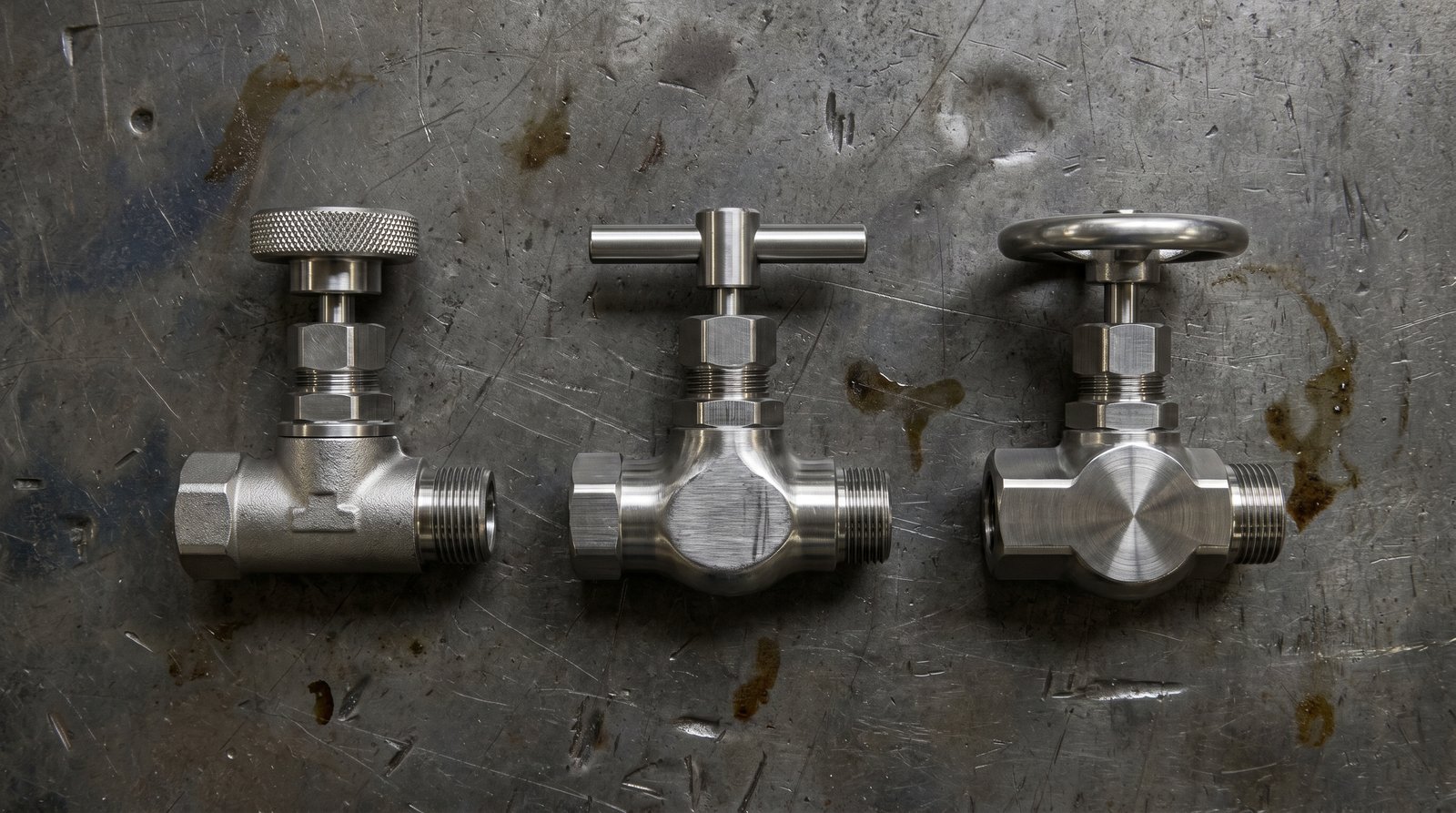
- Confirm the service. Liquid sample line? Vacuum bleed? High-pressure hydraulics? The service narrows the brand candidate list before you compare prices.
- Check the pressure rating against system maximum. Most needle valves spec out at 6,000 psi for stainless, 3,000 psi for brass. Spike pressure during start-up or load-shed must stay under the rating.
- Match the stem tip to the fluid. Regulating stems for liquids and gases differ. Vee-stems for soft seats, ball-stems for hard seats. Read the data sheet.
- Stay within one brand on a single seat-and-stem assembly. The taper geometry differs between brands. Mixing parts wrecks the seal.
- Specify the connection style. Compression for tube, NPT for pipe, weld for fixed installations. Note the OD or pipe size — needle valves are sized by line, not by valve body.
Side-by-side comparison
- Flow control resolution: Hoke > Swagelok > Parker. Hoke’s longer stem taper gives finer per-turn flow change.
- Pressure rating spread: Swagelok 1RS and 1VS series cover up to 10,000 psi. Parker HNV up to 6,000 psi. Hoke 2200/2300 series stops at 6,000 psi.
- Material range: Swagelok and Hoke run more exotic alloy options (Monel, Hastelloy C-276, Alloy 400). Parker mostly stainless and brass.
- End connections: All three offer compression, NPT, and tube-weld. Swagelok offers more metric and BSP variants.
- Lead time when out of stock: Stock-out lead times run 4-12 weeks at the manufacturer. Same-day pickup from a stocking distributor avoids the gap.
Common mistakes to avoid
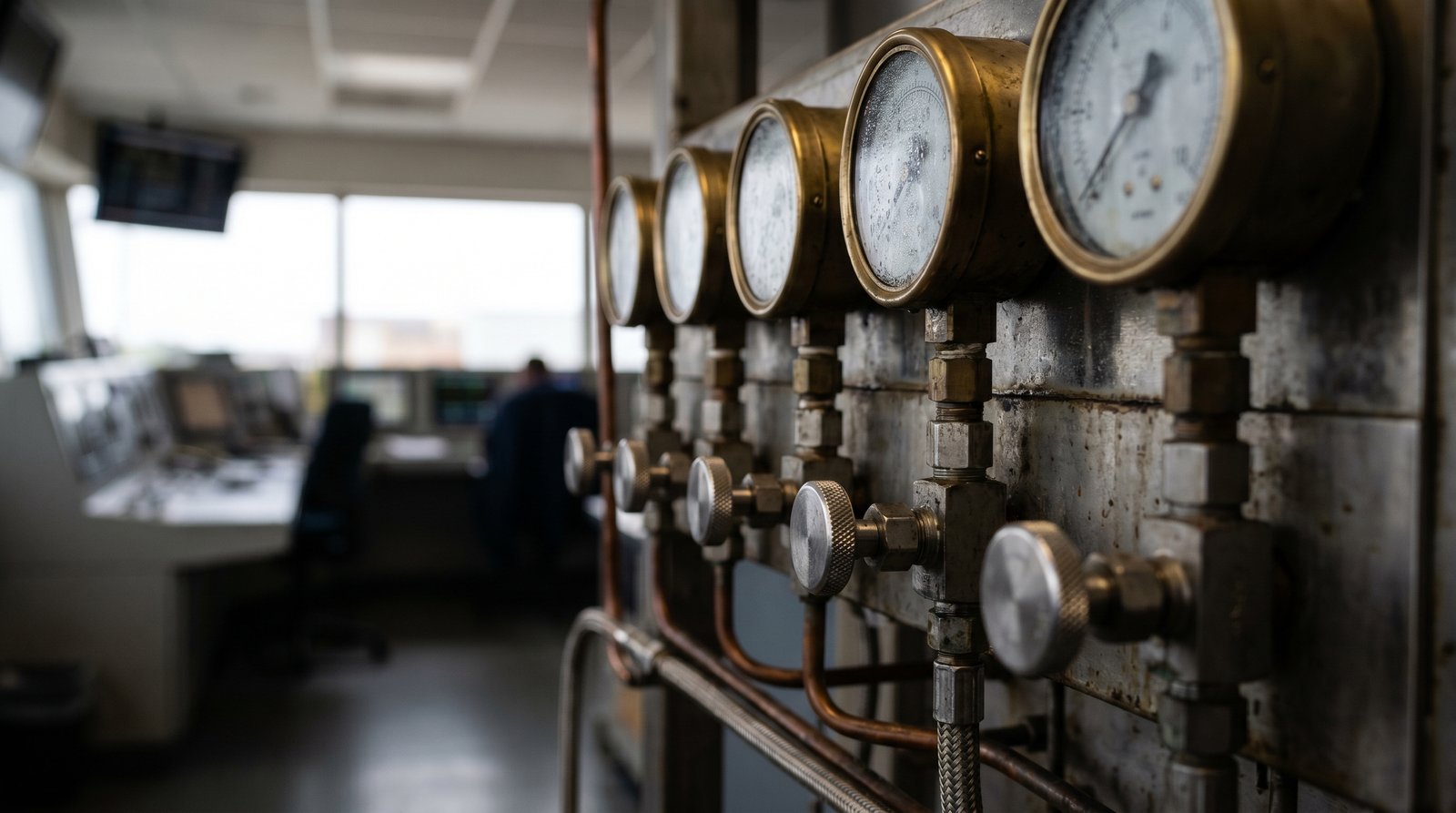
- Using a needle valve as a shutoff. They are throttle valves. Repeated full-close cycles deform the seat and the stem.
- Spec’ing a brass body for a chemical line. Brass corrodes against many process fluids. Default to 316L stainless unless a compatibility chart proves otherwise.
- Mixing manufacturer parts in one valve. Stem from one brand, seat from another, ferrules from a third — the assembly looks fine and fails under pressure.
- Skipping the back-seat verification. Most needle valves have a back-seat that lets you replace packing without depressurizing. Confirm it is rated for your service before you rely on it.
- Ordering by valve size instead of line size. The line drives the valve, not the other way around. A 1/4″ tube line takes a 1/4″ needle valve, regardless of body footprint.
When each brand wins
Parker wins when you need volume coverage on standard hydraulic and pneumatic throttle work and you want a 1-day stock turn from a distributor with depth.
Swagelok wins when you are building an instrumentation panel, sample isolation rack, or any high-purity rig that demands tight variant control and exotic alloy options.
Hoke wins when the service is vacuum, ultra-low flow, or precision gas calibration. The longer stem taper and finer machining give you finer control per turn than the other two.
Industries we serve with needle valves
Oil and gas, chemical processing, power generation, water treatment, food and beverage, semiconductor, pharmaceutical, and lab instrumentation. Different services, same selection logic: match the brand and stem profile to the fluid, the pressure, and the flow precision you need.
Frequently asked questions
What is the difference between a needle valve and a ball valve?
A needle valve regulates flow with a tapered stem. A ball valve switches flow with a quarter-turn rotation of a drilled ball. Use a needle valve for fine control. Use a ball valve for shutoff and isolation.
How do I size a needle valve?
Match the connection size to the line size, then verify the CV against the maximum flow you need at the maximum allowable pressure drop. Most data sheets publish CV curves at multiple stem positions.
Can I use a needle valve for shutoff?
Not as a primary isolation. The seat is sized for throttle service, not for repeated hard-close cycles. Pair a needle valve with a ball valve upstream for shutoff duty.
What pressure rating should I look for?
Default to 6,000 psi stainless or 3,000 psi brass for general industrial service. Verify the spike pressure during system transients stays under the rating. High-pressure work goes to the Swagelok 1RS or equivalent.
Are Parker and Swagelok needle valves interchangeable?
Externally yes — both accept standard tube and pipe connections. Internally no — the stem and seat geometries differ. Stay within one brand on a single valve body.
What material should I specify for chlorine service?
316L stainless for the body and stem. Hastelloy C-276 or Monel 400 for high-concentration or wet chlorine. Avoid brass — it corrodes fast under chlorine.
How fast can Collins-Oliver ship needle valves?
Same-day pickup at our Baton Rouge facility on in-stock items. Nationwide shipping with no minimum order. Stock includes Swagelok, Parker, and Hoke across stainless and brass.
What is a back-seat on a needle valve?
A back-seat is a secondary seal that engages when the valve is fully open. It lets you replace the stem packing without depressurizing the line. Check the manufacturer’s spec sheet to confirm it is rated for your service.
Need needle valves shipped today? Call Collins-Oliver or browse our valve inventory. Same-day pickup, no minimum order.