

TL;DR
- Ball valves give you fast, positive shutoff with a quarter-turn handle and almost no pressure drop when fully open.
- Three configurations dominate industrial service: one-piece (compact, light-duty), two-piece (most common), three-piece (rebuildable in place).
- Swagelok and Parker cover the broadest stainless and brass range. Hoke handles specialty and high-pressure niches.
- Collins-Oliver stocks 130+ Swagelok stainless ball-valve SKUs and 40+ Parker brass ball-valve SKUs, ready for same-day shipping.
- Critical service starts at material compatibility and finishes at seat material. Get both right and the valve runs cycles into the hundreds of thousands.
Why ball valves run most industrial isolation duty
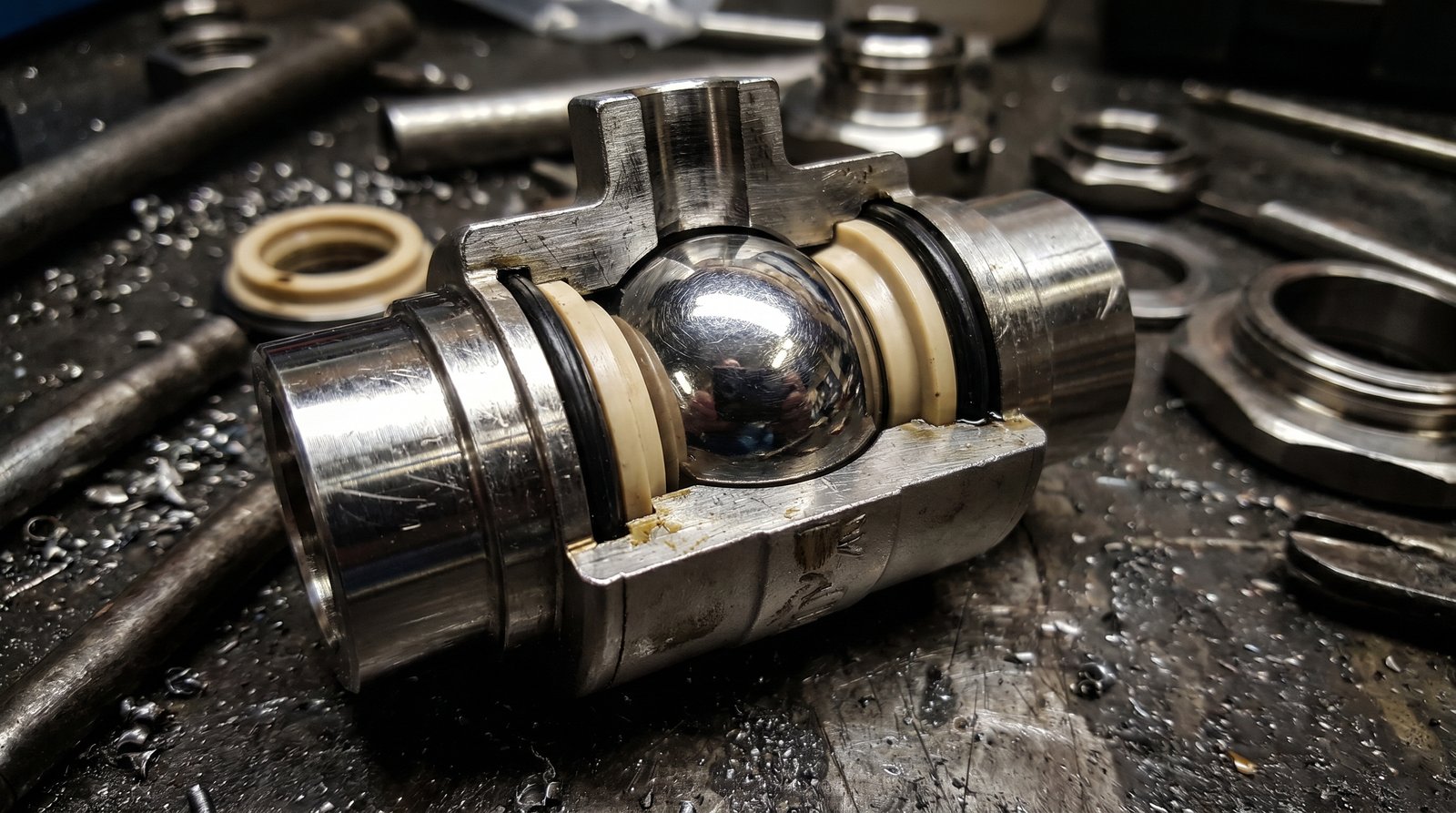
A ball valve uses a drilled ball that rotates 90 degrees inside a metal body. Open: full bore, low pressure drop, fast flow. Closed: hard seal, no leak, instant isolation. That combination handles the bulk of isolation, blow-down, sample-port, and shutoff work across plants.
Compared with a gate or globe valve, the ball valve closes faster, leaks less, and runs longer between rebuilds. Compared with a needle valve, it shifts more volume but cannot throttle precisely. Ball valves are on/off devices first. Throttle service belongs elsewhere.
The three configurations
- One-piece. Body cast as a single unit. Compact, light, low cost. Cannot be serviced in place — when the seat fails, the valve is scrap. Best for low-cycle, low-criticality service.
- Two-piece. Body in two halves, bolted at one face. Most common industrial configuration. Servicing requires removing one half from the line.
- Three-piece. Body in three sections, bolted at two faces. Center section drops out for in-line service without breaking the upstream or downstream connections. Mandatory for critical service that must be rebuildable without shutting the system down.
Picking the right ball valve for your service
- Confirm the fluid. 316L stainless covers most aqueous and chemical service. Brass for clean water and instrument air only. Monel and Hastelloy for chlorine, seawater, and exotic chemistry.
- Set the pressure rating with margin. Standard stainless ball valves rate to 1,000–2,200 psi WOG. High-pressure series step to 6,000 psi and above. Always rate above the system relief setting, not the operating pressure.
- Match the seat material to the temperature. PTFE seats run to 400°F. PEEK seats to 500°F. Metal-seated valves for high-temperature steam, ash slurry, or solids-laden flow.
- Specify the bore. Full-port preserves flow and lets you pig the line. Reduced-port saves cost and weight when full flow does not matter.
- Choose the end connection by line type. Compression fittings for tube. NPT or BSP for pipe. Socket weld or butt weld for permanent installations.
Swagelok vs Parker — when each wins
- Swagelok dominates instrumentation panels and small-bore high-purity work. The 40-series and 60-series ball valves cover 1/4″ through 1″ with tight quality control and consistent ferrule integration.
- Parker wins on hydraulic and pneumatic distribution work and on brass configurations for instrument air and clean water. The MV and MB series carry deep stock at most distributor branches.
- Hoke takes precision and high-pressure niches — its 7100 and 7600 series step into 10,000 psi territory with stainless construction.
Common failure modes and how to avoid them
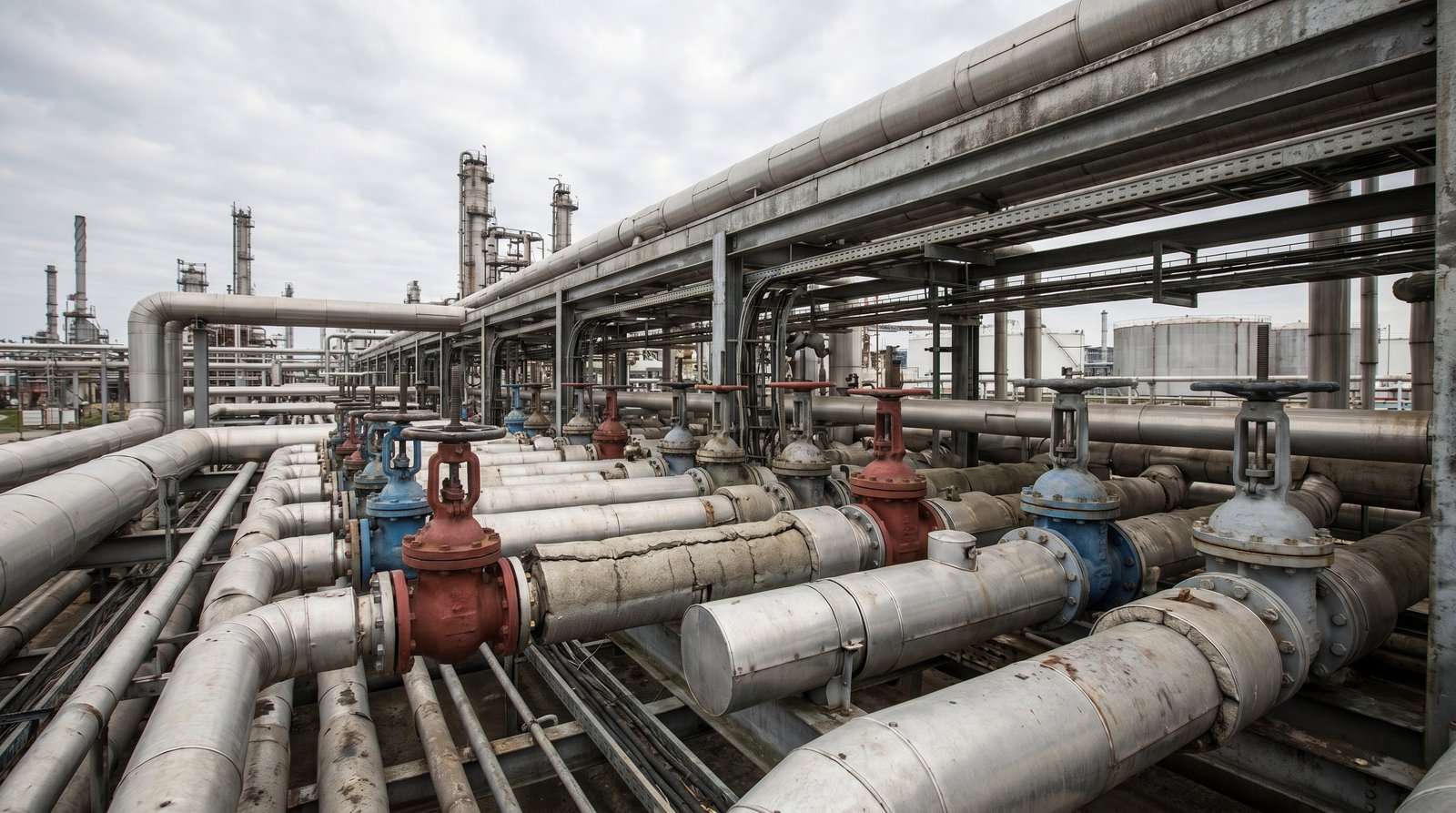
- Seat extrusion. The seat material flows out of its groove under thermal cycling and pressure. Specify the right seat for the temperature, not the lowest-cost option.
- Cavitation pitting. Throttling a ball valve creates cavitation that pits the ball. If the duty is throttle, switch to a needle or control valve.
- Stem leakage. Stem packing fails when nobody checks it. Inspect at every shutdown. Replace before it bleeds visibly.
- Galvanic corrosion. Mixed-metal connections — brass valve on a stainless line — corrode at the joint. Match the metallurgy across the connection.
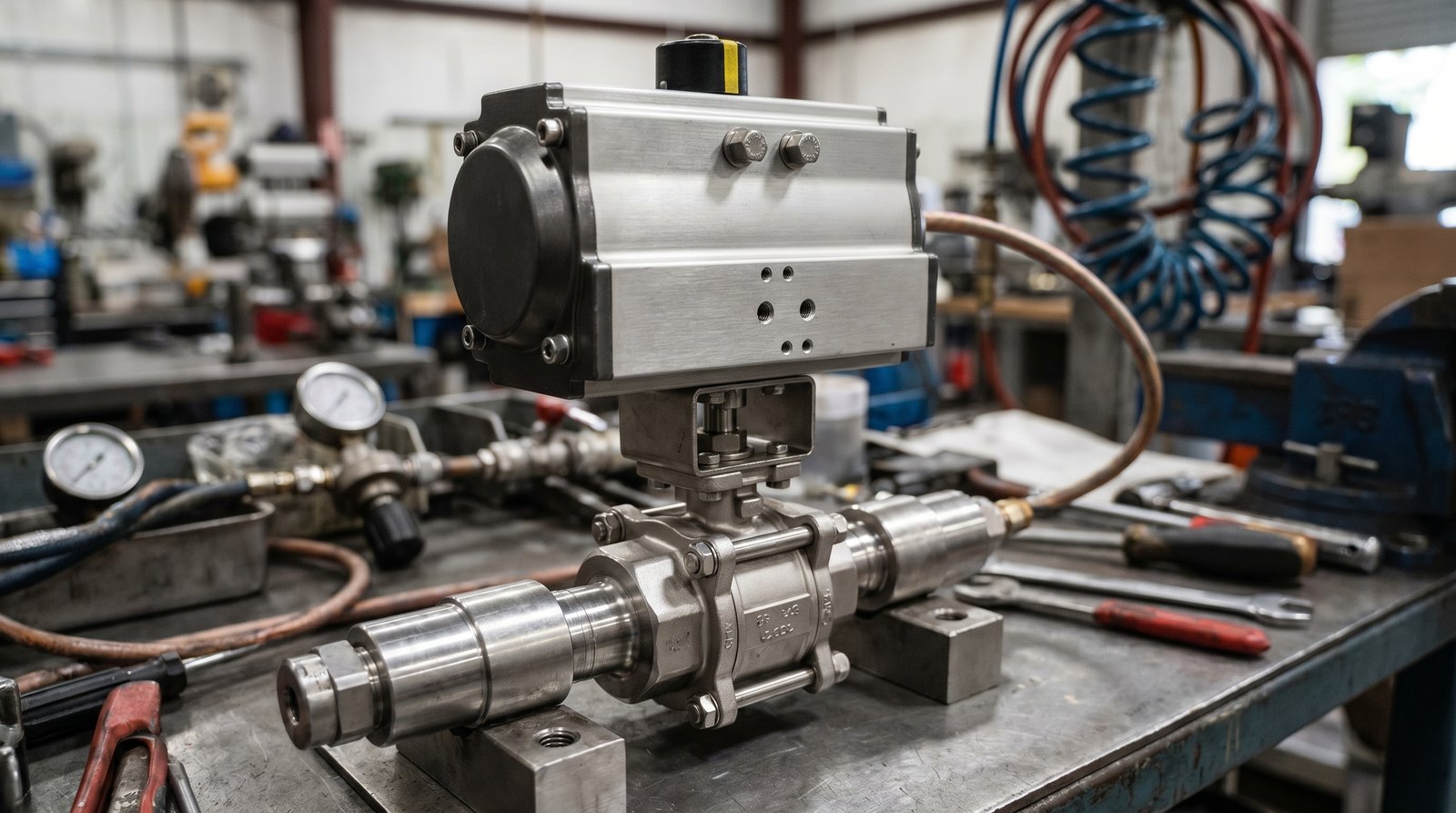
- Wrong actuator torque. Pneumatic and electric actuators must match the valve’s break-to-open torque, not just the run torque. Undersized actuators stall on debris.
Service intervals — what real plants do
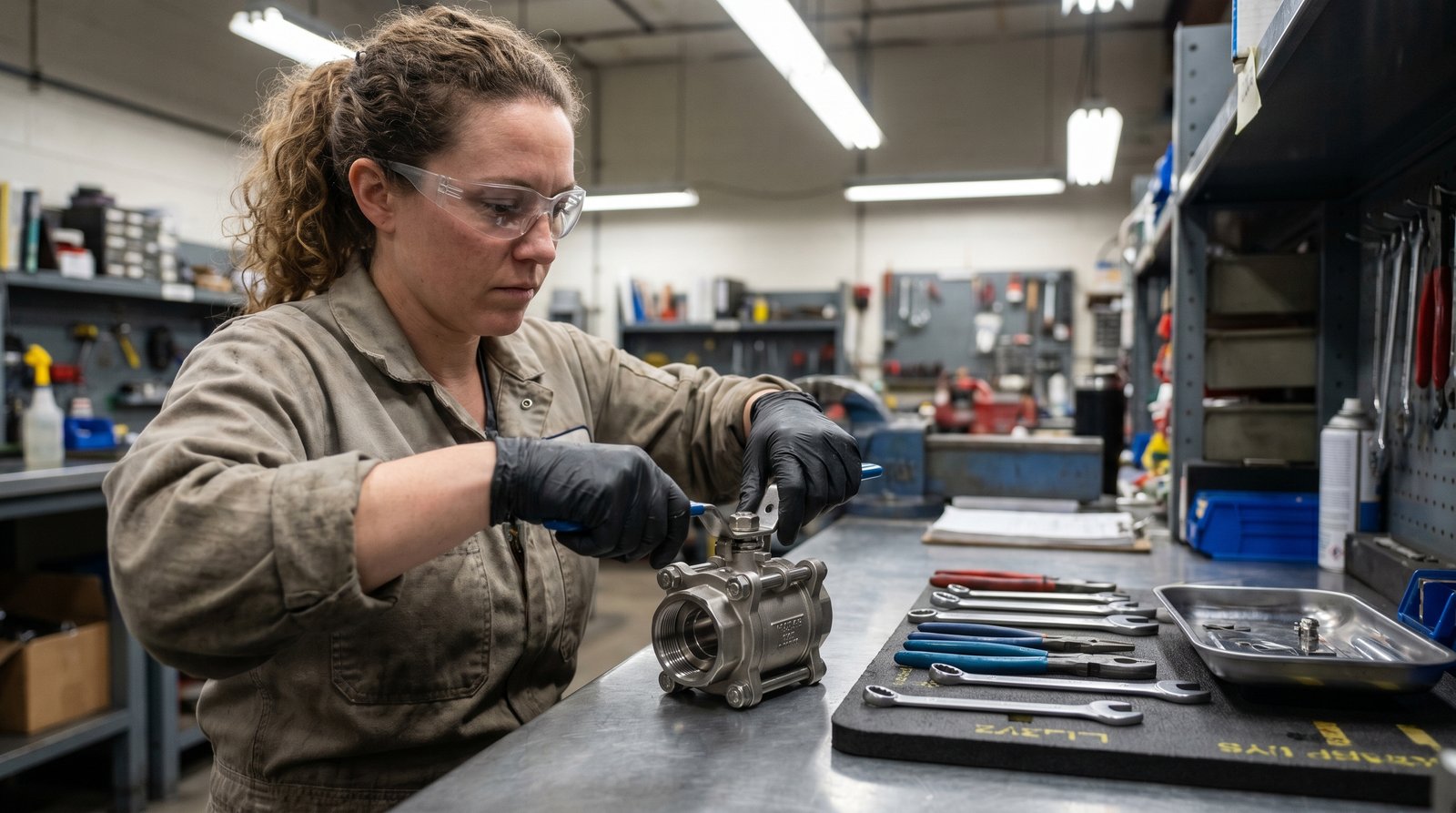
Critical service: full rebuild on a 24-month cycle. Three-piece configuration makes this routine — drop the center section, replace seats and seals, return to service in under an hour.
General isolation duty: seat inspection annually. Replace at signs of erosion or leak.
Sample and instrument lines: visual inspection at every system shutdown. Replace at any visible damage.
Critical-systems checklist
- Three-piece body for in-line serviceability
- 316L stainless minimum for general service
- Full-port for any line that must be pigged or that carries solids
- PEEK seats for high-temperature service
- ISO 5211 actuator mount for any automated valve
- Fire-safe certification (API 607) for hydrocarbon service
- Lockout/tagout provisions on every shutoff
Frequently asked questions
Is a ball valve good for throttling?
No. Throttling a ball valve causes cavitation that pits the ball and erodes the seat. Use a needle valve or a control valve for throttle duty.
What is the difference between full-port and reduced-port ball valves?
Full-port matches the bore of the line — no pressure drop, no flow restriction. Reduced-port has a smaller bore, which lowers cost and weight but adds pressure drop.
How long does a ball valve typically last?
A correctly specified ball valve handles 100,000+ cycles before requiring seat replacement. Wrong seat material, wrong seat geometry, or throttle duty drops that number fast.
What seat material handles steam service?
Metal seats handle most steam service. PEEK seats are rated to 500°F and cover saturated steam at lower pressures. PTFE will not survive sustained steam exposure.
Can I use a brass ball valve on chemical service?
Only if the chemical is verified compatible with brass. Most chemical process fluids attack brass. Default to 316L stainless and verify against a material compatibility chart.
What is a fire-safe ball valve?
A fire-safe ball valve is certified to API 607 or API 6FA. It maintains seal integrity through an external fire event using a secondary metal seat that engages when the primary seat burns away.
How fast can Collins-Oliver ship ball valves?
Same-day pickup at our Baton Rouge facility on in-stock items. Nationwide shipping with no minimum order. We carry 130+ Swagelok and 40+ Parker SKUs in stainless and brass.
What is the difference between WOG and CWP ratings?
WOG (Water, Oil, Gas) is the cold non-shock pressure rating for general service. CWP (Cold Working Pressure) is the same concept under a different name. Both apply at ambient temperature. High-temperature service derates the published number.
Need ball valves shipped today? Call Collins-Oliver or browse our valve inventory. Swagelok, Parker, Hoke — same-day pickup, no minimum order.