
TL;DR
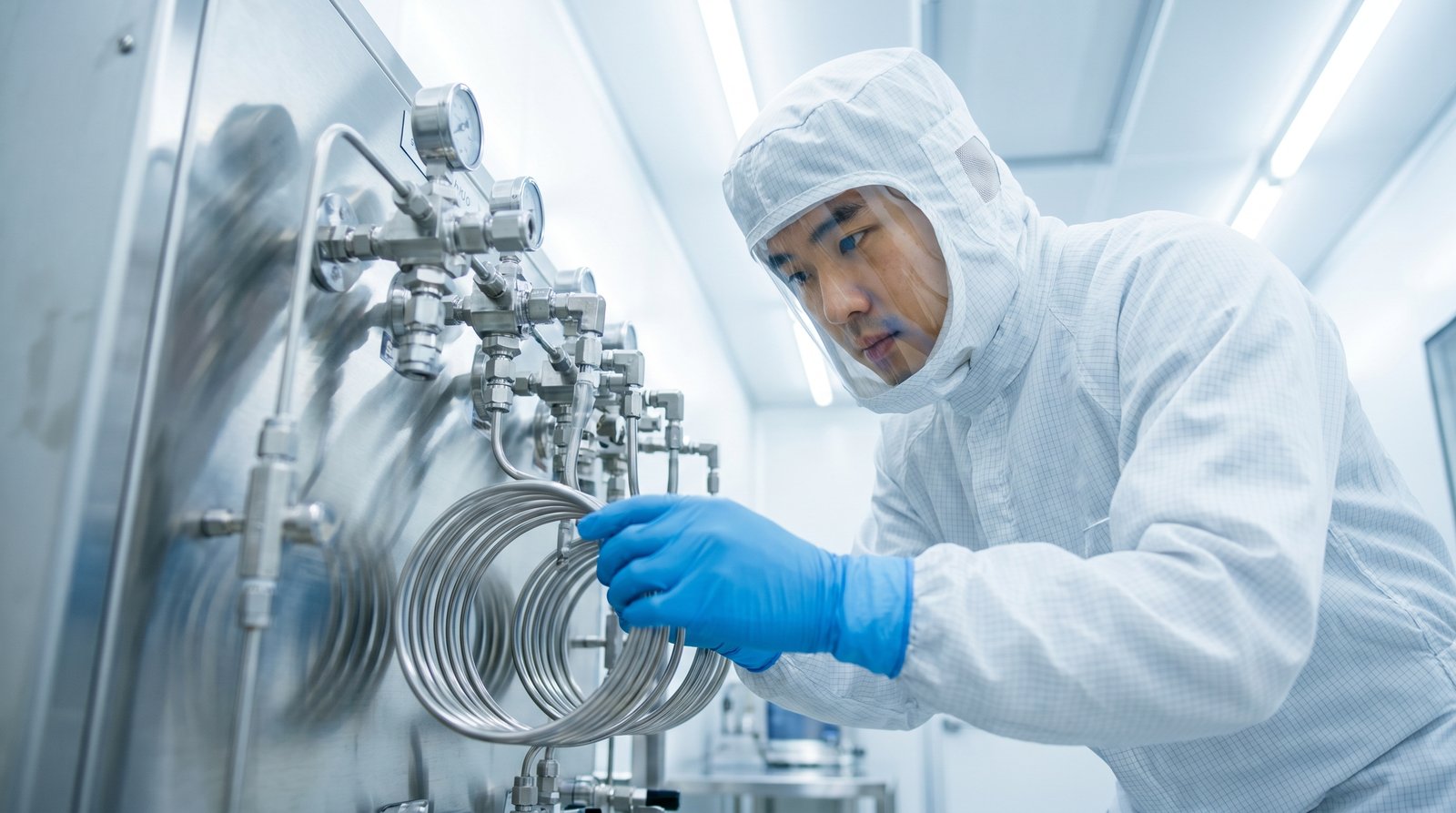
- Semiconductor fabs run on ultra-high-purity gas delivery. The fittings that connect those lines must contribute zero particulates and zero outgassing.
- VCR (metal gasket face seal) and VCO (o-ring face seal) dominate UHP service. Both are designed to leak rates of 4 x 10⁻⁹ std cm3/sec helium or lower.
- 316L electropolished tubing pairs with VCR fittings on toxic and corrosive gas lines. 316L mechanically polished pairs with VCO on non-critical gas runs.
- Collins-Oliver carries Swagelok and Parker UHP fittings with the certifications semiconductor procurement teams require.
- The category is unforgiving — wrong gasket material, wrong surface finish, or wrong leak rate, and the entire deposition chamber gets contaminated.
Why ultra-high-purity tube fittings are their own category
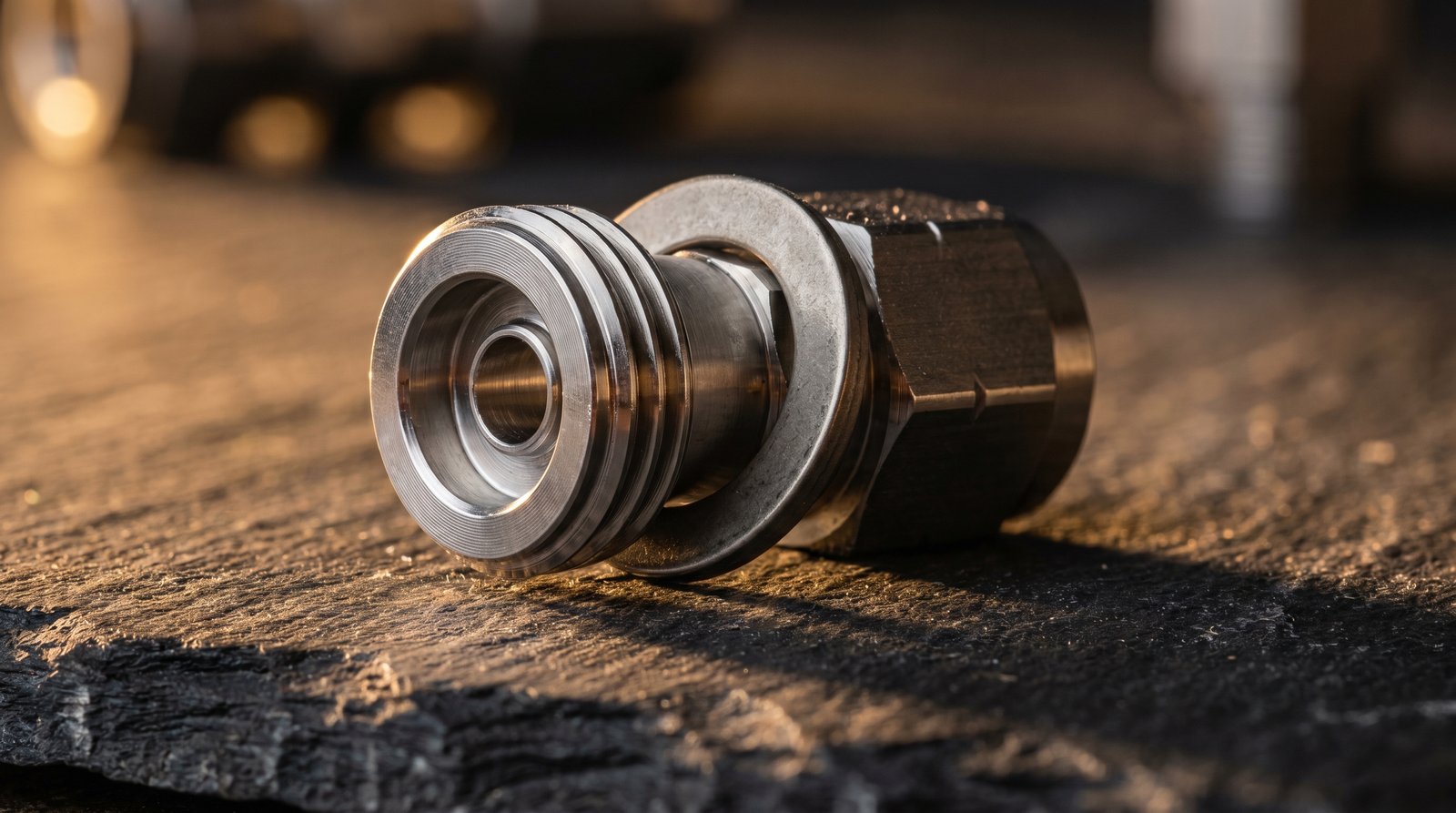
A standard compression fitting seals against pressure. A UHP fitting seals against pressure AND prevents outboard contamination from entering AND prevents inboard particulates from generating. The performance gap is enormous. A standard 316L compression fitting passes a hydrocarbon pressure test at 6,000 psi. A UHP VCR passes that same pressure test AND holds a helium leak rate of 1 x 10⁻⁹ std cm3/sec at the same time.
The difference shows up in the price tag and the supply chain. A standard 1/4″ Swagelok stainless union runs $20-40. A 1/4″ VCR fitting set with gasket runs $50-150. The cost is real and the reason is real.
VCR vs VCO — when each fits
- VCR (Vacuum Coupling Radiation): Metal gasket face seal. Each fitting body has a polished sealing surface. A nickel or stainless gasket sits between two glands. Tightening drives the gland faces into the gasket, deforming it for an inert metal-to-metal seal.
- VCR handles toxic, corrosive, and pyrophoric gas service: silane, ammonia, arsine, chlorine, hydrogen chloride. The metal gasket does not outgas, swell, or extrude.
- VCO (Vacuum Coupling Off): O-ring face seal. Polished gland with an elastomer (Viton, Buna-N, Kalrez) o-ring. Lower cost than VCR, slightly higher leak rate.
- VCO handles cleaner gas services: nitrogen, helium, argon, oxygen, dry process air. Where the gas is non-corrosive and elastomer compatibility checks out.
Surface finish — the specification line that often gets cut
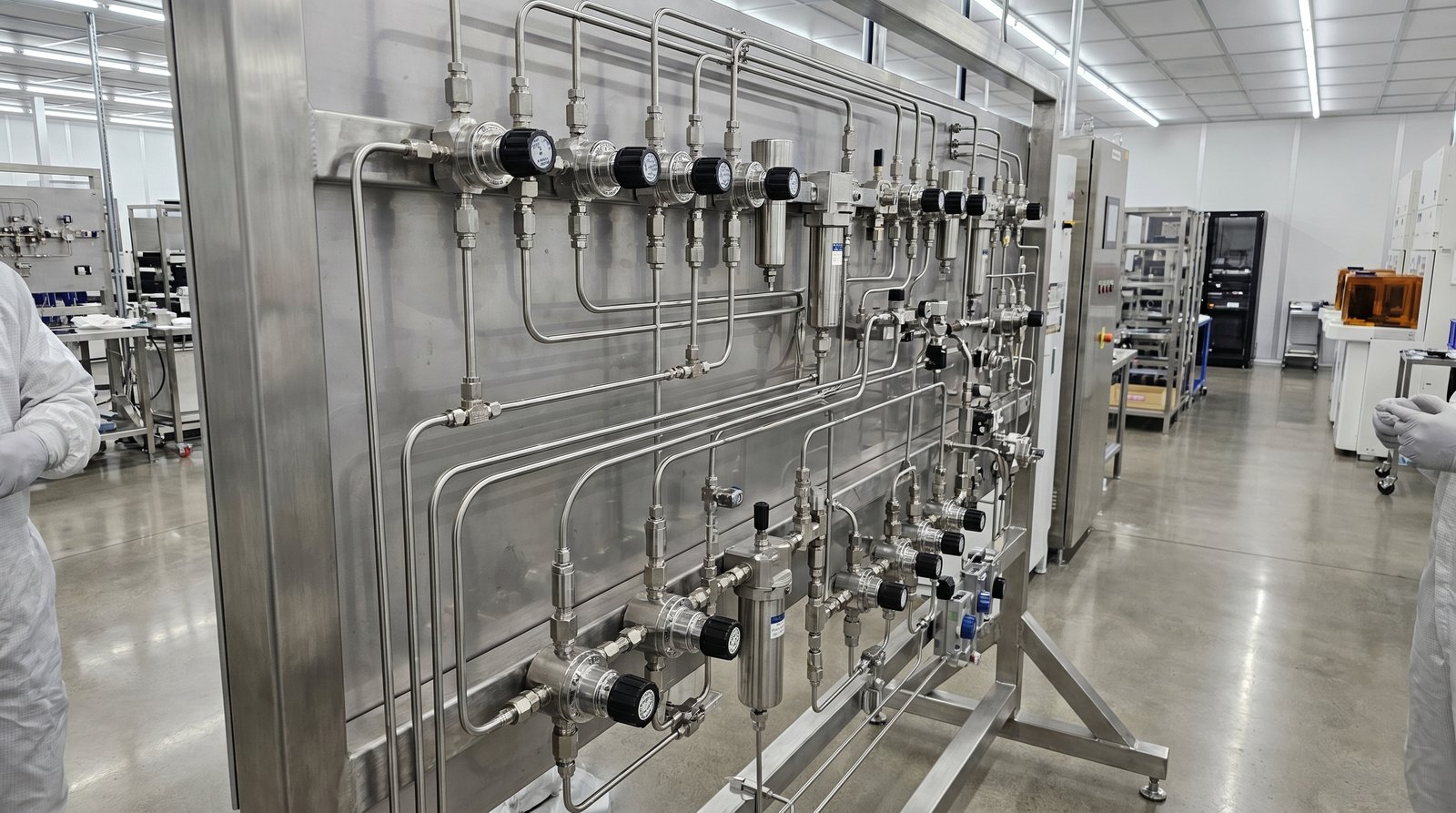
UHP tubing carries a surface finish specification. The two common scales are average roughness (Ra) in microinches, and maximum peak-to-valley. Standard semiconductor service runs 5 Ra electropolished. Critical chambers run 3 Ra or finer. Skipping the spec, or accepting a lower finish to save lead time, ends in particulate counts that fail tool qualification.
- Standard EP (5 Ra max): Most semiconductor process gas delivery.
- Premium EP (3 Ra max): Critical deposition lines and high-purity bulk specialty gas.
- Mechanical polish (10-15 Ra): Non-critical bulk gas, breathing air, instrument air.
Tube specification for UHP service
- Grade: 316L stainless, low-sulfur (S ≤ 0.005%) for orbital welding.
- Finish: Electropolished to 5 Ra or 3 Ra depending on service criticality.
- Cleanliness: Documented particulate count, hydrocarbon residue under detection limit, moisture below 10 ppb.
- Packaging: Sealed end-caps, double-bagged in Class 10 cleanroom-compatible packaging.
- Certification: Mill cert with surface-finish measurement, helium leak rate, and lot traceability.
Gasket selection for VCR
- Nickel 200: Default for most semiconductor gas service. Soft, deforms cleanly, single-use.
- 316L stainless: Reusable gasket option for less-critical service.
- Silver-plated stainless: Used in some high-temperature applications.
- Copper: Specialty service only. Outgasses under high vacuum.
Most semiconductor procurement specs single-use nickel and rotates gaskets on every break. Reusing a nickel VCR gasket compromises the leak rate.
Industries served beyond chip fabrication
- Pharmaceutical: Sterile compressed-gas distribution, fermentation gas delivery, oxygen and nitrogen on bioreactors.
- Specialty gas industry: Cylinder filling, bulk gas distribution, high-purity laboratory supply.
- Solar manufacturing: Silane and dopant gas delivery to PECVD systems.
- Aerospace: Propellant test stands, high-purity inert gas distribution.
- Medical device manufacturing: Ethylene oxide sterilization lines, calibration gas to validation rigs.
- Research laboratories: Mass spectrometer carrier gas, vacuum chamber test rigs, calibration standard delivery.
Common mistakes that contaminate UHP systems
- Mixing surface finishes in one line. A 5 Ra tube run with a 10 Ra fitting creates a particulate trap. Match the finish at every component.
- Reusing VCR gaskets. Nickel takes its set on first use. Second use does not seal at UHP leak rates.
- Wrong torque on the VCR nut. Over-torque deforms the gasket past its working range. Under-torque leaves a gap. Use a torque wrench, not feel.
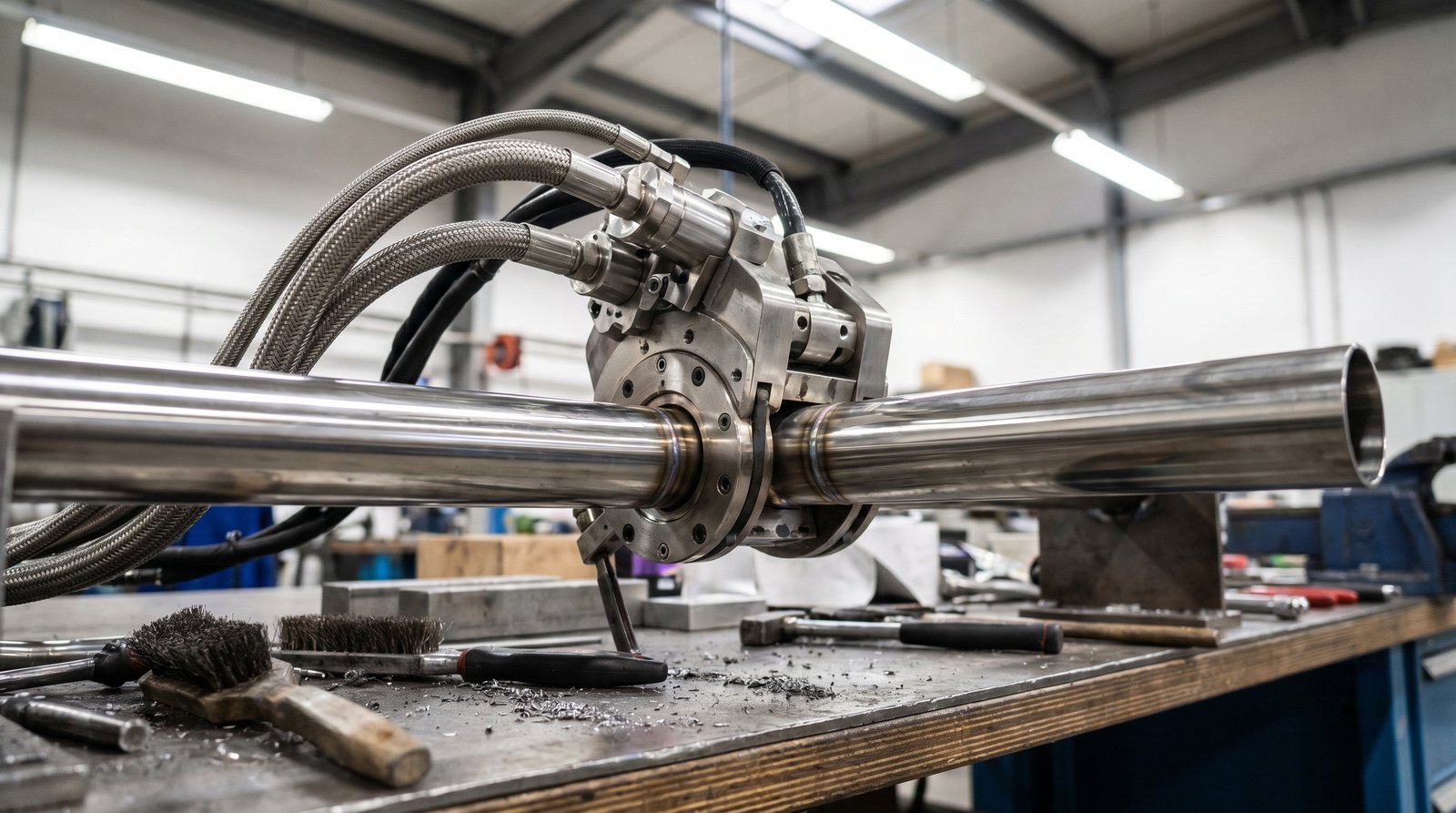
- Welding without purge gas. Atmospheric weld on UHP tubing oxidizes the interior. Orbital welds with argon purge are standard.
- Skipping the leak test. Every joint gets a helium leak check before service. Pressure test only proves the line holds pressure — it does not prove the line is clean.
Procurement checklist
- Brand spec confirmed at the order line
- Surface finish (Ra) specified for tubing and fittings
- Mill certifications requested for all components
- Gasket material identified (nickel, stainless, copper)
- Cleanroom packaging specified on the purchase order
- Helium leak rate documented per lot
- Traceability from mill to delivery confirmed
Frequently asked questions
What is a VCR fitting?
VCR is a metal-gasket face-seal fitting designed for ultra-high-purity gas service. Two polished gland faces clamp a soft metal gasket. The metal-to-metal seal achieves helium leak rates below 4 x 10⁻⁹ std cm3/sec.
What is the difference between VCR and VCO?
VCR uses a metal gasket (typically nickel). VCO uses an elastomer o-ring. VCR handles aggressive and toxic gases. VCO covers cleaner non-corrosive service at lower cost.
Can VCR gaskets be reused?
Nickel VCR gaskets are designed for single use. Reuse compromises the seal at UHP leak rates. Stainless gaskets are sometimes reused in less critical service.
What surface finish do semiconductor lines require?
Most process lines call for 5 Ra electropolished. Critical deposition lines step to 3 Ra. Non-critical bulk gas runs 10-15 Ra mechanical polish.
Can I weld UHP tubing without purge gas?
No. Atmospheric welding oxidizes the interior surface and contaminates the line. Orbital welding with continuous argon purge is the industry standard.
Which brand should I specify for semiconductor service?
Swagelok dominates U.S. semiconductor specifications. Parker covers similar territory at competitive pricing. Specialty UHP suppliers (Fujikin, Tylok, SAES) cover niche services.
What is the helium leak rate for a properly installed VCR?
Below 4 x 10⁻⁹ std cm3/sec. Verify per joint after installation using a helium leak detector. Anything above this rate indicates a contamination path into the line.
How fast can Collins-Oliver ship UHP fittings?
Same-day pickup at our Baton Rouge facility on in-stock items. UHP fittings ship in cleanroom packaging with certifications. Specialty finishes and exotic gaskets ship within 2-5 days from depot stock.

Need UHP tube fittings today? Call Collins-Oliver or browse our tube-fitting catalog. Swagelok and Parker VCR, VCO, and orbital-weld UHP components — same-day pickup, no minimum order.