
TL;DR
- Quick-connects join or separate a line by hand with no tools.
- Types include full-flow, single-shutoff (valved), and double-shutoff.
- Choose the body material (316 stainless or brass) and seal for your media.
- Confirm the coupling's pressure and temperature rating separately from the fitting.
Quick-connect couplings for instrumentation let you make and break a line in seconds, without wrenches and without draining a whole loop. You push, you twist or sleeve back, and you are connected. On calibration carts, sample panels, and portable analyzers, that speed pays you back every shift. This reference walks you through coupling types, shut-off styles, seal materials, sizing, and the pressure and temperature numbers that decide which coupling fits your application. Read it before you specify, then call Collins-Oliver for the exact part.
What Is a Quick-Connect Coupling and How Does It Work?
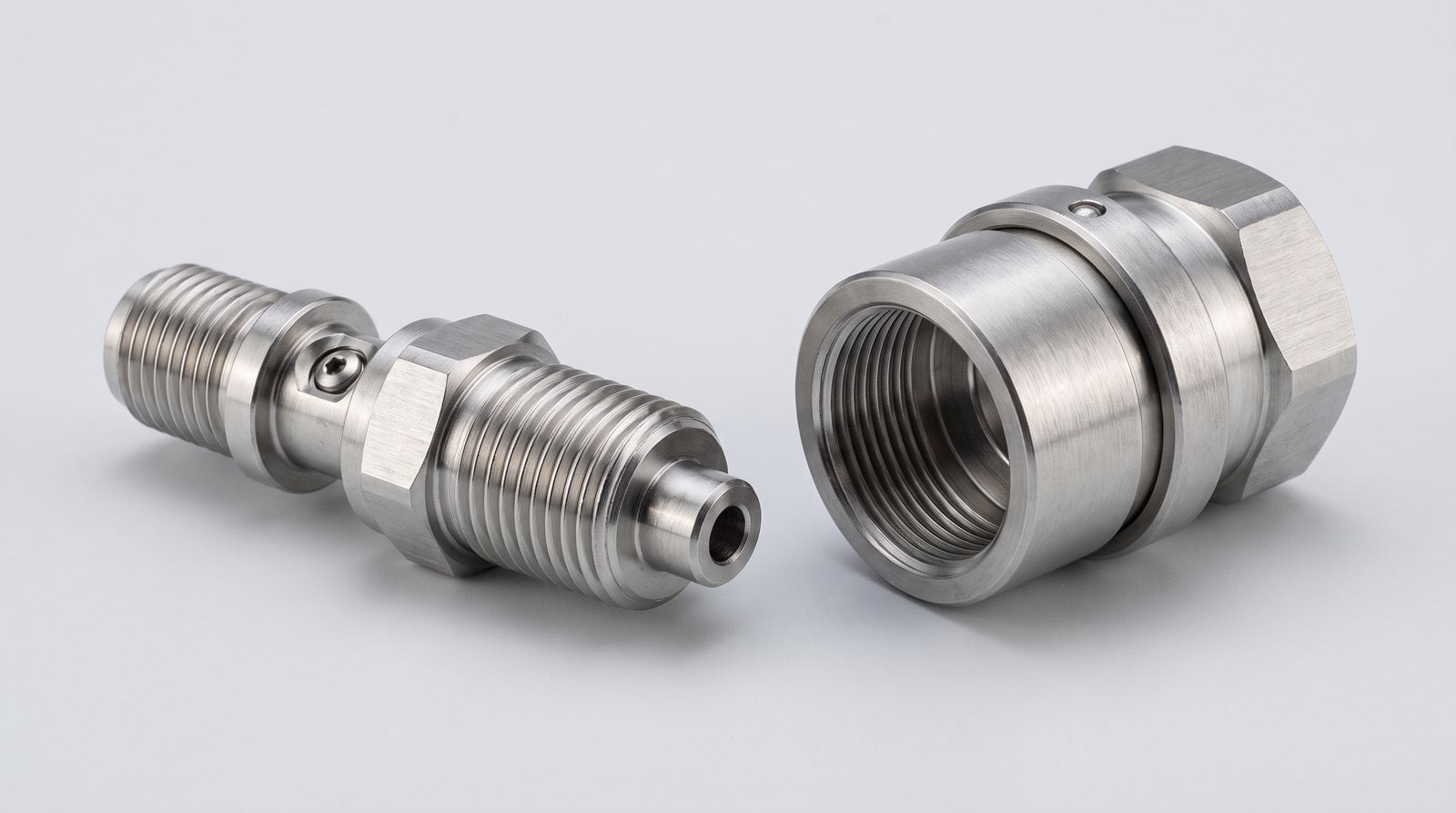
A quick-connect coupling is a two-piece fitting: a body (the socket) and a stem (the plug or nipple). Push the stem into the body and a ring of locking balls or a collet grips a groove on the stem. A sleeve or collar holds that grip. Pull the sleeve back and the stem releases. You get a repeatable, tool-free connection that keeps your line clean and your hands free.
Most instrument-grade couplings add valves inside one or both halves. Those internal valves are what separate a serious coupling from a garden-hose fitting. They control whether your media escapes when you disconnect, and they decide how much air you trap when you reconnect.
What Are the Main Types of Quick-Connect Couplings?
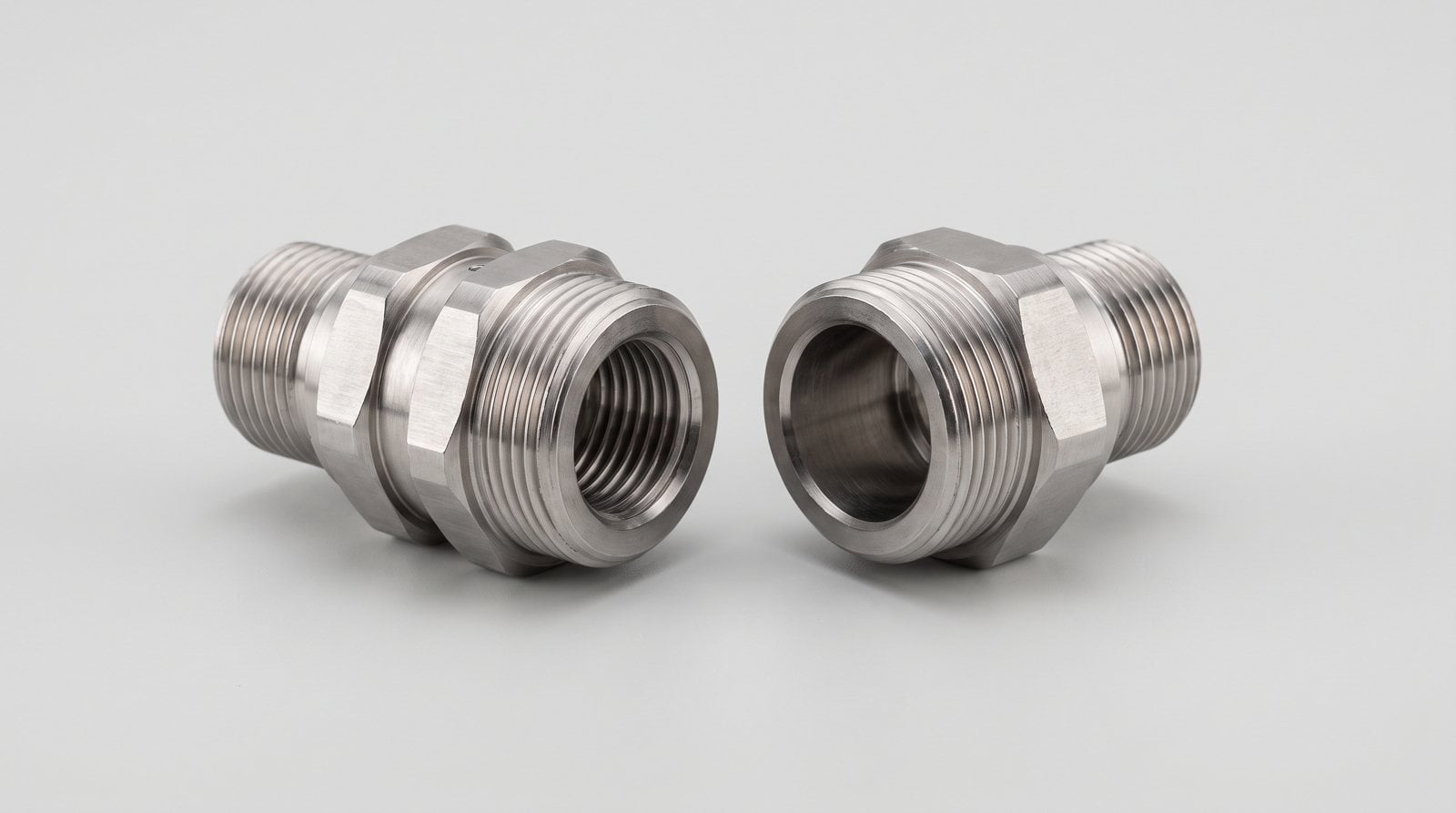
Couplings are grouped by their shut-off behavior. Pick the shut-off first, because it drives spill, air inclusion, and safety. Here is how the common styles compare.
| Shut-off style | How it seals | Spill on disconnect | Air inclusion on connect | Best for |
|---|---|---|---|---|
| Double end-shutoff | Valves in both body and stem | Very low | Low | Gas sampling, analyzers, costly or hazardous media |
| Single end-shutoff | Valve in one half only | Moderate | Moderate | Drain lines, non-critical liquid transfer |
| Full-flow (straight-through) | No internal valve | High (line must be depressurized) | None | Maximum flow, low pressure drop, dead-headed lines |
| Flush-face (flat-face) | Flat mating valves | Near zero | Near zero | Clean systems, hydraulics, spill-sensitive fluids |
For instrumentation, double end-shutoff and flush-face designs win most of the time. They protect your sample integrity and keep your bench clean. Full-flow couplings still earn a place where you want the lowest possible pressure drop and you control depressurization upstream.
Which Materials and Seals Should You Choose?
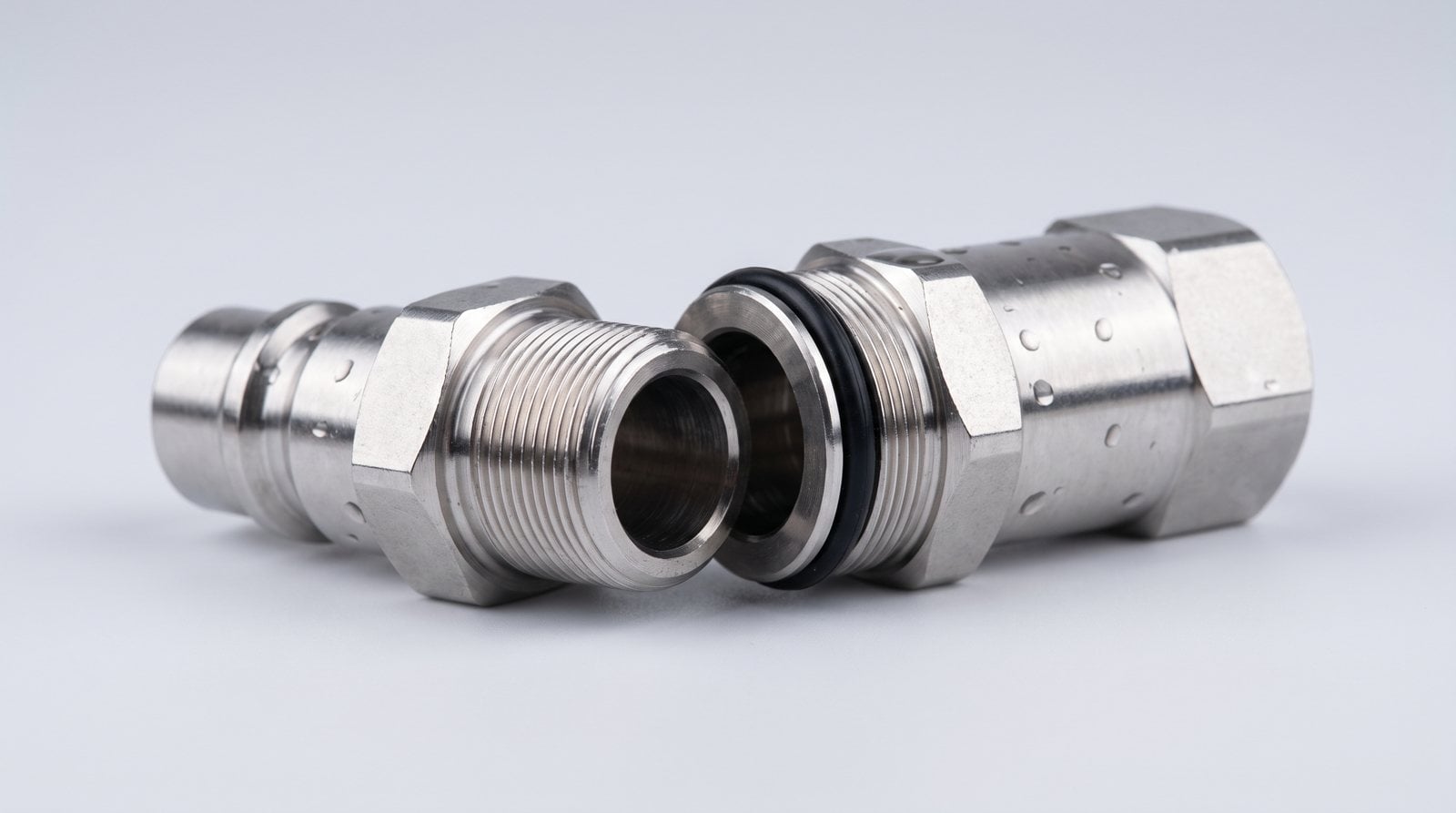
Your media picks your metal and your seal. Match both to the fluid, the temperature, and the corrosion you expect. Guessing here costs you leaks and rework.
- 316 stainless steel: your default for corrosive media, refinery service, and marine or coastal air. Strong, weldable, and forgiving.
- Brass: economical for shop air, water, and mild fluids. Do not put it near chlorides or aggressive chemicals.
- Nickel-plated brass: adds corrosion protection over a brass body for cleaner cosmetics and light-duty chemical exposure.
Seal choice is just as decisive. Fluorocarbon (FKM) handles a wide chemical and temperature range. Nitrile (Buna-N) fits general oil and water service at lower cost. EPDM suits steam and hot water. PTFE and perfluoroelastomer (FFKM) step in for aggressive chemistry and high heat. Confirm the seal against your media before you order. When the fluid is unusual, call Collins-Oliver with your application and let the team match the elastomer.
How Do You Size a Quick-Connect Coupling?
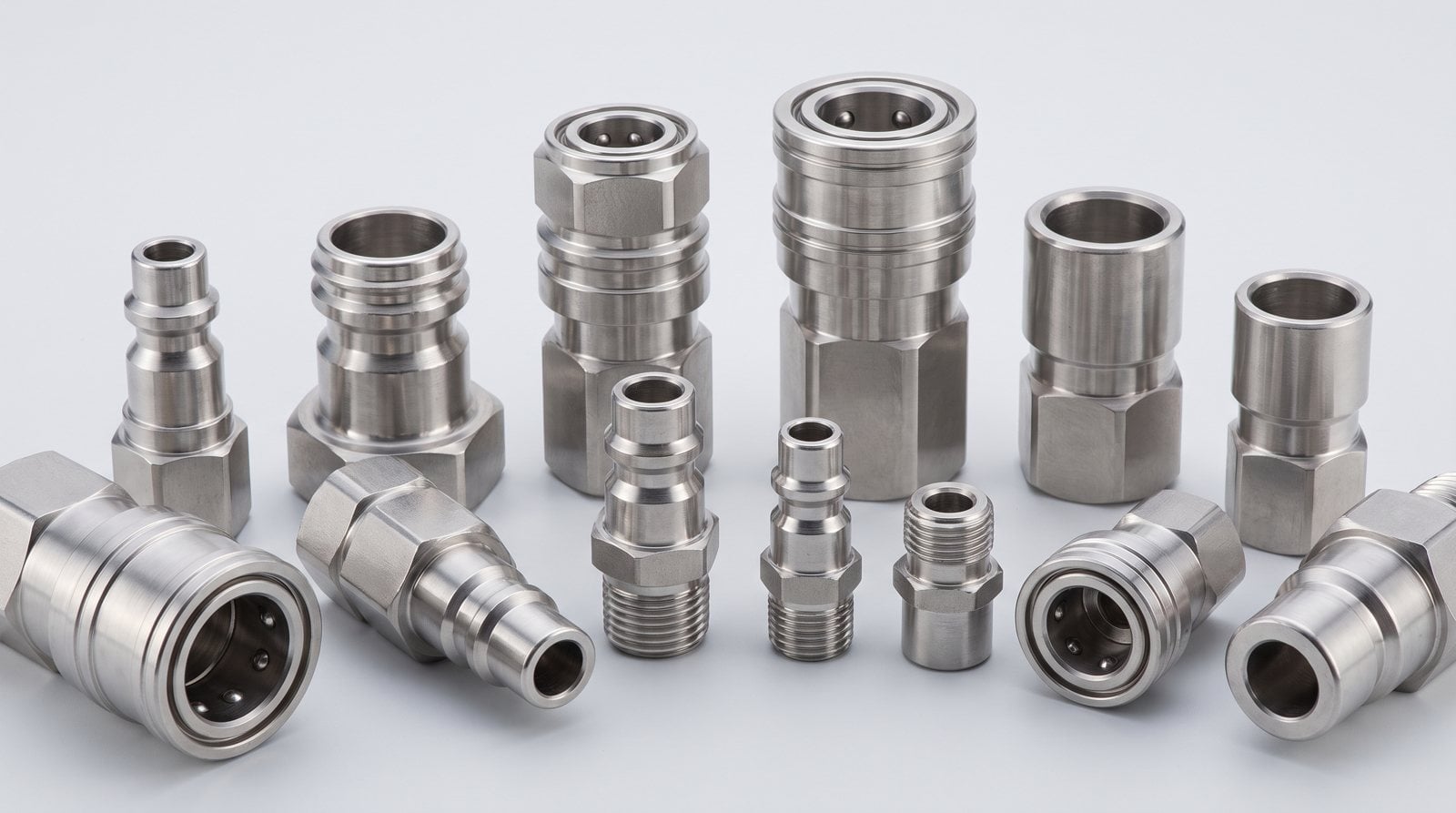
Size the coupling to the flow you need, not just to the tube you happen to have. An undersized coupling chokes your line and adds pressure drop you will feel downstream. Work through these steps.
- Nominal size: match the coupling body size to your line size, commonly 1/8 in., 1/4 in., 3/8 in., or 1/2 in.
- End connection: choose how the coupling ties into your system. Options include instrumentation tube fitting ends, NPT male or female, and hose barbs.
- Flow capacity: check the manufacturer flow coefficient (Cv) so the coupling does not become the bottleneck.
- Pressure and temperature: confirm the rated pressure at your operating temperature, because ratings drop as temperature climbs.
What Pressure and Temperature Ratings Apply?
Ratings vary widely by series, material, and seal, so always read the current manufacturer catalog for your exact model. As a planning guide, many instrument-grade stainless quick-connects serve vacuum through several thousand psi, and elastomer seals commonly cover roughly minus 10 degrees F to 400 degrees F depending on compound. Those are ballpark envelopes, not a promise for your part. For the certified rating on the coupling you plan to buy, call Collins-Oliver and confirm the number against your working conditions.
Quick-Connect vs Permanent Fittings: When Does Each Win?
Choose a quick-connect when you connect and disconnect often: calibration, sampling, portable equipment, and test stands. Choose a permanent tube fitting when the joint is set-and-forget and you want the lowest leak risk over years of service. Many panels use both, quick-connects at the interface and permanent fittings inside the assembly. Build for how the line actually gets used.
For related products, browse our tube fittings or explore more in our resource library.
Frequently Asked Questions
Are quick-connect couplings leak-tight enough for gas sampling?
Yes, when you pick a double end-shutoff or flush-face design in 316 stainless with the right seal. Those styles minimize spill and air inclusion, which protects sample integrity. Confirm the rating for your pressure and media before you install.
Can I mix brands of quick-connect couplings?
No. Bodies and stems are engineered as matched pairs. A stem from one series rarely seals or locks correctly in another brand body. Keep both halves from the same manufacturer and series.
What is the difference between single and double end-shutoff?
Double end-shutoff puts a valve in both halves, so both sides seal on disconnect and spill stays very low. Single end-shutoff valves only one half, which lets the unvalved side drain. Use double end-shutoff for hazardous or costly media.
Do quick-connect couplings need Teflon tape?
Only on tapered pipe-thread ends such as NPT. The quick-connect action itself seals with internal valves and O-rings, so it needs no tape. Follow the maker's thread-sealant guidance for the pipe end.
How do I know which coupling fits my instrument line?
Start with your media, pressure, temperature, and end connection, then match shut-off style and seal. Send those details to Collins-Oliver and the team will spec the exact coupling for your system.
Get the Right Coupling, Call Collins-Oliver
Collins-Oliver is your authorized DK-LOK distributor in Baton Rouge, Louisiana, stocking quick-connect couplings, tube fittings, valves, and stainless tubing for refineries, chemical plants, and instrumentation shops across the Gulf Coast. Tell us your media, pressure, and connection and we will match the coupling to your application. Call (225) 922-9324 or (800) 247-5756, email info@collins-oliver.com, or request a quote today.