
TL;DR
- A hose assembly pairs a flexible hose (PTFE, metal, or rubber core) with end fittings.
- Common ends are tube-fitting, male or female NPT, and 37-degree flare.
- Order factory-assembled, pressure-tested hoses rather than field-building your own.
- Size by hose ID, working pressure, media, and temperature.
A hose assembly is only as good as the fittings crimped on its ends. This guide to hose fittings and assemblies breaks down the hose types you run in a plant, the end connections that mate them to your system, and the STAMPED method that gets you a safe, correct assembly the first time. Flexible hose absorbs vibration, spans movement, and connects points that rigid tube cannot. Spec it wrong and you get leaks, blow-offs, and downtime. Below you get the reference you need. When your service is severe, call for your application.
What Types of Hose Do You Use in Instrumentation and Process Service?
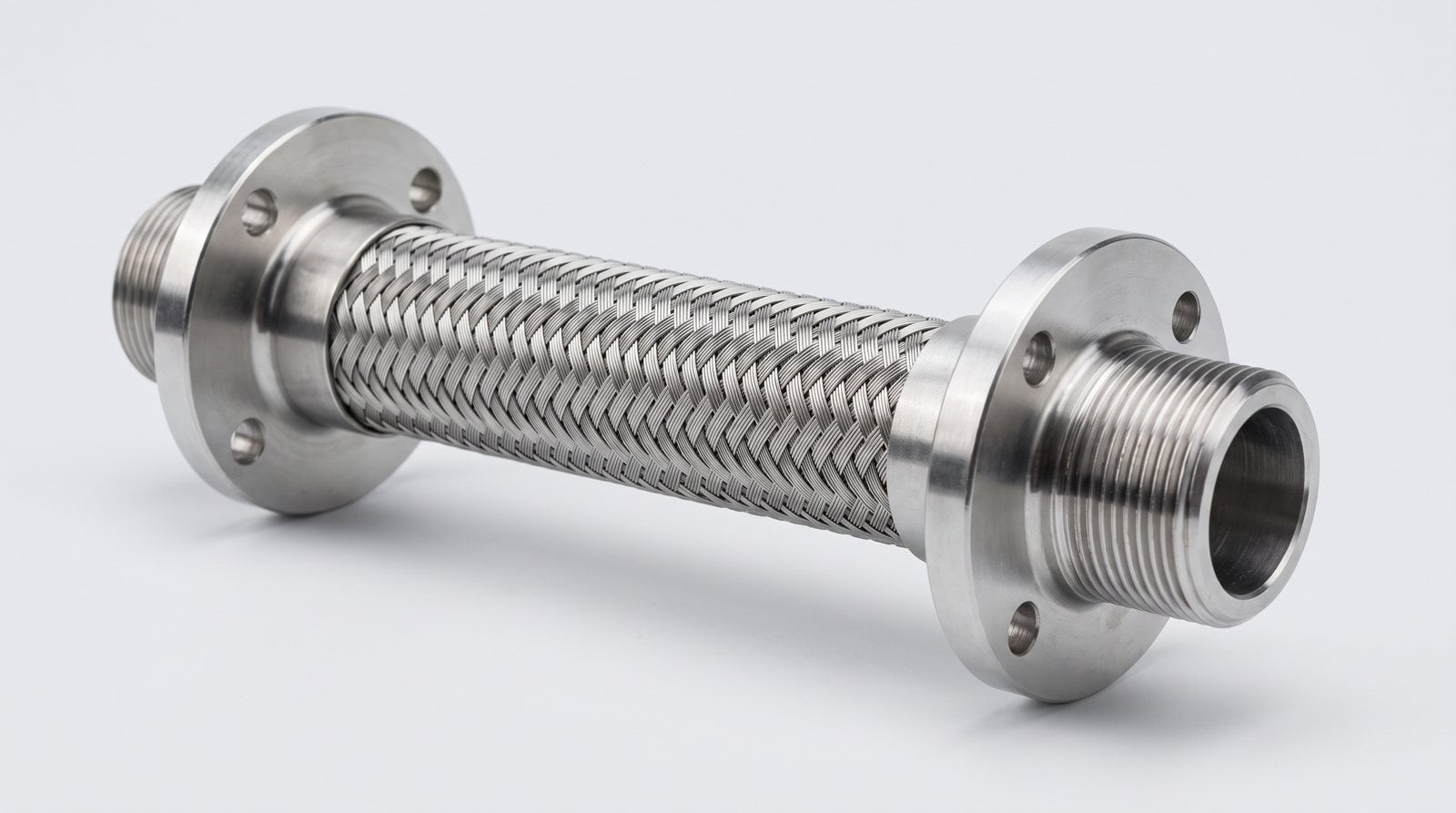
Hose construction sets the pressure, the media, and the temperature the assembly can take. Here are the common families you meet in refinery, chemical, and utility work.
| Hose type | Construction | Best for |
|---|---|---|
| PTFE (smooth or convoluted bore) | PTFE liner, stainless braid | Aggressive chemicals, steam, high purity, wide temperature |
| Metal (corrugated) | Corrugated stainless core, braid | High temperature, steam, cryogenic, tight bends |
| Rubber (industrial) | Elastomer tube, textile or wire reinforcement | Water, air, general fluid transfer |
| Thermoplastic / hydraulic | Thermoplastic or synthetic tube, wire braid | Hydraulic power, high pressure |
PTFE and corrugated metal hose carry most instrumentation and chemical service because they handle a wide temperature range and resist aggressive media. Match the liner to your chemical and the braid to your pressure.
What Are the Common Hose End Connections?
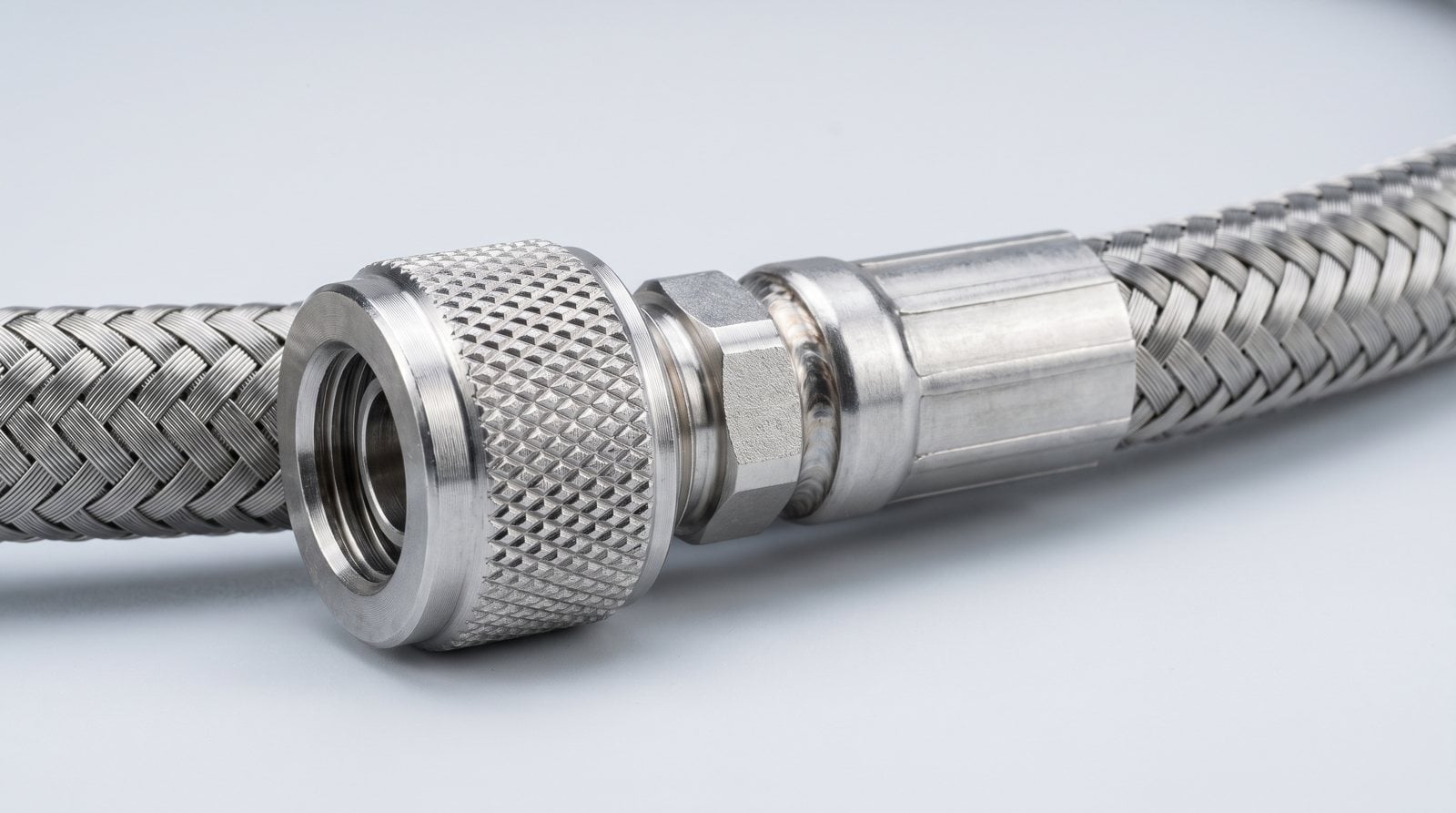
The end fitting mates the hose to your system, and it must match the port you connect to. Get the end type, the size, and the thread standard right, or the assembly will not seal.
- Tube-fitting ends: a twin-ferrule end (such as DK-LOK) that connects the hose straight into an instrument tubing run.
- NPT (male or female): taper pipe thread to ANSI/ASME B1.20.1, the North American standard.
- JIC 37-degree flare: a metal-to-metal flare seat common in hydraulic and instrument service.
- SAE straight thread / O-ring boss (ORB): a straight thread that seals on an O-ring, good for repeated make-and-break.
- Flange ends: bolted flanges for larger sizes and higher pressure.
- Sanitary / tri-clamp: quick-release clamp ends for hygienic and high-purity service.
- Quick-connect couplings: fast disconnect for utility and temporary hookups.
Ends can differ from one side of the hose to the other. A single assembly might carry an NPT end on one side and a tube-fitting end on the other. Specify each end separately.
How Do You Select a Hose Assembly?
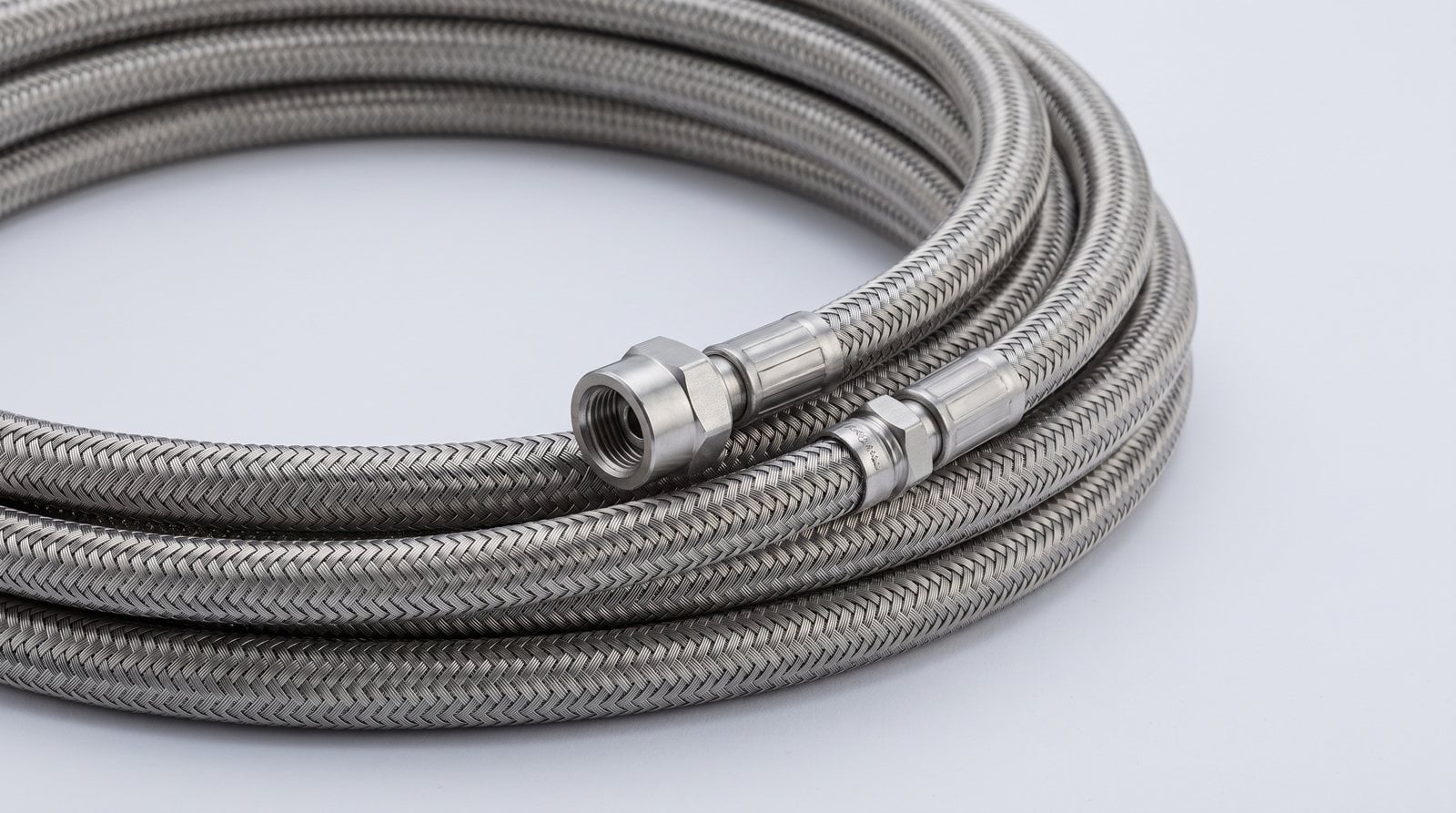
Use the STAMPED method. It is the industry checklist that captures every variable an assembly needs. Miss one and you risk a failure.
| Letter | Stands for | What to specify |
|---|---|---|
| S | Size | Inside diameter (for flow) and overall length |
| T | Temperature | Both media temperature and ambient temperature |
| A | Application | Routing, bend radius, motion, vibration |
| M | Media | The fluid or gas, and its concentration |
| P | Pressure | Working pressure and any surge or spikes |
| E | Ends | End type, size, and thread standard for each end |
| D | Delivery | Quantity, testing, tagging, and certification |
Two numbers deserve extra care. Never run a hose below its minimum bend radius, because a tight kink cuts life and can burst the hose. And always keep a safety factor between working pressure and burst pressure. We size that factor to your service. Send us your STAMPED details and we build the assembly.
Why Order a Factory-Assembled Hose Instead of Building Your Own?
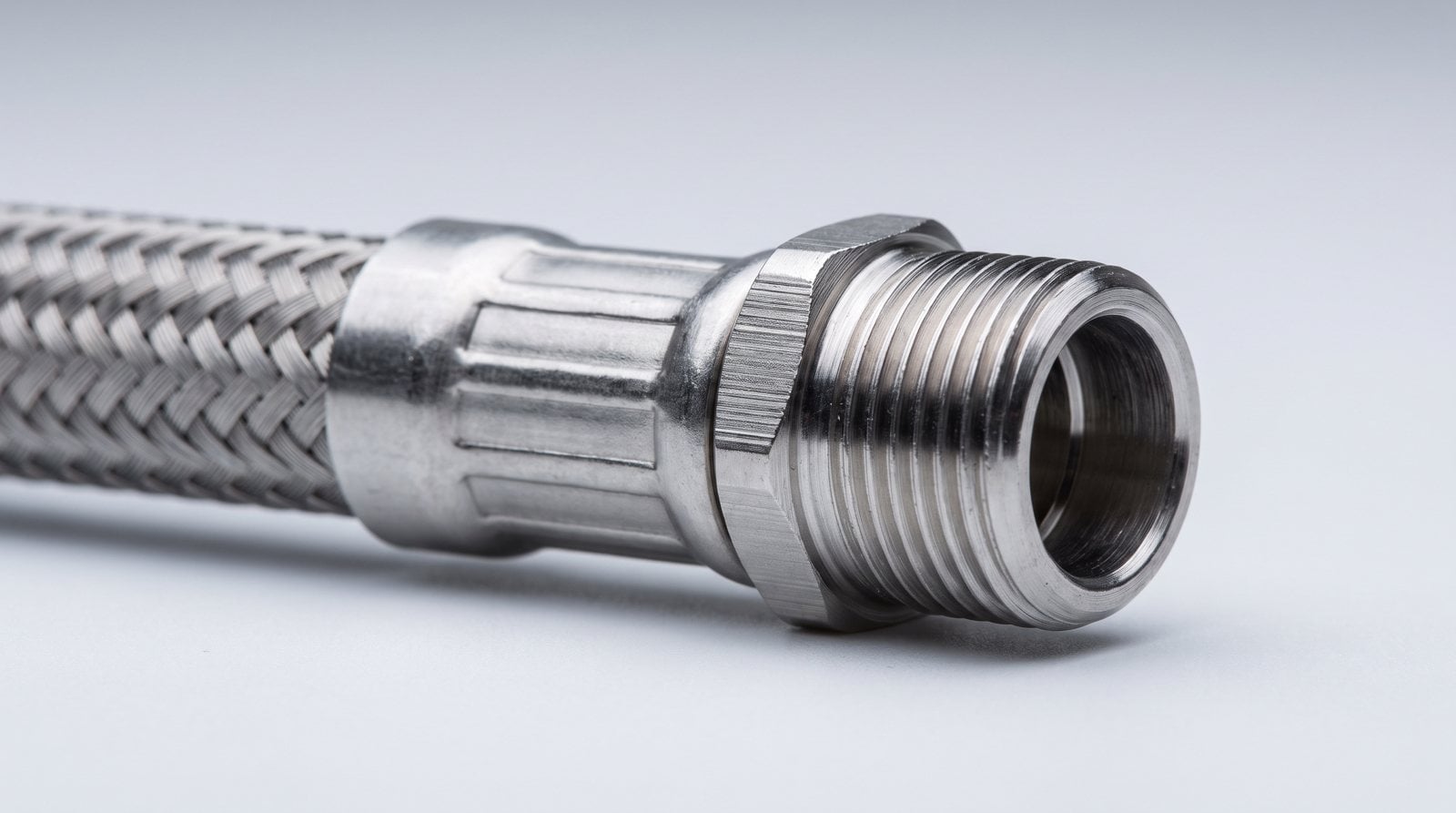
Crimping is not a place to guess. The fitting, the ferrule or collar, and the crimp diameter must match the exact hose so the connection holds its rated pressure. A properly built assembly is pressure-tested, tagged, and traceable, so you know it will perform and you can prove it during an audit. A field-built connection with the wrong crimp can blow off under pressure and hurt someone. Give us the hose type and the ends, and we deliver a tested assembly, not a gamble.
How Do You Maintain a Hose Assembly in Service?
A hose assembly is a wear part, so inspect it on a schedule. Look for cover cracks, blisters, kinks, corroded braid, and any weep at the crimp. Watch for a hose that has taken a set or twisted, because torsion cuts life fast. Keep hoses off hot surfaces and sharp edges, and support long runs so they do not sag into their own bend radius. When a hose reaches the end of its rated life or shows damage, replace the whole assembly, not just the fitting. A tested replacement costs far less than the leak, the cleanup, or the injury a failure brings. Tag each assembly with its install date so you track service life across the plant.
For related products, browse our fittings and assemblies or explore more in our resource library.
Frequently Asked Questions
What does STAMPED stand for in hose selection?
Size, Temperature, Application, Media, Pressure, Ends, and Delivery. It is the checklist that captures every variable a safe hose assembly needs.
Can a hose have different fittings on each end?
Yes. Many assemblies pair different ends, such as an NPT end and a tube-fitting end. Specify each end type, size, and thread separately.
What hose handles aggressive chemicals best?
PTFE-lined hose with stainless braid resists most aggressive chemicals and handles a wide temperature range. Corrugated metal hose suits high heat and steam.
What is minimum bend radius and why does it matter?
It is the tightest bend a hose tolerates without damage. Bend below it and you kink the hose, cut its life, and risk a burst. Always route within the rated radius.
Should I build my own hose assembly?
No. Crimp diameter and fitting must match the exact hose. A factory-built assembly is pressure-tested, tagged, and traceable. A wrong field crimp can blow off under pressure.
Order Tested Hose Assemblies from Collins-Oliver
Collins-Oliver is your authorized DK-LOK distributor in Baton Rouge, building and supplying hose assemblies for refineries, chemical plants, power generation, and utilities across the Gulf South since 1986. Send us your STAMPED details and we deliver a tested, tagged assembly. Call (225) 922-9324 or (800) 247-5756, or email info@collins-oliver.com for a quote.