TL;DR
- 316L stainless covers steam service up to about 800°F at moderate pressure. Above that, switch to Inconel 600 or 625.
- Carbide precipitation degrades standard 316 at sustained high temperature. The L grade slows it down. Inconel avoids it entirely.
- Pressure rating derates significantly with temperature. The ambient-temperature rating is not the service rating.
- Thermal cycling demands matched coefficients of expansion across body, ferrules, and tube.
- Specify the alloy by the service temperature, not by the cold pressure rating.
Why steam service punishes the wrong material
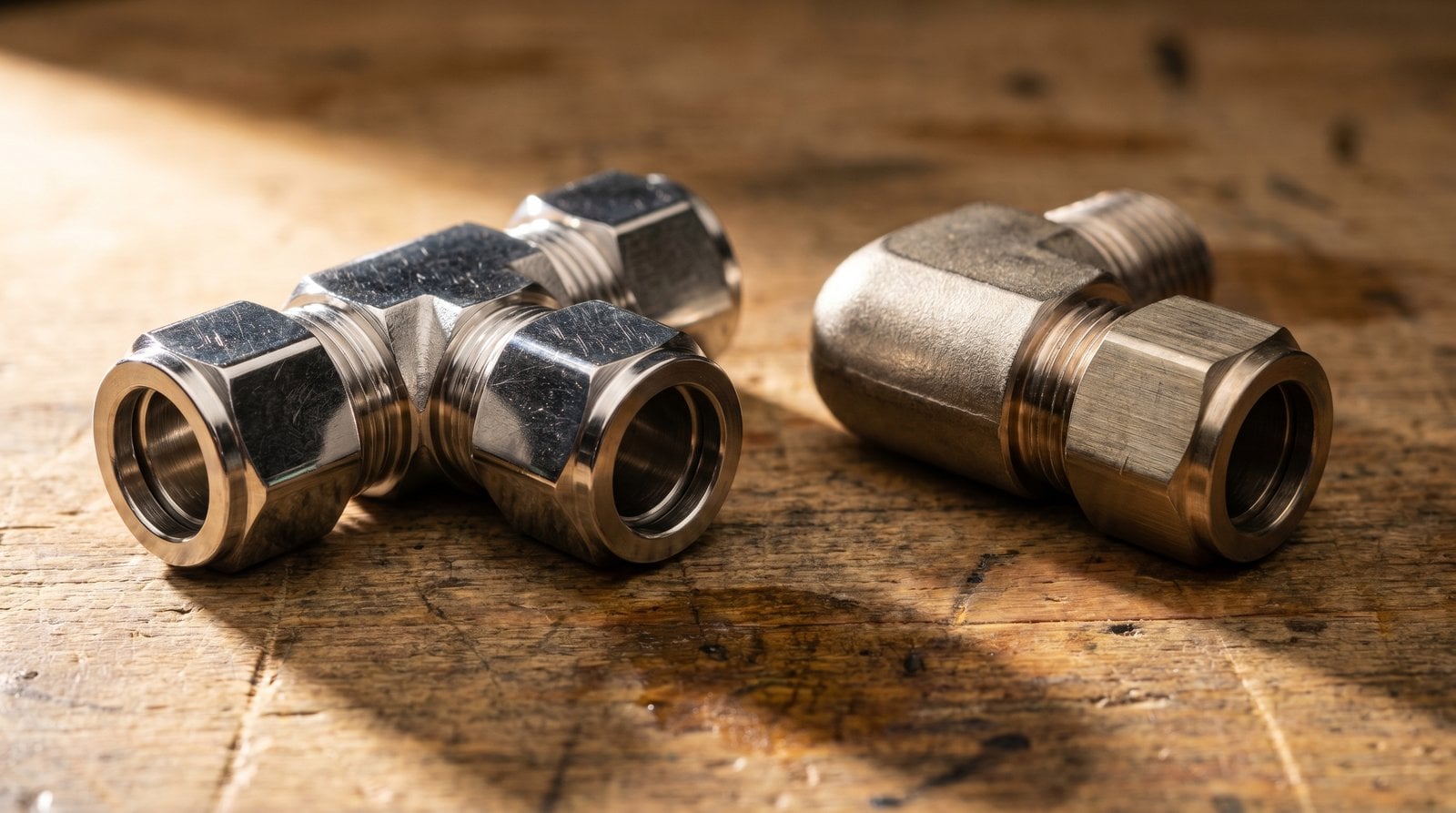
Steam combines high temperature, high pressure, and (usually) high cycle rate. Every alloy has limits on all three. Push past those limits and the failure mode is rarely a clean rupture — it is a slow degradation that ends in a leak, an outage, or worse.
The specific damage mechanisms depend on the alloy. Standard 316 stainless precipitates chromium carbides at the grain boundaries when held above 800°F for sustained periods. The chromium that left the grain boundary cannot resist corrosion. Within months or years, intergranular corrosion attacks the depleted region. The fitting cracks under pressure or vibration.
316L — where it works
- Saturated steam below 800°F
- Steam drum instrumentation lines (water and saturated steam)
- Condensate sampling and recovery lines
- Feedwater instrumentation
- Steam-turbine bearing-oil instrumentation
- Deaerator vent piping
316L’s low carbon (0.03% max) slows the carbide precipitation problem dramatically compared to standard 316 (0.08% max). The published continuous service rating runs to 1,200°F, but the pressure rating derates fast above 800°F. By 1,000°F, 316L is rated at roughly 60-70% of its ambient pressure rating.
Inconel — where it earns its cost
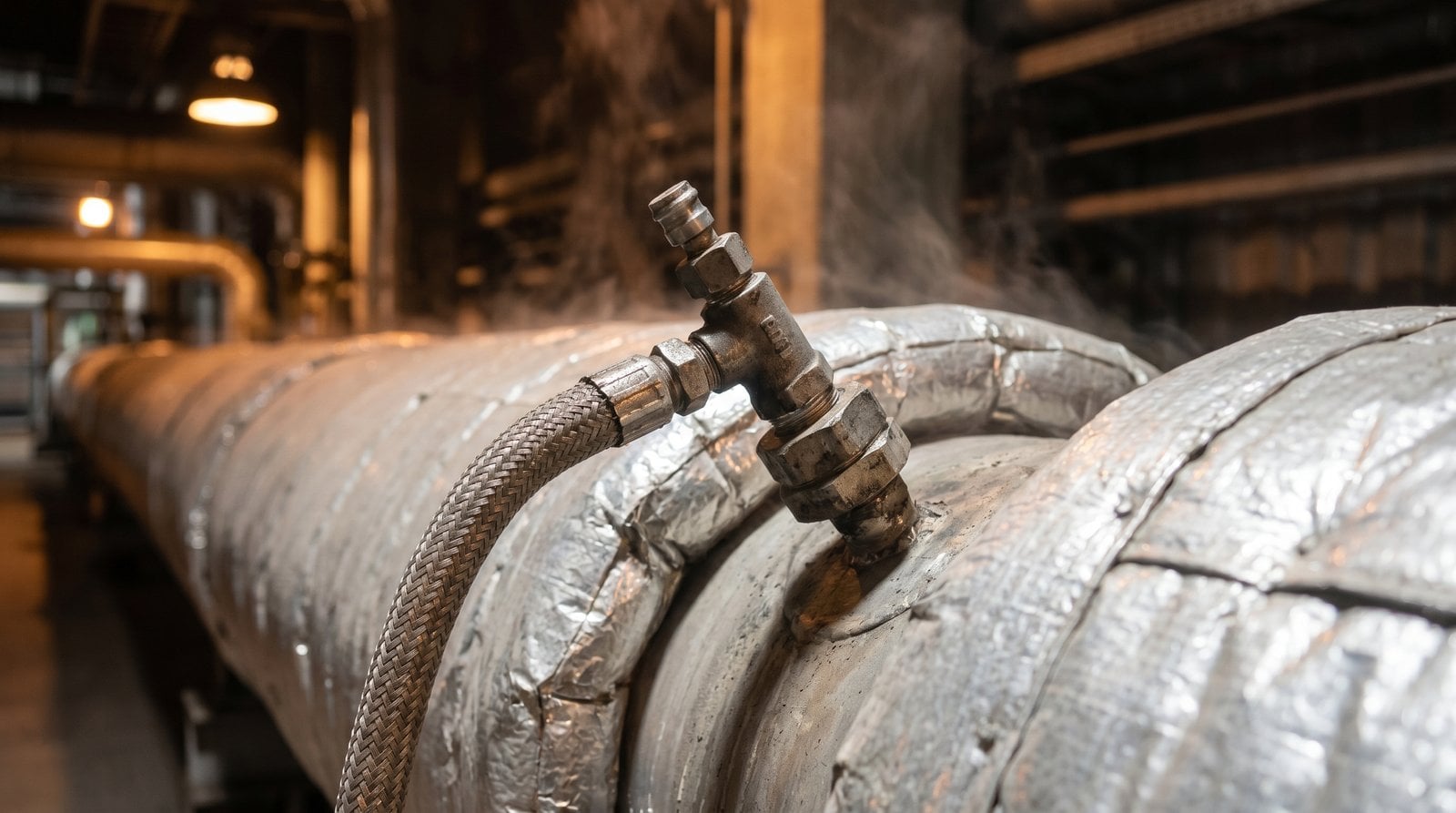
- Main steam outlet instrumentation (typically 1,000+°F)
- Reheat steam lines
- Superheater outlet temperature taps
- Combined-cycle hot-section gas turbine instrumentation
- Gas-fired boiler high-temperature zones
- Geothermal high-temperature well-head taps
Inconel 600 holds rating to 1,200°F. Inconel 625 pushes further and adds resistance to aggressive chemistry. Both alloys avoid the carbide-precipitation issue that limits stainless. Cost runs 5-10x the equivalent 316L fitting, which is why nobody specifies Inconel where 316L works.
The pressure-temperature curve nobody reads carefully
Standard 316L stainless tube fitting at 1/2″ OD: 4,200 psi at ambient. At 400°F: roughly 3,500 psi. At 800°F: roughly 2,700 psi. At 1,000°F: roughly 1,800 psi. At 1,200°F: roughly 1,100 psi.
The numbers are illustrative — each manufacturer publishes its own derating curve. The pattern is universal: pressure rating falls with temperature, and the slope steepens above 800°F. Always specify against the service temperature, never against the ambient rating.
Thermal cycling — the failure that gets missed
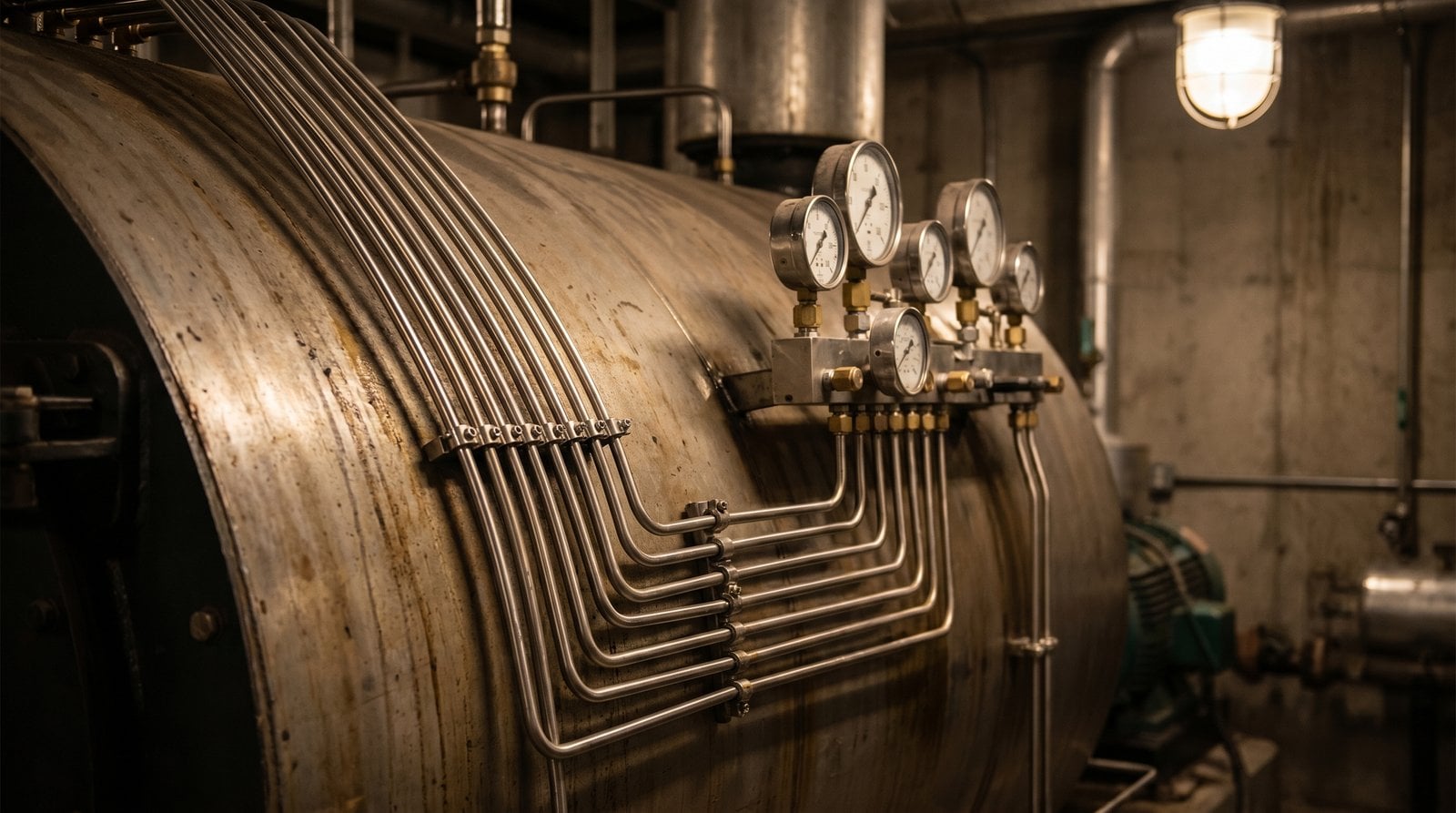
Even base-load power plants cycle. Combined-cycle units start and stop daily. Every cycle expands and contracts each component at its own coefficient of expansion. Stainless and chrome-moly tube on a mixed installation expand differently. Over thousands of cycles, the fitting loosens.
The fix: match coefficient of expansion across body, nut, and ferrules. Specify the same alloy for the tube where possible. Where the tube must be a different alloy, verify the expansion mismatch falls within the manufacturer’s published tolerance.
Bonnet construction for steam-service valves
- Bolted bonnet: Serviceable. Required for any valve that will need stem packing replacement or seat work in service.
- Welded bonnet: Permanent. Higher pressure rating, smaller envelope, lower cost. Cannot be serviced — replace the entire valve at end-of-life.
- Pressure-seal bonnet: High-pressure service (above 4,500 psi). The bonnet seal tightens as system pressure rises.
Stem packing material
- Graphite: Default for steam service above 400°F. Resists oxidation, holds shape under cycling.
- Reinforced PTFE: Below 400°F. Lower friction than graphite, longer cycle life on actuated valves.
- Standard PTFE: Below 250°F only. Will not survive sustained steam exposure.
Common mistakes in steam service material selection
- Specifying 316 instead of 316L for welded service. Welding standard 316 precipitates carbides at the heat-affected zone. Use 316L always for welded tubing and fittings.
- Using 316L at 1,200°F sustained. Published rating allows it, but the pressure derating leaves almost nothing for actual service. Step to Inconel.
- Mismatched thermal expansion in mixed-alloy assemblies. Chrome-moly tube in a stainless fitting under daily cycling fails.
- PTFE seats on steam-service ball valves. PTFE creeps in steam. Use PEEK below 500°F or metal-to-metal above.
- Skipping the derating curve check. Pressure rating at ambient is not the service rating.
What to put on the purchase order
- Alloy specified clearly: 316L or Inconel 600/625
- Mill test report required
- Temperature service zone documented
- Pressure rating at service temperature confirmed against published curve
- NACE certification if any sour gas is present
- Bonnet style for valves
- Seat material for valves
- Stem packing material for valves
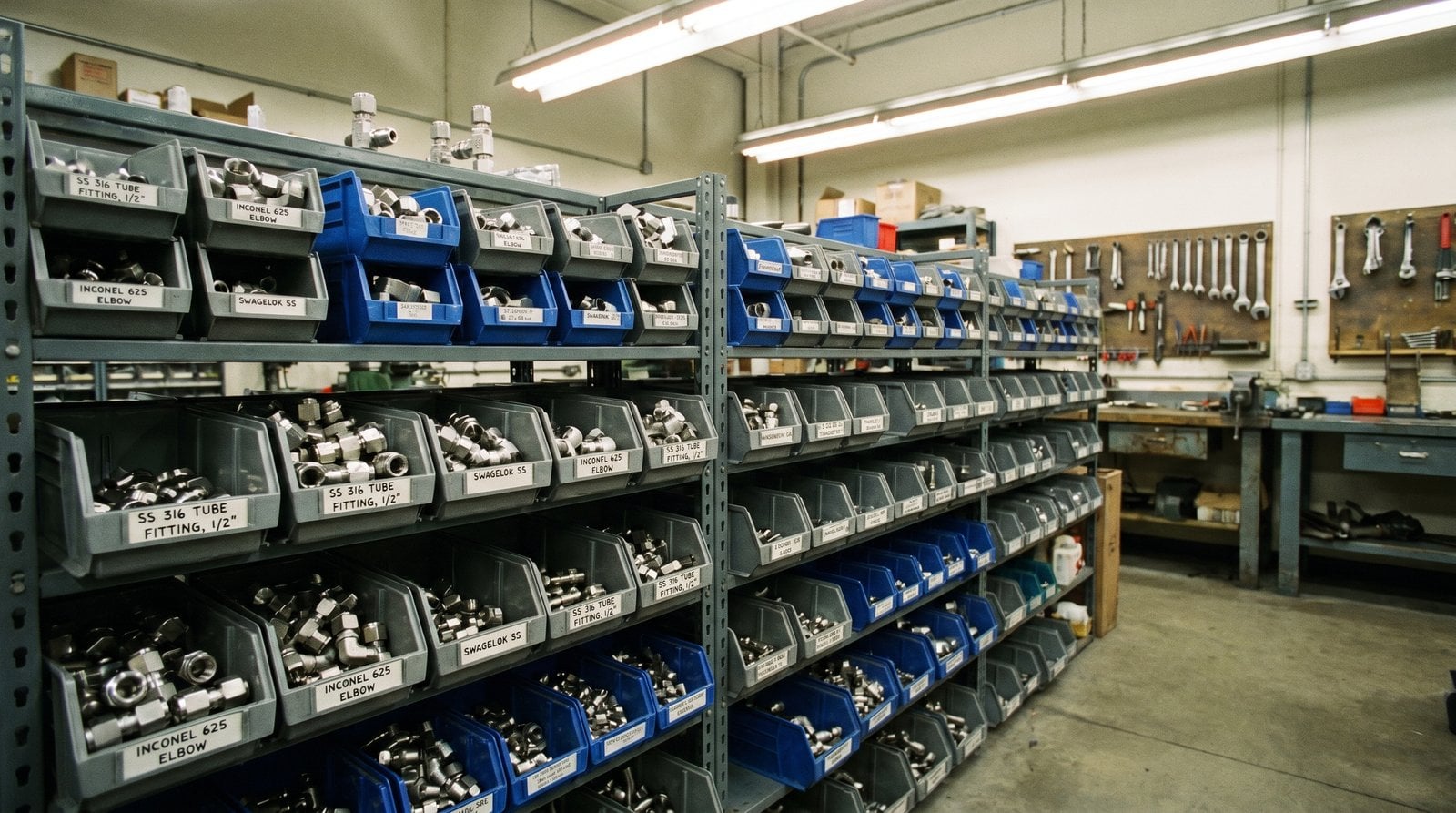
Need help spec’ing fittings for steam or high-temperature service? Read the power-gen resource guide or call Collins-Oliver. 316L, 321, Inconel 600 and 625 in stock — same-day shipping on standard items.