TL;DR
- Ball valves fail in five predictable ways: seat extrusion, stem leak, ball pitting, actuator stall, and seal degradation.
- Each failure mode has a root cause and a preventive measure. Most failures are spec failures, not product failures.
- Three-piece configuration plus the right seat material handles 80% of the failure modes that take ball valves out of service.
- Routine inspection at every shutdown catches the other 20% before they become outages.
The five failure modes that cause most ball-valve outages
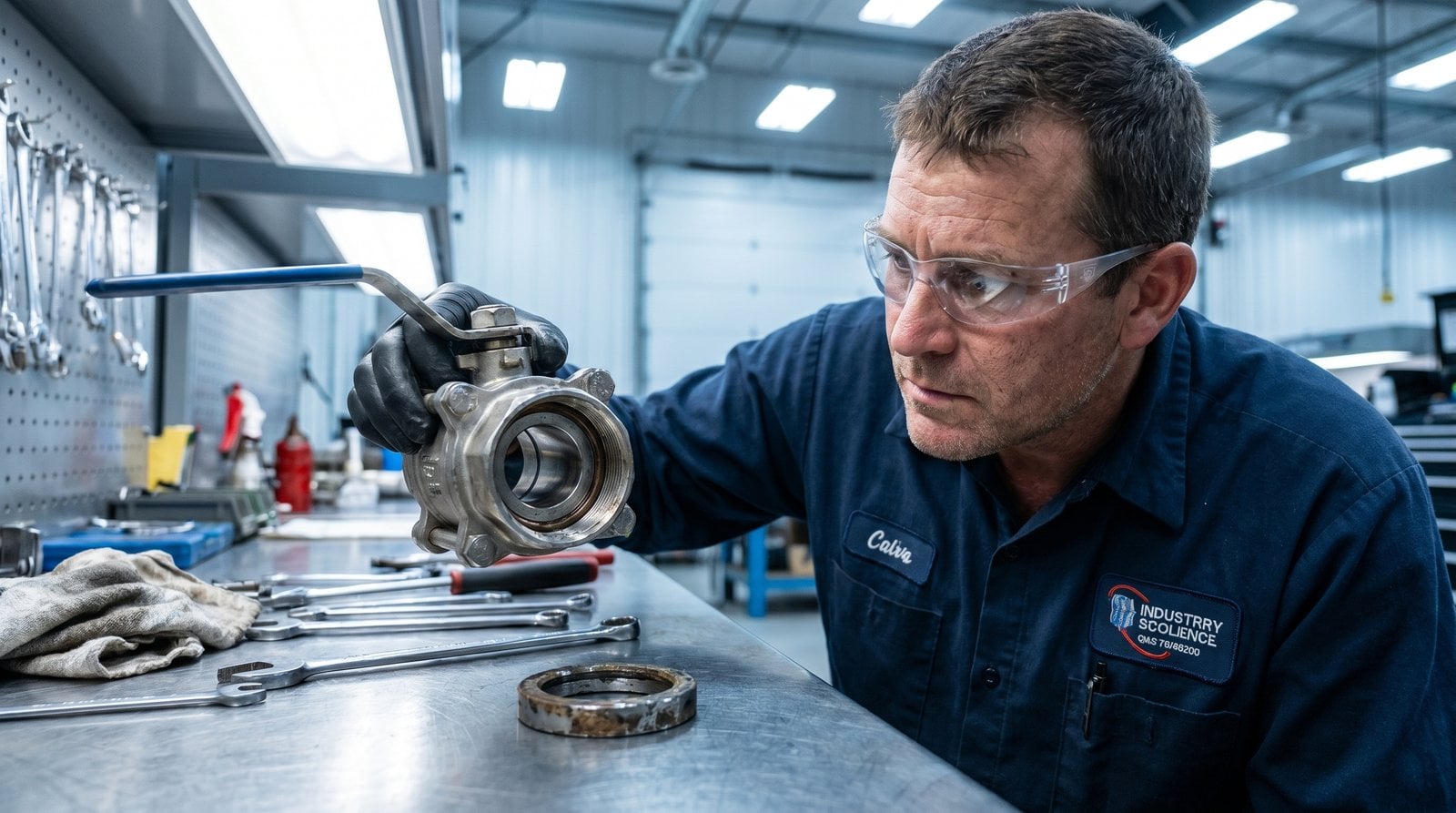
Every plant has a story about a ball valve that failed at the worst possible time. Pull the failed valves into a maintenance shop and the same patterns repeat. Five failure modes account for the vast majority of ball-valve removals from industrial service.
Failure 1: Seat extrusion
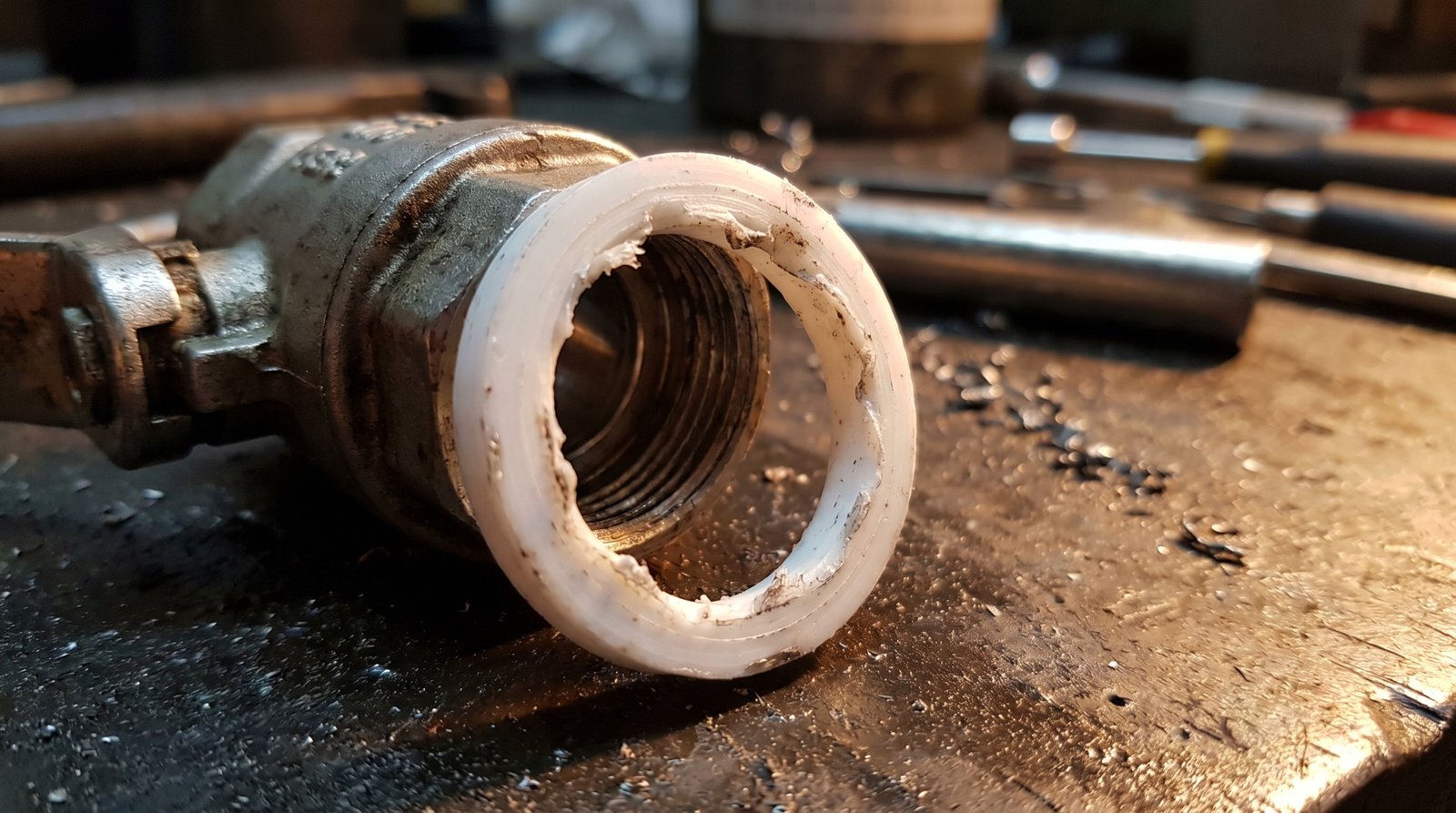
What it looks like: A leak develops in the closed position. Looking inside the valve, the seat material has flowed out of its groove, pinched between the ball and the body.
Root cause: Wrong seat material for the temperature, the pressure, or the combination. Standard PTFE creeps under thermal cycling. Reinforced PTFE handles higher temperatures. PEEK pushes the limit further. Metal seats handle steam and high-temperature service.
Prevention: Match the seat material to the service envelope, including thermal cycling and steady-state. Specify reinforced PTFE (PTFE + glass) or PEEK for any service above 250°F or under steady high-pressure cycling.
Failure 2: Stem leak

What it looks like: A drip or visible weep from the top of the valve, around the stem. Liquid stains the body. Sometimes appears only when the valve operates.
Root cause: Stem packing degradation. PTFE chord packing dries out, takes a set, and fails to seal. Graphite packing oxidizes in hot service. Vibration loosens the packing nut.
Prevention: Inspect stem packing at every shutdown. Replace at any visible weep or staining. Use graphite for high-temperature service, reinforced PTFE for moderate temperature with chemical exposure, standard PTFE for general service.
Failure 3: Ball pitting
What it looks like: Small pits on the ball surface, particularly on the inlet face. Sometimes accompanied by an audible chatter or vibration during partial flow.
Root cause: Cavitation. Ball valves used for throttling create localized low-pressure zones that cavitate. Each cavitation event removes a small piece of metal. Over months, the ball pits.
Prevention: Do not use ball valves for throttle service. If the duty is throttle, install a needle valve or a control valve. Ball valves are on/off devices. Used correctly, they last for hundreds of thousands of cycles.
Failure 4: Actuator stall

What it looks like: The actuator drives the stem partially, then stops. The valve sits in an intermediate position. Manual override sometimes completes the stroke.
Root cause: Actuator torque is below the valve’s break-to-open torque. Common causes: actuator sized at run torque (not break-out torque), packing too tight, debris under the seat, ice or scale inside the valve.
Prevention: Size actuators against the break-to-open torque, not the run torque. Account for service-specific factors (debris, ice, scale). Inspect packing tightness on routine maintenance. Add a torque margin of 25-50% above the published value.
Failure 5: Seal degradation
What it looks like: A slow leak from the body seam (two-piece or three-piece bolted joints). Body bolts may show oxidation. The leak gets worse with thermal cycling.
Root cause: Body seal elastomer degraded by temperature, chemistry, or age. Common with Buna-N on hot oil service or PTFE-encapsulated o-rings on aggressive chemistry.
Prevention: Specify the body seal material against the fluid AND the temperature, not just the fluid. Replace body seals at every disassembly. Audit elastomer age across the plant inventory — most have a 5-year shelf life and a 5-year service life.
The 80/20 fix: three-piece body plus the right seat material
Three-piece ball valves handle the first four failure modes better than one-piece or two-piece bodies. The center section drops out for in-line service without breaking upstream or downstream connections. Seats, seals, stem packing, and the ball all replace in under an hour.
Pair the three-piece body with PEEK seats for any service above 250°F, reinforced PTFE for moderate temperature, and metal seats for sustained high-temperature steam. That single specification choice handles the vast majority of ball-valve service issues.
Inspection routine that catches the other 20%
- Visual inspection at every system shutdown. Check for staining, weeping, body bolt corrosion.
- Function test at every shutdown. Stroke the valve full open, full closed. Note any hesitation or partial-travel issue.
- Stem packing nut check. Should be hand-tight plus 1/4 turn, no more.
- External seal inspection on body seams. Any visible weep, replace at next opportunity.
- Cycle count tracking on high-use isolations. Replace seats on a planned schedule, not on a leak-driven schedule.
What this means for procurement
Most ball-valve failures trace to specification choices made at the buying stage. The wrong seat material, the wrong actuator sizing, the wrong body configuration — these locked in months or years before the failure happened. Procurement teams that build the spec correctly at the order stage save the field maintenance team most of its valve work.

Need ball valves spec’d for critical service? Read the ball-valve resource guide or call Collins-Oliver. 130+ Swagelok and 40+ Parker SKUs in stock, same-day shipping nationwide.