
TL;DR
- Pick a valve by its job: on/off, throttling, or one-way flow.
- Ball valves give fast quarter-turn on/off with full bore and low pressure drop.
- Needle valves give fine, repeatable throttling of low flow rates.
- Check valves pass flow one way and block reverse flow automatically.
Every instrument loop lives or dies on the valves you pick. This instrumentation valve selection guide lays the four workhorses side by side: ball, needle, check, and bonnet (globe-style) valves. Each one does a job the others do poorly. Pick by the function you need, the flow control you want, and the pressure and media you run. Below you get a fast comparison table, a plain description of each valve, and the questions that point you to the right one. When your service is severe or unusual, call for your application.
How Do You Choose an Instrumentation Valve?
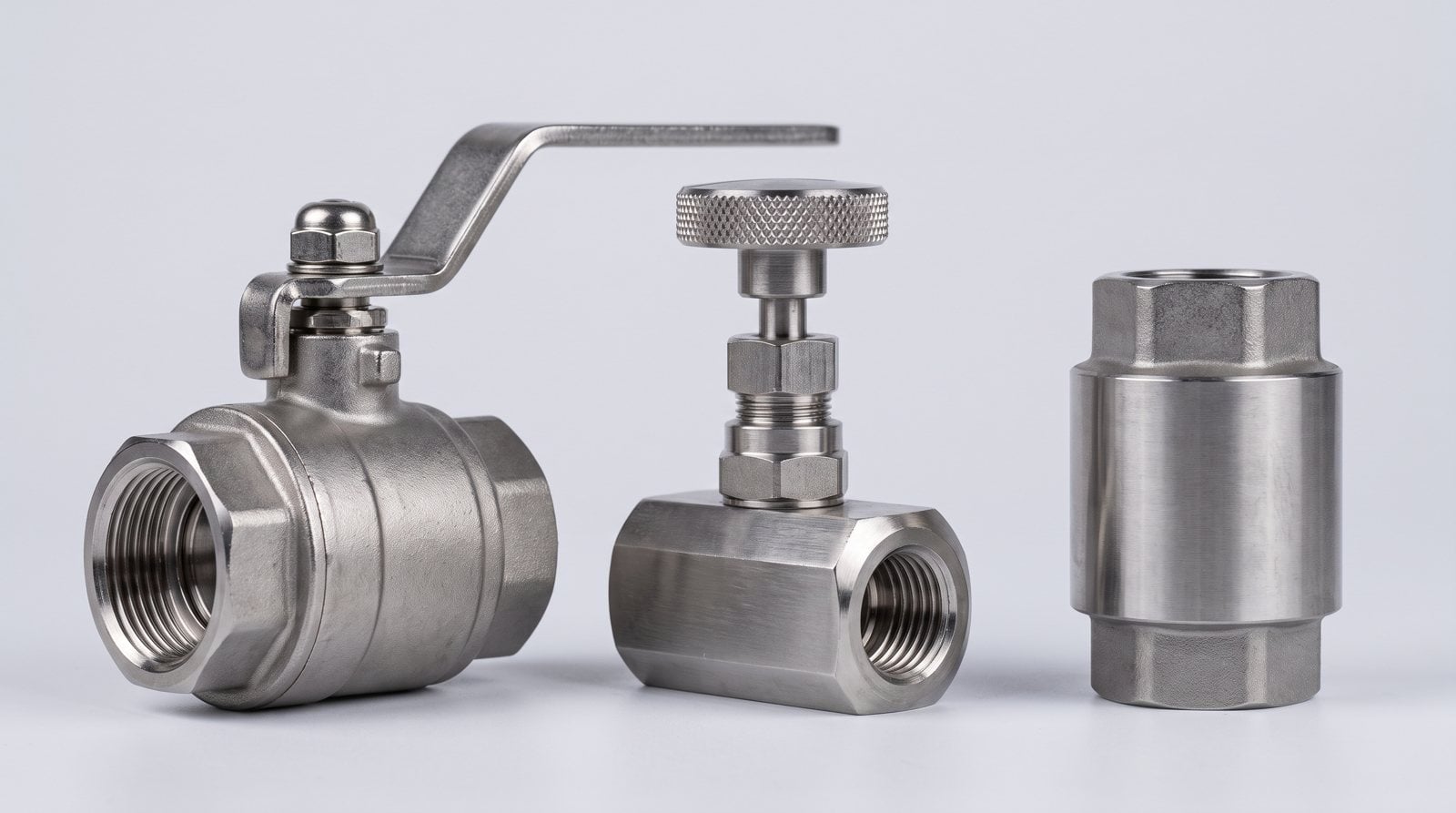
Start with the job. Do you need a fast on/off shutoff, fine throttling, one-way flow protection, or a tight isolation seat you can rebuild? That single answer eliminates most of the field. Then layer in pressure, temperature, media, and how often you cycle the valve. A valve that seals gas at high pressure is not the same valve that meters a sample stream by the drop. Match the mechanism to the task and you get years of clean service instead of a nagging leak.
| Valve type | Primary job | Flow control | Best for |
|---|---|---|---|
| Ball | On/off isolation | Poor (quarter-turn, not for throttling) | Fast full-open / full-close shutoff |
| Needle | Fine throttling / metering | Excellent (fine, gradual) | Sample flow, calibration, bleed |
| Check | One-way flow | None (automatic) | Backflow prevention, pump protection |
| Bonnet (globe) | Isolation with rebuildable seat | Good (throttling capable) | Positive shutoff, frequent maintenance |
When Should You Use a Ball Valve?
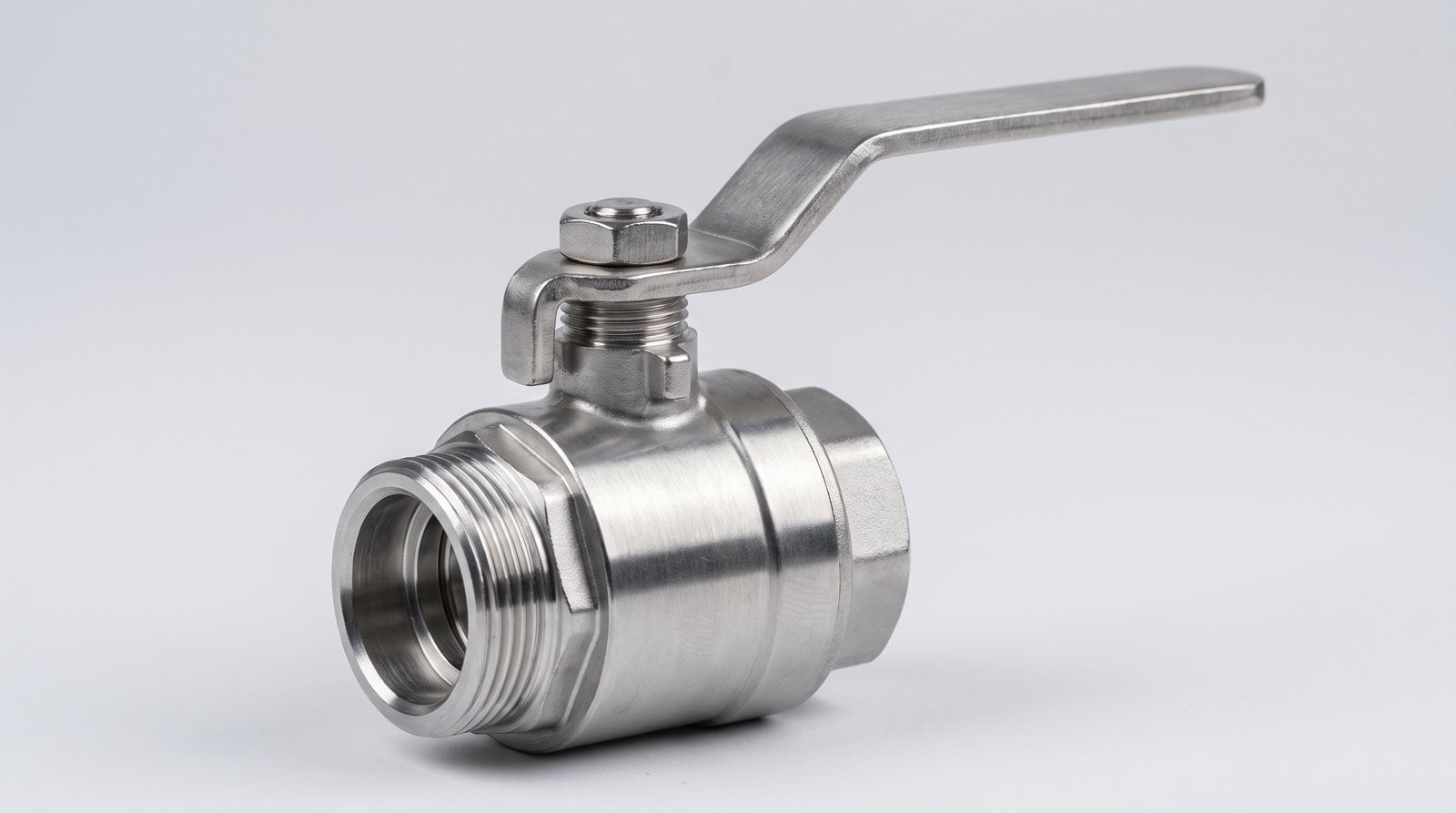
Reach for a ball valve when you want fast, positive on/off. A quarter turn takes it from full open to full closed, so an operator sees valve position at a glance. The bore runs straight through, so flow loss is low and the valve clears debris well. What a ball valve does not do is throttle. Park it half open to control flow and you wire-draw the seat, chew up the seals, and lose the tight shutoff you bought it for. Use ball valves for isolation, drains, and switching. Keep them fully open or fully closed.
When Should You Use a Needle Valve?
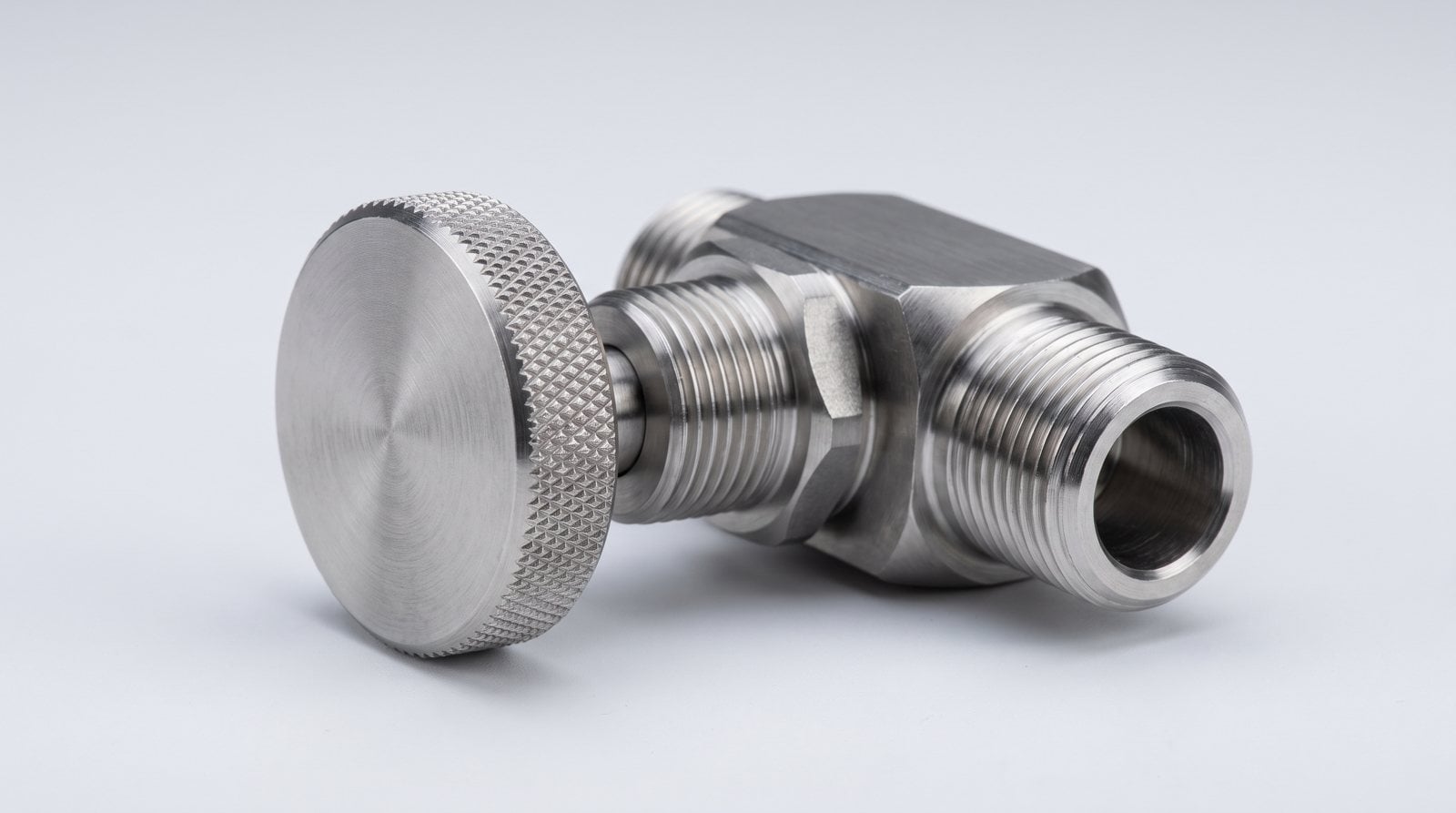
A needle valve is your metering tool. A fine, tapered stem advances slowly into a small seat, so a full handle turn moves only a trickle of flow. That gives you precise, repeatable control for sample lines, calibration rigs, bleed points, and any spot where you dial flow by the drop. The trade is capacity. The narrow seat limits how much a needle valve passes, so it is not your bulk isolation valve. Spec a needle valve wherever "fine adjustment" matters more than "fast shutoff."
When Should You Use a Check Valve?
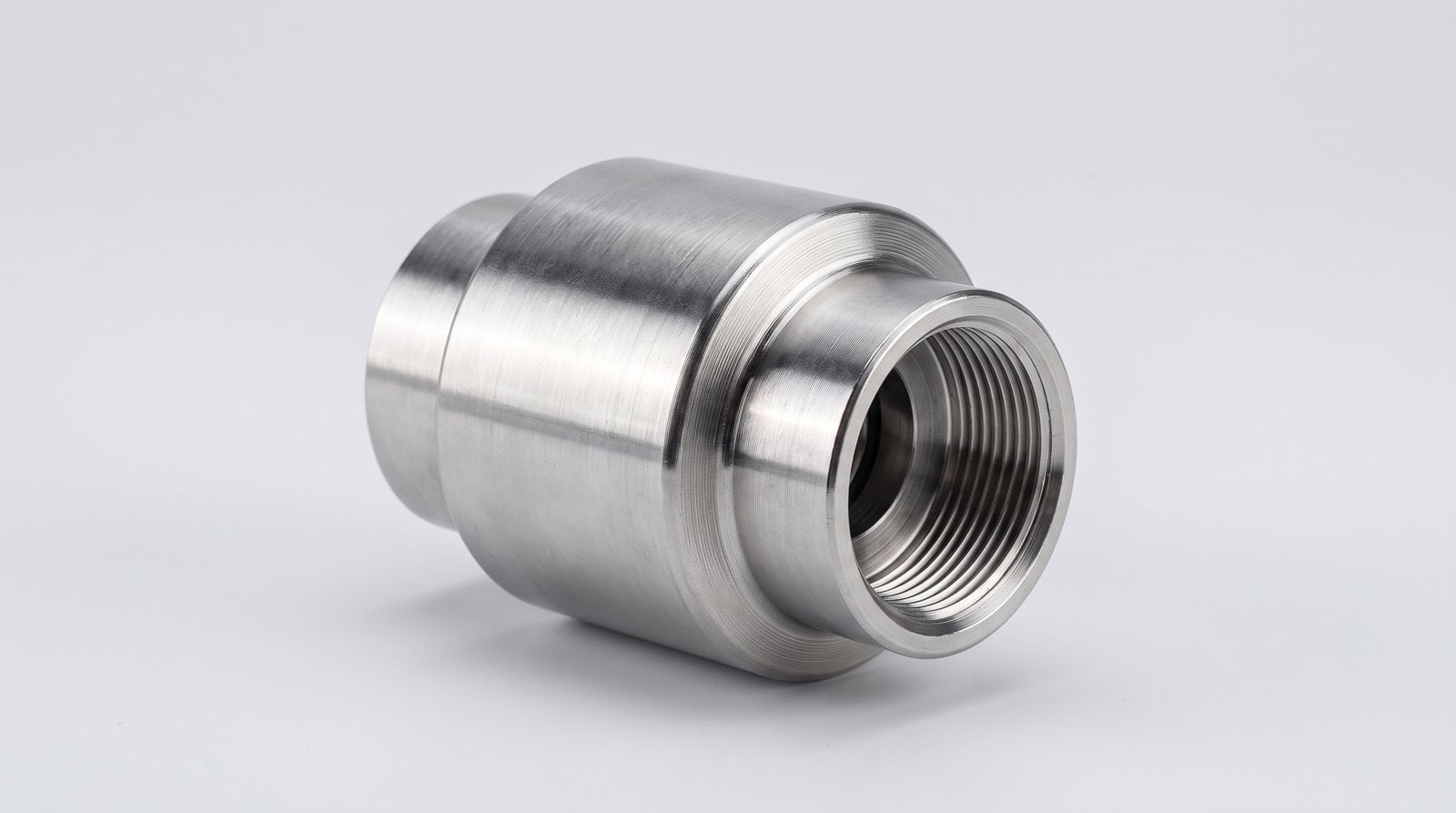
A check valve does one job automatically: it lets flow go one way and stops it going back. No handle, no operator. Media pressure opens it and reverse flow or a spring closes it. You use check valves to protect pumps and compressors from backflow, to keep two streams from cross-contaminating, and to hold a system charged when upstream pressure drops. The number that matters is cracking pressure, the differential that opens the valve. Match the cracking pressure and the orifice to your flow, because an oversized check chatters and an undersized one starves the line. Give us your flow and pressure and we size it.
When Should You Use a Bonnet or Globe-Style Valve?
Bonnet valves, the globe-pattern instrument valves, give you positive isolation with a seat and stem you can service. The bonnet threads or bolts onto the body, so you rebuild the internals instead of scrapping the valve. The flow path turns through the seat, which costs some pressure drop but delivers a firm, tight shutoff and decent throttling. These are the valves you want on manifolds, root valves, and any critical isolation point that sees frequent maintenance. When uptime and rebuildability rank above minimum pressure drop, the bonnet valve earns its place.
What About Manifolds and Multi-Valve Assemblies?
Many instrument installs combine these functions. A 2-valve, 3-valve, or 5-valve manifold packages isolation and equalizing valves for a transmitter into one compact block, cutting leak points and install time. The individual valves inside still follow the same rules: isolation seats for shutoff, needle-style stems for fine control. Tell us the transmitter and the service, and we spec the manifold and the port pattern for your loop.
For related products, browse our instrumentation valves or explore more in our resource library.
Frequently Asked Questions
Can I use a ball valve to throttle flow?
No. Ball valves are on/off devices. Throttling with a partly open ball damages the seat and seals. Use a needle or globe valve to control flow.
What is the difference between a needle valve and a globe valve?
A needle valve uses a fine tapered stem for precise metering at low flow. A bonnet globe valve gives firmer isolation and higher capacity with rebuildable internals.
What is cracking pressure on a check valve?
Cracking pressure is the forward differential that opens the check valve. Size it to your flow so the valve neither chatters nor starves the line.
Which valve gives the tightest shutoff?
Ball valves and bonnet valves both give positive shutoff. Ball valves shut fast with a quarter turn. Bonnet valves let you rebuild the seat for long service.
Do these valves come in 316 stainless?
Yes. Instrumentation ball, needle, check, and bonnet valves are widely available in 316/316L stainless and other alloys. Ask us for your pressure and media.
Spec Your Instrument Valves with Collins-Oliver
Collins-Oliver is your authorized DK-LOK distributor in Baton Rouge, supplying ball, needle, check, and bonnet valves plus manifolds to refineries, chemical plants, and power generation across the Gulf South since 1986. Tell us the function, pressure, and media, and we match the valve. Call (225) 922-9324 or (800) 247-5756, or email info@collins-oliver.com for a quote.