
TL;DR
- A 37-degree flare seals metal-to-metal on a flared tube cone, per SAE J514 (AN/JIC).
- Dash sizes count 1/16-inch steps of tube OD (dash-8 equals 1/2 in.).
- A 37-degree flare is not a pipe thread and is not the same as a 45-degree flare.
- Specify 316 stainless for corrosive or high-vibration service.
AN/JIC 37-degree flare fittings seal metal to metal on a 37-degree cone, which is why they hold up under vibration, thermal cycling, and high pressure without weeping. You will find them on hydraulic power units, fuel systems, instrument air, and test rigs where a threaded pipe joint would loosen or leak. This reference lays out the governing standard, the dash-size and thread chart you actually use at the bench, the materials to specify, and the applications where these fittings earn their keep. When you know the part, Collins-Oliver has it.
What Is a 37-Degree Flare Fitting?
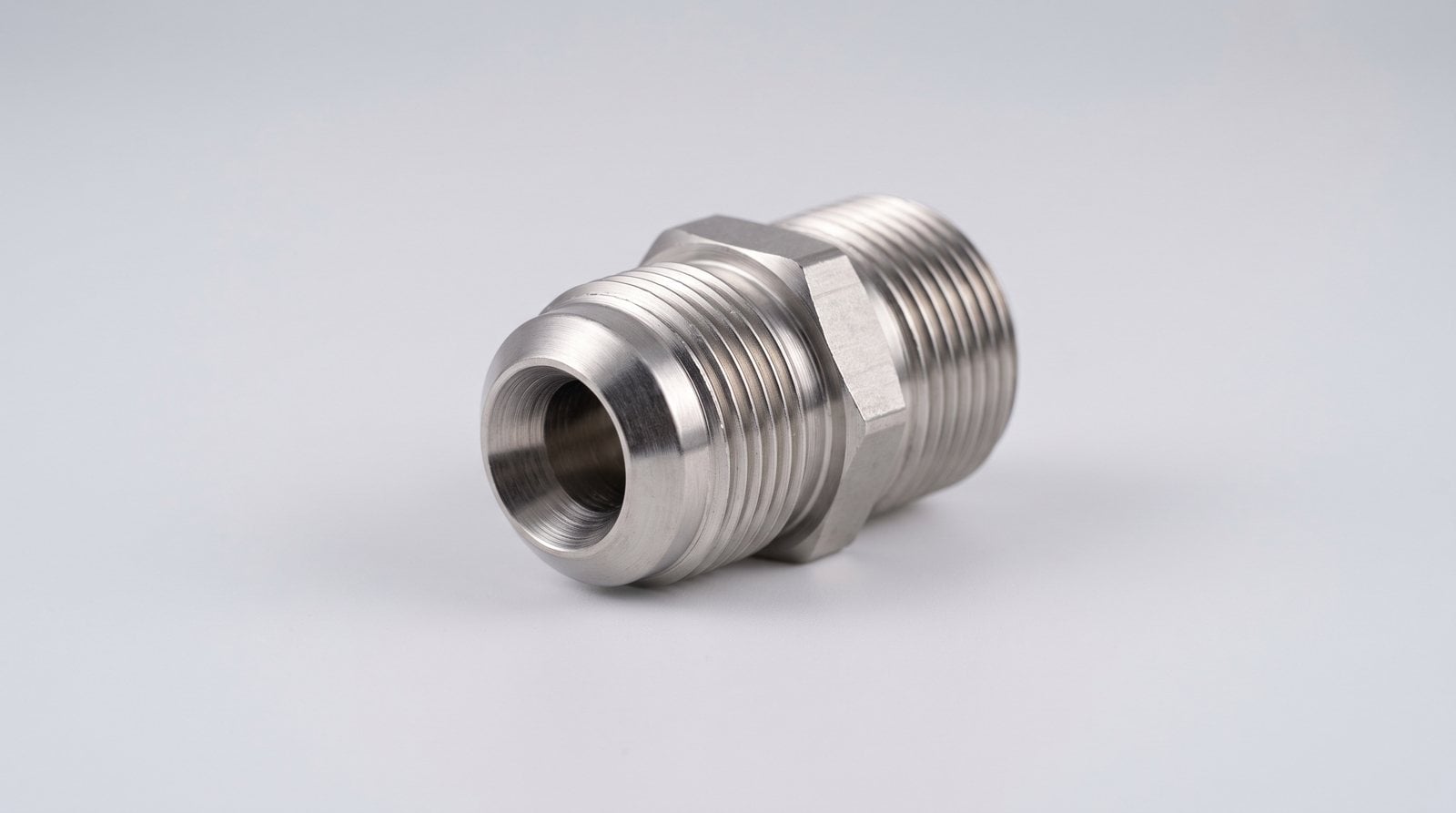
A 37-degree flare fitting seals when a flared tube end presses against a 37-degree cone on the fitting nose. A nut and sleeve pull the flare tight against that cone, creating a metal-to-metal seal. No tape, no dope, no thread deformation. The seal lives on the flare face, so the straight thread only supplies clamping force. That design gives you a joint you can break and remake many times and still seal.
People use "AN" and "JIC" almost interchangeably, and for good reason. Both share the same 37-degree seat and the same thread series. The difference is pedigree, which the next section explains.
What Standards Govern AN and JIC Fittings?
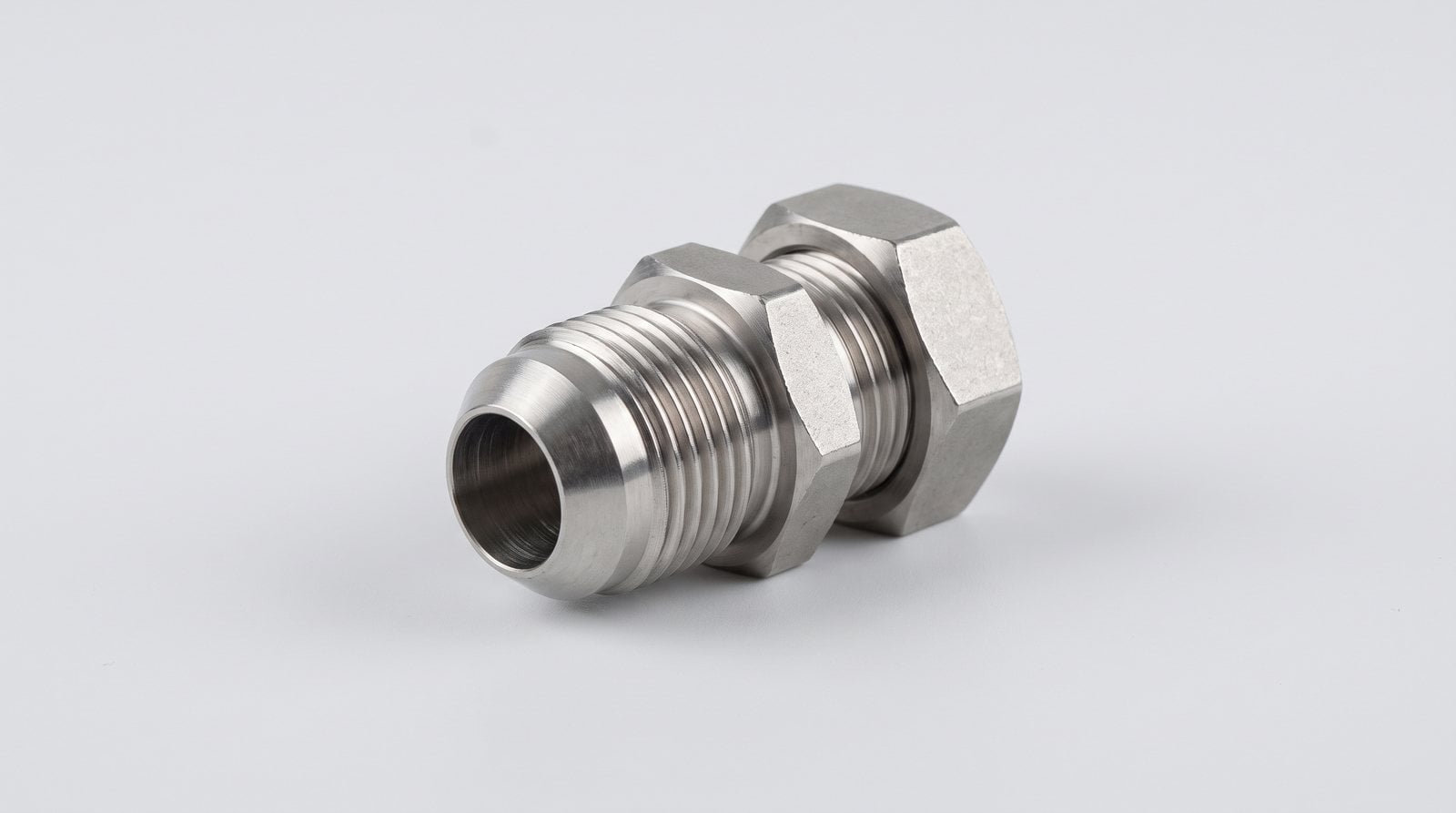
JIC fittings are built to SAE J514, the standard for 37-degree flare tube fittings and connections. AN fittings trace to the old Army-Navy aerospace specifications. The two are dimensionally identical and interchangeable in most fluid-power applications, sharing the same 37-degree flare angle, thread series, and dimensions. The practical difference is inspection and quality pedigree: AN parts were built to tighter military acceptance, so aerospace and racing crowds favor the AN callout while industrial hydraulics defaults to JIC per SAE J514.
- SAE J514: defines JIC 37-degree flare tube fittings and their straight-thread ports.
- Seat angle: 37 degrees, the trait that names the family.
- Thread: Unified National (UN/UNF) straight thread, not tapered NPT.
- Interchange: AN and JIC mate together because the flare and threads match.
How Do You Read AN/JIC Dash Sizes and Threads?
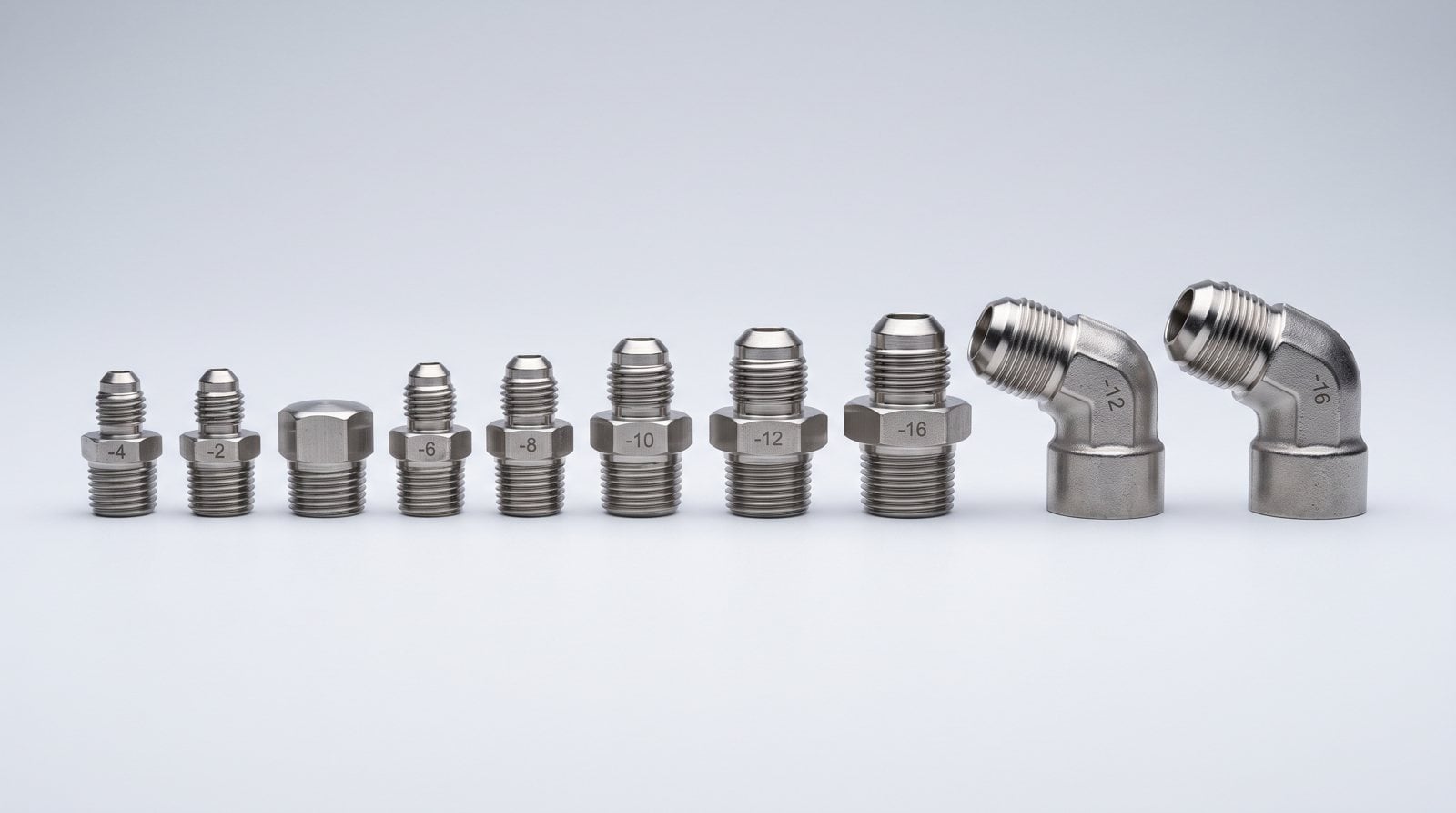
The dash size tells you the tube outside diameter in sixteenths of an inch. A -8 fitting fits 8/16, or 1/2 inch, tube OD. But do not read the thread from the dash number, because the thread is larger than the tube. A -8 JIC uses a 3/4-16 thread, not a 1/2 inch thread. Use the chart below to match dash, tube OD, and thread.
| Dash size | Tube OD (in.) | Thread (UN/UNF) |
|---|---|---|
| -2 | 1/8 | 5/16-24 |
| -3 | 3/16 | 3/8-24 |
| -4 | 1/4 | 7/16-20 |
| -5 | 5/16 | 1/2-20 |
| -6 | 3/8 | 9/16-18 |
| -8 | 1/2 | 3/4-16 |
| -10 | 5/8 | 7/8-14 |
| -12 | 3/4 | 1-1/16-12 |
| -16 | 1 | 1-5/16-12 |
| -20 | 1-1/4 | 1-5/8-12 |
| -24 | 1-1/2 | 1-7/8-12 |
To identify an unknown fitting, measure the thread OD, count threads per inch, and confirm the 37-degree seat with a flare gauge. Match all three to the chart and you have your size.
How Do You Tell a 37-Degree Flare From a 45-Degree Flare?
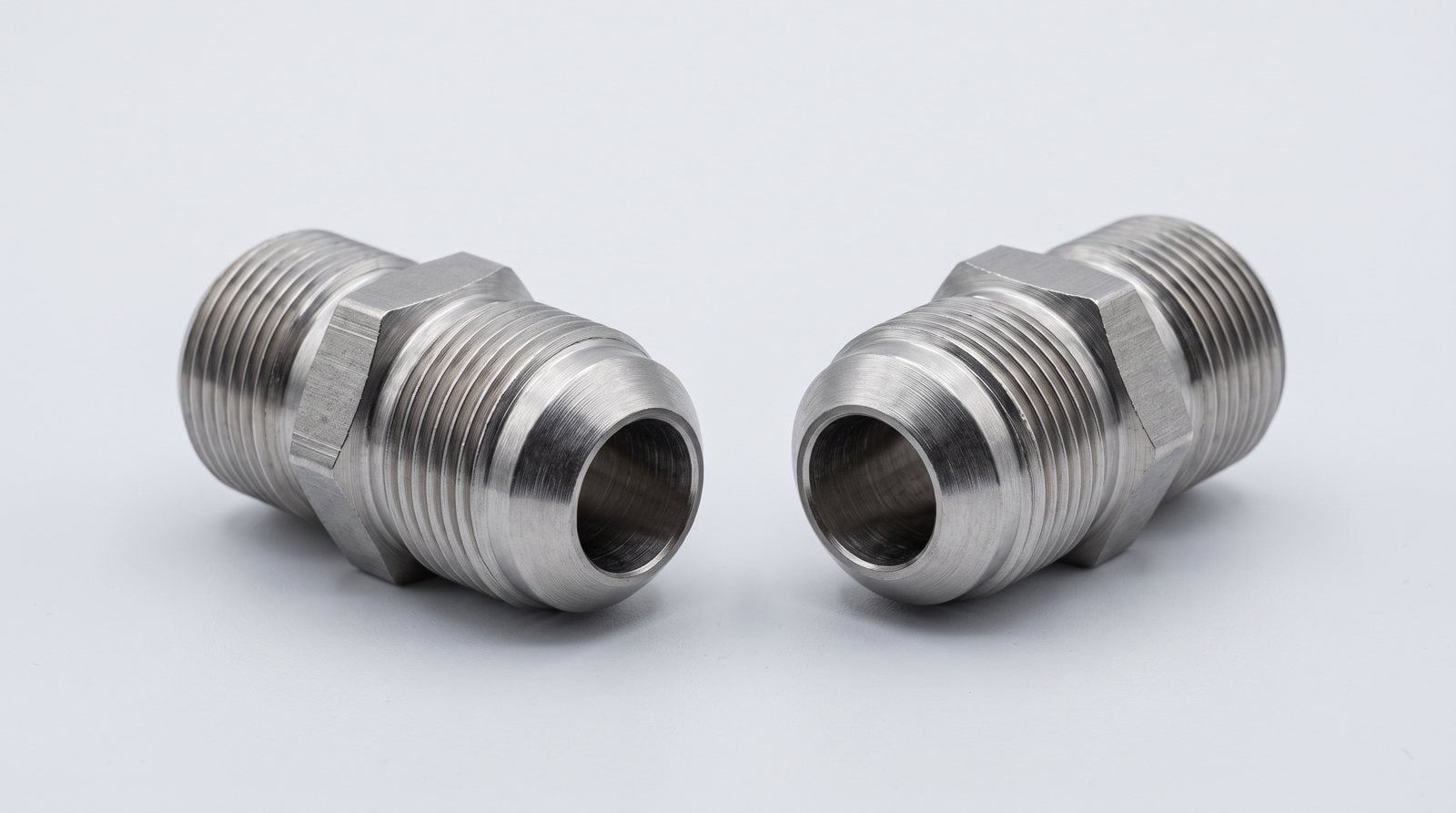
This trips people up because both look like flare fittings. The seat angle is the tell. AN/JIC uses 37 degrees. SAE 45-degree flare (automotive and refrigeration) uses 45 degrees. The two do not seal together, and forcing a 37 flare into a 45 seat leaks. Gauge the angle before you assume. When the number is worn off the fitting, the flare gauge settles it.
What Materials Should You Specify?
Match the metal to your fluid and environment. Instrument and process work leans on stainless for corrosion resistance, while general hydraulics often runs carbon or brass.
- 316 stainless steel: your choice for corrosive media, refinery duty, and coastal or marine air.
- Carbon steel: economical for standard hydraulic power lines in a controlled environment.
- Brass: good for instrument air, water, and mild fluids at lower pressure.
- Monel and exotic alloys: for aggressive chemistry and high-temperature service.
Keep the fitting alloy compatible with the tube alloy to avoid galvanic issues, and match the tube wall so the flare forms cleanly. Thin-wall tube flares easily but tolerates less pressure. Thick-wall tube needs more force to flare but handles higher pressure.
Where Are AN/JIC Fittings Used?
You will find 37-degree flare fittings anywhere pressure and vibration meet a need for a reusable joint.
- Hydraulic power systems: the industrial default for medium and high-pressure lines.
- Fuel and oil lines: aerospace, motorsport, and heavy equipment.
- Instrument and analytical panels: where a serviceable, leak-tight connection matters.
- Test benches and skids: frequent make-and-break without wearing out the seat.
For related products, browse our tube fittings or explore more in our resource library.
Frequently Asked Questions
Are AN and JIC fittings interchangeable?
Yes, in most fluid-power applications. Both share the 37-degree seat and the same thread series, so they mate and seal together. AN parts carry a tighter military quality pedigree, while JIC follows SAE J514 for industrial use.
What thread does a -8 JIC fitting use?
A 3/4-16 UNF straight thread on 1/2 inch tube OD. The thread is bigger than the tube, so never read the thread size straight off the dash number. Use a dash-size-to-thread chart to match them.
Can I mix 37-degree and 45-degree flare fittings?
No. A 37-degree AN/JIC flare will not seal against a 45-degree SAE seat, and forcing them together leaks. Gauge the seat angle before you connect, especially when the markings are worn off.
Do JIC fittings need thread sealant?
No. The seal is metal-to-metal on the flare face, so the straight thread only clamps. Adding tape or dope to a JIC straight thread does nothing useful and can contaminate the line. Save sealant for tapered NPT ends.
How do I flare tube for a 37-degree fitting?
Use a 37-degree flaring tool sized to your tube OD and wall. Cut the tube square, deburr it, then form the flare so it seats fully on the cone. A clean, concentric flare is what makes the joint hold.
Specify Your Flare Fittings With Collins-Oliver
Collins-Oliver is your authorized DK-LOK distributor in Baton Rouge, Louisiana, stocking AN/JIC 37-degree flare fittings, tube fittings, valves, and stainless tubing for refineries, petrochemical plants, and instrumentation shops along the Gulf Coast. Give us your dash size, alloy, and pressure and we will match the fitting to your line. Call (225) 922-9324 or (800) 247-5756, email info@collins-oliver.com, or request a quote today.