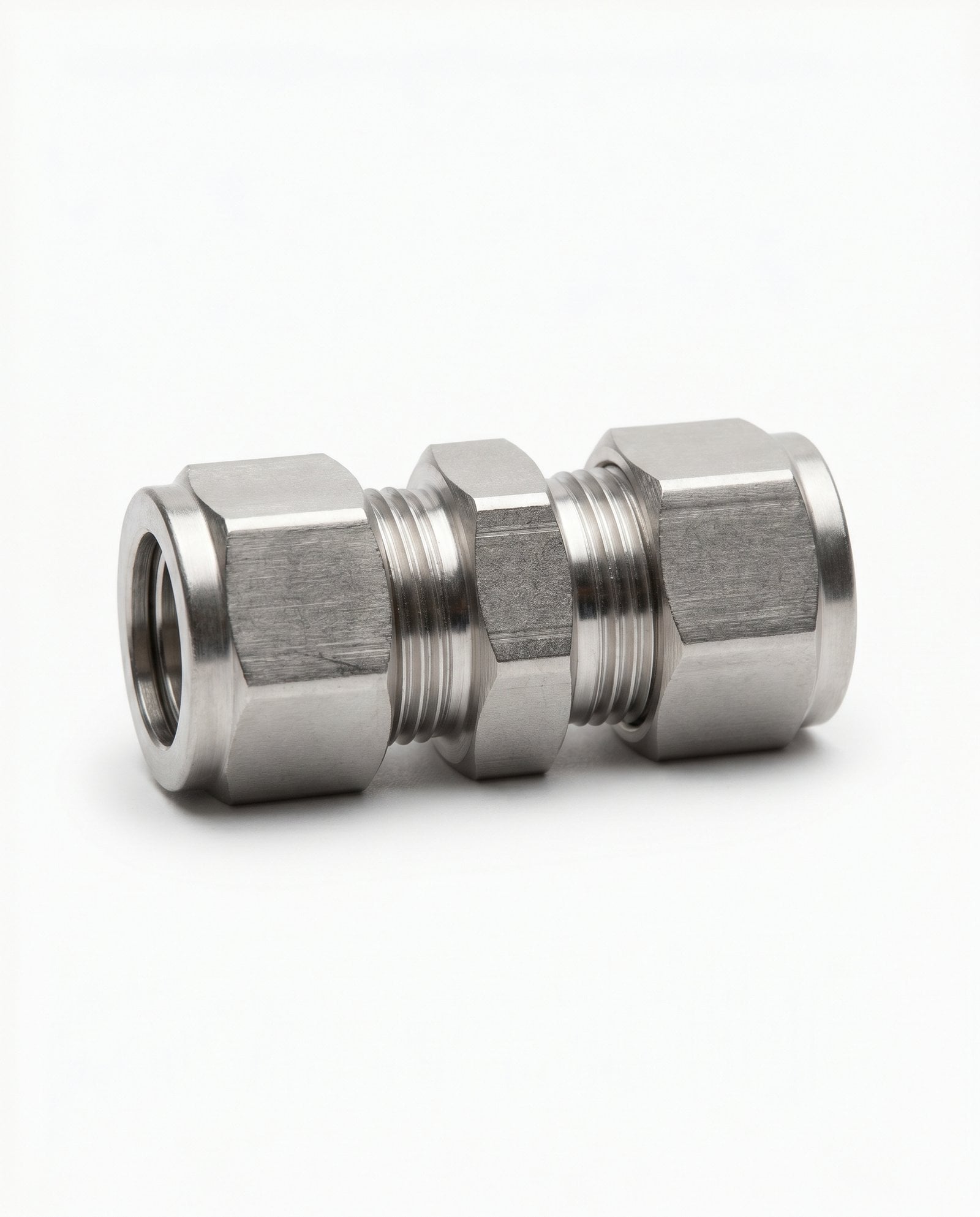
What makes a tube fitting supplier the best source?
Start with your plant standard. The best source supplies the approved fitting family, identifies the exact configuration and confirms availability. For process instrumentation, a familiar brand name leaves essential questions unanswered.
A useful parts conversation reaches the connection details. Your supplier should distinguish the tube end from a threaded transition and identify missing tubing information. Ask which manufacturer document supports the selection. Keep substitution decisions visible.
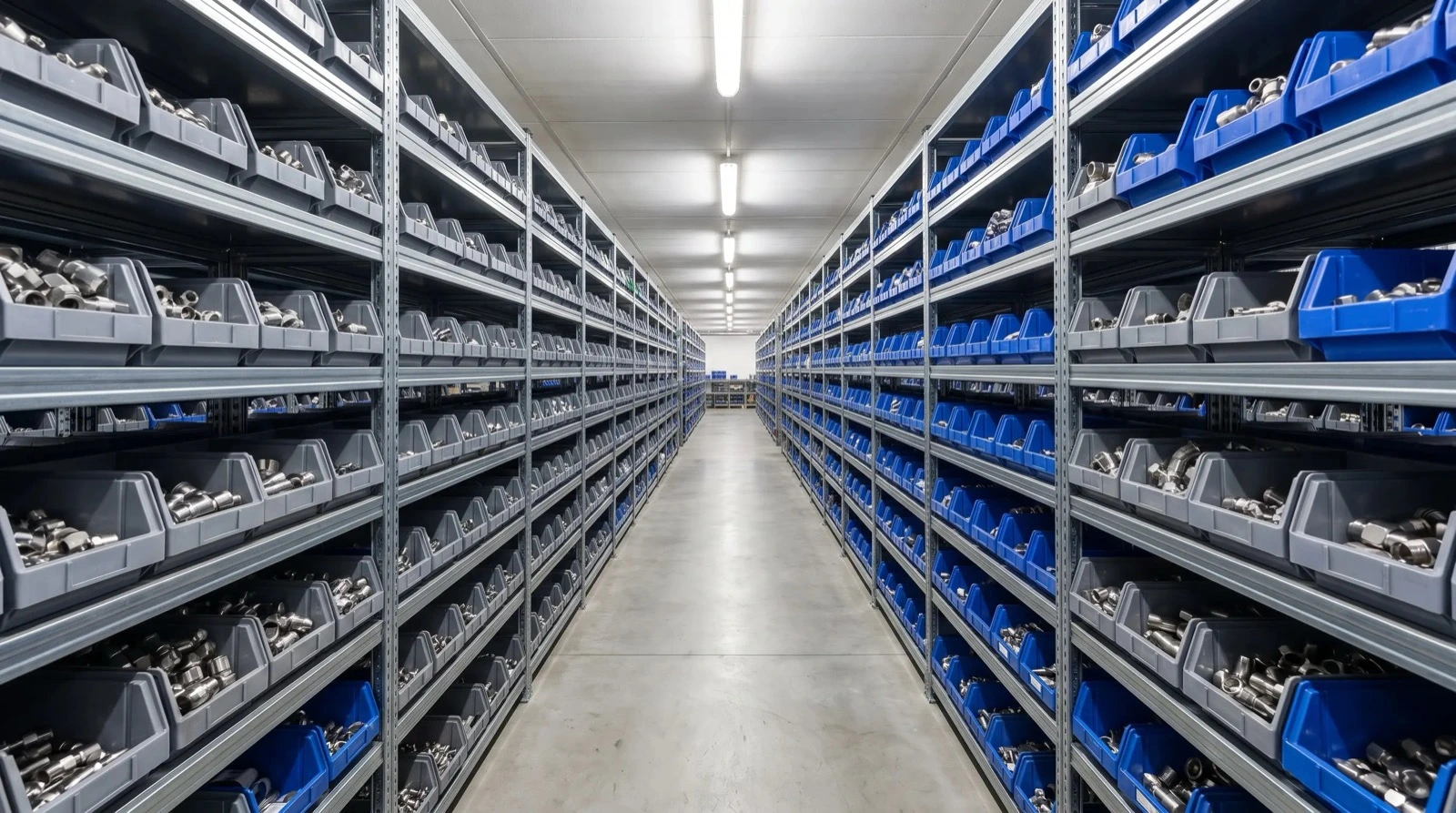
Stock matters when the required parts match. Ask whether your quantity is physically available and where it will ship from. Compare complete responses against the same parts list. A stock total does not establish availability for your order.
How do you verify high-pressure tube fittings?
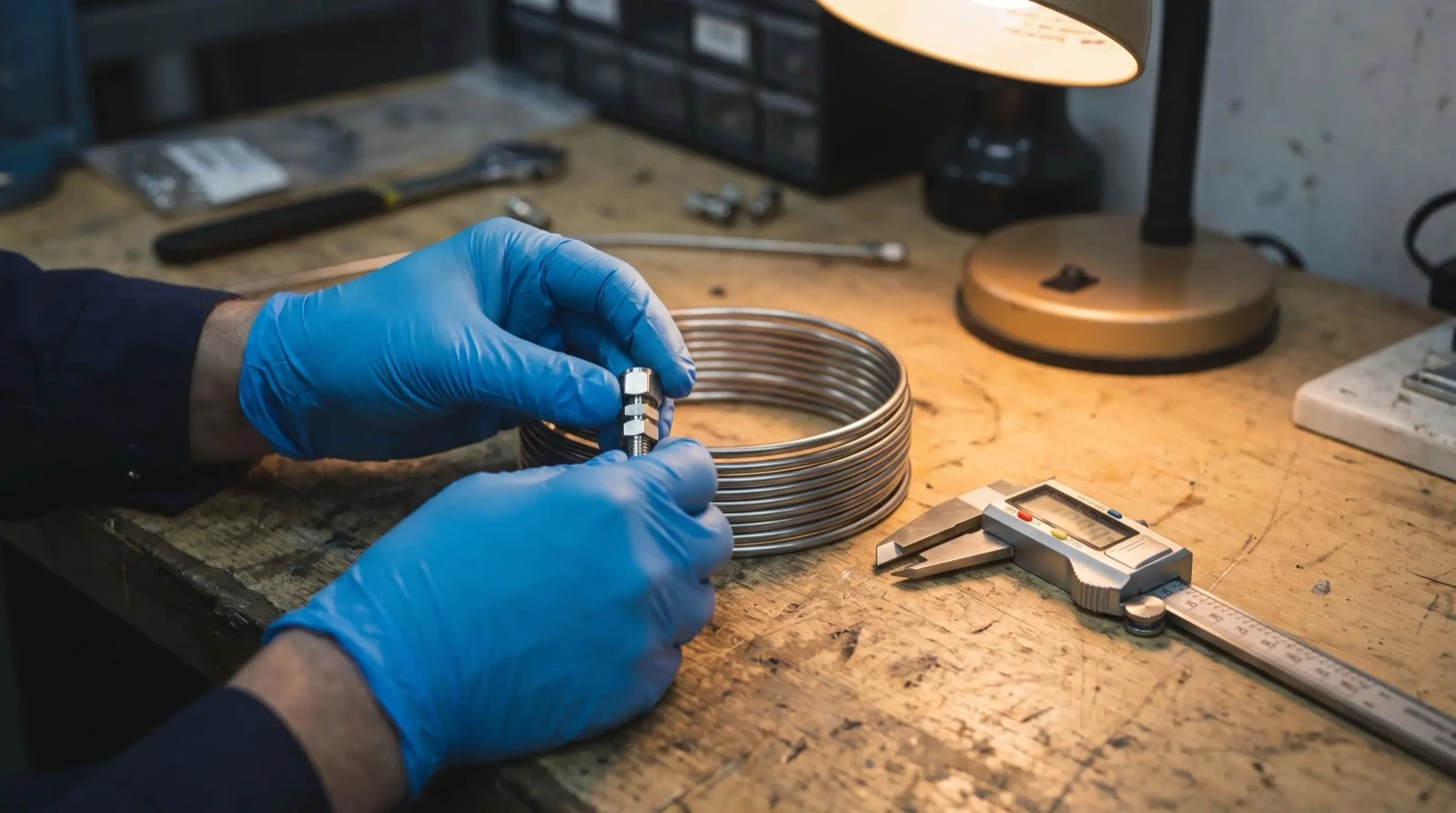
Start with the tubing. Swagelok tube fitting ends are rated to the tubing’s working pressure, as specified in Swagelok’s tube fitting catalog. Your connection therefore needs a defined tubing specification. A standalone pressure figure beside a fitting number misses this basis.
Internal pressure loads the tube wall. A larger tube outside diameter places more stress on a wall of the same thickness at the same pressure. Increasing wall thickness helps resist this load. Read OD and wall thickness as a pair in your selection.
Compare the rows in Swagelok’s tubing data sheet. For the same material and OD, the listed thicker walls support higher working pressures. At the same wall thickness, larger diameters generally have lower values. Changing your tube OD means checking the pressure basis again.
Thicker has a boundary. Swagelok does not recommend tube walls outside its listed ranges for each size. Your tubing must also meet the specified material and hardness requirements. A heavier tube outside those ranges lacks the same documented connection basis.
Temperature changes the allowable pressure. Apply the tubing data sheet’s applicable temperature factor to your selected tubing value. Read its notes on manufacturing tolerances and welded tubing too. The tables make no allowance for corrosion, erosion, welding or bending.
The tubing governs the tube end, while the complete assembly needs every component checked. A lower limit at a transition or connected device still controls your system. Use the guide to tubing pressure limits to organize the review. Changing the fitting alone does not strengthen the tubing.
| Assembly element | What sets its limit | What you check |
|---|---|---|
| Tube fitting end | Documented capability with the specified tubing | Fitting family and compatible tubing |
| Tubing | Material, OD, wall thickness and temperature | The applicable tubing entry and notes |
| Threaded end | Connection design, size, material and service conditions | The separate end-connection data |
| Tested assembly | Published service limits remain in force | Test configuration, method and scope |
Which fitting design and material does your system need?
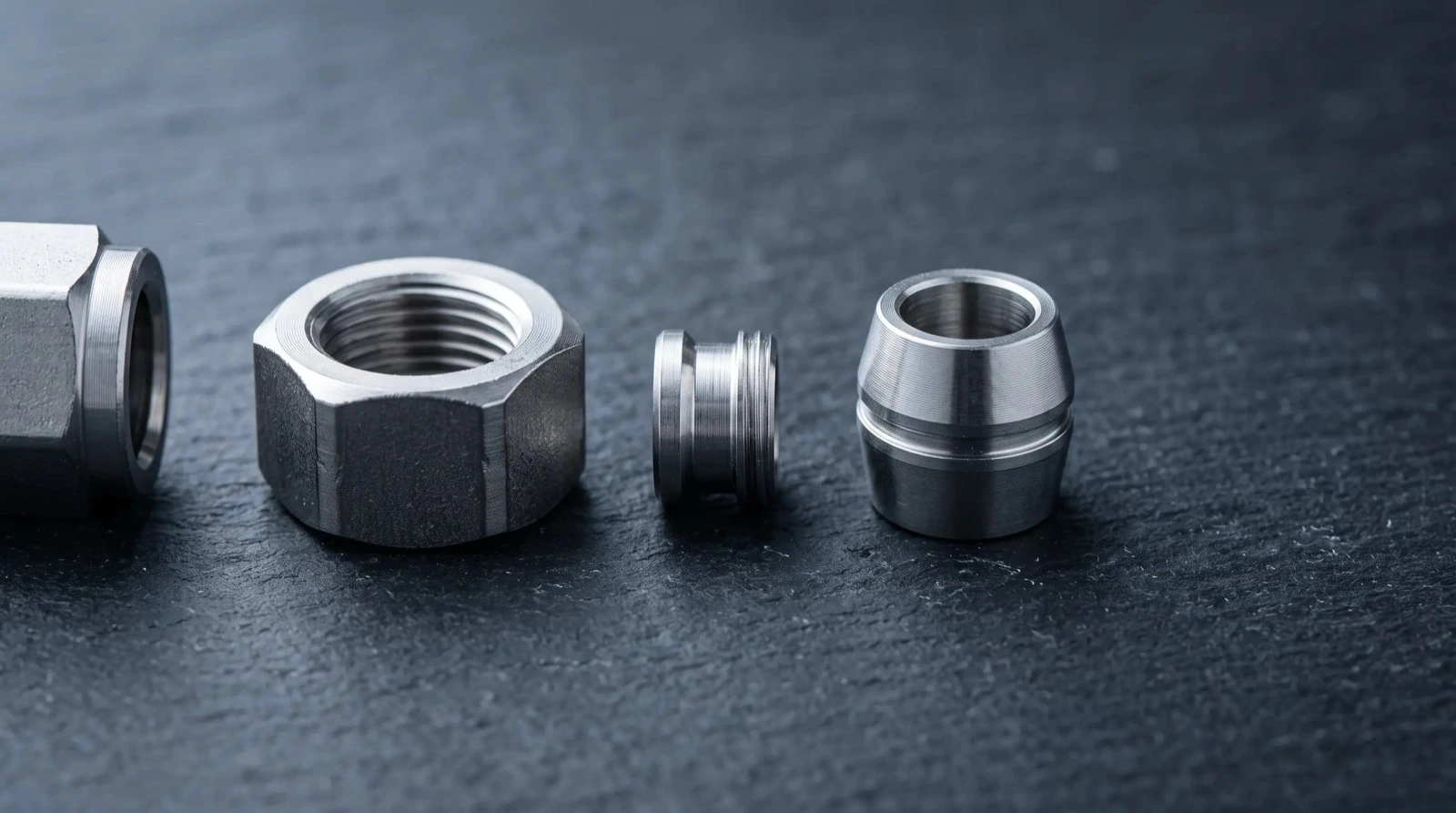
Sealing and grip perform different jobs. Swagelok’s twin-ferrule design separates those functions, as its fitting design documentation explains. The front ferrule seals against the body and tube OD. As you turn the nut, the back ferrule advances the front ferrule and grips the tube radially.
Parker CPI uses a single-ferrule design. One ferrule performs the sealing and gripping work, so your comparison concerns how those functions are combined within the assembly. Ferrule count alone establishes neither pressure capability nor suitability for a particular service. Match the exact design to the tubing and application.
Mechanical grip must hold the tube against pressure loads. Sealing must close the fluid path at the connection surfaces. Both functions matter in your instrumentation tube fittings, including during service changes. Use the ferrule design comparison to separate architecture from application requirements.
Your evaluation still needs the exact configuration. Treat a Parker CPI series envelope as range information, then obtain applicable data for the selected material, size and connections. Keep series maxima out of individual part specifications.
Specify material by service. The grade 316 stainless steel appears in Swagelok’s materials table, but the name alone does not establish suitability for your fluid or surroundings. Include temperature and external exposure in the review. A pressure rating does not answer a corrosion question.
What changes at a threaded transition?
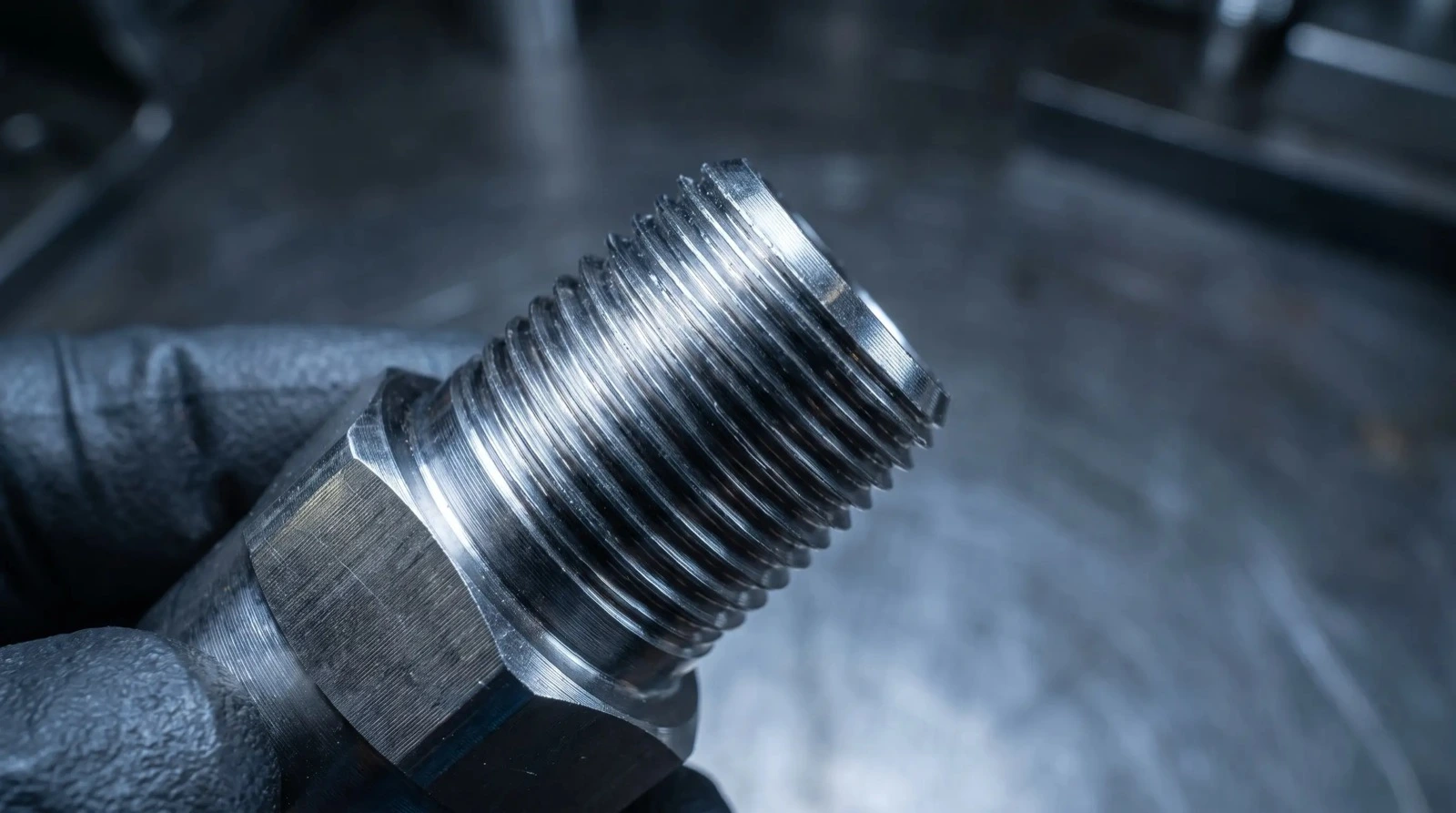
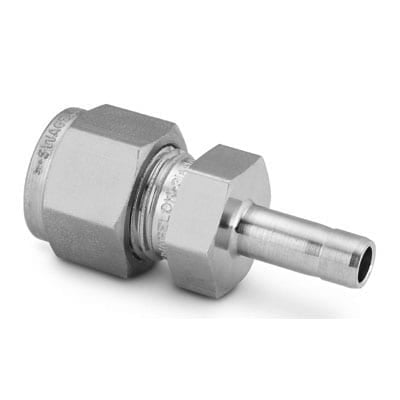
A tube-to-NPT connector has distinct sealing interfaces. The ferrules seal around your tube, while the tapered pipe end joins a threaded port. Swagelok lists tube-end and pipe-end pressure data separately in its connection rating guidance. Check both ends and the mating component.
Thread size alone leaves gaps. Swagelok’s pipe-end tables distinguish male and female connections and material. For your transition, identify thread type, size and sex before selecting the applicable entry. The tube-end pressure basis does not transfer automatically to the threaded end.
Sealing practice changes too. Swagelok’s installer’s pocket guide requires suitable sealant on tapered pipe threads. For your assembly, distinguish this interface from the ferrule seal around the tube. Apply the instructions for each connection type.
What should you send with a quote request?
Turn these checks into a complete request. Your parts list should connect the selected fittings to the actual service. Resolve missing details before purchase.
- State your manufacturer, fitting family, complete part number and required quantity.
- Identify your tube outside diameter, wall thickness, material and tubing specification.
- Describe your connections at each end, including thread type and fitting shape.
- Provide your process fluid, pressure and temperature requirements, including relevant excursions.
- Include your plant specification, drawing revision and required product documentation.
- Give your required date, pickup or shipping preference and approval contact for substitutions.
What belongs in your installation and test package?
Installation completes the connection. Swagelok’s tube fitting installation instructions require the tube to seat against the body shoulder before tightening. Follow the procedure for your fitting size and configuration. Hold the body steady while turning the nut.
Isolate and depressurize before work. Your procedure should release trapped pressure through the designated route before a connection is opened or tightened. Swagelok prohibits bleeding pressure by loosening fitting nuts or plugs. Keep pressure release separate from disassembly.
Inspect the tubing surface before assembly. Deburred ends protect the ferrule sealing edge during insertion, as the tubing data sheet explains. Protect your tubing against scratches and reject damaged sealing areas. Use the instrumentation leak prevention guide when preparing the work package.
A hydrostatic test report answers a bounded question. Swagelok’s hydrostatic test report evaluates specified fittings on extra heavy-wall stainless steel tubing under laboratory conditions. Its method restrained the tubing against bursting with clamping blocks to focus failure at the fitting-to-tube engagement. Compare this setup with your proposed assembly.
The report records behavior under increasing hydraulic pressure. The observed endpoints include loss of grip, material rupture and leakage preventing further pressure increase. These results provide evidence about the tested connection’s grip and sealing behavior. Read them alongside your tubing dimensions and fitting configuration.
Laboratory overpressure results do not establish a higher operating limit. The report explicitly leaves published ratings unchanged and restricts its findings to the stated conditions. It does not establish gas leak performance or long-term resistance to vibration and corrosion in your plant. Those questions need evidence addressing those conditions.
Define installation acceptance separately. Your approved procedure needs the test boundary, medium, pressure, duration, acceptance criteria and recorded results. Identify instruments or components requiring isolation under the procedure. A manufacturer’s laboratory report does not replace the installed system’s test record.
Why source high-pressure tube fittings from Collins-Oliver?
Collins-Oliver has distributed instrumentation fittings, valves and tubing since 1986. It serves Gulf Coast refineries, chemical plants and process facilities. Bring your tubing and valve requirements together when an installation needs more than fittings.
Stock extends beyond the website. Collins-Oliver stocks over 19,000 part numbers, with 119 products detailed online. Browse the tube fitting catalog, then send your complete parts list for an availability check. The online selection represents only part of the inventory.
Authorized DK-LOK distribution provides a direct reason to choose Collins-Oliver when your specification names this manufacturer. The company also stocks Swagelok, Parker and Hoke. Start with the approved family and exact part. Multiple stocked brands support sourcing against different plant specifications.
The warehouse is at 9821 S. Perdue Ave., Baton Rouge, Louisiana. Same-day pickup gives your local maintenance team a collection option, and nationwide shipping serves destinations beyond the Gulf Coast. Confirm stock and pickup readiness before dispatching a driver. Match the delivery plan to the work schedule.
Call (800) 247-5756 for a parts conversation. You reach a person who knows the part and understands the connection details behind the ordering code. Bring your tubing information and manufacturer requirements. Stocked brands, same-day pickup and direct parts help give your team specific reasons to source high-pressure fittings from Collins-Oliver.
Frequently asked questions
Does gas service change how you select tubing?
Yes, wall thickness affects sealing too. Swagelok’s gas-service tubing recommendations explain how heavier walls resist ferrule action, helping ferrules press out minor surface imperfections. Select your tubing from the indicated gas-service options.
Is it acceptable to mix different brands of ferrules and fitting bodies?
Keep the specified components together. Swagelok rejects mixing its tube fitting components with other manufacturers’ components in its component intermix guidance. Treat your replacement ferrules, nut and body as a manufacturer-specific assembly.
Do you use a gap gauge after reassembling a Swagelok fitting?
No, you follow the reassembly instructions. The Swagelok reassembly procedure excludes gap inspection gauges from reassembled fittings and describes marking the assembly before disconnection. Include those marks in your maintenance preparation.
How do you identify metric Swagelok tube fittings?
Check the manufacturer’s identification features. Swagelok’s metric fitting identification guide describes stepped shoulders on body hexes and MM markings on shaped fitting forgings. Confirm your tube measurement and ordering number alongside those features.
Do oxygen-service fittings need a separate cleaning requirement?
Specify cleaning for the application. Swagelok distinguishes standard cleaning from special cleaning and packaging in its cleaning and packaging documentation. Put your approved oxygen-service cleaning requirement on the request before the supplier selects an ordering option.
What should you do when the received part differs from the quote?
Hold the affected item. Compare its markings, packaging and paperwork with your approved order, then send the supplier a clear record of the mismatch. Release the item only after the discrepancy is resolved through your receiving process.
Send your parts list and service details. Include the approved fitting family and required date. Call (800) 247-5756 or request a quote.
Want more of this in your Google feed? Tap here and Google shows you our articles first.