If you ask are Parker and Swagelok fittings interchangeable, the manufacturers do not give your maintenance team a shared approval to mix components. Parker’s December 2012 catalog publishes interchange references for fittings and components. Swagelok’s published position rejects intermixing and interchanging its tube fitting components with other manufacturers’ components.
You should not treat Parker and Swagelok fitting components as interchangeable in your line, because Parker publishes interchange references while Swagelok rejects intermixing and interchanging its components.
Are Parker and Swagelok fittings interchangeable under both policies?
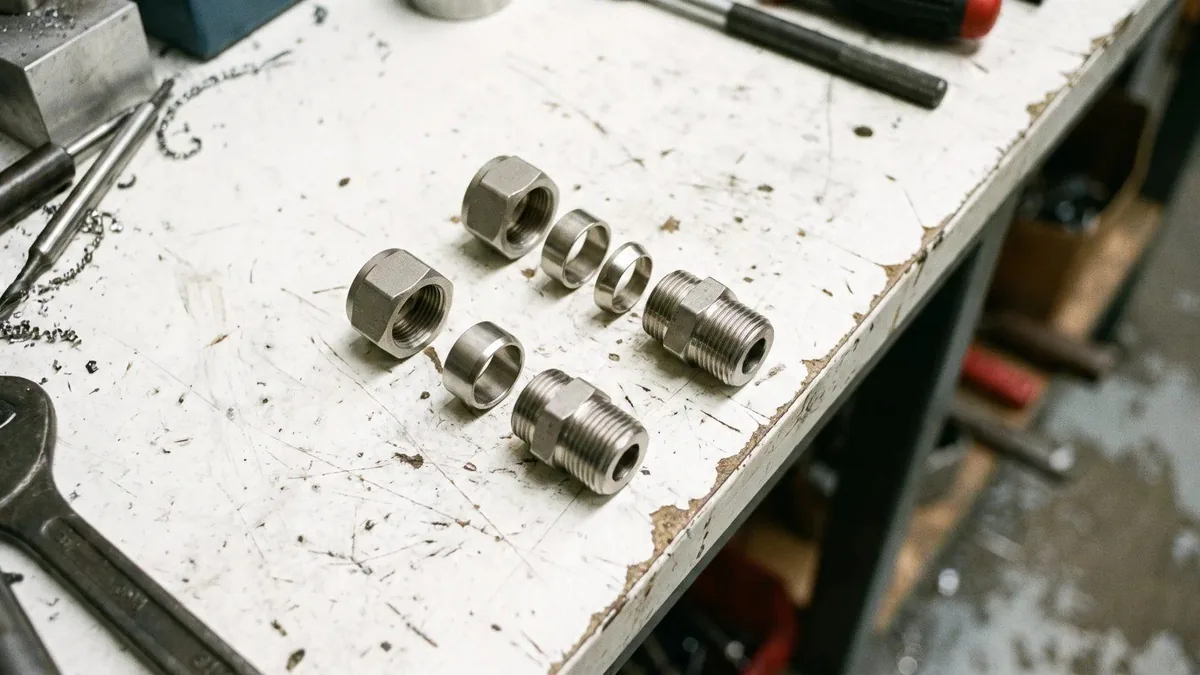
Define your scope first. The work order should distinguish loose components, an existing tube assembly and a complete fitting replacement. Swagelok defines intermix as assembling a fitting with components from different manufacturers. It defines interchange as putting tubing with an installed nut and ferrules into another manufacturer’s body, as its intermix and interchange explanation describes.
Parker publishes component cross-references. For your comparison, look for its “INTER-CHANGES WITH” columns alongside nuts and A-LOK front and back ferrules in the December 2012 component tables. Those entries document Parker’s references for its products. The decision still needs Swagelok’s position on its own components.
Keep those positions separate. The purchase request you submit must not turn Parker’s reference table into Swagelok approval. A cross-reference identifies an item for comparison, while the maintenance decision also depends on the exact assembly and plant requirements. Specify a complete approved assembly when replacing a connection.
What changes in A-LOK vs Swagelok vs CPI?
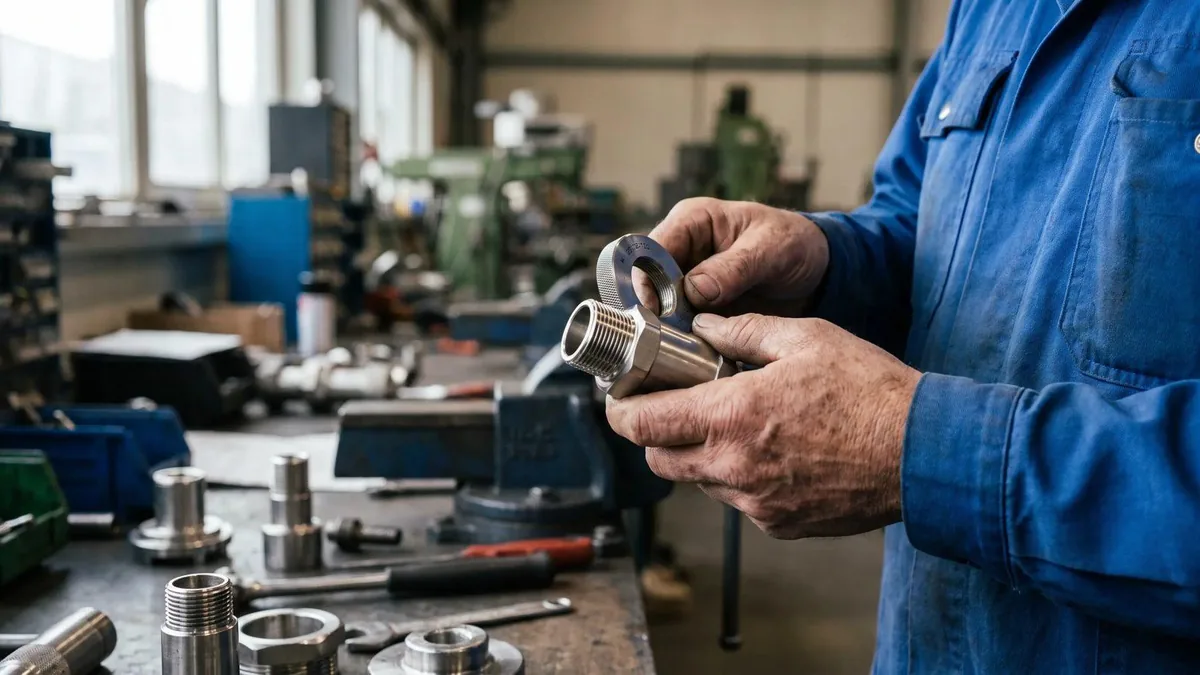
Identify the series name. Your label should say Parker A-LOK or Parker CPI, rather than Parker alone. Parker describes A-LOK as a two-ferrule design and CPI as a single-ferrule design on its official ferrule product page. The distinction belongs on the parts request.
| Fitting family | Published arrangement | Your identification check |
|---|---|---|
| Parker A-LOK | Two ferrules | Record A-LOK as the series. |
| Parker CPI | Single ferrule | Record CPI as the series. |
| Swagelok tube fitting | Two ferrules | Record Swagelok and the complete part number. |
Start your twin-ferrule comparison with construction. Look for separate sealing and gripping functions in Swagelok’s tube fitting catalog. Its front ferrule seals against the body and tubing, while the back ferrule advances the front ferrule and grips the tube. Matching ferrule counts does not establish component compatibility.
Keep your purchasing language consistent too. The bill of materials should retain the manufacturer’s series designation, even when a storeroom description says compression fitting. Collins-Oliver’s guide to ferrule arrangements provides related reading for your team. Keep the actual selection tied to manufacturer documentation.
What should you check before changing parts on a line?
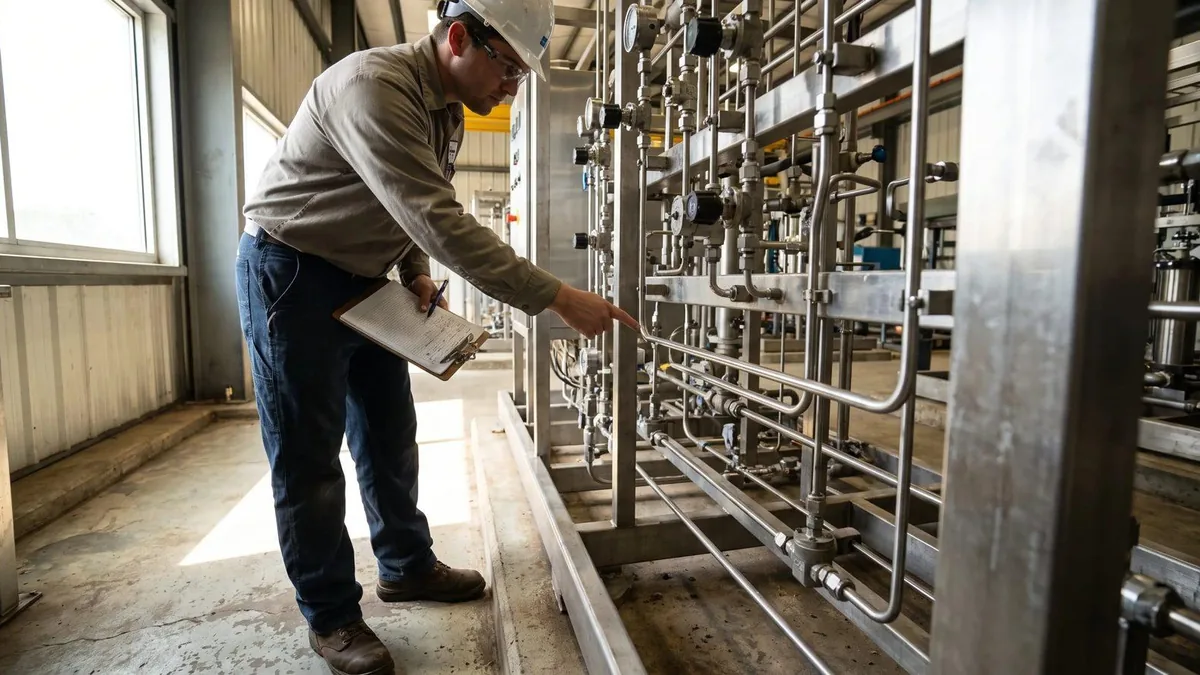
Prepare a complete connection record. Your drawing, tubing specification and maintenance scope should agree before parts reach the bench. Capture the following details in the work pack. Resolve missing information before releasing the replacement.
- Tube OD: record the outside diameter and whether the tubing is fractional or metric. Match the fitting designation to the actual tube.
- Tube wall: record the specified thickness and locate the applicable manufacturer tubing table. Include the service medium in the check.
- Material: identify the tubing and fitting alloys. Check the service specification for compatibility with the fluid and surrounding environment.
- Thread form: identify each threaded end independently. Record NPT, BSPT, BSPP or the specified alternative, including the mating port and sealing arrangement.
- Plant specification: confirm the approved manufacturer, series, material, documentation and installation procedure. Route proposed substitutions through the site’s change process.
- Assembly history: establish whether ferrules are already installed on the tube. Record the existing body, nut and ferrule manufacturer before defining the replacement scope.
Check tubing condition too. Your OD and wall entries do not describe scratches, hardness or preparation. Swagelok’s tubing data addresses surface finish, material, hardness and wall thickness, and calls for deburred tube ends. Record damage instead of hiding it beneath a replacement nut.
Give your thread check its own line. Record the tube connection separately from the process connection. Swagelok’s thread specification table distinguishes tube fitting nut threads from NPT and ISO/BSP end connections. A familiar wrench size is not a thread identification method.
Send the same record to purchasing and maintenance. Your buyer needs the ordered configuration, while the installer needs the approved assembly procedure. Put the equipment tag beside the part number so a similar item for another instrument does not enter the job kit. Keep the selection traceable through installation.
Flag conflicting records. Your drawing might specify A-LOK while the maintenance request lists only a generic tube connector, leaving purchasing without a defined series. Resolve the discrepancy in the job record and carry the corrected description onto the order. Do not let an incomplete description become the basis for a substitution.
Where does the pressure rating come from?
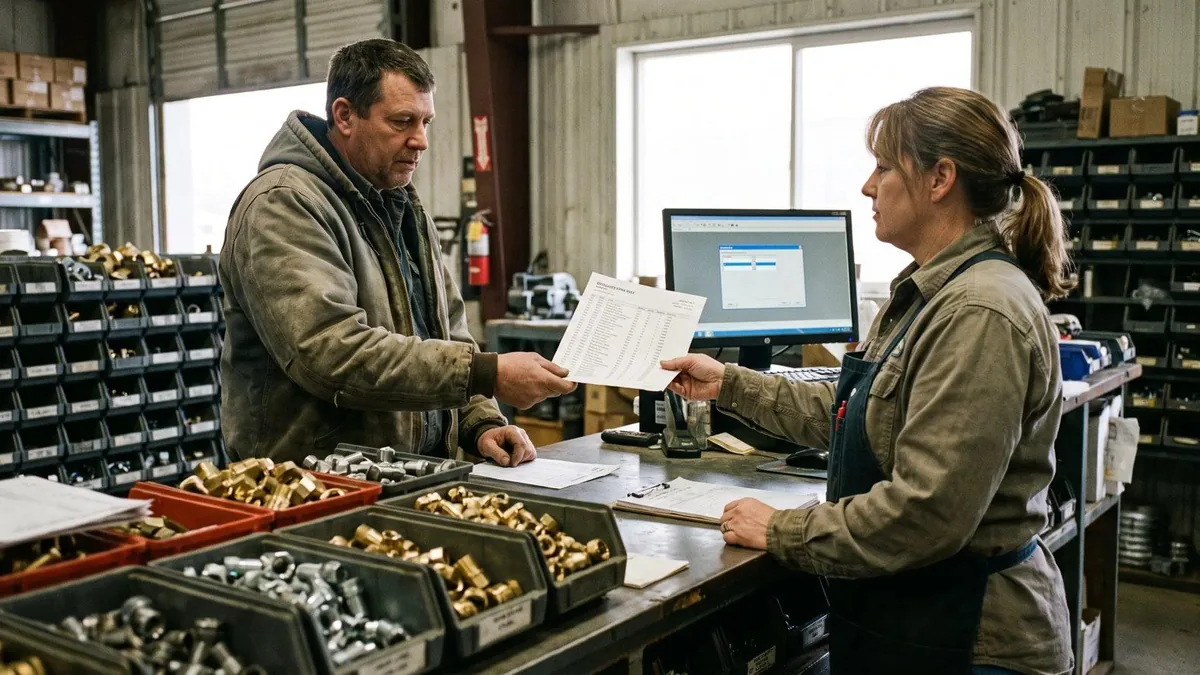
Find the tubing data. Your Swagelok tube fitting end is rated to the working pressure of the tubing, as stated in MS-01-140. Do not assign a standalone fitting pressure from its part number. Match the tubing and service conditions to the published selection data.
Temperature also belongs in your selection. Use the material-specific tables and elevated-temperature factors in Swagelok’s tubing selection data. The document also distinguishes tubing wall selection for gas service. A room-temperature lookup alone does not complete the service check.
Apply the same discipline for Parker. Your Parker selection should follow its tubing guidance and applicable end-connection limits. The Parker catalog’s pressure guidance directs readers to tubing tables and notes pipe threads as a potential pressure-limiting feature. Treat a series envelope as an envelope, never as an individual part rating.
Preserve these inputs in your purchasing description. Attach the tubing specification and service conditions rather than write a bare pressure beside a fitting number. Leave a place for the selected manufacturer’s document and revision. Give the reviewer the basis for the choice.
Are Parker and Swagelok fittings interchangeable as complete replacements?
Define a replacement scope. Your plan should identify every component being removed and every connection being retained. A complete fitting replacement is a different job from placing existing ferrules in another brand’s body. Write the scope before selecting an alternative.
Identify each retained tube end. Your drawing needs to show where existing ferrules remain and where a new connection will be prepared. If the plan retains a nut and ferrules from the previous manufacturer, the proposal still includes component interchange. Purchasing a complete fitting does not resolve an incomplete installation plan.
Start your shutdown work with isolation. Depressurize before disassembling or adjusting a Swagelok connection, following its installation precautions. Do not bleed the system by loosening the fitting nut. Follow the plant’s isolation procedure before opening the connection.
Plan access as well. Your replacement needs enough room for assembly and later maintenance. Swagelok’s installation guidance addresses connection access, tubing routes and support. Include those details in the replacement review, then complete the plant’s specified inspection and leak test.
Close the paperwork loop. The completed work pack you retain should identify the installed manufacturer and series, record the approved change and retain the inspection results required by the plant. Update the spare-parts entry to match the finished connection. The next maintenance job needs the installed configuration, not the superseded purchase description.
Where should you source Parker and Swagelok parts?
You have both brands available through Collins-Oliver. Your maintenance planning draws on stock exceeding 19,000 part numbers, with same-day pickup in Baton Rouge and nationwide shipping. The company buys new and new surplus material. Ask a person who knows the part to check your exact number, quantity and collection or shipping needs.
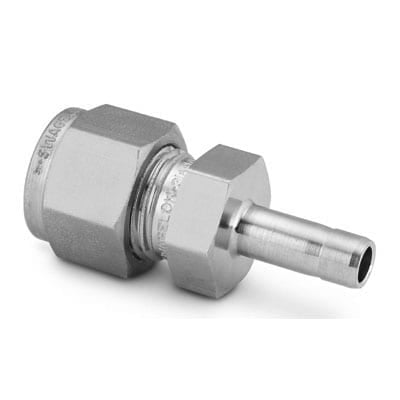
Your Parker request might start with the Parker A-LOK union tee listing. You will also find a Swagelok SS-810-3 tee listing, whose configuration appears on Swagelok’s own product page. Send the complete requirement with either request. A product listing starts the stock conversation, while your plant specification controls selection.
You should bring the work pack. Your part number, connection description, tubing details and required documentation give the counter team a clear request. Add the needed quantity and job timing so availability is checked against the actual task. For broader buying context, see the Parker and Swagelok purchasing overview.
You should confirm the order line by line. Your requested brand and series belong beside the quantity, with proposed alternatives identified separately for review. Ask the counter team to confirm the selected item before arranging pickup or shipping. Keep the approved description with the receiving paperwork.
What else do buyers ask about fitting interchange?
Does a cross-reference prove the fittings have identical dimensions?
No, you still need the drawing. Your layout needs its own dimensional check because Parker labels catalog dimensions as reference information subject to change in its fitting tables. Request the applicable drawing before approving a replacement in a confined panel.
Does a repair need a complete fitting or replacement components?
You should make the order match the approved repair scope. Your request should explicitly say complete assembly or identify each required component. Include a receiving check for the ordered contents so the installer does not discover missing parts after isolation.
Does a gap gauge approve a Swagelok fitting after reassembly?
No, you should distinguish initial assembly from reassembly. Your Swagelok gap inspection gauge is not for reassembled fittings, according to the reassembly instructions. Keep the applicable reassembly procedure with the job kit.
Is tightening by feel enough for a tube fitting?
No, you should follow the prescribed procedure. Your tubing size, wall and hardness affect how installation feels, as Swagelok’s installation article explains. A technician’s familiar wrench feel does not replace the instructions for the selected fitting.
How should storeroom bins separate Parker and Swagelok parts?
You should give each manufacturer and series a distinct location. Your bin label should carry the complete part number, material and connection description, with loose components separated from complete fittings. Keep unidentified loose parts out of job kits until their identity is resolved.
What belongs in a request for an alternative fitting?
You should state why an alternative is needed. Your request should identify the original item, the permitted substitution scope and the person responsible for approving the change. Ask for the proposed manufacturer’s documentation with the alternative so the decision remains tied to a specific assembly.
You have a part to match. Bring your specification and call (800) 247-5756. Or request a quote from Collins-Oliver.
Want more of this in your Google feed? Tap here and Google shows you our articles first.