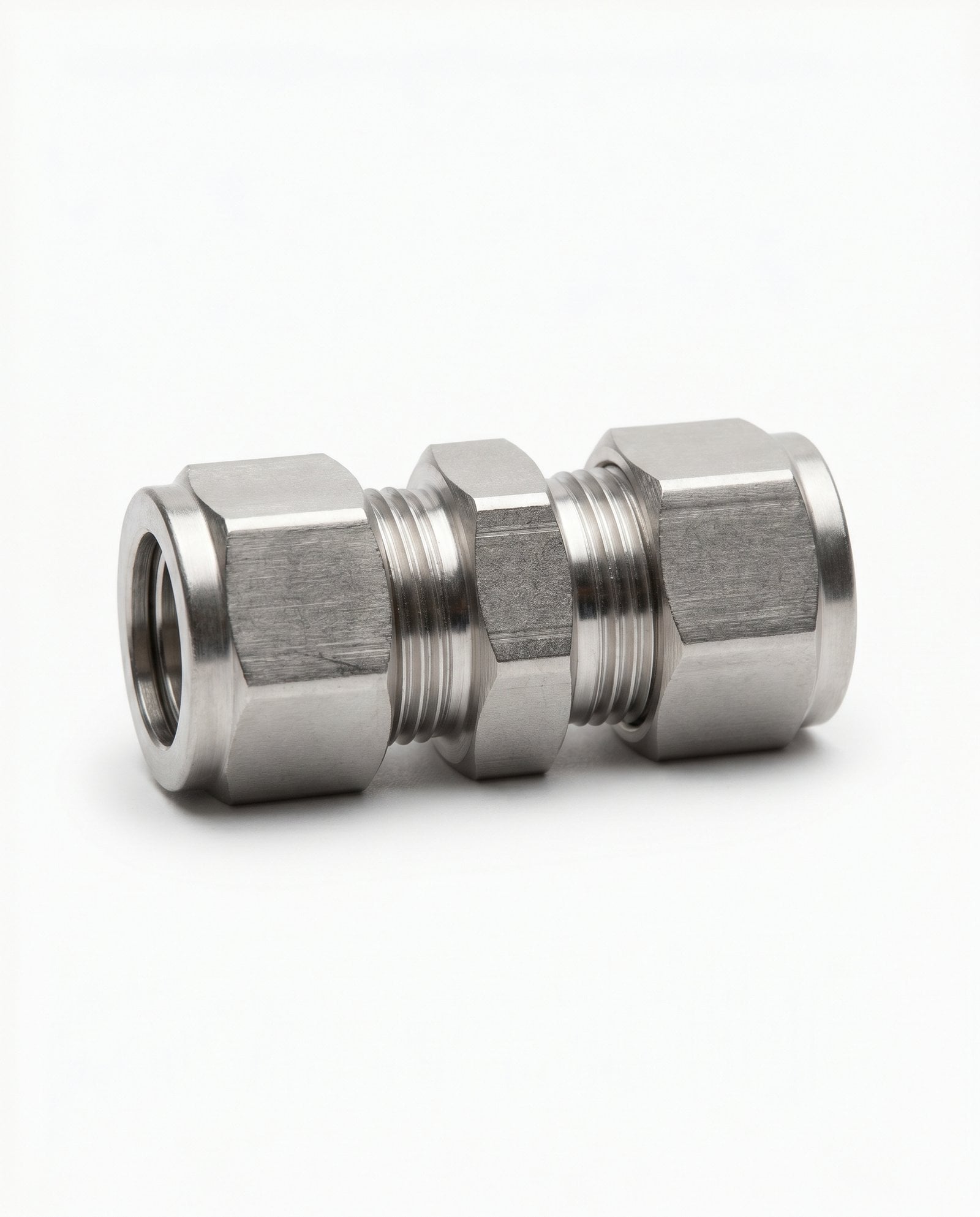
Which fluids decide stainless steel vs brass tube fittings?
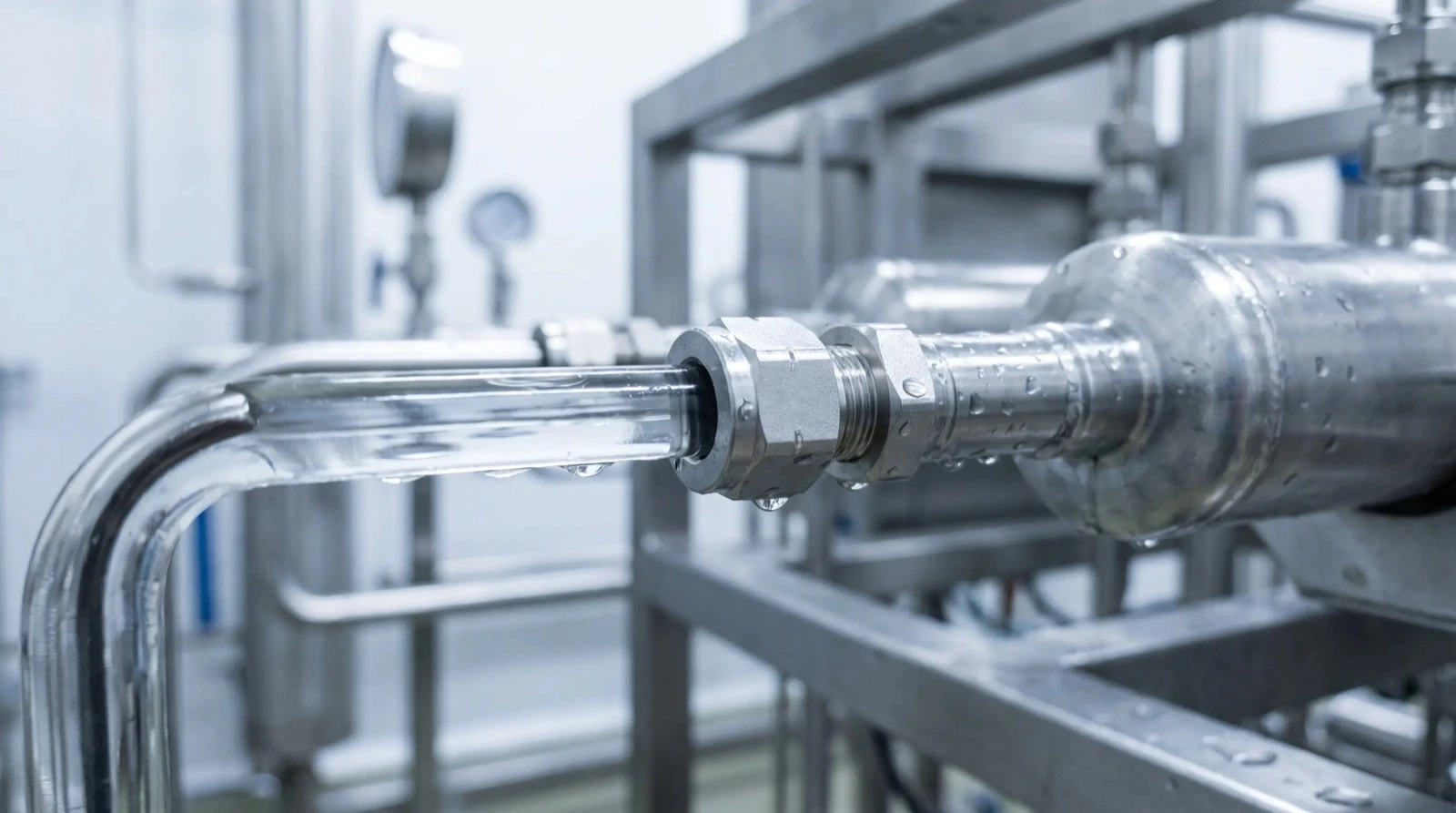
Start with the actual mixture. Concentration, contamination and cleaning chemicals belong beside the main fluid name when you assess your wetted materials. Use the full three-way material comparison for the general primer. This article follows the fluid through the connection.
Brass earns its place in utilities. Clean instrument air, dry nitrogen and many hydraulic oils suit brass when you have compatible tubing and adequate operating limits. Water needs closer attention to your treatment chemistry, acidity and stagnation. A utility label does not establish compatibility.
Ammonia rules brass out of selection. Some amines attack copper alloys through soluble complex formation, while sulphur and hydrogen sulphide create further corrosion concerns. Identify your chemical species before you accept a broad label such as amine solution or sour hydrocarbon. Total sulphur alone does not describe the attack.
Many chloride services also exclude ordinary brass. Aggressive chloride solutions and chloride-rich waters deserve specific alloy review before you approve your fitting. Neither every chloride salt nor every brass behaves alike. Switching to stainless still requires a separate corrosion assessment.
Sample systems need the full exposure history. A flushing step introduces a different liquid, and a process upset changes what reaches your sampling connection. Include those events when you select the wetted alloy. Compatibility with the normal sample does not cover the cleaning cycle.
| Service | Brass assessment | Stainless assessment |
|---|---|---|
| Instrument air and nitrogen | Sensible for clean, compatible utility service | Often selected by plant standard or external exposure |
| Water | Review chemistry and dezincification susceptibility | Review chlorides, deposits and temperature |
| Hydraulic oils | Check additives and the complete fluid formulation | Check pressure, seals and contamination requirements |
| Ammonia and aggressive amines | Exclude ammonia and incompatible amine formulations | Select against the actual mixture and conditions |
| Chloride-rich or reactive sulphur media | Exclude ordinary brass where attack is expected | Evaluate an appropriate alloy beyond a generic stainless designation |
Where do dezincification and brass cracking show up?
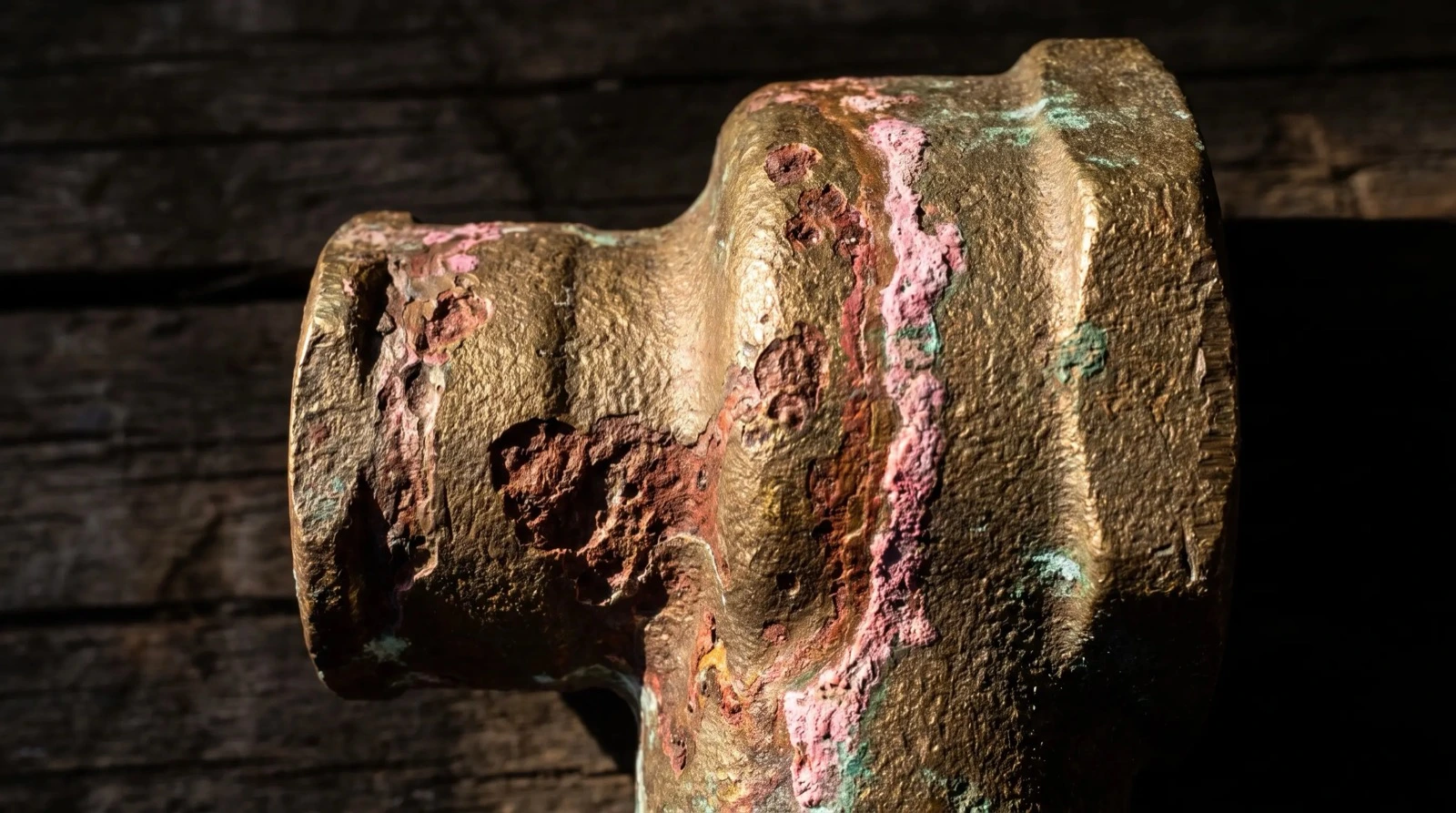
Dezincification removes zinc from brass. A porous copper-rich structure remains, with reduced mechanical strength, as AMPP’s dezincification explanation describes. Include stagnant water branches in your inspection plan when you screen susceptible brass. The fitting’s remaining shape hides its lost strength.
Plant examples follow the exposure. Warm water sample branches, idle utility takeoffs and deposit-covered fittings deserve attention because your local conditions differ from flowing header water. Look for weeping and mineral deposits as you inspect. Localized attack threatens a small region, while broader attack weakens a larger surface.
Inspection findings need their operating context. Compare your affected branch with similar branches carrying the same water, including their temperatures and time out of circulation. Preserve the removed component when you investigate the failure. Replacing the fitting without identifying the exposure leaves the cause in place.
Stress corrosion cracking follows another mechanism. A susceptible alloy, tensile stress and the relevant environment act together, as AMPP’s cracking guidance explains. Include residual manufacturing stresses and assembly loading when you assess your connection. Substantial overall metal loss is unnecessary.
Ammonia exposure deserves particular attention. ASTM describes an ammonia vapour test for susceptible copper alloys that addresses residual stress and cracking. Applied to your plant, that mechanism makes damp fittings near ammonia equipment or ammonia-containing cleaners inspection priorities. Check the outside exposure even when you carry clean fluid inside.
Why is 316 stainless still vulnerable to chlorides?
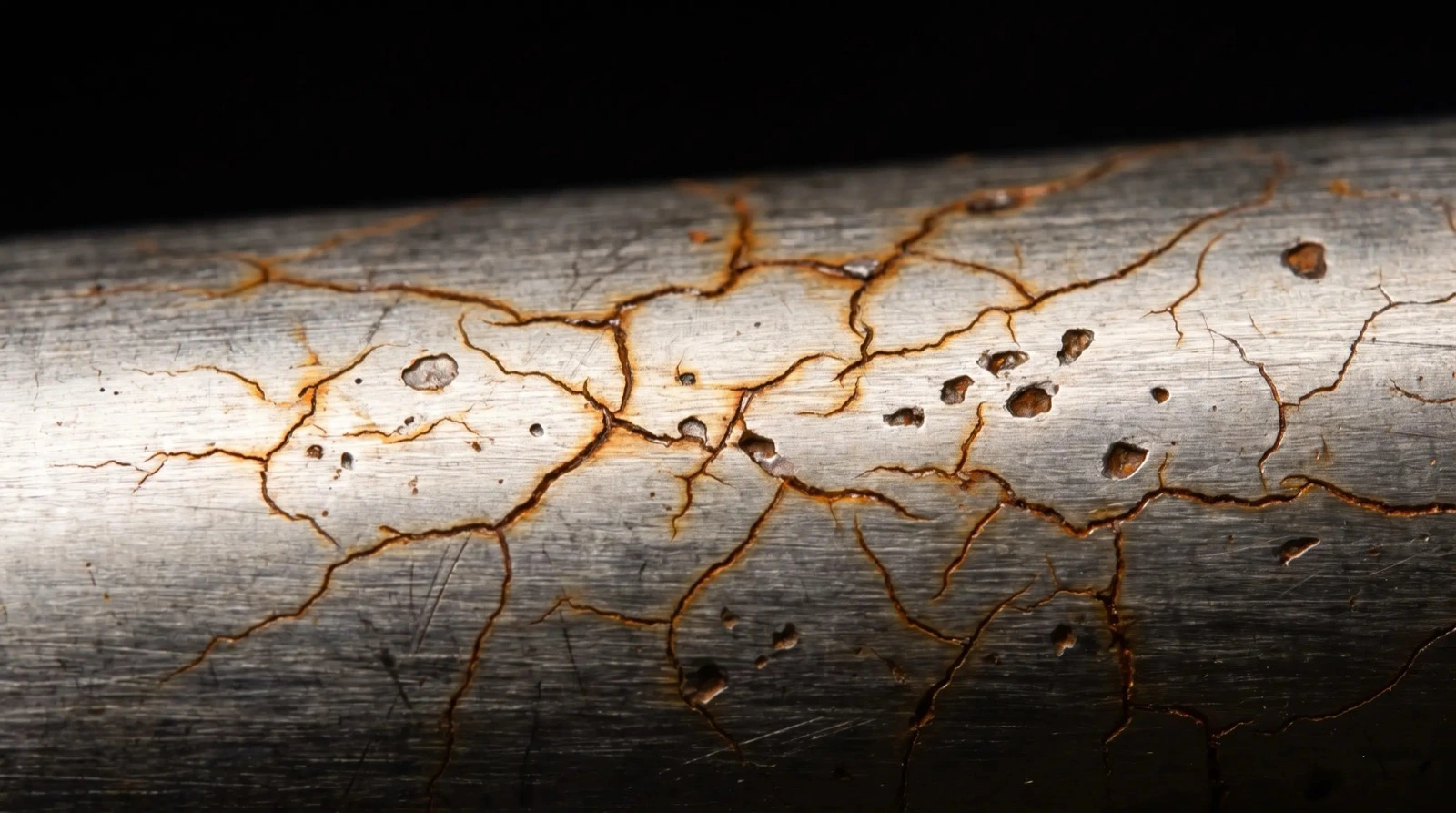
Stainless protection has limits. The passive oxide film resists corrosion, but chlorides threaten that protection in your wetted passages and external crevices. Swagelok’s materials selection guide identifies 316 stainless as susceptible to chloride pitting, crevice corrosion and stress corrosion cracking. Treat those as distinct mechanisms when you assess damage.
Improved resistance is not immunity. Alloy composition changes corrosion behaviour, but the stainless designation does not remove the environmental and stress conditions that drive cracking. Keep your corrosion assessment separate from the material’s mechanical rating when you evaluate hot chloride service. Passing the pressure calculation leaves that question open.
Cracking needs stress and exposure. Heat, chloride concentration and tensile stress increase concern, including stresses left by forming or imposed during service. Inspect your hot sample tubing, sheltered joints and wet supports as you map exposure. Clean process fluid does not remove an external chloride hazard.
A coastal installation illustrates the distinction. Salt-bearing moisture around your fitting creates a different exposure from the dry nitrogen flowing inside. If you find repeated wetting or trapped deposits, include those locations in the corrosion review. Where the environment exceeds the selected alloy’s resistance, specify a more resistant material.
What happens when brass meets stainless in a wet system?
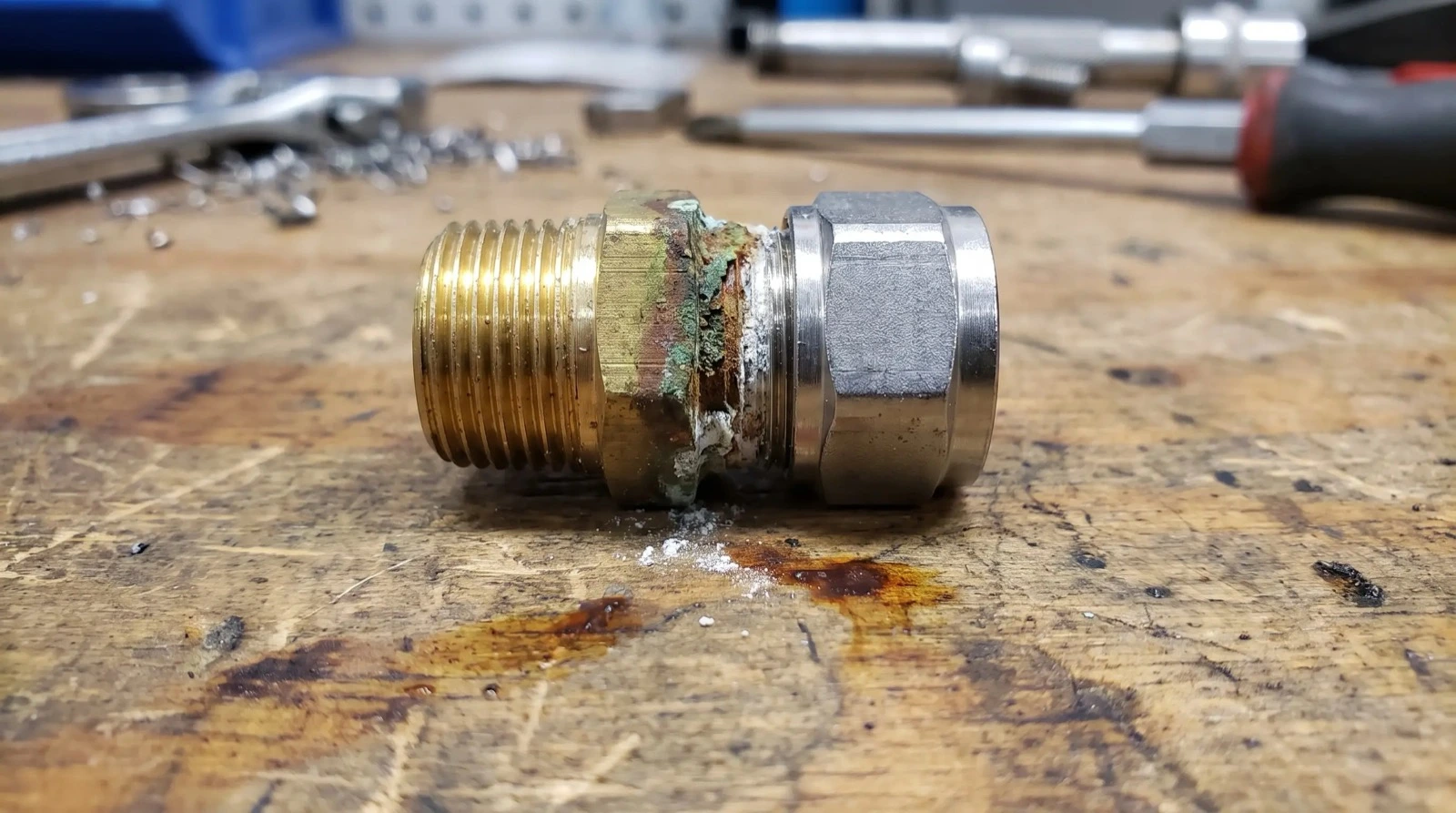
Wet contact changes the pairing. AMPP’s galvanic corrosion guidance explains the need for electrical contact and a conducting electrolyte. In an aerated wet system with passive stainless, brass generally becomes the less noble metal and suffers accelerated attack. Check your actual electrolyte before you assign that relationship.
Exposed area matters as well. A small brass fitting coupled to a larger wetted stainless surface concentrates the anodic burden on the brass. Reversing the arrangement changes your area balance, so a stainless fitting on brass tube still puts the brass at risk. Compare wetted areas when you assess severity.
Corrosion is only part of the decision. Swagelok’s installer’s tubing selection instructions explicitly reject stainless tubing with brass fittings because the tube must be softer than the fitting material. Reject that pairing when you specify your Swagelok connection. A dry system does not solve unsuitable tube grip.
The reverse needs documented compatibility too. A stainless fitting on brass tube still needs the manufacturer’s acceptance of your tube alloy, hardness and wall. Prefer an approved matching combination when you design the joint. Treat an engineered insulating transition as a separate component with its own service limits.
How do pressure and temperature affect stainless steel vs brass tube fittings?
Temperature changes the useful pressure limit. Brass generally has a narrower useful range for hot duty than stainless steel, while both require the applicable product data. Compare your coincident pressure and temperature before you choose the material. Separate maximum figures do not establish a usable operating point.
Swagelok’s tube-end basis is explicit. Its tube fitting pressure-rating basis rates the tube fitting end to the working pressure of the tubing used with it. Record your tubing material, outside diameter and wall when you select the connection. A fitting material name is not a standalone pressure rating.
Apply the appropriate temperature adjustment. Swagelok’s tubing data sheet provides material-specific elevated-temperature factors and explains their application. Check threaded transitions, valves and seals alongside your tubing as you establish the assembly limit. The lowest applicable limit controls.
Fluid events add another check. Trapped liquid heating, pump pulsation and rapid valve closure belong in your design review alongside steady operation. Trace the expected excursions before you compare the candidates. Use the tubing pressure-limit guide for the dimensional basis.
Heating also changes mechanical loading. Restrained thermal expansion adds stress, and AMPP’s environmental cracking overview identifies thermal expansion and cycling among stress sources. Review your supports and connected equipment when you assess a repeatedly heated line. Selecting stainless alone does not resolve imposed loads.
When do cost and the plant specification decide?
Brass offers a real manufacturing advantage. Its easier machining supports efficient production, while stainless generally requires more machining effort and higher component expenditure. Compare your installed and maintenance costs when you weigh the trade-off. Brass remains sensible where the service supports it.
Machinability does not justify field modification. Drilling or reshaping a purchased fitting changes the component you selected for your pressure boundary. Keep manufacturing economics separate from maintenance practice. Easy cutting says nothing about approval for the altered part.
The plant specification often decides first. A mandated stainless fitting family settles your purchase even where brass would tolerate the fluid. If you propose a change, identify the reason and follow the plant’s material substitution process. A matching connection size does not establish an accepted substitute.
Keep the service review practical. Record your normal conditions and the exposures that occur during startup, shutdown and cleaning. Use these checks before you release the material selection.
- Identify your complete fluid formulation, contaminants and cleaning media.
- Map your stagnant branches, hot locations and external wetting.
- Check your tube alloy, hardness and approved fitting combination.
- Establish your assembly limits at the required pressure and temperature.
- Apply your plant material class and approved manufacturer requirements.
Why source fluid-system fittings from Collins-Oliver?
Collins-Oliver distributes instrumentation fittings, valves and tubing. Its instrumentation tube fitting selection gives you a starting point for your approved parts list. Stock exceeds 19,000 part numbers across the business. Ask about the exact configuration and quantity required.
Approved brands simplify the sourcing conversation. Collins-Oliver is an authorized DK-LOK distributor and also stocks Swagelok, Parker and Hoke. Name your specified manufacturer when you submit the request. Keep the fitting family tied to the approved design.
Local access supports planned maintenance. Collins-Oliver serves Gulf Coast refineries, chemical plants and process facilities, with same-day pickup in Baton Rouge and nationwide shipping. Confirm your stock and collection arrangements before you dispatch a driver. Match the supply plan to the work window.
Frequently asked questions
Is dezincification-resistant brass suitable for ammonia?
Dezincification resistance does not establish ammonia compatibility. It addresses selective zinc loss, while your ammonia service introduces a separate cracking and corrosion question. Keep ammonia excluded when you evaluate brass substitutions.
Does a pressure test prove brass fittings are chemically compatible?
No, the test answers a different question. A successful initial test does not reproduce your long-term chemical exposure or establish resistance to stress corrosion cracking. Keep the compatibility assessment separate when you accept the test result.
Does stainless steel protect the O-ring from chemical attack?
The metal body does not protect wetted elastomers. Swagelok’s catalog lists O-ring materials separately for applicable connections, so your selection needs both metal and seal compatibility. Check the seal compound when you change fluids.
Are all hydraulic fluids suitable for brass fittings?
Many hydraulic oils suit brass, but hydraulic fluid describes a function. Water-containing formulations and different additive packages require their own assessment for your system. Recheck compatibility when you change the fluid product.
Is a brass fitting the same material as a bronze fitting?
No, those names describe different alloy families. A bronze valve body’s service history does not establish suitability for your brass tube fitting. Identify the actual alloy before you transfer an operating assumption.
Should you tighten a brass fitting that starts weeping?
Isolate and depressurize the affected line first. Weeping through your fitting body calls for investigation of material damage, and added nut tightening does not restore lost metal. Identify the leak path before you select the repair.
Bring your fluid and tubing details. Include the plant specification you need supplied. Call (800) 247-5756 or request a quote.
Want more of this in your Google feed? Tap here and Google shows you our articles first.