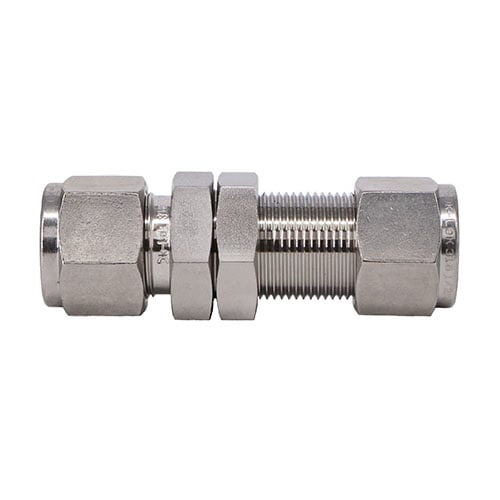
Tube fitting material selection decides whether your instrumentation line runs leak-free for years or fails within months. Get the alloy wrong and you pay twice: once at the counter, and again when the fitting pits, seizes, or lets go under pressure. This guide compares the three metals you reach for most in a plant or refinery: 316 stainless steel, brass, and carbon steel. You will see where each one wins, where each one struggles, and how to match the metal to your media, temperature, pressure, and budget.
TL;DR
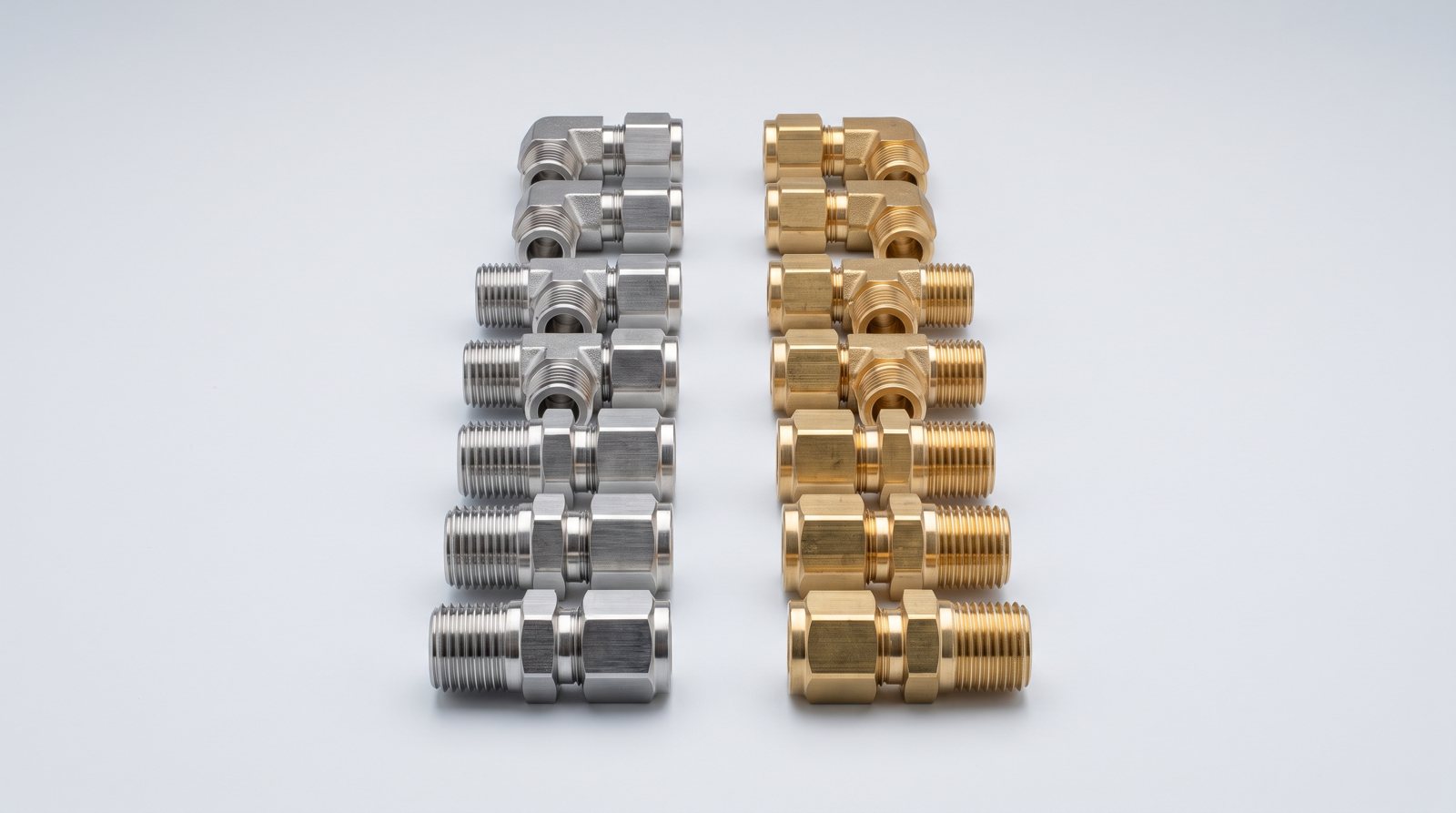
- 316 stainless steel resists chloride pitting best because its 2 to 3% molybdenum raises its Pitting Resistance Equivalent Number to roughly 24, so it wins in corrosive, marine, and high-purity service.
- Brass suits clean water, instrument air, and non-corrosive gas at moderate pressure and temperature, but ammonia triggers stress-corrosion cracking, so keep brass away from it.
- Carbon steel delivers high strength at the lowest price for oil, gas, and hydraulic lines, yet it rusts without a protective coating in wet or humid settings.
- Match the fitting metal to your tubing metal to stop galvanic corrosion at the joint.
- Answer four questions first: what flows through the line, how hot and how high the pressure climbs, how harsh the outside environment is, and whether the line needs high purity.
Quick Answer
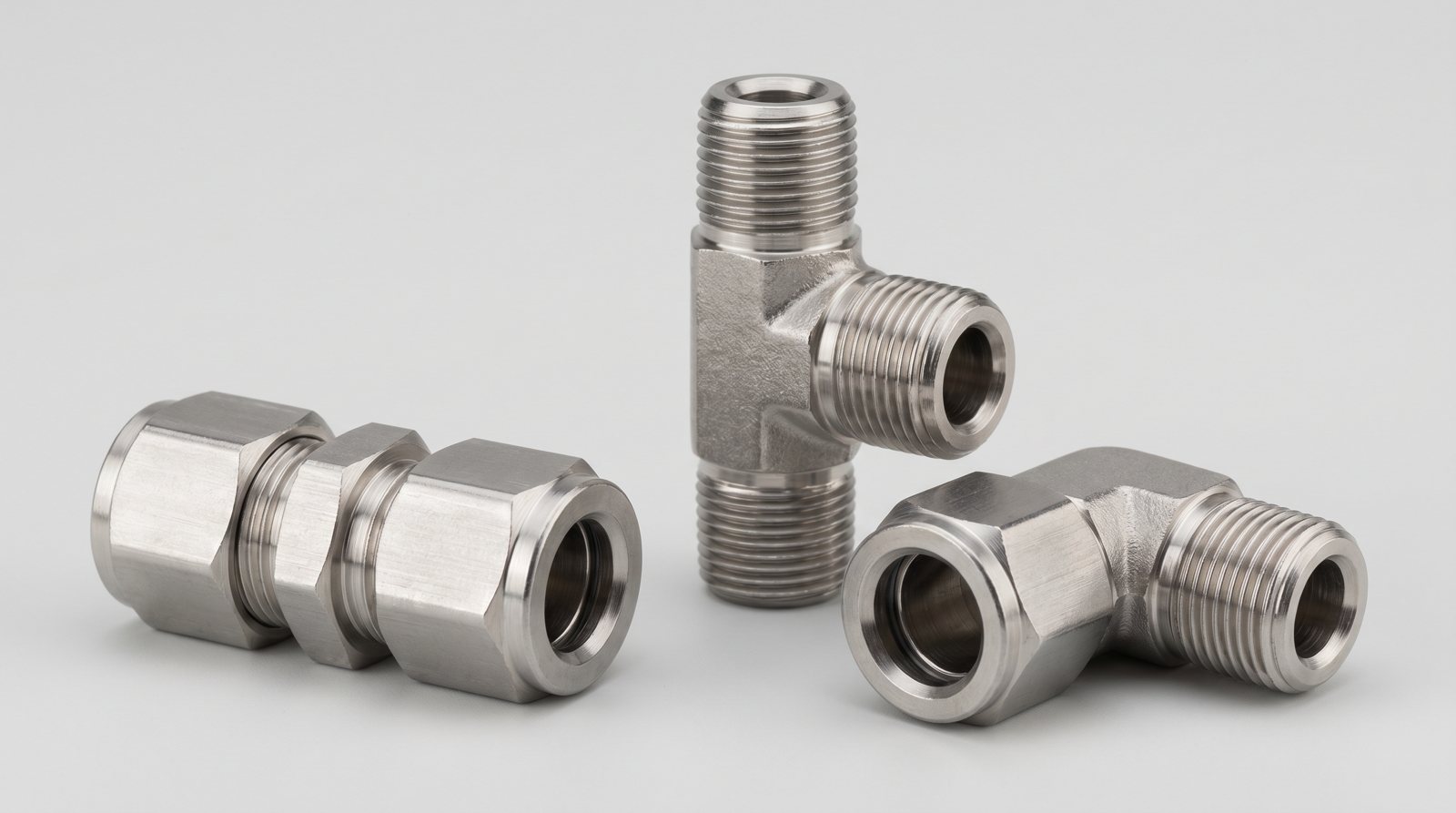
Choose 316 stainless steel when corrosion resistance, chlorides, or high purity drive the job. Choose brass for clean water, air, and mild gas at moderate conditions. Choose carbon steel for high-strength oil, gas, and hydraulic service where a coating keeps corrosion under control. The right material depends on your media, your pressure and temperature, and the environment around the line, so answer those three before you look at price.
Why does tube fitting material matter for your system?
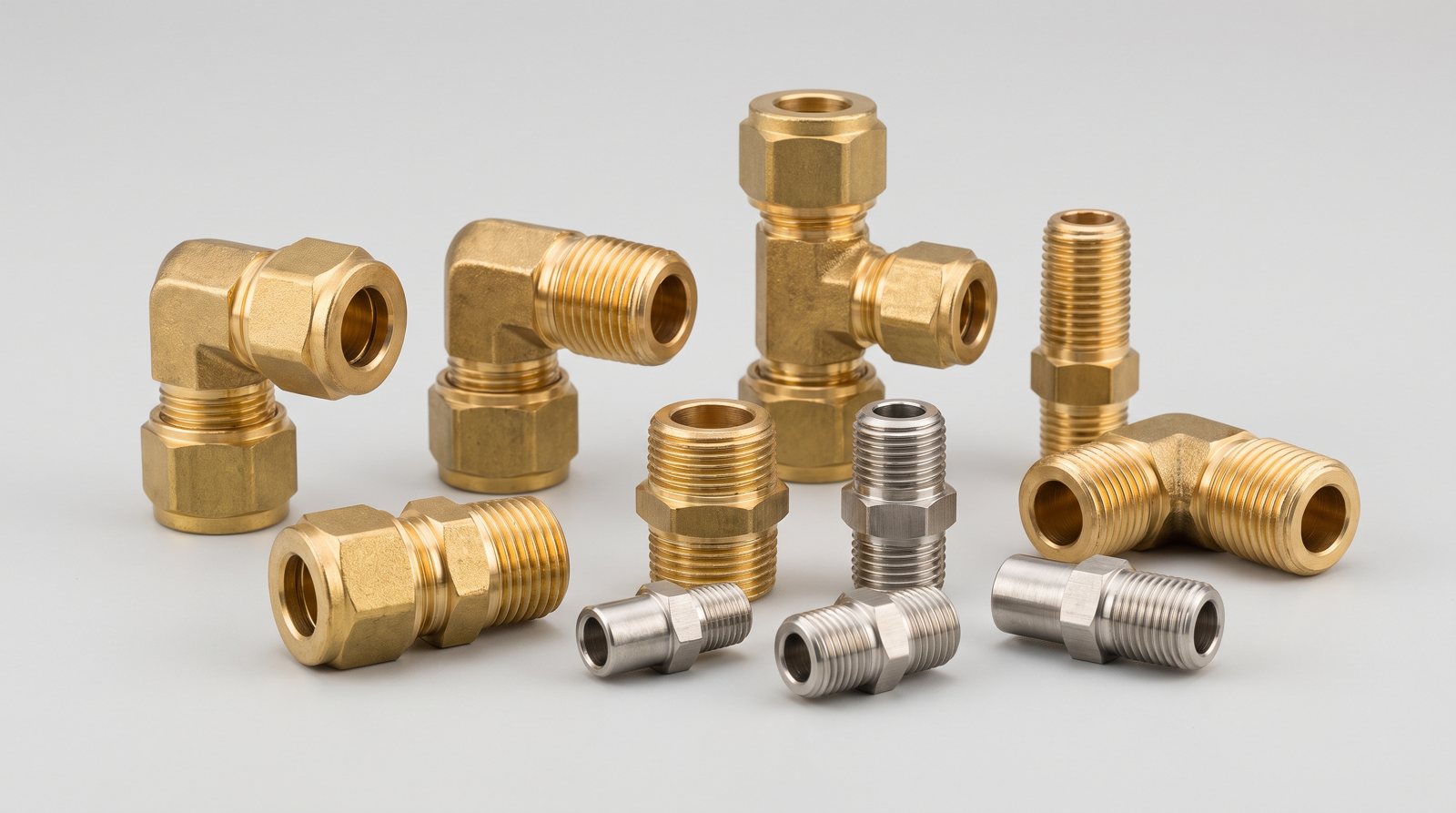
The fitting is the weak point in any tubing run. It holds pressure, resists the media inside, and fights the environment outside. Pick a metal too weak for your chemistry and you invite pitting, cracking, and galvanic corrosion at the joint. The right choice protects your people, your product, and your uptime. So before you compare price tags, study three things: what flows through the line, what surrounds the line, and how hot and how high the pressure climbs.
Material also drives total cost of ownership, not sticker cost. A cheap fitting in the wrong service will fail, and a single leak on a live process line costs far more in lost product, downtime, and cleanup than the fitting ever saved. Spec the metal to the duty and you buy once. You will find the full range of body metals across our tube fittings and tubing lines, so you match the joint end to end.
When should you choose 316 stainless steel?
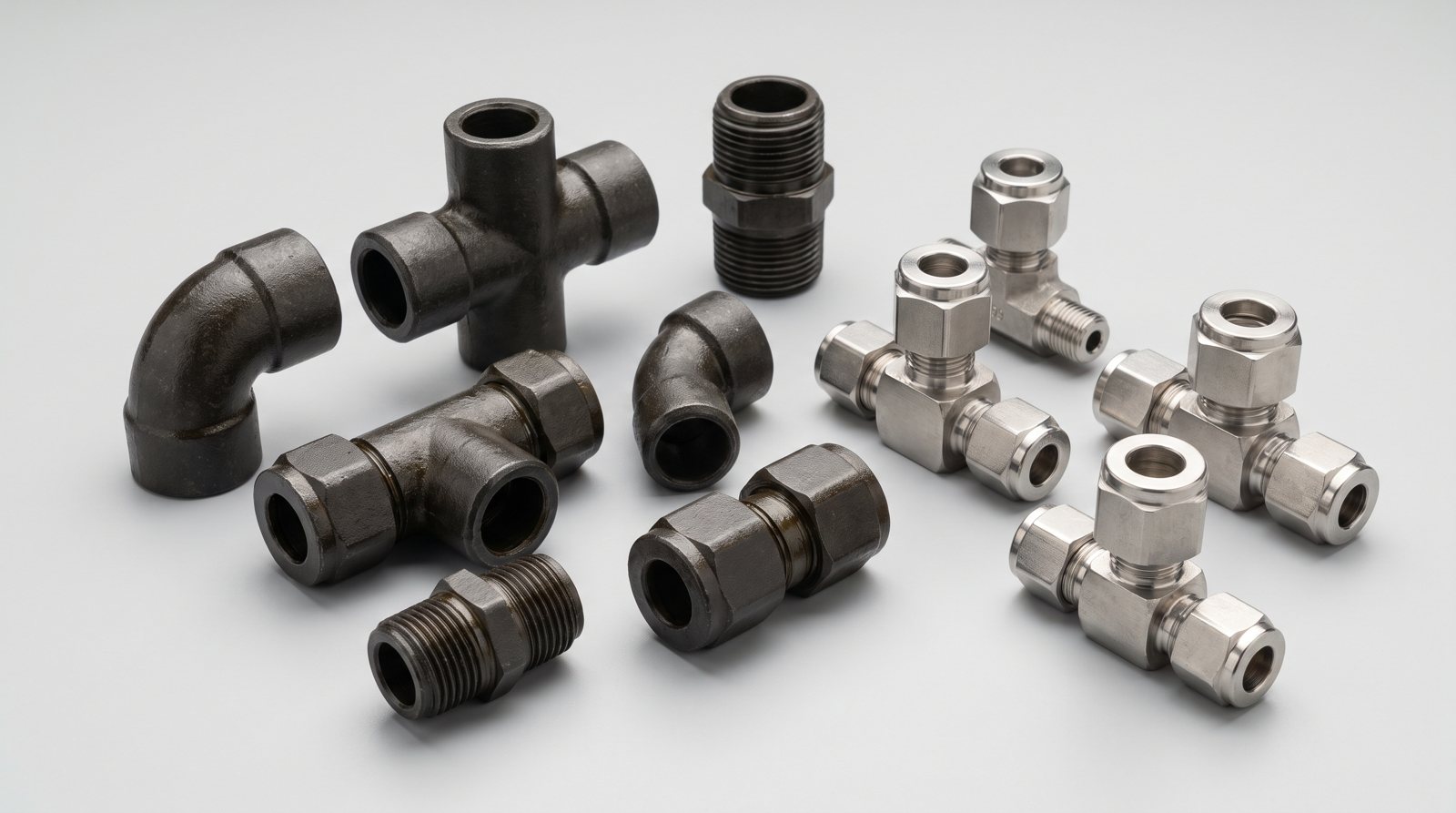
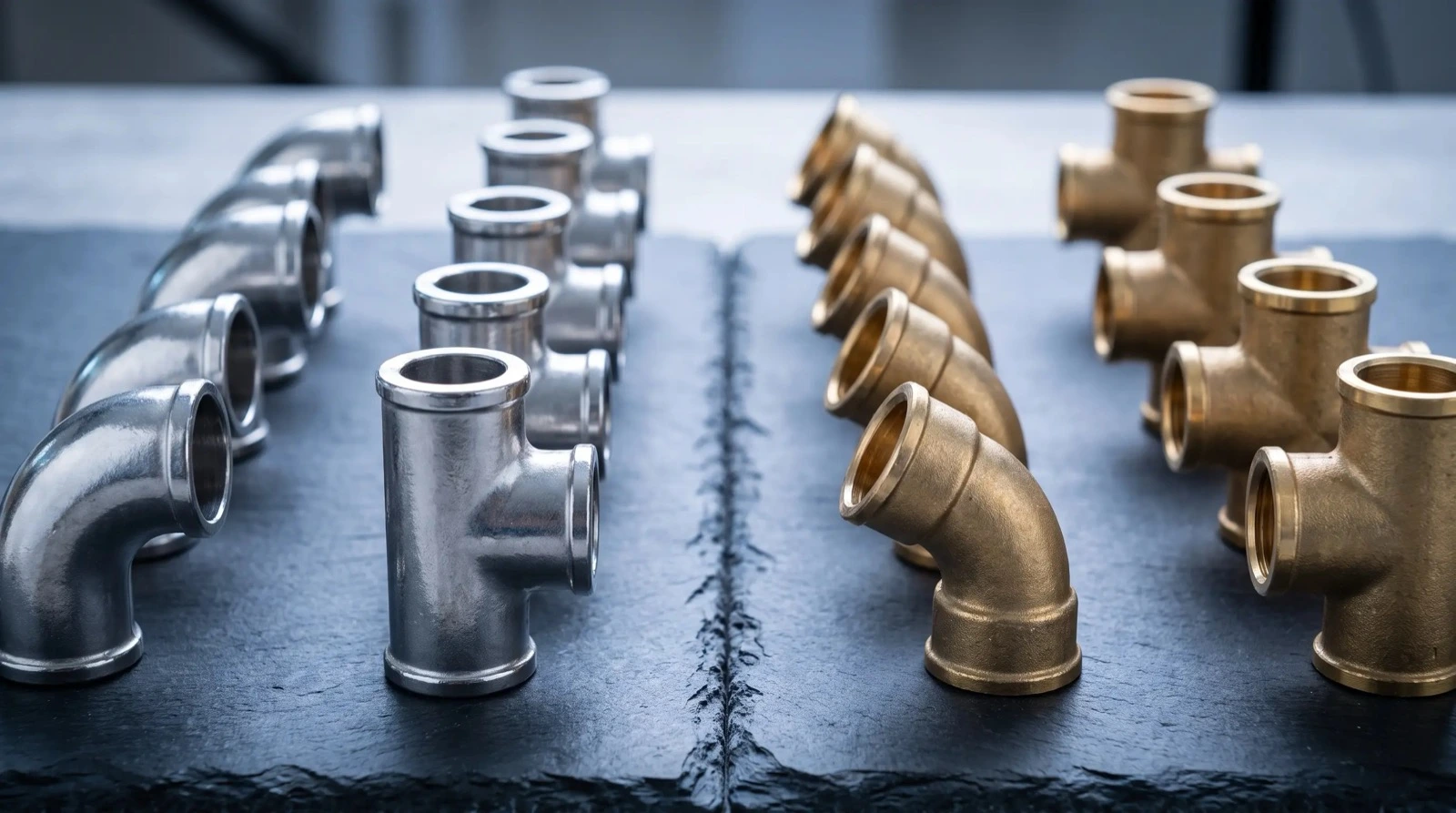
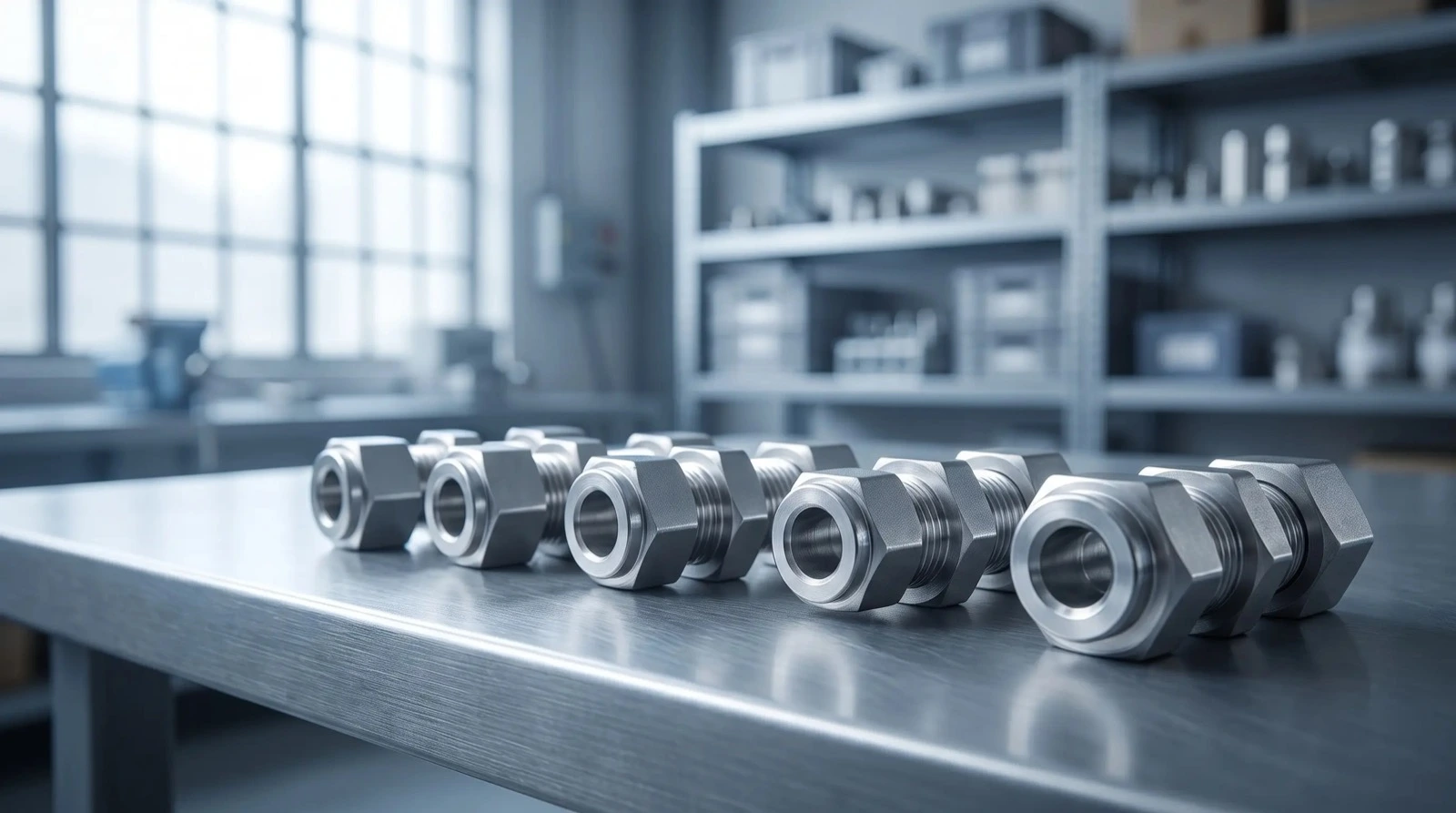
Reach for 316 stainless when corrosion resistance outranks cost. The alloy carries 2 to 3% molybdenum, which gives it a real edge against the chloride pitting and crevice corrosion plain 304 struggles with. Molybdenum lifts the Pitting Resistance Equivalent Number of 316 to about 24, and it improves pitting resistance more than three times as much per point as chromium does. Type 316 also holds a higher critical pitting temperature, near 70 degrees Celsius at 500 ppm chloride, so it keeps its passive film where 304 gives up. Refineries, petrochemical plants, and coastal facilities lean on it hard for exactly these reasons.
Choose 316 stainless when you face:
- Corrosive or aggressive media, including many acids and chloride-bearing fluids
- Marine, offshore, or salt-air environments
- High-pressure instrumentation and analytical systems
- Wide temperature swings, hot or cryogenic
- Sanitary or high-purity lines where you refuse the risk of contamination
The trade-off is price. Stainless costs more than brass or carbon steel. But in a sour-gas line or an offshore skid, the premium pays for itself the first time the fitting does not fail. When your application is critical or corrosive, 316 is the safe default. For a deeper look at how alloys resist attack, the Swagelok corrosion-resistant metals guide lays out the chemistry in plain terms.
When is brass the smart pick?
Brass earns its keep in clean, low-corrosion service. This copper-zinc alloy machines beautifully, conducts heat well, and costs less than stainless. For water, air, and many non-corrosive gases at moderate pressure and temperature, brass gives you a reliable, affordable connection. Most brass fittings hold structural integrity from roughly minus 40 to plus 120 degrees Celsius, which covers a wide band of utility and control work.
Brass fits well with:
- Instrument air and pneumatic controls
- Water and many non-aggressive fluids
- Fuel gas and general utility lines
- Low to moderate pressure and temperature service
Watch the limits. Brass does not belong near ammonia, which attacks the alloy and drives stress-corrosion cracking, especially where a fitting sits under high assembly stress. High-zinc brass also suffers dezincification in aggressive water, which leaves a spongy, weak copper structure behind. High-sulfur environments and aggressive chlorides punish brass too. And the alloy softens as temperatures climb, so it will not match stainless in hot, high-pressure duty. Keep brass where the media stays friendly and the conditions stay moderate.
Where does carbon steel belong?
Carbon steel gives you strength and a lower price than stainless. It handles high pressure and holds up well with oil, gas, and many hydrocarbons where corrosion stays controlled. On big plant utility runs and hydraulic systems, carbon steel stretches your budget without giving up muscle. You will see it across heavy process infrastructure where load, not chemistry, sets the spec.
The catch is rust. Carbon steel corrodes in wet, humid, or chemically hostile settings unless you protect it. Look for zinc-plated or otherwise coated carbon steel fittings when moisture is in play, and inspect the coating for damage before you install. Skip bare carbon steel entirely for corrosive media or wash-down environments where stainless is the only sensible answer. Pair carbon steel bodies with compatible valves from our valve line so the whole assembly carries the same rating.
How do the three materials compare at a glance?
| Property | 316 Stainless | Brass | Carbon Steel |
|---|---|---|---|
| Corrosion resistance | Excellent | Moderate | Low (needs coating) |
| Relative cost | Highest | Moderate | Lowest |
| Best media | Corrosive, chlorides, acids, high purity | Water, air, non-corrosive gas | Oil, gas, hydraulics |
| Avoid with | Rarely limited | Ammonia, high sulfur, aggressive water | Moisture, corrosives (bare) |
| Temperature range | Widest | Moderate | Wide |
Read the table as a starting filter, not a final answer. Two lines with the same media will still call for different metals once you factor in pressure class, ambient salt, and purity requirements. When you sit between two options, the corrosive or higher-purity path points you to 316.
What should you answer before you buy?
Match the metal to the job with a short checklist. Answer these and the right material usually names itself:
- What media flows through the line, and how aggressive is it?
- What is the maximum operating pressure and temperature?
- Is the environment wet, salty, or chemically harsh?
- Does the line demand high purity or sanitary compatibility?
- Will you mix metals and risk galvanic corrosion?
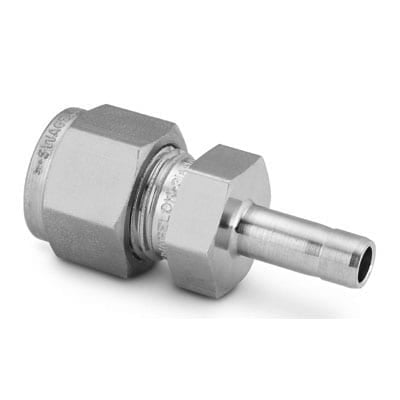
When two lines connect, keep the fitting material compatible with the tubing material. Mixing dissimilar metals invites galvanic corrosion at the joint. Match your ferrules, body, and tube for the longest, safest service life, and specify tubing to a recognized standard such as ASTM A269 for seamless austenitic stainless. DK-LOK, for one, calls for fully annealed 304 or 316 tubing to its published tube-fitting specifications for leak-free make-up. In our Baton Rouge warehouse we keep 316 stainless, brass, and carbon steel fittings on the shelf across more than 3,000 sizes and configurations, so you match the exact spec without a long lead time. When you want a second set of eyes on the choice, reach our team through the resources hub or send the details straight over.
Frequently Asked Questions
Is 316 stainless always better than 304?
For corrosion resistance, yes. The molybdenum in 316 fights the chloride pitting 304 struggles with. In clean, dry, non-chloride service, 304 will work and costs less, but 316 is the safer choice for instrumentation in refineries and coastal plants.
Are brass fittings safe with ammonia?
No. Ammonia attacks brass and drives stress-corrosion cracking, and a stressed high-zinc fitting fails fastest. Choose 316 stainless steel for ammonia service. Call us with your application and we will confirm the right material.
Why would I choose carbon steel over stainless?
Carbon steel costs less and delivers high strength for oil, gas, and hydraulic lines where corrosion stays controlled. Add a protective coating when moisture is present, and switch to stainless when the media or environment turns corrosive.
Do I have to match the fitting material to the tubing?
Match them whenever your design allows. Mixing dissimilar metals at the joint risks galvanic corrosion. Same-metal connections give you the most reliable, longest-lasting seal.
What is PREN, and why does it matter?
PREN stands for Pitting Resistance Equivalent Number, a score built from chromium, molybdenum, and nitrogen content. A higher PREN signals stronger resistance to chloride pitting. Type 316 lands near 24, ahead of 304, which is why it holds up in salt-air and chloride service.
How do I know which material fits my exact application?
Tell us your media, pressure, temperature, and environment. Our team specs the right alloy every day and will steer you to the correct fitting the first time.
Get the right material from Collins-Oliver
Stop guessing on material and start specifying with confidence. Collins-Oliver is your authorized DK-LOK distributor in Baton Rouge, stocking 316 stainless, brass, and carbon steel tube fittings, valves, and tubing for refineries, petrochemical plants, and power generation across the Gulf Coast. Tell us your application and we will match the metal to the job. Call (225) 922-9324 or (800) 247-5756 for a quote, or reach us through our contact page.
About Collins-Oliver
Collins-Oliver, Inc. has distributed instrumentation tube fittings, valves, and tubing from Baton Rouge, Louisiana since 1986. As an authorized DK-LOK distributor, we supply 316 stainless, brass, and carbon steel components to refineries and process plants across Louisiana and the Gulf Coast. Call our team at (225) 922-9324 or (800) 247-5756 to spec your next system.