TL;DR
- High-pressure hose-fitting selection comes down to four numbers: working pressure, burst pressure, dash size, and end-connection type.
- Most plant buyers searching for “hose fittings” actually need tube fittings. Confirm the line type before you spec anything.
- If the line is genuinely flexible hose, the fitting style depends on whether the hose is wire-braided or rubber-only.
- The published working pressure is at 70°F. Hot service derates the rating fast.
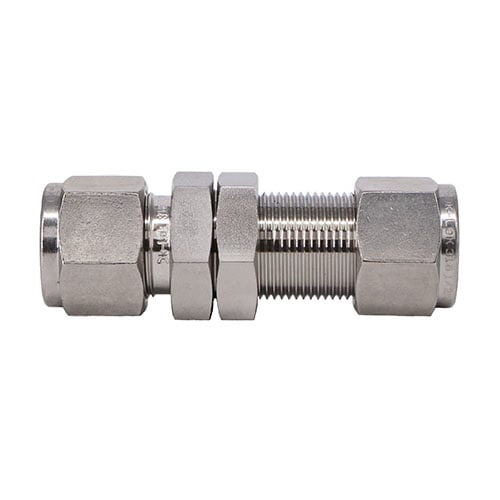
- If the application is rigid metal tube, the right product is a compression tube fitting, not a hose fitting.
Start by confirming the line
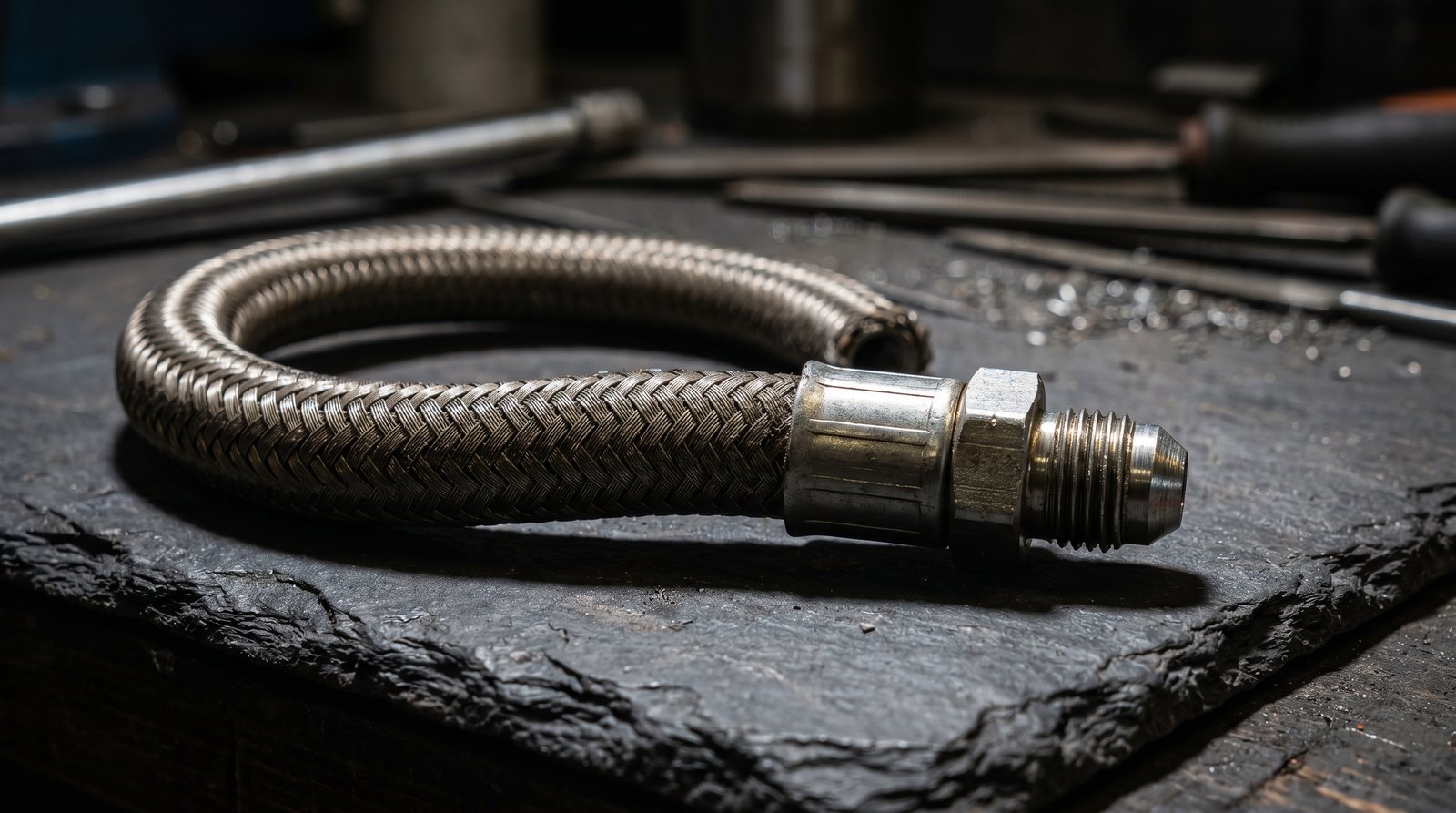
Half of every “hose fitting” call we take ends with a tube fitting on the truck. Operators call the line a hose because that is what the plant has always called it. The first job is to pick the line up. If it flexes by hand, it is a hose. If it bends only with a tube bender, it is rigid tube, and you need a tube fitting (compression or push-to-connect), not a hose end.
This matters because hose ends and tube ends fail in completely different ways. A hose end uses a crimp or swage that grips the rubber wall. A tube fitting uses a metal ferrule that bites into a rigid OD. Cross-spec the two and the connection leaks the moment it gets pressurized.
If the line is actually a hose: the four numbers
- Working pressure. The continuous duty rating. Must exceed the system maximum operating pressure plus a safety margin (typically 4:1 against burst).
- Burst pressure. The catastrophic failure pressure. Published on every reputable manufacturer’s data sheet.
- Dash size. Hose is sized in 1/16″ ID increments. Dash -4 = 4/16 = 1/4″ ID. Dash -16 = 16/16 = 1″ ID. Always order by dash, not by OD.
- End connection. Female JIC (most common), male NPT, male flat-face seal, ORFS (o-ring face seal), code 61 flange (heavy hydraulics).
Crimp style depends on hose construction
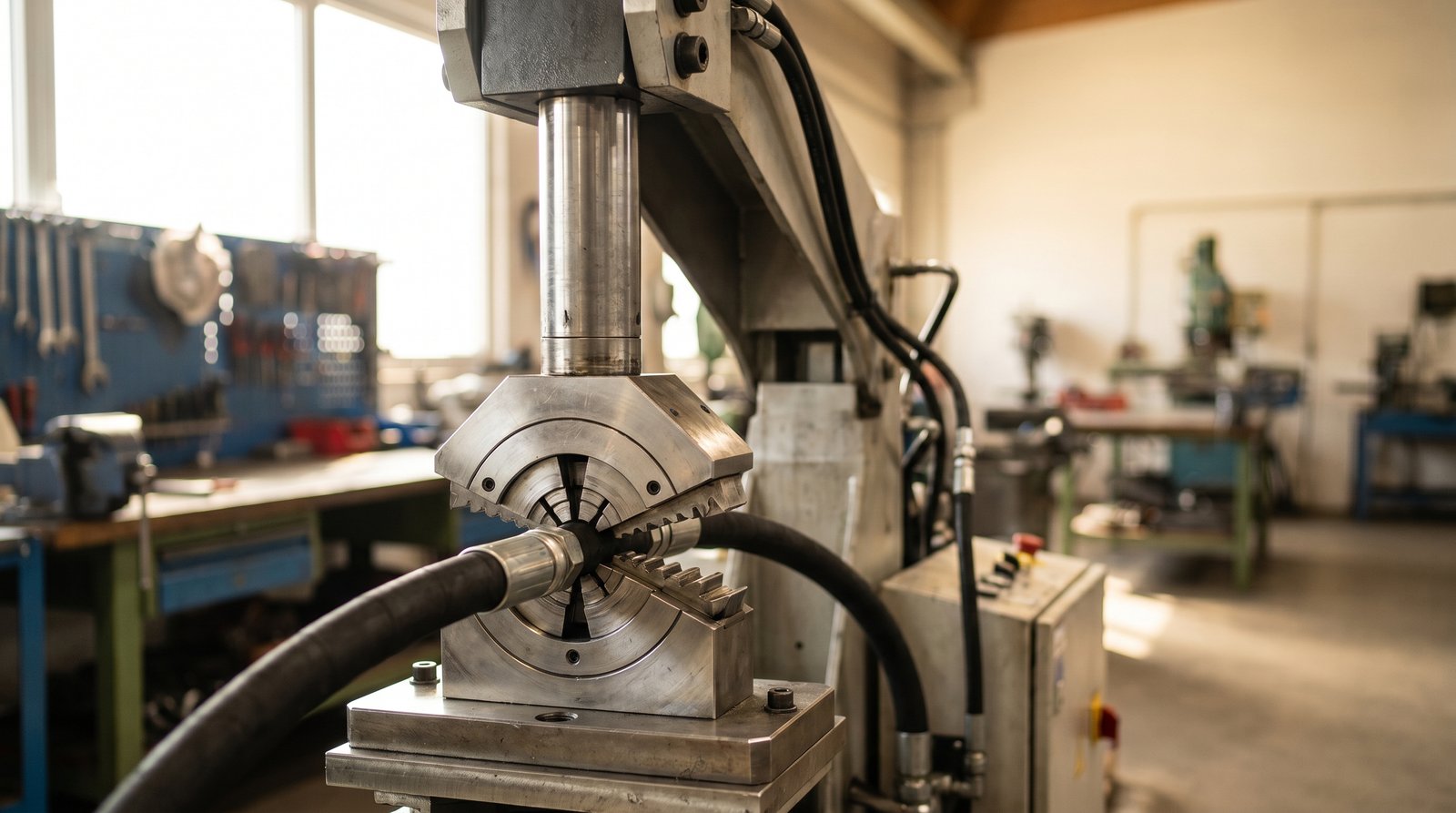
- Wire-braided hose (R1, R2, R12): Permanently crimped fittings only. The braid takes the structural load. Field-attachable fittings are not rated for high-pressure service.
- Spiral hose (R9, R12, R15): Crimp-only. Higher pressure ratings, larger crimp dies, specialty crimping equipment.
- Rubber hose without reinforcement: Lower-pressure utility service. Crimped or barbed fittings.
- PTFE or convoluted hose: Specialty crimp dies. Match the manufacturer’s published assembly procedure.
What the temperature derating actually means
A hose rated for 3,000 psi working pressure is rated at 70°F. At 200°F that same hose may rate 2,400 psi. At 250°F it may rate 1,500 psi. The rubber loses tensile strength as it heats. The wire braid retains strength but the rubber holds the wire in place, so the assembly fails at the rubber’s limit, not the wire’s.
Always check the manufacturer’s derating curve for the operating temperature. Specify a working pressure with margin for the maximum service temperature, not the ambient rating.
When the answer is actually a tube fitting
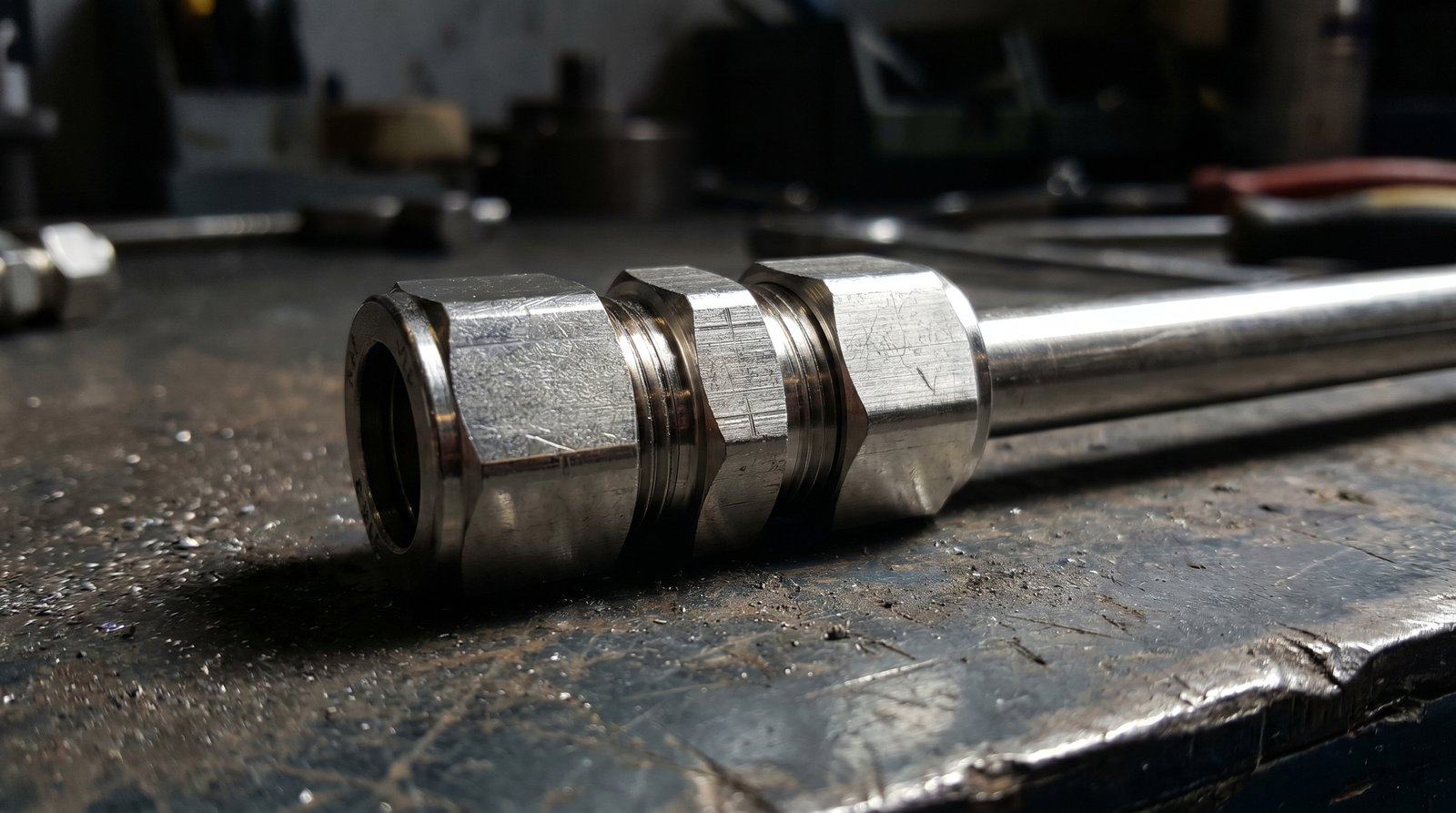
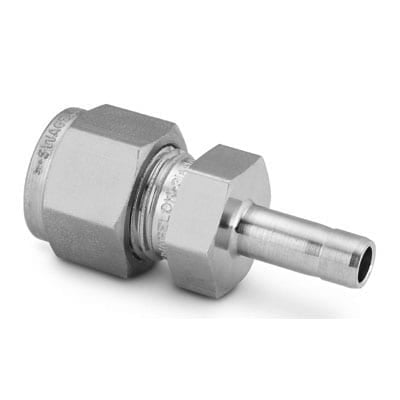
If the conversation gets to “high-pressure hose fittings” and the line turns out to be 1/4″ or 3/8″ OD rigid stainless tubing, the right product is a compression tube fitting in the matching brand. Standard double-ferrule designs handle 6,000+ psi. High-pressure series step to 15,000 psi. The seal is metal-to-metal, no rubber to fail, no elastomer to age.
Collins-Oliver carries the disambiguation handle: a single product line search that returns tube fittings AND the hose-to-tube adapters that handle the crossover cases.
Common mistakes that cause hose-fitting failures
- Reusing field-attachable fittings on permanent installations. Reusables are not rated for sustained high-pressure service.
- Crimping with the wrong die set. Each manufacturer publishes a die chart. Use the right die for the hose and fitting combination.
- Routing the hose with a tight bend radius. Minimum bend radius is published per hose type. Violating it crushes the reinforcement.
- Ignoring fluid compatibility on the inner tube. Hot oil swells nitrile. Methanol attacks some polymer liners. Verify the inner material against the fluid.
- Treating hose fittings as tube fittings. Compression ferrules will not seal against a flexible hose end. Different geometry, different seal logic.
What to do next
Step one: verify whether the line is actually flexible hose or rigid tube. Step two: if rigid tube, switch the spec to a compression tube fitting in the matching brand and size. Step three: if flexible hose, confirm working pressure, dash size, and end-connection type before placing the order.
For the borderline cases — instrument carts, test rigs, calibration loops — the right call is usually a quick-connect coupling or a tube-to-hose adapter, not a permanent hose fitting.

Need help spec’ing a fitting? Read the hose-vs-tube disambiguation guide or call Collins-Oliver. We stock the fittings, the adapters, and the tube — same-day shipping nationwide.