Hy-Lok vs Swagelok: What differs in the design?
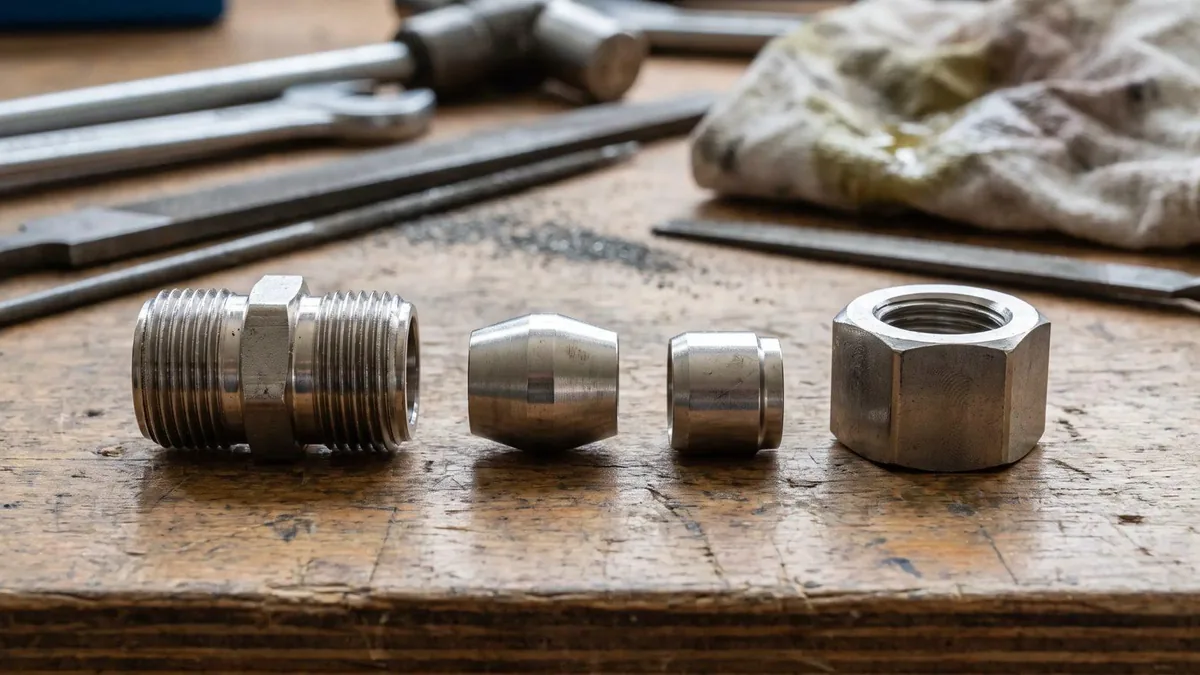
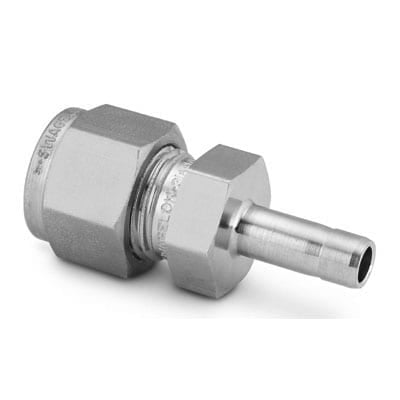
Both brands offer twin-ferrule fitting systems. Your selection starts with the body, nut and ferrules. Hy-Lok describes its own assembly as a body, front ferrule, back ferrule and nut in its tube fitting product description. A shared component layout does not establish a shared design.
Swagelok separates sealing and gripping functions for your comparison. Its front ferrule seals against the body and tubing, while its back ferrule grips the tube. Your comparison should recognize Swagelok’s advanced back-ferrule geometry, standard on stainless steel fittings from 1/4 through 1 in. and 6 through 25 mm and described as hinging inward during assembly in its tube fitting catalog. Match the description to the selected size and material.
| Selection point | Hy-Lok tube fittings | Swagelok tube fittings |
|---|---|---|
| Ferrule arrangement | Front and back ferrules. Hy-Lok design | Front sealing ferrule and back gripping ferrule. Swagelok design |
| Published tube size range | 1/16 through 2 in. and 2 through 50 mm. Hy-Lok catalog cover | 1/16 through 2 in. and 2 through 50 mm. Swagelok catalog cover |
| Material examples | 316 stainless steel, brass and specialty alloys. Hy-Lok materials | 316 stainless steel, brass and specialty alloys. Swagelok materials |
| Gaugeability | Gaugeability listed among product features. Hy-Lok features | Gap inspection for initial installation. Swagelok gaugeability |
You still need an exact ordering entry. Your required shape, tube size, port thread and material belong on the same selection sheet. Treat the published ranges as catalog coverage, then verify the actual configuration. A catalog heading is no substitute for a complete part description.
Spell out the material requirement. Keep your specified grade and any material documentation requirement together, especially when the purchase description says only stainless steel. Ask for the manufacturer’s full ordering designation before accepting a proposed match. A shortened stock description leaves the engineering requirement unresolved.
How do the manufacturers establish pressure capability?

Start with the tubing. Swagelok rates its tube fitting ends to the tubing working pressure listed in its tubing data, as stated in MS-01-140. For your Swagelok tube end, record the selected tubing’s working pressure. Record the tubing basis instead.
Hy-Lok’s own documentation gives you a tubing-based statement too. Its pressure guidance rates Hy-Lok fittings to the maximum working pressure of recommended tubing. Your assessment must retain its temperature derating and tubing-table conditions. Hy-Lok labels its tubing-table figures as reference information, not design values.
Tube outside diameter alone is insufficient. Put your material, wall thickness, manufacturing specification and design temperature beside it. Use the relevant manufacturer’s tubing guidance to establish the connection’s pressure basis, then review the other end connection and remaining system components. Keep every limiting condition attached to the selection.
Make the calculation traceable. Your engineering record needs the document revision, selected tubing entry and applicable adjustments, rather than an isolated pressure copied from a search result. For a purchasing discussion, the tube OD and wall thickness explainer provides background. Use manufacturer documentation for the actual technical decision.
What does gaugeable mean during installation?
Define the inspection step. A gaugeable connection gives your installer a specified way to check assembly. The Swagelok Tube Fitter’s Manual explains the initial gap check between nut and body. If the correct gauge enters, further tightening is required.
Distinguish inspection from preparation. Your work instruction should identify the fitting, assembly method and matching inspection tool before work starts. Swagelok’s manual directs the installer to choose the gauge for both the fitting size and assembly method. Keep the tool with the relevant job kit.
The job also requires the right procedure. Your maintenance sheet should distinguish a fresh assembly from a remake of an existing connection. Both manufacturers exclude gap-gauge inspection from their reassembly procedures in the Hy-Lok instructions and Swagelok manual. Depressurize the line before adjustment or disassembly.
Hy-Lok vs Swagelok: What do they say about intermix?
The manufacturers’ exact wording matters here. Your Swagelok decision starts with this statement: Swagelok recommends NO intermix/interchange of Swagelok tube fitting components with other manufacturers’ components. It appears in the catalog’s intermix/interchange section. Keep the entire connection within the selected brand.
Hy-Lok’s website gives you different wording. Its fitting features page lists Complete Interchangeability. Your review also needs the catalog warning: Improper selection or intermixing components of other manufactures may cause personal injury or property losses. Read the Hy-Lok selection warning alongside the feature claim.
Separate the claim from permission. Your plant’s acceptance of Hy-Lok as a complete fitting does not establish approval for a mixed connection. The Hy-Lok feature statement is evidence of Hy-Lok’s wording about its product, not evidence of Swagelok acceptance. Swagelok’s own instruction remains explicit.
Precise repair language is also necessary. Swagelok’s intermix and interchange explanation distinguishes assembling mixed-brand components from moving tubing with an installed nut and ferrules into another brand’s body. Your repair request should identify which action is proposed. Replacing a complete connection is a separate scope of work.
Make brand identity visible. Label your storage bins, preserve component packaging and keep replacement kits together. For related reading across approved fitting brands, see the DK-LOK and Swagelok comparison. Keep the manufacturer’s instructions attached to each work package.
When does your plant specification decide?
Start with the approved specification. If your plant names a manufacturer without an approved alternative, purchasing follows the named requirement. If it permits alternatives, engineering must assess the proposed complete fitting against the documented service and connection requirements. Availability does not approve a substitution.
You should resolve approval before scheduling installation. Put your required documentation and acceptance criteria into the requisition so the supplier knows what must accompany the material. Record any approved change against the relevant equipment or line documentation. A verbal description leaves too much unstated.
- Identify your approved manufacturer and exact fitting configuration.
- State your tubing material, outside diameter and wall thickness.
- Include your fluid, design pressure and design temperature.
- Specify your port thread, sealing arrangement and installation clearance.
- List your documentation requirements and substitution approval route.
You gain a clearer decision record this way. Your engineer sees the service basis, your technician sees the installation scope, and purchasing sees the approved item. Keep those descriptions consistent through quotation, receipt and issue to the job. The ordered fitting should match the approved connection.
You should define the replacement boundary too. State whether your work package covers a complete connection, an individual component or an entire tubing run, then identify every item required for that scope. Route an unexpected brand mismatch back through the approval process before assembly starts. Keep the repair plan explicit.
How does Collins-Oliver supply both brands?
Both brands are stocked by Collins-Oliver. Your sourcing conversation starts with Hy-Lok and Swagelok stock within an inventory of over 19,000 part numbers. The company supplies instrumentation tube fittings, valves, tubing and instrumentation pipe fittings. Start with the manufacturer and complete part number.
Fulfillment choices support your order planning. Your order planning includes same-day pickup in Baton Rouge and nationwide shipping, as described on Collins-Oliver’s tube fittings page. Confirm the required quantity and available material against the job date. Stock depth supports the search, while the exact item determines the order.
Discuss your requirement with a person who knows the part. Bring your specification, connection details and required paperwork to the conversation, especially when a description on an old requisition is incomplete. Ask Collins-Oliver to quote the approved brand and identify any proposed alternative separately. Keep the buying decision tied to the engineering decision.
Plan receipt as carefully as sourcing. Match your quotation line, package identification and delivered quantity before issuing material to the crew. Separate items awaiting identification or documentation from the approved job kit, and resolve discrepancies with the supplier. A complete receiving record gives the installer a clear starting point.
Frequently asked questions
How do you tell metric Hy-Lok fittings from fractional fittings?
Inspect your fitting’s identification features. Hy-Lok’s metric identification guidance describes stepped shoulders on the body and hex nut. Confirm your tubing designation before selecting the replacement.
What details help identify a fitting with an unreadable part number?
You should send clear photographs of the body, nut, markings and both connection ends. Include your measured tube outside diameter, equipment reference and any original drawing or requisition. Treat photographs as identification aids, then confirm the complete ordering description before approval.
Does Hy-Lok publish separate guidance for gas service?
Yes, you will find minimum tubing wall guidance for gas service in the Hy-Lok catalog. Your selection needs the applicable gas-service entry as well as the pressure assessment. Put the service type on the requisition.
What needs inspection before fitting new tubing?
Check your tube condition before assembly. The Swagelok handling and installation manual addresses surface damage, square cutting and deburring. Add those checks to your preparation sheet before the tube reaches the fitting.
Do fitting orders need cleaning requirements?
Yes, you should state any required cleaning and packaging condition explicitly. Swagelok lists cleaning and packaging options in its fitting catalog. Put your approved requirement in the order description so receiving has a clear acceptance condition.
What happens when a quotation lists a substitute fitting?
You should request a separate line identifying the proposed manufacturer and full part description. Attach your written engineering disposition before releasing the order. Preserve both the original requirement and the approved change in the purchasing record.
You have the part details ready. Call (800) 247-5756 or request a quote from Collins-Oliver. Bring your approved specification to get the sourcing conversation started.
Want more of this in your Google feed? Tap here and Google shows you our articles first.