Compare Swagelok 40 series vs 60 series ball valves by the parts your line requires. You get different packing, flow capacity, and maintenance access despite matching tube fitting sizes. Start with the complete ordering number.
For your line, choose SS-45TS8 for a one-piece body with live-loaded PFA packing, or SS-63TS8 for reinforced PTFE seats and a three-piece swing-out service design, after matching the valve to your operating requirements.
Swagelok 40 series vs 60 series ball valves: what differs?
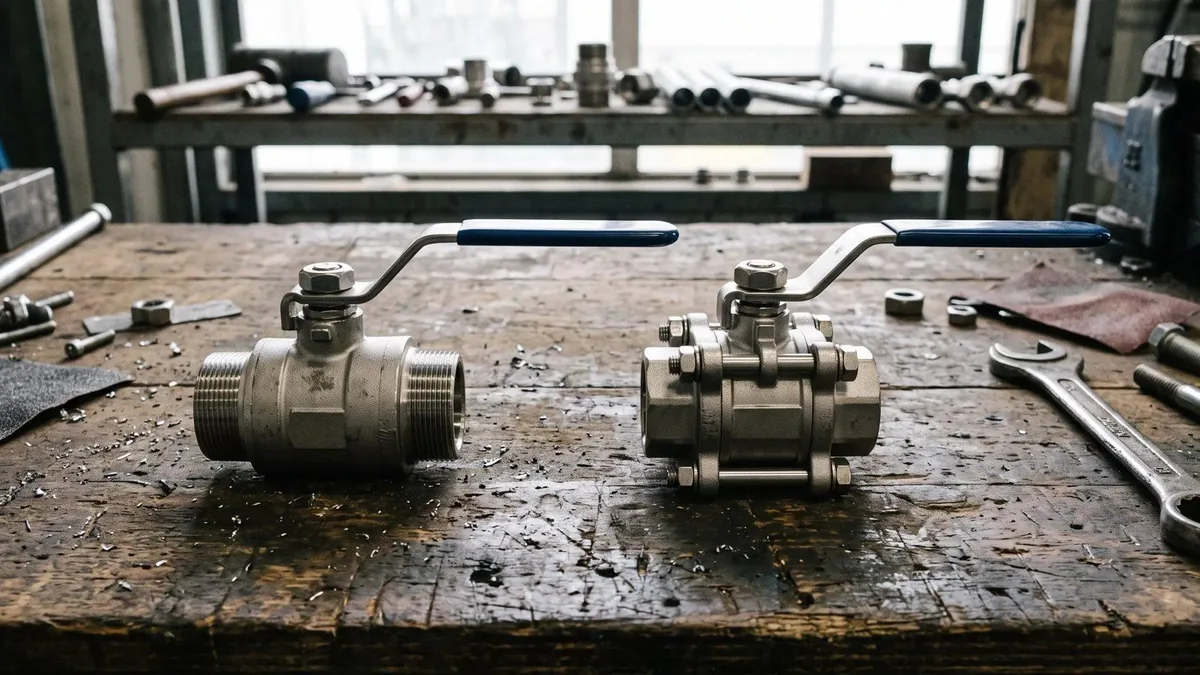
Construction is where your decision starts. The comparison puts a one-piece ball valve in the instrumentation family beside a three-piece ball valve in the process family for your review. Swagelok identifies SS-45TS8 as a one-piece instrumentation valve and SS-63TS8 as a three-piece valve with a swing-out design. Match the construction to the maintenance work your installation requires.
Both valves give you the same connection description. The flow specification still needs your attention. The table separates the exact published attributes, with manufacturer links beside the values. Treat each column as a specific configuration.
| Attribute | SS-45TS8 | SS-63TS8 |
|---|---|---|
| Body construction | One-piece | Three-piece, swing-out design |
| Body material | 316 stainless steel | 316 stainless steel |
| Published packing or seat material | Live-loaded PFA packing | Reinforced PTFE seats |
| Maximum Cv | 12 | 7.5 |
| Both end connections | 1/2 in. Swagelok tube fitting | 1/2 in. Swagelok tube fitting |
| Standard handle | Black lever | Black lever |
These attributes give you a clear starting point. Your next step is matching these attributes to the line specification and maintenance plan. For purchasing, keep the Collins-Oliver SS-45TS8 listing and the SS-63TS8 ordering page attached to the request. Keep manufacturer specifications beside the purchasing record.
Name the deciding requirement in your selection. You might be replacing an approved valve, revising a maintenance plan, or specifying a new line, and each task starts with a different record. For replacement work, begin with the installed ordering number and the approved equipment specification. For a new installation, establish the service requirements before choosing the body style.
Which packing or seat material belongs on your specification?
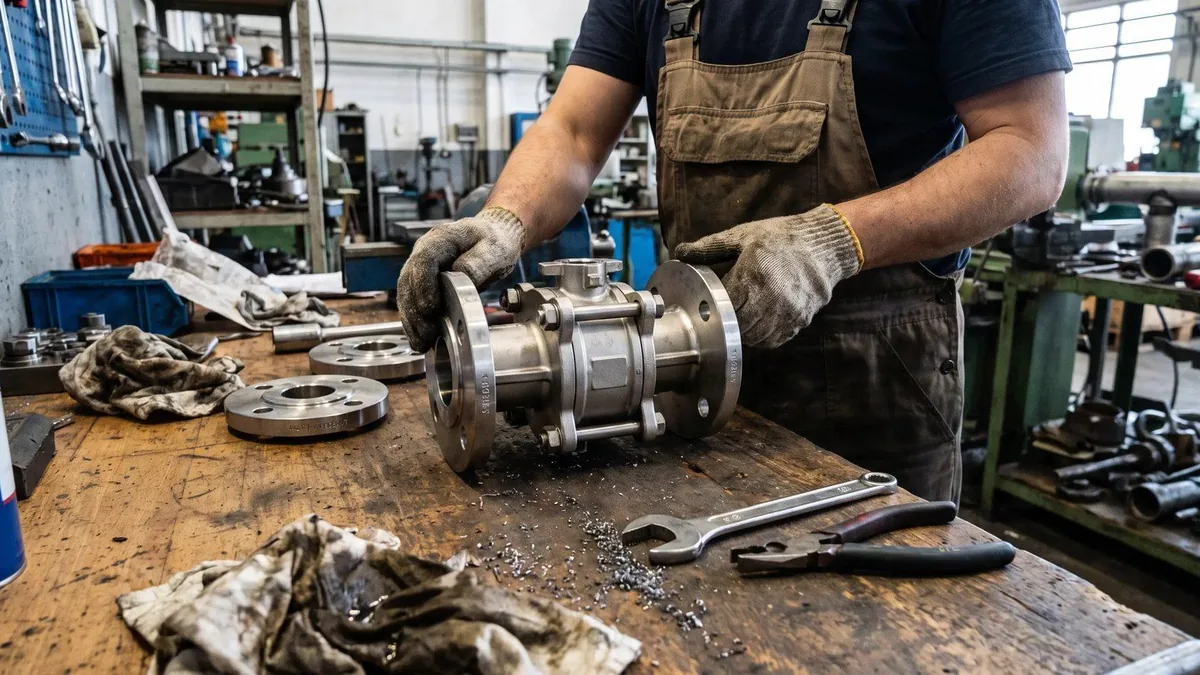
The correct material description belongs in your specification. Your SS-45TS8 specification calls for live-loaded PFA packing, as its manufacturer record states. The Swagelok one-piece valve catalog, MS-02-331, describes the corresponding capsule seat packing and packing springs. Preserve the material name when transferring the requirement into a purchase order.
For the 60 series ball valve, your specification follows a different entry. Record reinforced PTFE seats for your valve, matching the exact product page. Avoid replacing either description with a broad label such as plastic seats. The full material description gives the reviewer something specific to check against the process requirements.
Preserve the component names in your comparison, too. Your comparison involves packing on the one-piece valve and seats on the three-piece valve, following Swagelok’s product attributes. A shared stainless steel body description does not complete the materials review. Carry the complete valve configuration through engineering approval.
The service is the starting point for your material decision. You should put the process fluid, operating temperature, and cleaning conditions beside the selected valve record. Resolve each requirement before releasing the order, rather than treating the family name as approval for the application. Record the approved part number in the equipment file, together with the material requirement and the application it serves.
Swagelok 40 series vs 60 series ball valves: how do Cv and ends compare?
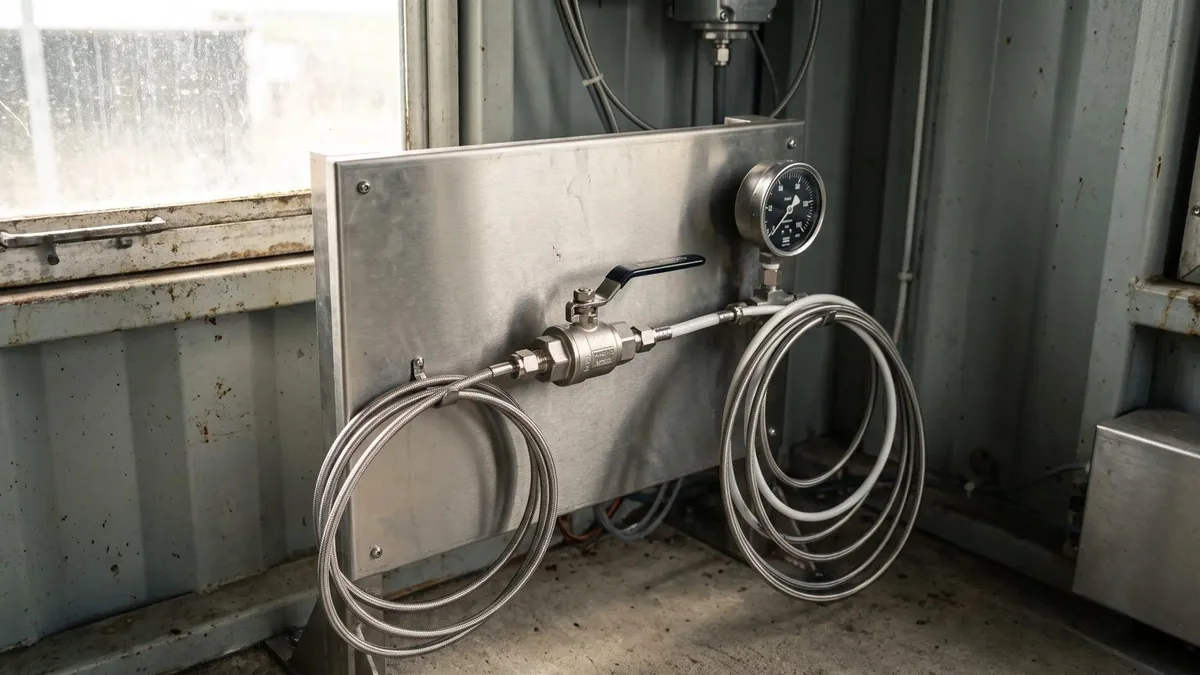
Both valves give you matching nominal connection sizes. The published maximum Cv values for your comparison differ. Swagelok lists Cv 12 for SS-45TS8 and Cv 7.5 for SS-63TS8. Put those exact values into the valve selection record.
The deciding input remains your required flow. Compare the listed Cv with your line requirement, including the permitted pressure loss. A matching connection size alone does not resolve the flow calculation. Keep the flow review separate from the connection check.
Include the full connection name in your request, too. Your request should say Swagelok tube fitting, not simply a nominal size. Carry both end descriptions into the requisition so a threaded connection does not enter the order through shorthand. Connection type belongs beside connection size.
Extend your replacement review beyond the ends. You should compare the selected valve’s drawing with the available installation space, tubing arrangement, and handle access. Do this before committing the maintenance crew to a direct swap. Matching end descriptions are the beginning of the fit check.
Keep the drawing with your requisition. Your installer needs the selected configuration, rather than a photograph of a similar valve from the same family. Mark the available space on the installation sketch and identify anything blocking handle movement or maintenance access. Resolve the layout before parts arrive at the work site.
What does the three-piece design change during maintenance?
The body choice follows from your service plan. You get a swing-out design on SS-63TS8, as its product description confirms. The seal-kit section of Swagelok catalog MS-01-146 describes inline maintenance through the swing-out construction. Plan the installation around access to the valve body.
Allow room for your maintenance work. Your layout should account for access to body fasteners, the handle, and the surrounding tubing before selecting the service position. Include nearby supports and adjacent equipment in the layout review. A service feature needs a workable service space.
A different maintenance arrangement applies to your one-piece valve. You should distinguish packing adjustment from opening a swing-out center body. Swagelok’s one-piece valve catalog describes packing adjustment with the valve inline. Keep those maintenance tasks distinct in your work instructions.
Plan isolation before your maintenance work. Your work package needs depressurization, drainage, and control of the process contents before disassembly. Follow the instructions supplied for the exact valve and service parts. Inline service access does not authorize opening a pressurized assembly.
A defined task also belongs in your maintenance decision. You should state whether the planned job is packing adjustment, internal service, or complete valve replacement, then identify the instructions and parts required for it. Put the isolation steps and access requirements into the same work package. Give the crew a specific scope before the shutdown starts.
What should your valve request include?
Make your purchasing request actionable. Your approved ordering number should lead, followed by the application details needed to review a substitution. Include the installation constraints alongside the process requirements. Give the supplier a complete decision record.
- The complete manufacturer ordering number for your request, including every suffix.
- The required packing or seat material and approved body construction for your application.
- The connection type and size at both ends of your valve.
- The flow requirement for your line and the specified Cv.
- The process fluid, operating pressure, and operating temperature for your application.
- The handle access, maintenance clearance, and delivery location for your installation.
The exact configuration is the basis for your pressure review. You should read the applicable pressure-temperature information in the one-piece valve catalog or the three-piece valve catalog with the operating conditions beside it. Do not copy a family-wide headline into a per-part specification. Record the applicable limits during engineering review.
Mark substitutions for review in your request. Your request should identify whether the approved requirement is body construction, material, flow capacity, or maintenance access. If another part enters the discussion, compare the complete record again. Similar part numbers do not replace approval, even when the supplier lists the same nominal connection size and handle style.
At receiving, you should close the loop. Your receiving record should compare the delivered ordering number with the approved requisition, including any suffix added during the selection process. If the marking differs, resolve the discrepancy before releasing the valve for installation. Carry the final configuration into the spare-parts record so the next order begins with the approved information.
Where do you source the valve and confirm the part?
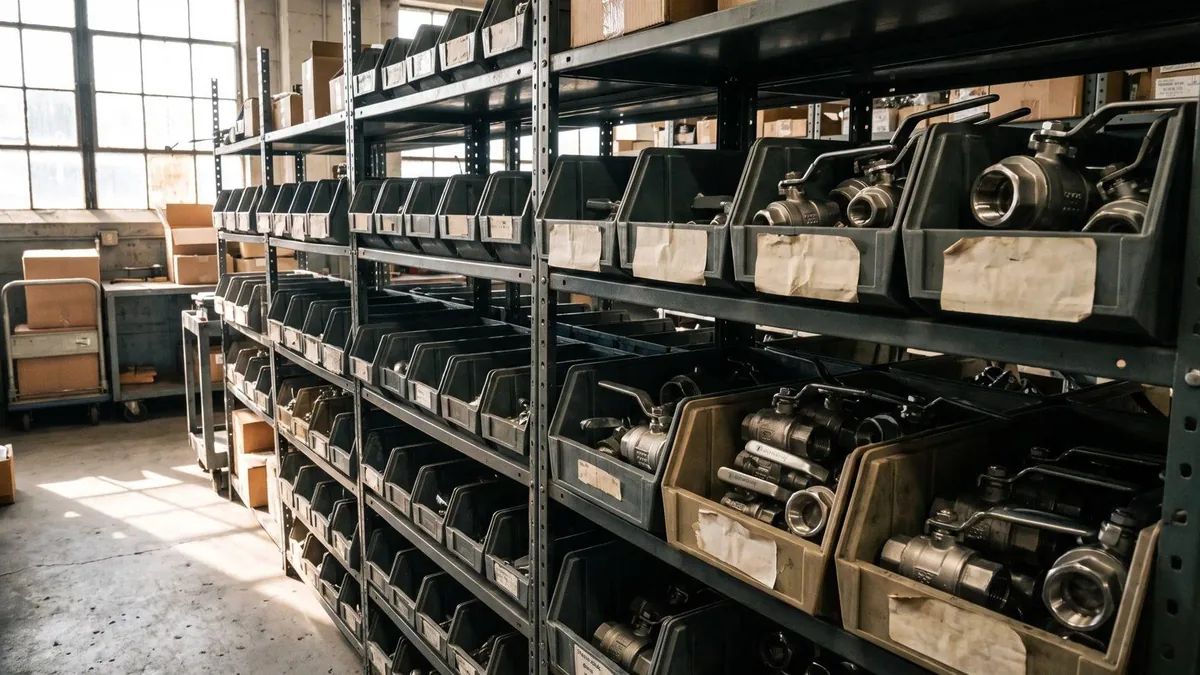
Your order needs the right stock conversation. You have access to Collins-Oliver’s inventory of over 19,000 part numbers and its ball valve selection. The company buys new and new surplus material and provides same-day pickup in Baton Rouge and nationwide shipping. Confirm the exact part and quantity for your schedule.
You should talk to a person who knows the part. Bring your ordering number, connection requirement, and maintenance plan to the Collins-Oliver conversation. Ask for the specific configuration and its availability before arranging pickup or shipment. Keep the approved part number at the center of the order.
Frequently asked questions
Is SS-45S8 the same as SS-45TS8?
No, you need to preserve the T in your ordering number. Swagelok’s SS-45S8 specifications list PTFE packing, while SS-45TS8 lists live-loaded PFA packing. Use the SS-45S8 product listing when the approved request calls for the PTFE configuration.
Should either ball valve stay partly open to regulate flow?
You should specify a separate regulating function if your process requires it. Both MS-02-331 and MS-01-146 describe these ball valves for fully open or fully closed operation. Put the control requirement into the selection review before ordering.
Does the standard SS-63TS8 include a latch-lock handle?
Request the handle option explicitly in your order. The handle-options section of MS-01-146 identifies an oval latch-lock option through the -LLK ordering suffix. Specify the required locking arrangement before choosing the final configuration.
What comes in a three-piece valve seal kit?
You should check the kit contents against your planned repair. The catalog’s seal-kit section lists components including packing, stem bearings, seat subassemblies, flange seals, lubricant, and instructions. Match the kit selection to the valve configuration before scheduling the work.
Did the 40G series replace every 40 series ball valve?
No, you should retain your exact ordering requirement. MS-02-331’s family comparison states stainless steel 44 and 45 series valves remain available. Check the individual part record before changing the specification to a different family.
How do you identify an installed valve from a photo?
You should capture the complete marking and both connections for your request. Include the handle, adjacent tubing, and available service space so the review starts with the installation context. Ask for a documented part match before authorizing the replacement order.
Bring your valve requirement to Collins-Oliver. You should call (800) 247-5756 or request a quote. Specify the complete part number.
Want more of this in your Google feed? Tap here and Google shows you our articles first.