Your search for discontinued tube fittings starts with the complete manufacturer part number and a stock check. For a replacement, you need a documented cross-reference and the manufacturer’s supersession notes. Contact Collins-Oliver with your obsolete fitting part number or surplus inventory list, since it stocks over 19,000 part numbers and buys new and new surplus material.
Where do you start with discontinued tube fittings?
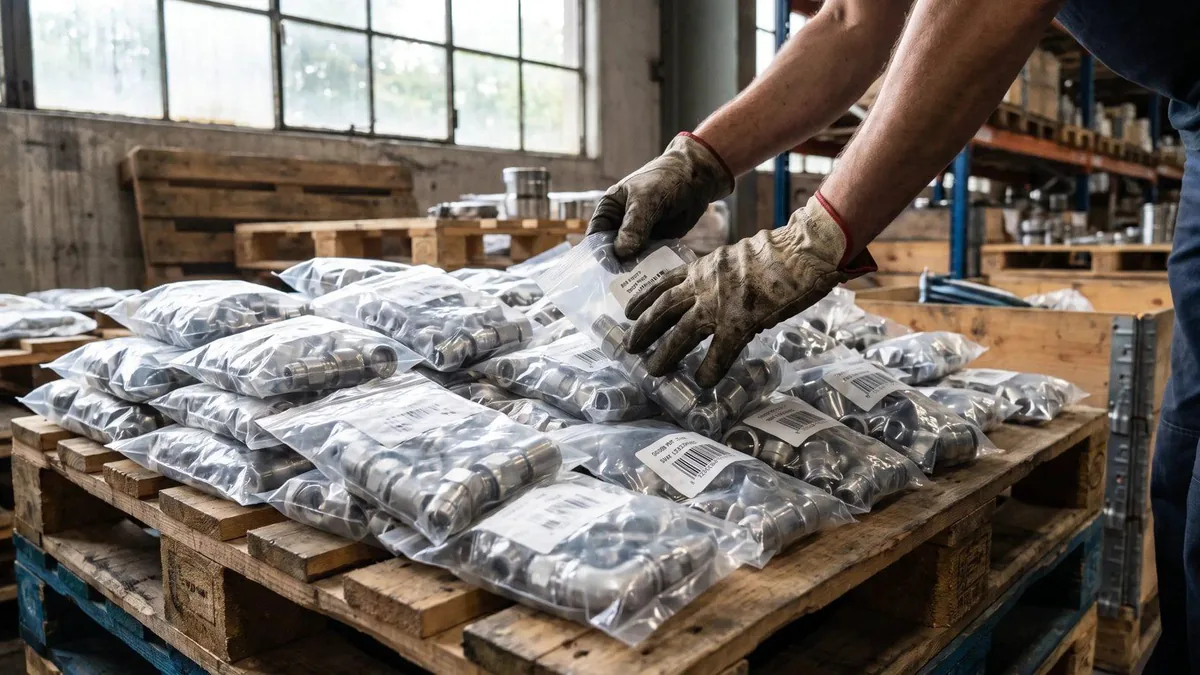
Start with your exact part number. You need a stock answer first. A missing online listing leaves an unanswered question about availability, so send the complete identifier to Collins-Oliver for a check against its stock list. Keep the original number intact.
Separate availability from product status. Your purchasing record should distinguish a current item awaiting stock, a discontinued item, and an item replaced by another ordering number. You need the manufacturer’s documentation to establish a discontinuation or supersession. An unsuccessful search proves neither.
Give your request a clear outcome. You want either the original item or a documented replacement candidate for engineering review. Ask for available quantity against the exact number before changing the requisition, then identify any differences in the proposed supply. Keep alternatives on separate lines.
Your search for rare tube fittings also needs context. Tell Collins-Oliver whether you are restoring an existing installation or buying spares for future maintenance. Include the required date and whether your specification permits a replacement review. Those details keep the search focused.
Define your response to a partial quantity. State whether the job needs the entire request together or whether a smaller confirmed quantity serves a separate maintenance task. Ask purchasing to record the balance against the original requirement. Keep the outstanding need visible until the order is complete.
What information helps identify the right fitting?

Send the label with your request. Also supply clear photographs of the fitting and its visible markings, keeping each image tied to the corresponding inventory line. Browse the tube fitting product selection for an initial reference. Submit the actual identifier for the stock check.
Build your request around these fields. You do not need polished presentation, but the description must distinguish what the records establish from what still needs verification. Copy markings exactly, including suffixes and punctuation. Leave uncertain fields visibly unresolved.
- Your manufacturer name, complete ordering number, and original purchase reference.
- Your required quantity, delivery destination, and maintenance deadline.
- Your documented material, tube outside diameter, and connection description at each end.
- Your photographs of labels, body markings, packaging, and the complete fitting.
- Your applicable drawing, piping specification, and restrictions on alternate products.
- Your available manufacturer change notice or earlier replacement correspondence.
Identify the scope of your purchase. You need to distinguish a complete fitting from a body, nut, ferrule set, or other component before comparing an inventory response with the requisition. Keep the assembly description beside the number. A partial assembly changes the order.
Preserve your source records during transcription. Attach the original document when a handwritten number or faded label leaves a character uncertain. Flag the uncertainty beside the typed entry instead of silently correcting it. A guessed character sends the search elsewhere.
How do you cross-reference discontinued tube fittings?
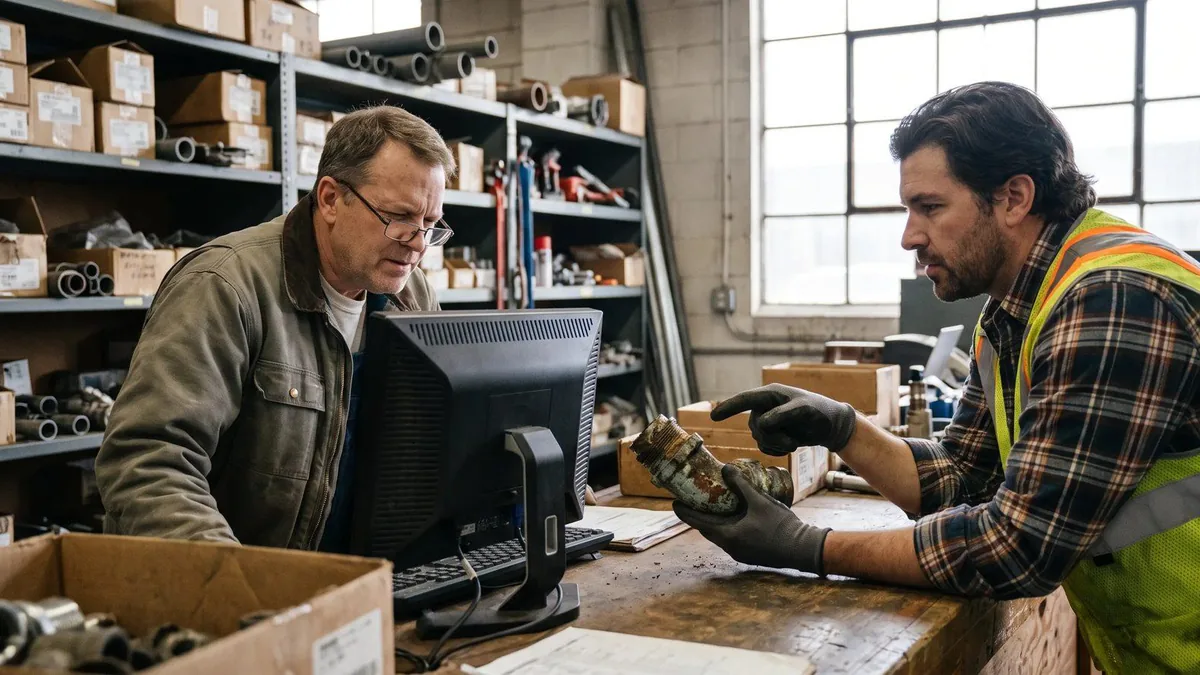
Keep your original number visible. You need a separate field for the proposed current number and a reference to the manufacturer document connecting them. Request the supersession notice, its effective date, and any qualifications covering the affected product. A matching description does not establish a supersession.
Read the notice against your application. Check which configurations it covers and whether the change concerns the ordering number, physical product, or available options. Attach the relevant passage to the replacement request. Preserve the limits of the manufacturer’s statement.
| Your starting point | Your next request | Your decision record |
|---|---|---|
| Exact original number located | Confirm quantity and supplied contents | Stock response tied to your original number |
| Manufacturer identifies a successor | Obtain the notice and current product documentation | Original number, successor, and documented changes |
| Alternative proposed without a supersession notice | Request a specification comparison | Separate engineering decision on the alternative |
| Identity remains uncertain | Resolve markings and original records | Open identification issue before purchase approval |
Check the pressure basis in your comparison. You will find Swagelok tube fitting ends rated to the tubing’s working pressure as listed in Swagelok Tubing Data, according to the manufacturer’s Gaugeable Tube Fittings and Adapter Fittings catalog. Base your Swagelok tube fitting end pressure review on that tubing data. Evaluate the tubing and connection together.
Carry your tubing information into the review. You need the material, outside diameter, wall thickness, and operating temperature to select the applicable information in Swagelok Tubing Data, which provides tubing pressure tables and elevated-temperature factors. Its selection guidance also addresses hardness and surface finish. A fitting number alone leaves the review incomplete.
Keep component compatibility explicit in your request. Follow Swagelok’s catalog recommendation against mixing or interchanging its tube fitting components with other manufacturers’ components. A cross-reference search does not authorize mixing nuts, ferrules, and bodies. Evaluate a proposed replacement as a complete connection.
Mark unresolved differences in your comparison. Give each difference an owner and a specific question, such as whether the proposed configuration matches the approved drawing. Keep the candidate separate from the approved purchasing number while those questions remain open. Record the decision before changing the order.
How do you sell new and new surplus material?

Your excess inventory starts with a list. Collins-Oliver buys new and new surplus material, so start your request through its material purchasing process. Include brands, part numbers, quantities, condition details, and photographs. Make each line identifiable.
Separate your stock by manufacturer and number. When you want to sell surplus fittings, a mixed container description gives the reviewer less to evaluate than an itemized inventory. Record complete assemblies separately from individual components. Keep photographs matched to their entries.
For surplus Swagelok fittings, preserve your labels and original records. Describe the material as new and new surplus and document its storage and packaging condition. Include the quantities actually counted rather than the quantity printed on an opened carton. Report the contents in front of you.
Explain why your material is available. You might be closing a project, reducing excess stores, or clearing contractor inventory after a scope change. Identify where the material is located and who controls its release. Keep disposal approval separate from the inventory description.
Retain your records through the review. Wait for confirmation of the accepted items and collection or delivery arrangements before moving the lot. Keep anything removed from the proposed inventory clearly marked on the latest list. The final handoff needs an accurate count.
What paperwork keeps the search from restarting?
Keep your sourcing decision with the requisition. Retain the original number, stock response, candidate replacement, manufacturer literature, and engineering disposition in the same record. Assign someone responsibility for unresolved questions before the order moves forward. Close each question in writing.
Make your receiving instructions specific. Direct the receiving team to compare the delivered manufacturer, ordering number, quantity, and supplied components against the purchase order. Identify any required documents before shipment so the receiving check has a defined scope. Record discrepancies before issuing material.
Preserve the history of your obsolete fittings. Add an approved successor to the item record while retaining the old identifier as a searchable reference. Attach the approval and the manufacturer notice rather than replacing the description alone. The next planner needs the reason.
Review your remaining spare requirement after the immediate purchase. Distinguish the quantity needed for the current job from the quantity requested for stores. Let maintenance and purchasing agree on the ongoing requirement from the installed equipment records. Give the next search a documented starting point.
Why bring your part number to Collins-Oliver?
Your search benefits from stock depth. Collins-Oliver carries over 19,000 part numbers, as described in its inventory depth overview. You have a stocking distributor to contact when hard-to-find fittings hold up a requisition. Ask about the exact item and quantity.
Put your requirement in front of a person who knows the part. Use the conversation to clarify the identifier, the required contents, and the information missing from your request. Collins-Oliver provides same-day pickup in Baton Rouge and nationwide shipping. Confirm the item and arrangements before dispatching your driver.
Bring your surplus list into the same conversation. You have a buying route for new and new surplus material alongside the search for required stock. State clearly which lines are wanted and which are available for review. Give each request its own inventory reference.
What else do buyers and sellers ask?
Is a confidential plant drawing needed to identify a fitting?
You should send only the drawing details needed to identify your requirement. Prepare an approved extract showing the relevant connection and specification, with unrelated process information removed. Keep the drawing reference and revision visible so the extract remains traceable.
What if the old purchase order has only a plant stock code?
You should trace your internal code through the item master, receiving record, or earlier supplier paperwork. Send the code as a reference while clearly identifying it as an internal identifier. Keep it separate from the manufacturer ordering number to prevent an incorrect search.
Does Collins-Oliver consider fittings without their packaging?
Collins-Oliver buys new and new surplus material, so ask about your unpackaged items before arranging a handoff. You should identify your material as new and new surplus, disclose the missing packaging, and supply photographs of the markings. Record each loose group separately from labeled cartons.
Should the whole inventory be sent if only some fittings are available?
You should identify your available items in a separate export or clearly marked column. Remove material reserved for active jobs from the proposed transaction. Add a list revision date so later quantity changes refer to the correct version.
What if the replacement number exceeds the purchasing system’s character limit?
You should retain your complete manufacturer number in an attachment or another field carried onto the purchase order. Ask purchasing to verify the supplier receives the full identifier rather than an abbreviated export. Check the acknowledgment against the complete number before releasing the order.
How should several departments order the same rare fitting?
You should combine your departments’ requirements into a reconciled request before ordering. Identify the job allocation for each quantity so repeated requests do not inflate the total. Name a purchasing contact to coordinate the stock response and internal allocation.
Have your part number or inventory list ready. Call (800) 247-5756 or request a quote. Tell Collins-Oliver what you need to source or sell.
Want more of this in your Google feed? Tap here and Google shows you our articles first.