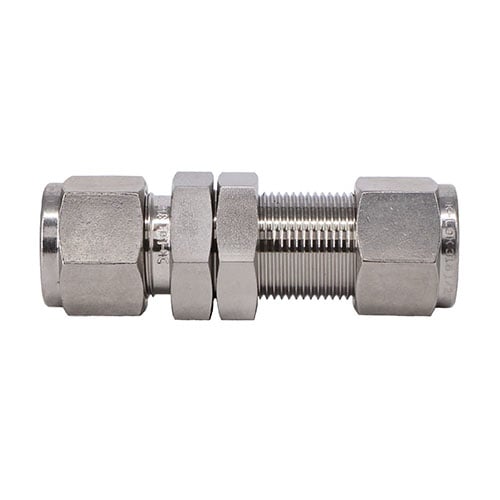
What must Swagelok equivalent fittings match?
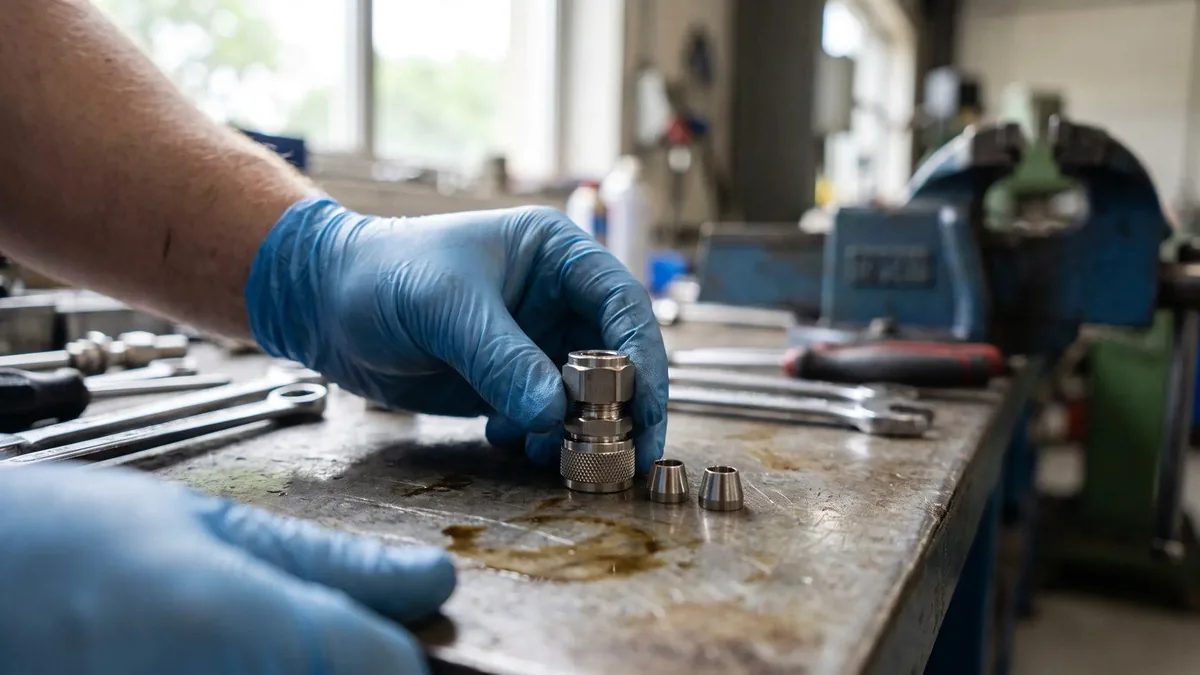
Define the replacement scope you need. Start with your drawing. A complete fitting substitution and a replacement ferrule are different requests, even when the tube outside diameter and pipe thread match. Specify which assembly stays in place.
The manufacturer’s component policy is another detail you need. Swagelok recommends against intermix or interchange of its tube fitting components with other manufacturers’ components in its tube fitting catalog. Your matching connection sizes do not establish approval to combine a body, nut or ferrules from different brands. Keep the complete assembly identity clear.
On the requisition, you should define “Swagelok equivalent”. Record your permitted brands, connection requirements and approval route for substitutions. A cross-reference identifies a candidate for comparison, while the drawing and service requirements determine acceptance. Give purchasing an actionable description.
The fitting family is another detail you need. For your maintenance handoff, include the guide to ferrule design differences alongside the selected manufacturer’s instructions. A twin-ferrule label alone does not identify an orderable assembly. Name the series and configuration.
Which Swagelok equivalent fittings brands are stocked?
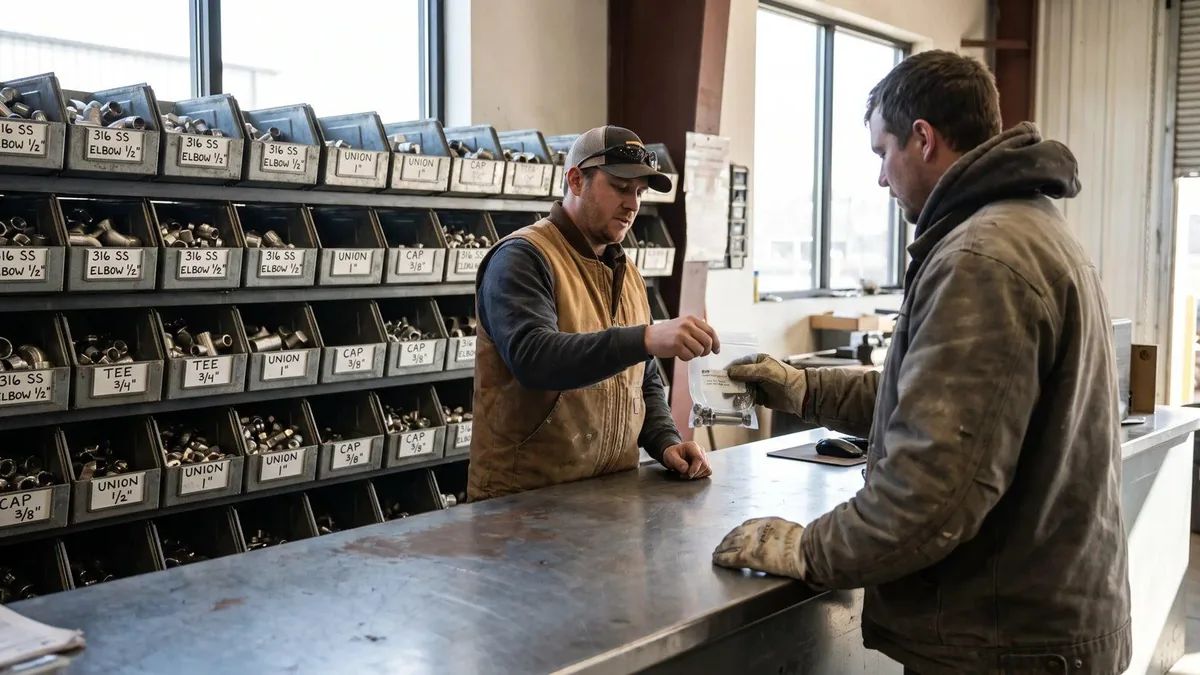
Several brands are available for you to check. Collins-Oliver stocks Swagelok itself, plus DK-LOK, Hy-Lok, Tylok, Parker, Hoke, Ham-Let, Superlok, Bi-Lok and FITOK. Use the manufacturer descriptions below to narrow your request, then confirm the exact stocked part and quantity. Brand coverage does not establish today’s availability.
| Brand | What its manufacturer publishes | What you should identify |
|---|---|---|
| Swagelok | Its gaugeable tube fitting catalog describes separate sealing and gripping functions for the front and back ferrules. | Your complete fitting or the exact original-brand component required. |
| DK-LOK | Its technical-information page describes a body, front ferrule, back ferrule and nut, with gaugeability and heat-code traceability. | Your fitting configuration, material and tubing size designation. |
| Hy-Lok | Its fittings catalog directory describes compression fittings with a double-ferrule design and gaugeability. | Your tube fitting family, distinct from its other connection families. |
| Tylok | Its product catalog identifies CBC-Lok as double-ferrule and CS-Lok as single-ferrule. | Your required series before comparing similar connector descriptions. |
| Parker | Its CPI and A-LOK catalog distinguishes single-ferrule CPI from double-ferrule A-LOK and supplies assembly and tubing-selection instructions. | Your exact Parker series, material designation and end connections. |
| Hoke | Its GYROLOK catalog describes controlled ferrule drive and a butt seal. | Your GYROLOK drawing dimensions and applicable assembly procedure. |
| Ham-Let | Its LET-LOK catalog describes the body, front ferrule, back ferrule and nut, plus installation and reassembly procedures. | Your LET-LOK configuration and whether the job involves initial assembly or reassembly. |
| Superlok | Its tube fitting catalog identifies double-ferrule compression fittings and supplies separate fractional and metric ordering designations. | Your complete order code, including connection type and material. |
Compare the documented product families available to you. Your search for Swagelok competitors should lead to those documents, rather than an assumption of identical construction. These descriptions explain each manufacturer’s own product and do not establish another manufacturer’s approval. Check the proposed assembly on its own merits.
Stock confirmation is another detail you need. Searching Swagelok alternatives produces a brand shortlist, but your purchase requires an exact configuration and quantity. Keep approved alternatives beside the original number on the request. Ask which complete assembly is available.
How do you cross-reference a part number?
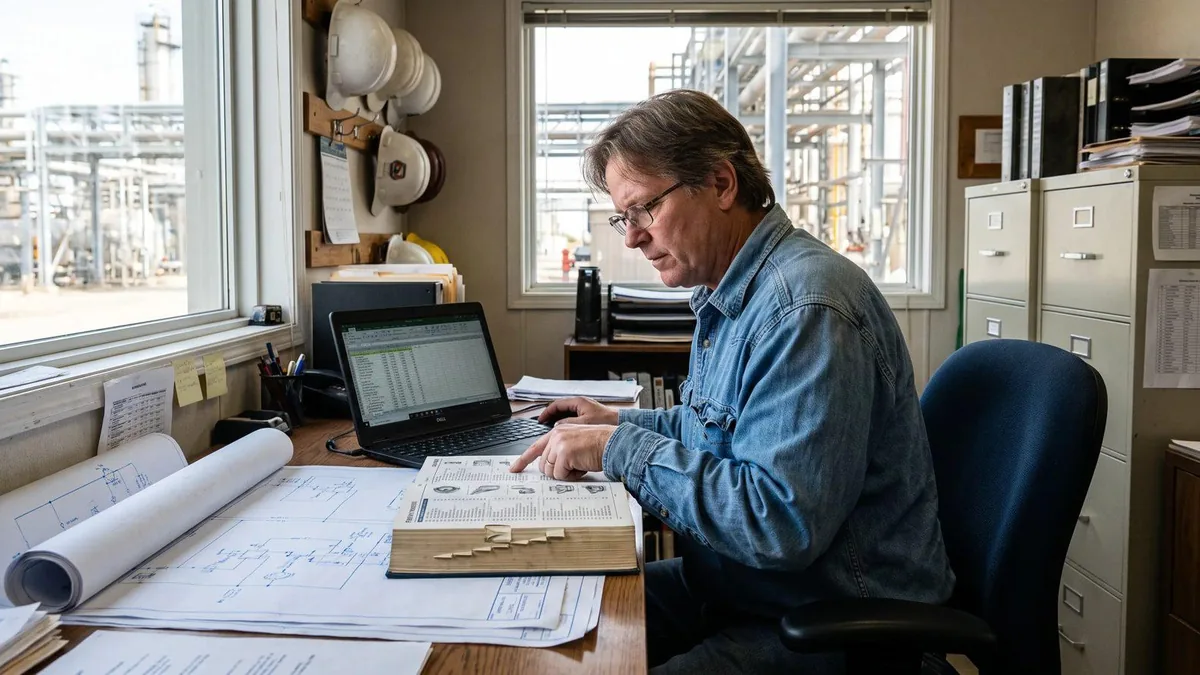
Begin with the original record you have. Photograph your label and transcribe the entire part number, including every suffix. Then open the original manufacturer’s product entry and compare its description against the drawing. Resolve discrepancies before selecting an alternative.
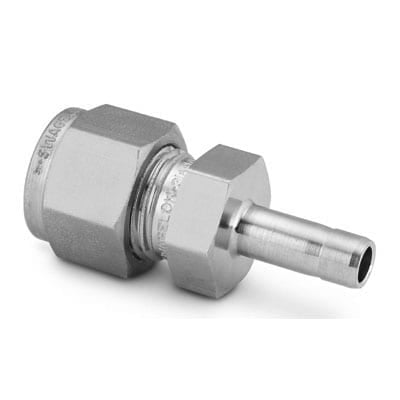
A concrete example for you is Swagelok SS-810-1-6. Swagelok identifies it as a male connector with a 316 stainless steel body, a 1/2 in. tube connection and a 3/8 in. male NPT connection. Put those verified details into your comparison sheet. They describe the starting part, not an approved substitute.
With those details, you now have a connection match to investigate. Parker independently lists A-LOK 8MSC6N for 1/2 in. tube OD and 3/8 in. NPT in its male connector table and ordering guide. Your next steps are selecting the material designation and checking dimensions, tubing requirements and service limits. This comparison establishes matching connection descriptions, not component interchange or completed engineering approval.
Next, you should build a side-by-side record. Carry your original requirements into the candidate manufacturer’s catalog and record the corresponding order code. Check the drawing dimensions as well as the connection labels. Do not translate a suffix by appearance.
- Record your original manufacturer, complete part number and drawing revision.
- Match your tube outside diameter, measurement system and fitting configuration.
- Confirm your thread form, nominal size, gender and sealing arrangement.
- Specify your body material, tubing material and required cleaning condition.
- Provide your tubing wall thickness, service media, pressure and temperature requirements.
- Compare your installation envelope, wrench access and tube engagement requirements.
- State your approved brands, requested quantity, documentation needs and required date.
Separate selection from the authorization you need. Attach your candidate catalog entry and drawing to the substitution request, then obtain the approval required by the project specification. Record the accepted manufacturer and complete order code before purchase. Leave no substitution hidden in a description.
When the existing body stays, you need a different request. Describe your installed assembly and identify the component requiring replacement. The DK-LOK and Swagelok comparison provides related reading, while each manufacturer’s documentation governs its own components. Do not treat a complete-fitting cross-reference as a ferrule interchange list.
What determines the pressure comparison?

Before assigning pressure capability, you need tubing data. In Swagelok’s pressure-rating basis, tube fitting ends are rated to the working pressure of the tubing listed in its tubing data. Your Swagelok tube-end pressure assessment therefore needs the tubing specification. Keep the tubing specification attached.
Check the complete connection before you proceed. Your evaluation should include the pipe-thread end, material, service temperature and other applicable catalog limits, not only the tube end. Swagelok’s catalog distinguishes pressure-rating bases by end connection. Review each end of the assembly.
For a Swagelok alternative, you should apply the same discipline. Parker’s tubing-selection guidance addresses material, wall thickness, hardness and gas-service considerations. Your comparison needs the candidate manufacturer’s applicable limits and the actual service conditions. A broad series envelope is not a part-specific rating.
What should you confirm before installation?
You need the correct instructions on site. Your installation packet should identify the selected manufacturer, series, tube preparation requirements and inspection method. Superlok’s installation guidance directs installers to keep its supplied fittings assembled to maintain cleanliness. Keep the packet with the material.
You should verify the shipment at receiving. Compare your approved order code with the package label, supplied description and accompanying records before releasing the material to the job. Separate any discrepancy for resolution, including an unexpected series or missing material designation. An accepted quote is the starting record, and the delivered item must match it.
You should distinguish a new assembly from a remake. Ham-Let’s LET-LOK instructions provide separate reassembly guidance, including marking the nut position before disconnection. Select the procedure matching your fitting’s condition. Do not substitute an initial pull-up procedure for a remake procedure.
You must prepare the line before opening it. Depressurize your system before disassembling a Swagelok tube fitting, as directed in its assembly and reassembly instructions. Follow the site’s isolation and return-to-service procedures, then document the completed connection. Keep installation and inspection records together.
Why bring your fitting request to Collins-Oliver?
Bring your part request directly to Collins-Oliver. Collins-Oliver carries over 19,000 part numbers and is an authorized DK-LOK distributor. Your request also reaches stocked Swagelok, Parker, Hoke, Hy-Lok, Tylok, Ham-Let, Superlok, Bi-Lok and FITOK product. Start with the exact part you need.
You have same-day pickup in Baton Rouge and nationwide shipping available. Confirm your specific quantity and timing before arranging collection or scheduling the work. Stock depth supports the search, while a confirmed line item supports the job. Ask for the actual availability.
You should speak with someone who knows the part. Bring your drawing, existing order code and acceptable alternatives so the conversation addresses the connection and replacement scope. Browse the tube fittings catalog to organize the request. Keep identification and delivery in the same conversation.
Frequently asked questions
What if I only have part of the fitting number?
For identification, you should send photographs of all legible markings and the original packaging. Add your drawing reference and a description of both ends. Keep the request marked for identification until the complete code is established.
How do I request quotes for several acceptable brands?
You should list each acceptable complete assembly as a separate alternative. Give your buyer a clear instruction to select an approved line item and record the chosen manufacturer. Keep the alternatives separate through order entry and receiving.
What should I do with mixed bags of nuts and ferrules?
You should separate unidentified components from identified inventory. Recover your packaging and purchase records before assigning a manufacturer or series. Keep unverified loose components out of installation kits.
Does new surplus have the documentation my job requires?
You should specify the records required for your order. For new and new surplus material, request confirmation of the available item-specific paperwork before accepting the line item. Product condition alone does not establish which records accompany it.
What changes on the maintenance record after a substitution?
After substitution, you should record the installed manufacturer, series and complete part number. Update your bill of materials and spare-parts request so later maintenance starts with the actual assembly. Attach the approved substitution record and installation photographs.
How do I handle a partial stock quantity?
You should identify which job locations need material first. Ask for your available quantity and the remaining quantity to appear separately in the response, with confirmed timing for each. Approve a split shipment only after matching it to the work schedule.
Call (800) 247-5756 or request a quote. Have your part number and drawing ready. You will need the quantity and required date too.
Want more of this in your Google feed? Tap here and Google shows you our articles first.