TL;DR
- Permanent compression fittings handle installed lines. Quick-connect couplings handle repeated connection cycles.
- If the line gets broken less than once a year, use a permanent compression fitting.
- If the line gets broken daily, weekly, or even monthly, use a quick-connect coupling.
- The trade-off: quick-connects rate at lower pressure than permanent fittings and have shorter service life per cycle.
- Hybrid is fine — permanent fitting on the long run, quick-connect at the access point.
The decision rule that gets it right 90% of the time
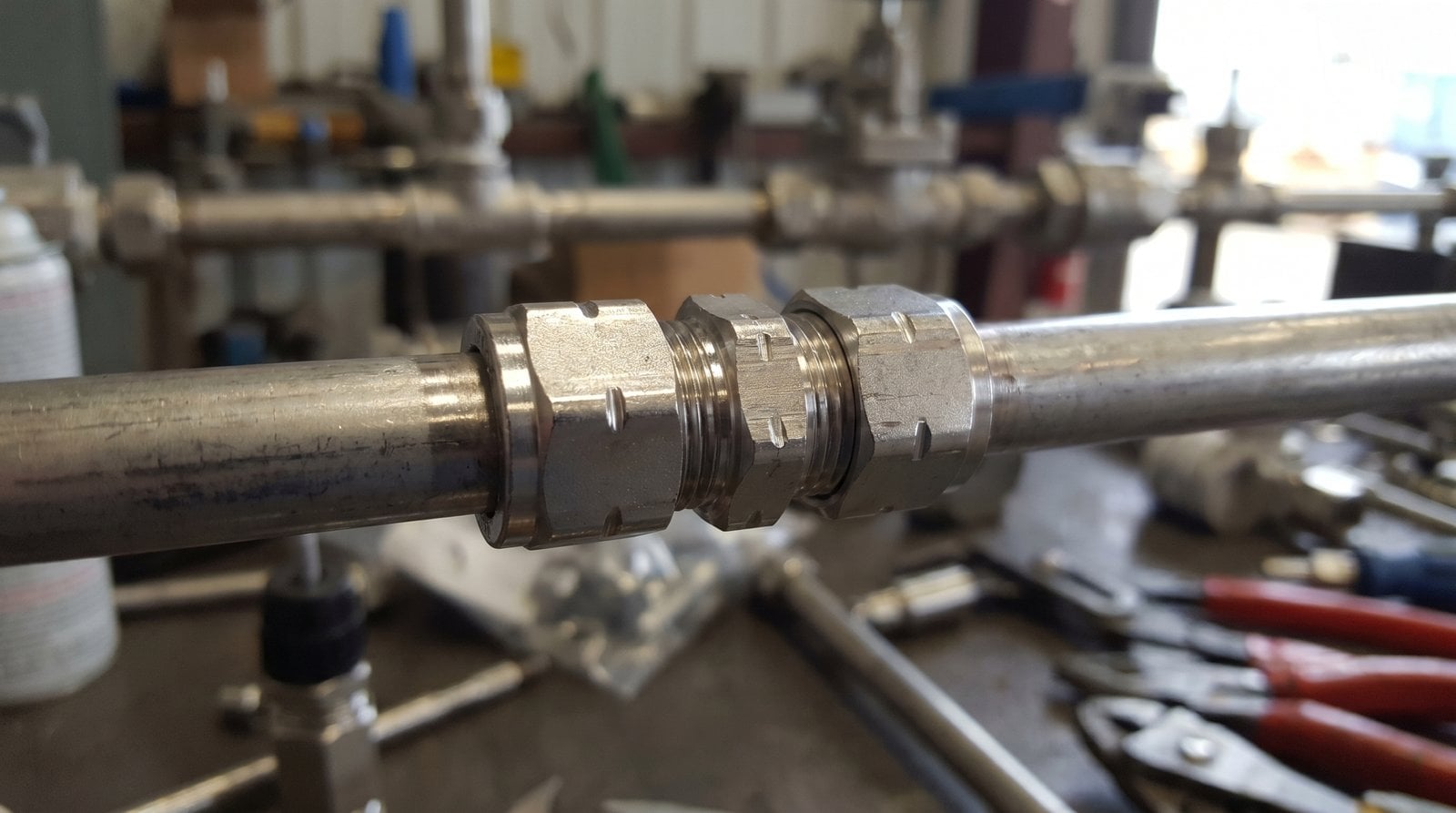
Count the disconnect cycles per year. If the answer is single digits, use a permanent compression fitting. If the answer is in the hundreds or thousands, use a quick-connect. Everything in between is a judgment call based on how much pressure the line sees and how much downtime each disconnect costs.
What permanent compression fittings actually do
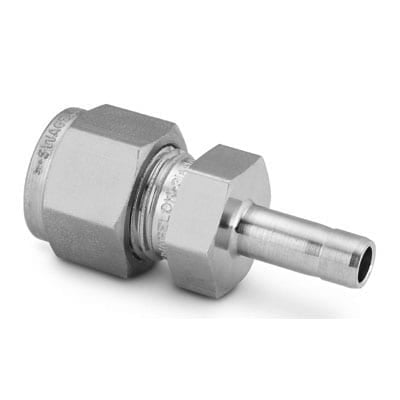
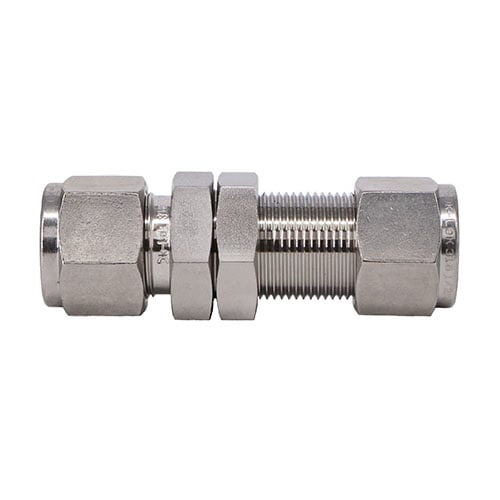
A double-ferrule compression fitting clamps onto rigid tube and creates a metal-to-metal seal under pressure. The fitting handles 6,000+ psi at ambient temperature in standard 316L stainless. High-pressure series handle 15,000 psi. The seal lasts as long as the tube does — 20+ years in most plant environments.
The trade-off: every time you break the connection, you have to torque the nut back to spec on reassembly. The ferrules take their original set. If you reseat them on different tube or in a different body, the seal fails.
What quick-connect couplings actually do
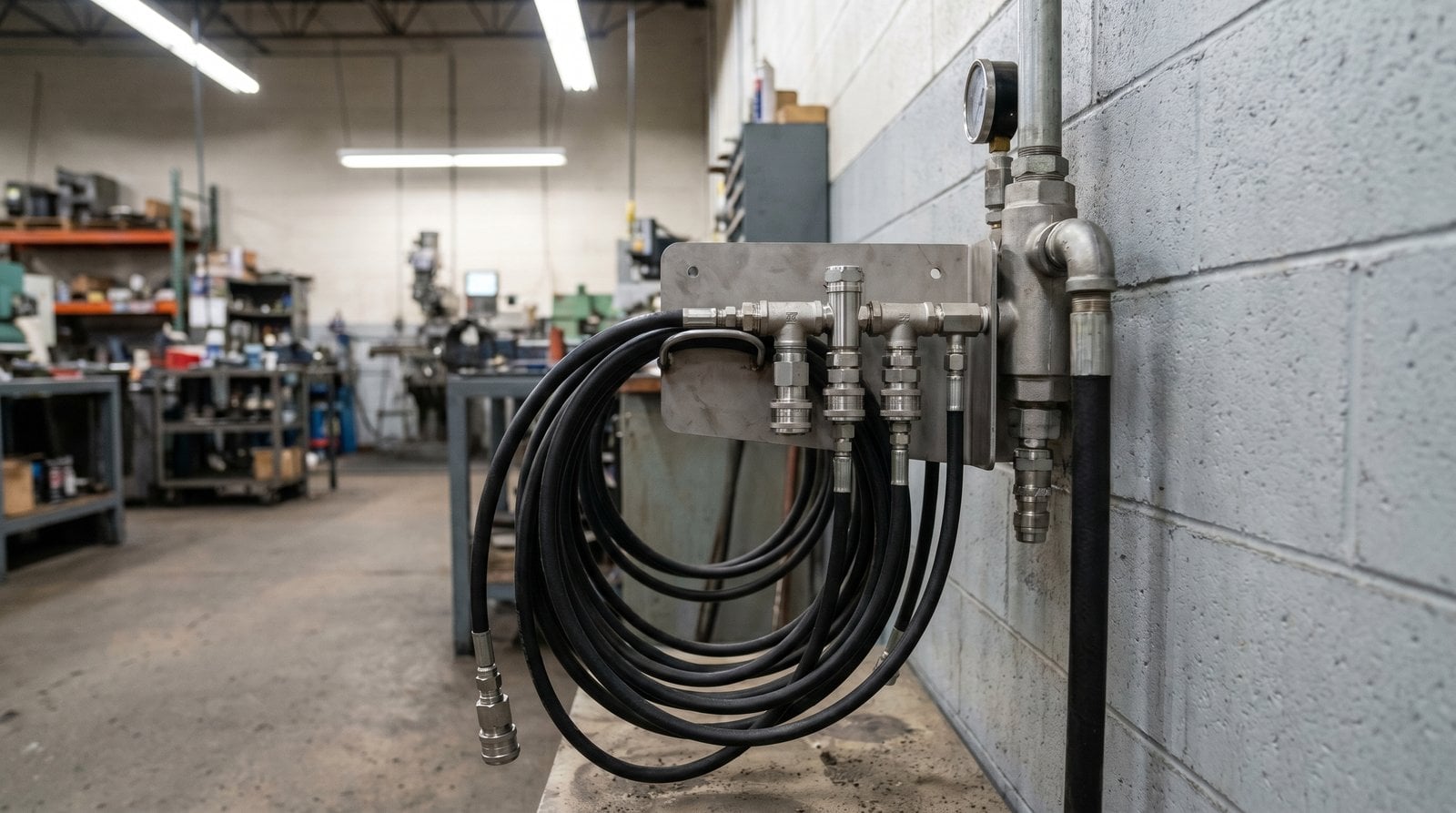
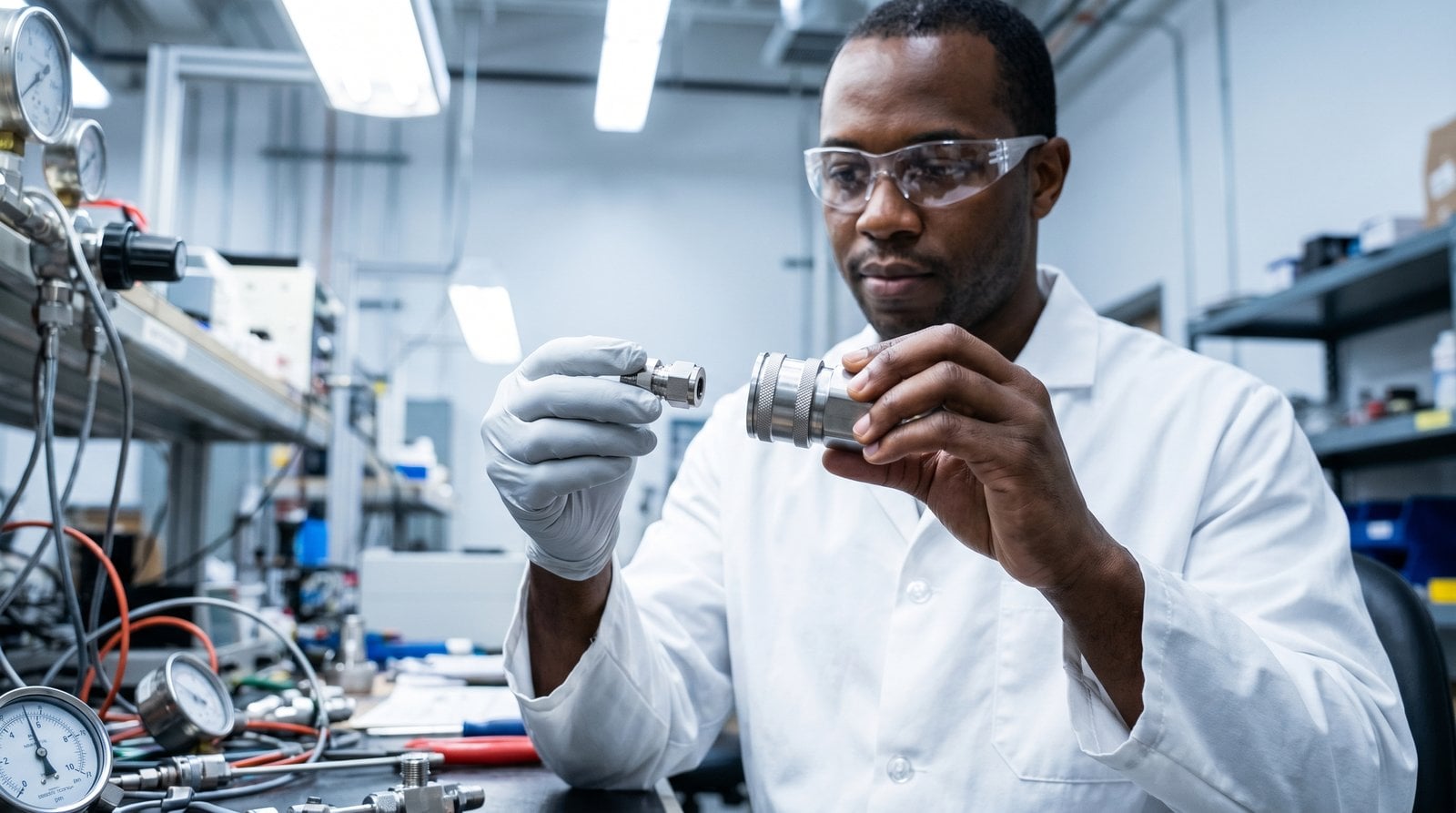
A quick-connect uses internal spring-loaded poppets, a positive-locking sleeve, and an elastomer seal. Push the two halves together and a click confirms engagement. Pull the sleeve back and they separate. Total cycle time: 3-5 seconds.
The trade-off: lower pressure rating (typically 3,000-5,000 psi on stainless), shorter service life per joint (1,000-5,000 cycles before seal replacement), and elastomer compatibility constraints with aggressive chemistry.
The cycle-count math
- 0-12 cycles per year: Permanent compression fitting. The reassembly torque is straightforward at this frequency. Higher pressure rating, longer service life.
- 12-500 cycles per year: Quick-connect makes sense, especially if disconnect downtime is expensive. Stainless quick-connects last 5+ years at this rate.
- 500-5,000 cycles per year: Quick-connect mandatory. Seal replacement at planned intervals (every 1-2 years on high-use stations).
- 5,000+ cycles per year: Specialty high-cycle quick-connects. These exist for hose station and test rig applications where the standard quick-connect would wear out fast.
Common use cases for each
Permanent compression fittings excel at:
- Process pipe and instrument runs
- Hydraulic control lines on installed equipment
- High-pressure (6,000+ psi) service
- UHP gas distribution to semiconductor tools
- Sample lines on permanent analyzers
- Cryogenic and high-temperature service
Quick-connect couplings excel at:
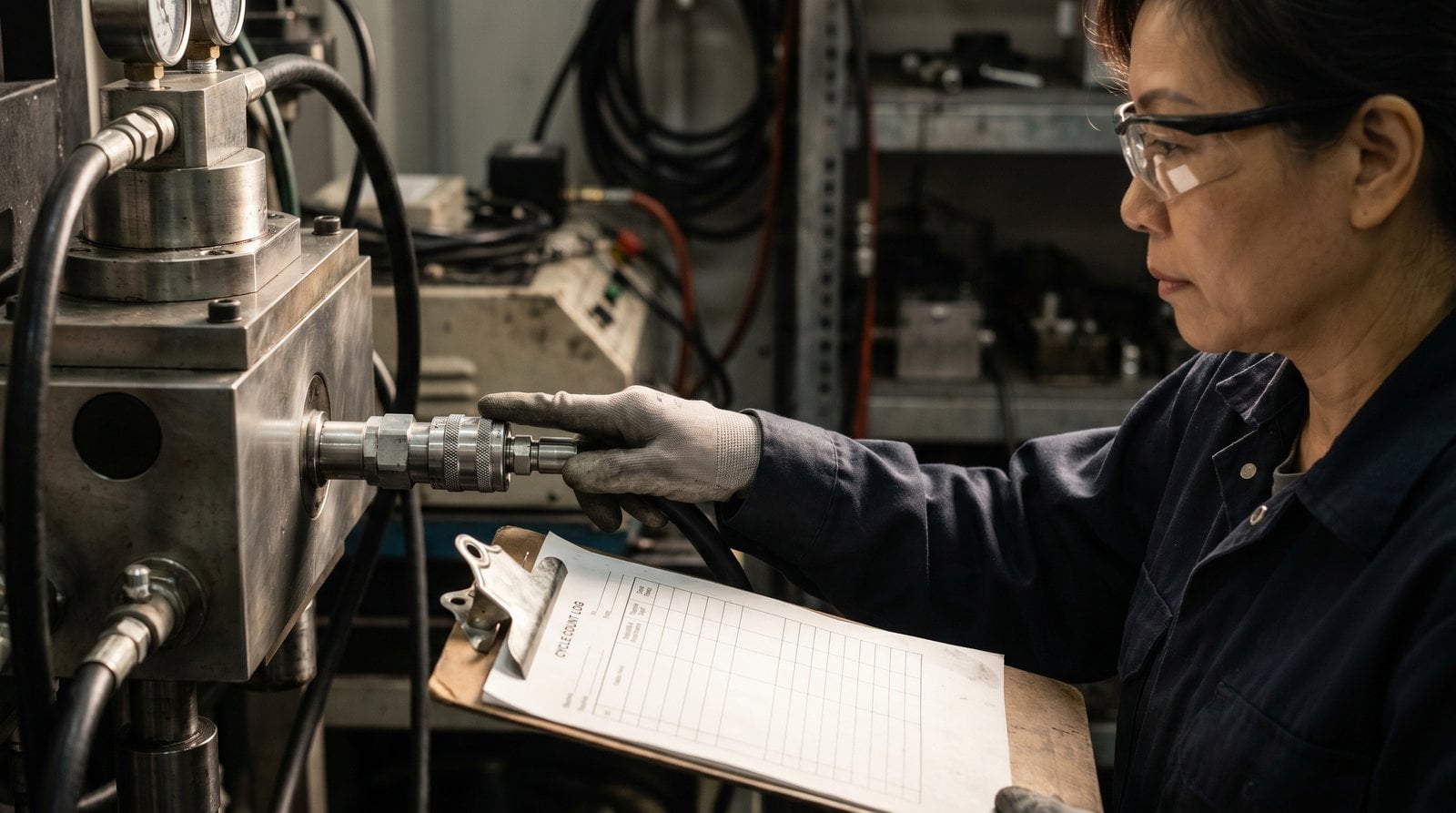
- Calibration carts and instrument test rigs
- Hydraulic test stands
- Mobile equipment quick-fill stations
- Lab gas chromatograph carrier supply
- CIP/SIP transfer connections in pharma
- Pneumatic tool drops
- Sample port access on process vessels
The hybrid pattern
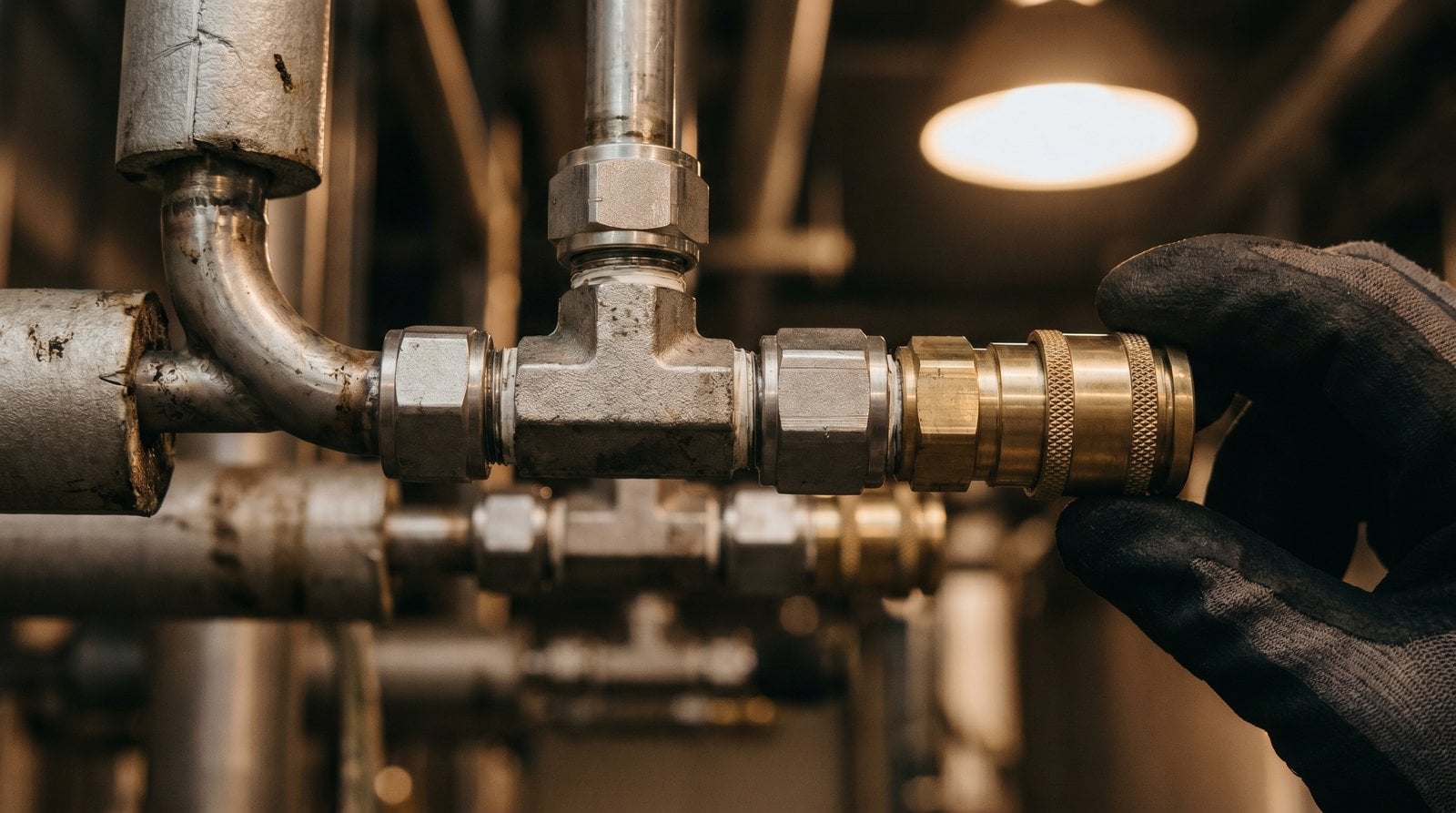
Most real installations use both. Permanent compression fittings on the long runs that never get disconnected. Quick-connects at the access points where operators connect and disconnect routinely.
Example: A pharmaceutical bioreactor uses permanent stainless tubing and compression fittings for the installed plumbing — feed lines, vent lines, sterile filter housings. At the operator interface, quick-connect couplings let the technician swap sample bottles, calibration standards, and CIP supply in seconds.
Common mistakes that mix the two up
- Using permanent fittings on a high-cycle line. The maintenance team has to torque the fitting back to spec every shift. Ferrules wear out fast. Switch to quick-connect.
- Using quick-connects on permanent installations. Higher cost than necessary, more failure points, lower pressure rating. Use permanent compression fittings.
- Mixing brands across the quick-connect pair. Each manufacturer’s profile is proprietary. The connect-side and the body-side must match brand.
- Specifying brass quick-connects on chemical service. Brass corrodes against most process chemistry. Switch to stainless.
- Skipping the elastomer compatibility check. Buna-N on hot oil melts in days. Always verify the seal material against the fluid.
What this means for procurement
Build the spec around the actual usage pattern, not around the standard catalog. Walk the line with the operations team. Count the disconnect cycles. If the count is going to climb (planned automation, new sampling protocol, expanded testing program), spec quick-connects up front. Retrofitting from compression to quick-connect on an installed line means cutting and re-fitting the tube.
For hybrid installations, document which sections use permanent compression and which use quick-connects. Future maintenance teams need to know the boundary.
Need to spec the right connection style? Read the quick-connect resource guide or call Collins-Oliver. 229 Swagelok stainless quick-connect SKUs in stock — same-day shipping nationwide.