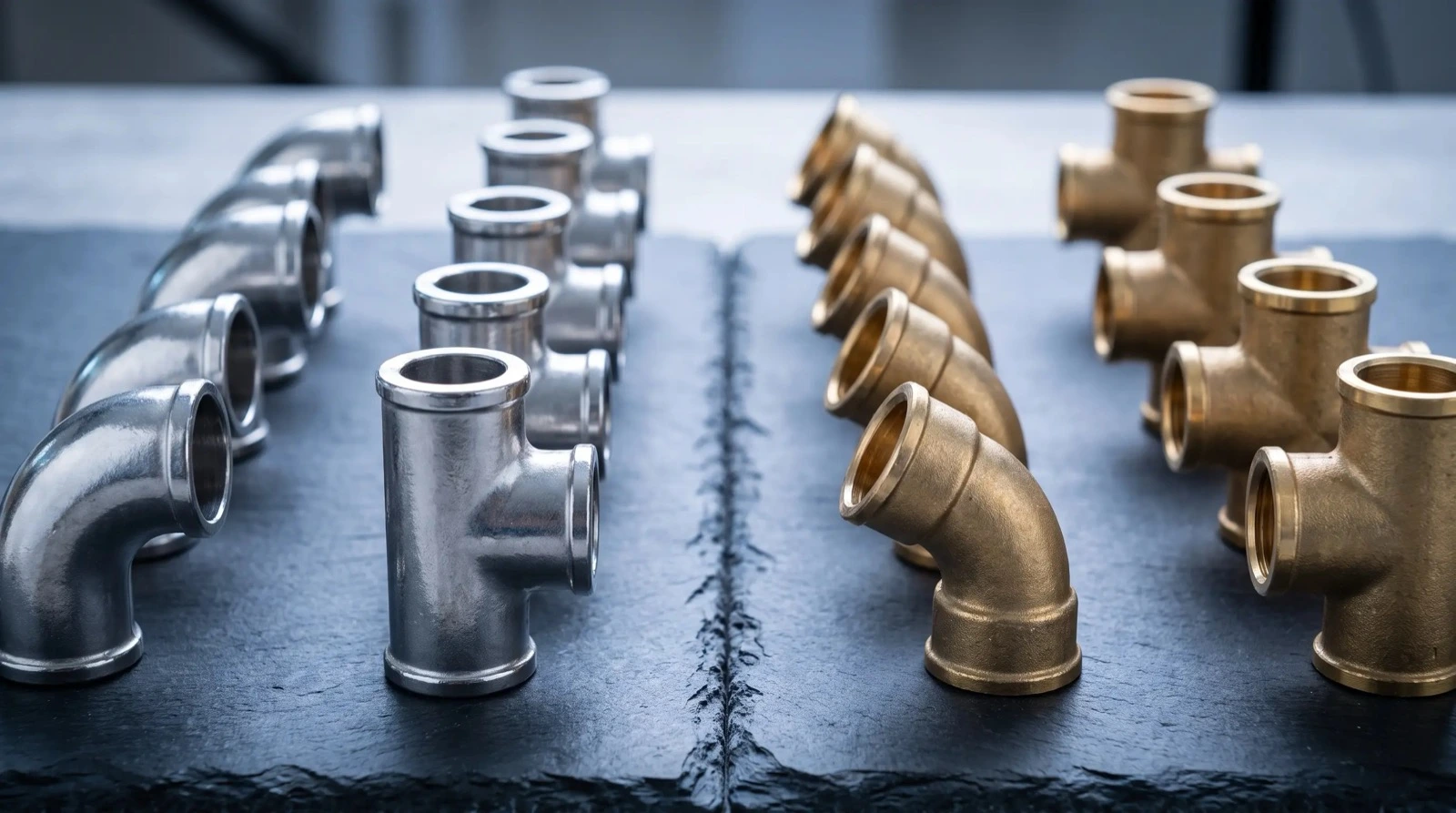
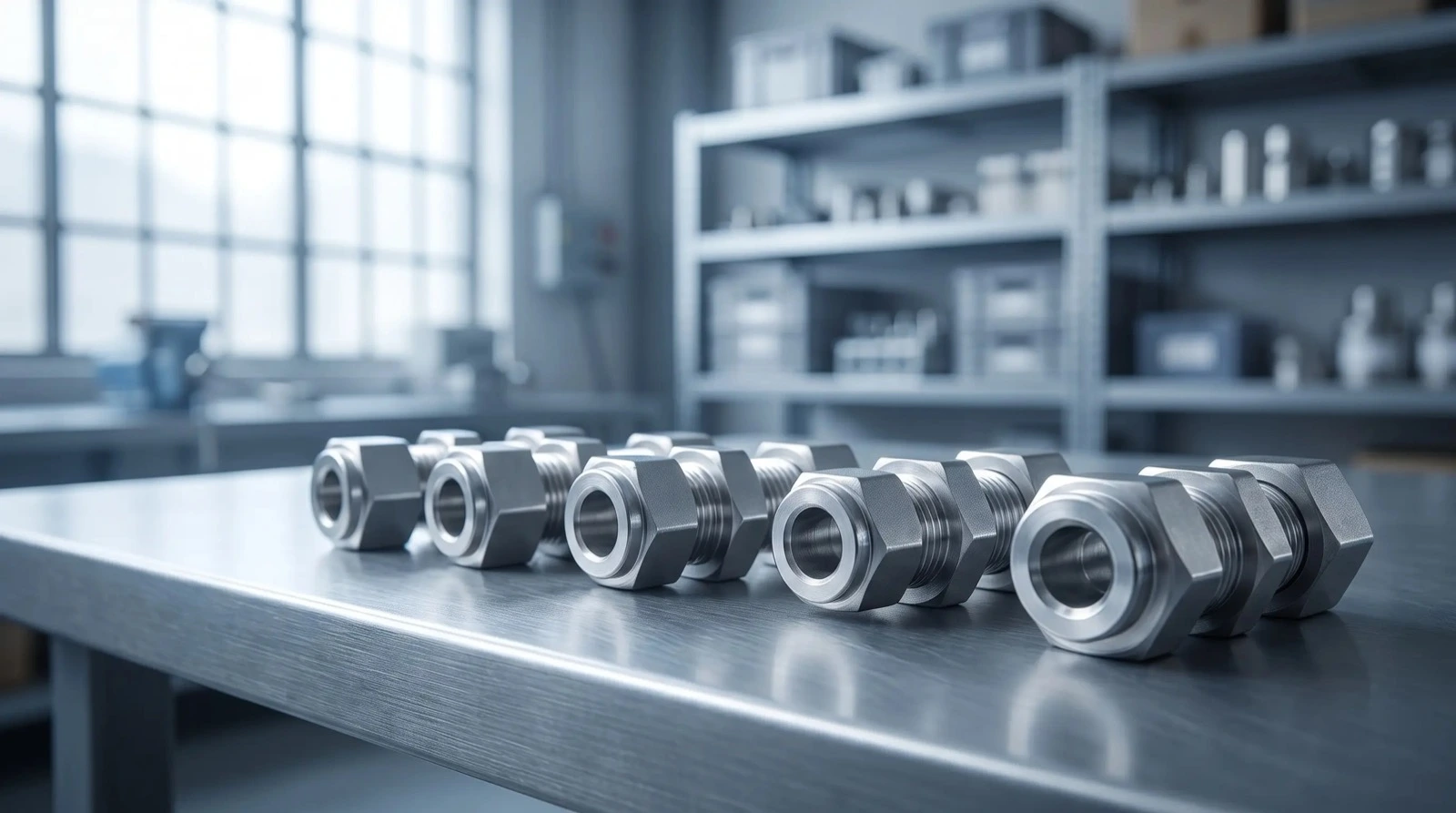
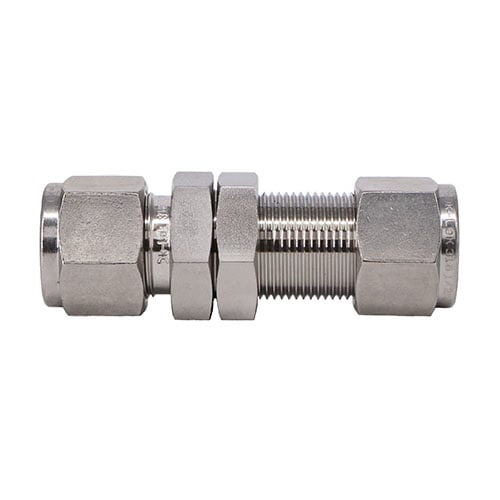
Knowing NPT vs BSPT vs AN thread types keeps you from the most avoidable failure in a fluid system: forcing two connections together which were never built to mate. A thread which looks close is not close enough. A five-degree gap in thread angle leaks under pressure. A flare seat and a pipe thread will not seal at all. This guide breaks down the three connection families you meet most on Gulf Coast process lines, how each one forms its seal, and how to order the correct thread the first time.
TL;DR
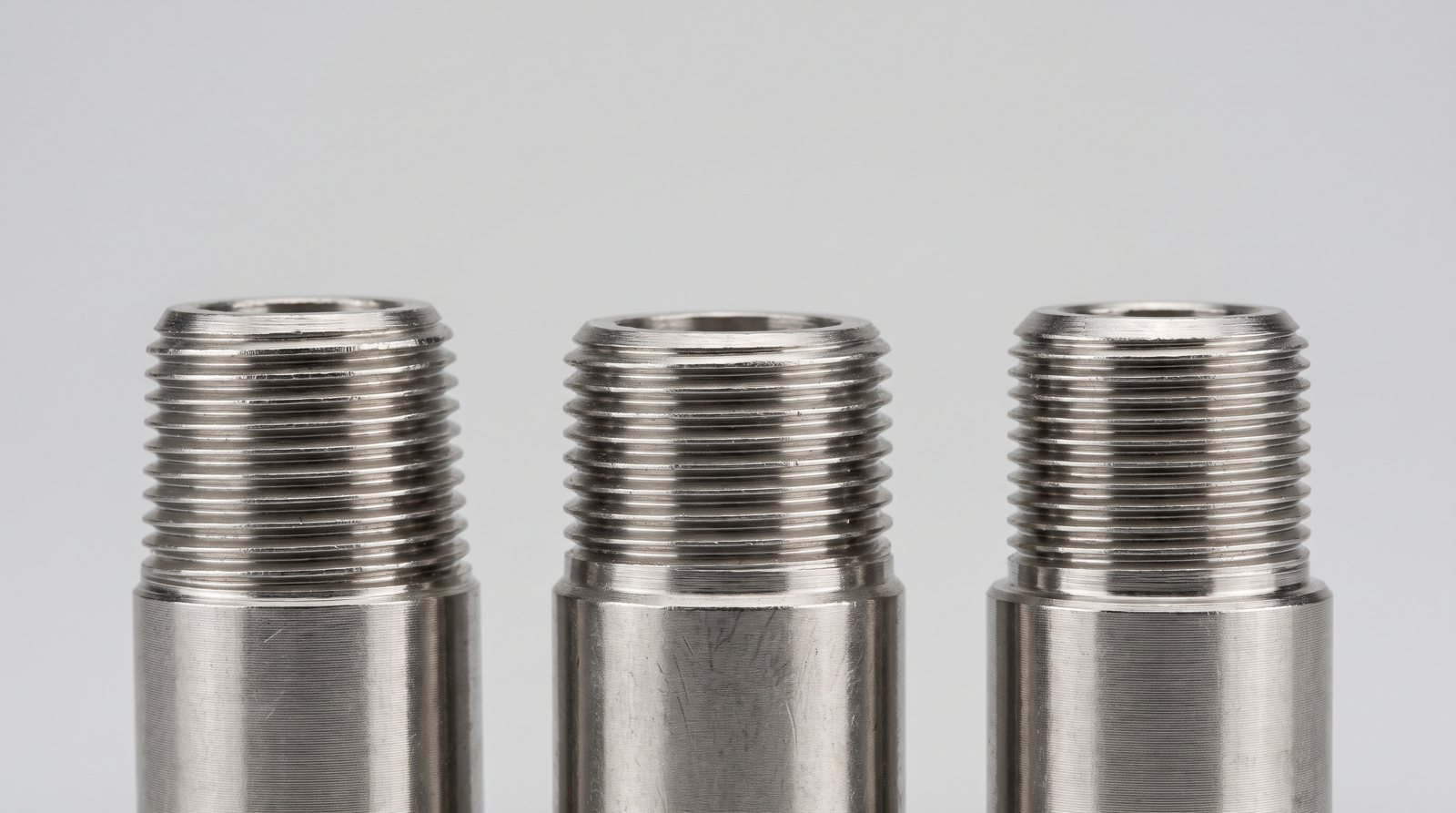
- NPT (National Pipe Taper) uses a 60-degree thread angle and a 3/4-inch-per-foot taper, sealing on the threads, so you add PTFE tape or sealant. Governing standard: ASME B1.20.1.
- BSPT (British Standard Pipe Taper) uses a 55-degree Whitworth angle with a 1:16 taper, also sealing on the threads. Governing standard: BS 21 / ISO 7. It will not mate with NPT.
- AN 37-degree flare (SAE J514, also called JIC) seals metal-to-metal on a 37-degree flared cone, not on the threads, so it needs no tape and remakes cleanly.
- A 37-degree AN flare and a 45-degree flare look almost alike and will not seal together.
- Match the standard on your existing equipment before you order, since size alone will fool you.
Quick Answer
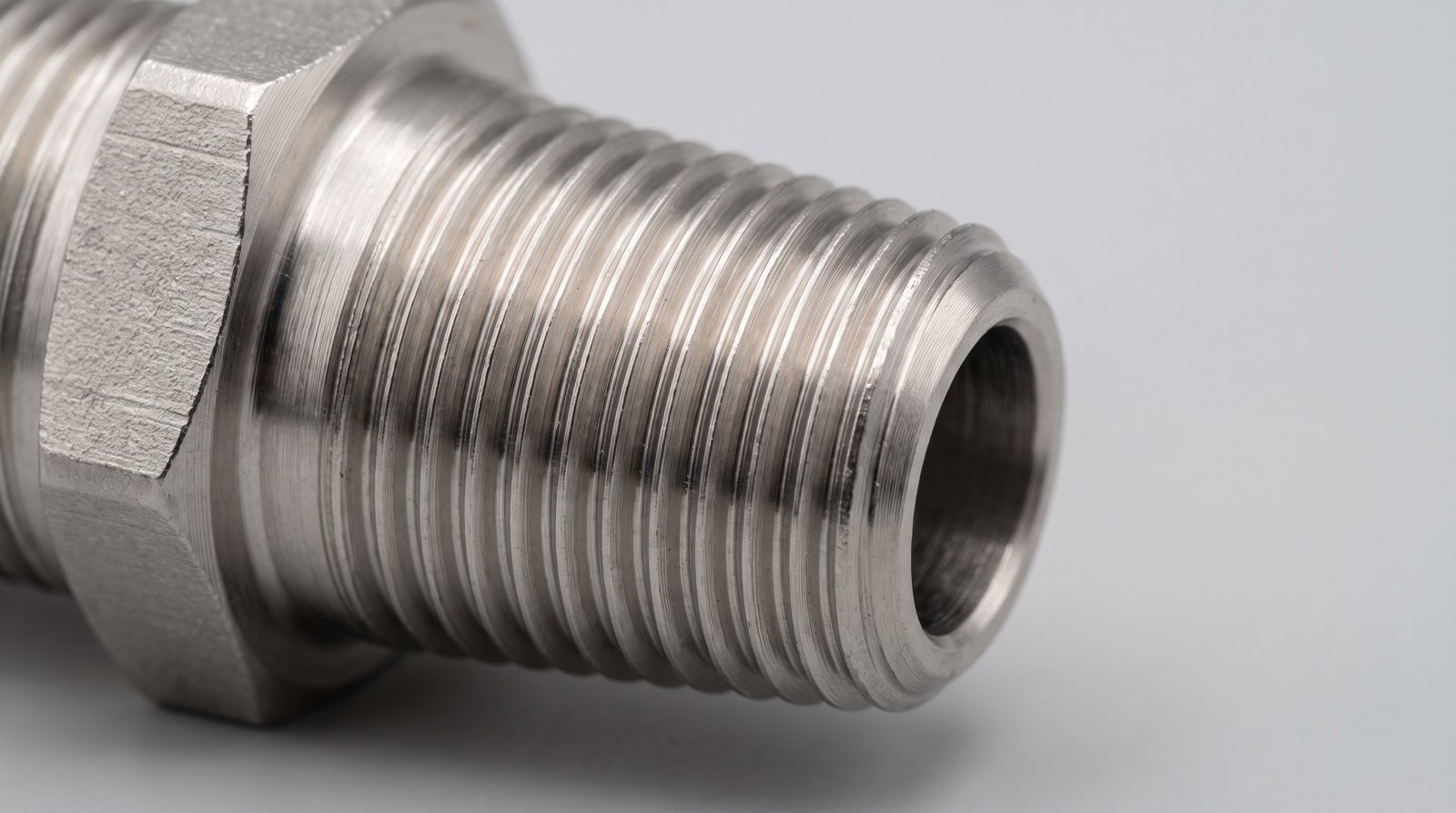
NPT, BSPT, and AN 37-degree flare are three different connection standards, and none of them seal against each other. NPT (60-degree, ASME B1.20.1) and BSPT (55-degree Whitworth, ISO 7) are tapered pipe threads which seal on the thread flanks, while AN (SAE J514, 37-degree) seals on a flared metal cone. Identify the standard on your existing part first, then order a matching fitting or the correct adapter.
Why do thread and connection standards matter?
Threads do two jobs on a fluid connection. They hold the parts together, and on many designs they form the seal. Miss the standard and you lose both. The parts start together and feel snug, but the flanks never fully engage, so the joint weeps, strips, or backs out once pressure climbs. Get the standard right and you protect your system, your readings, and your schedule. Learn the differences before you buy, not after a failed pressure test on the rack.
What is NPT, and how does it seal?
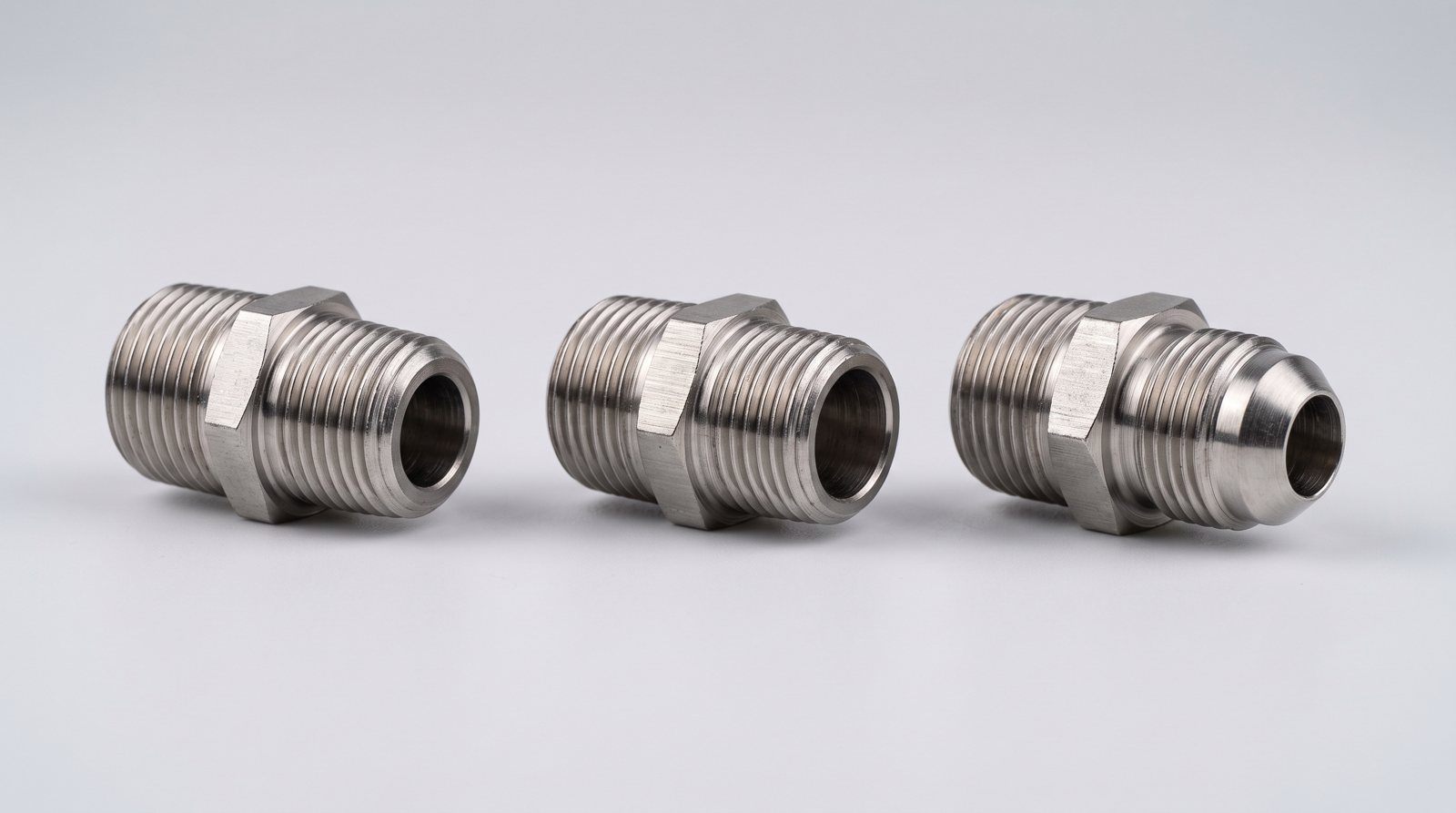
NPT stands for National Pipe Taper, the dominant tapered pipe thread across North America. NPT carries a 60-degree thread angle and a taper of 3/4 inch of diameter for every foot of length, a rate written as 1 in 16. ASME B1.20.1 governs the form. The taper is the whole point. As you tighten, the tapered threads wedge and deform slightly to seal along the flanks.
Because NPT seals on the threads, you add a thread sealant or PTFE tape to fill the tiny spiral leak path and lock the joint. You will meet NPT across Louisiana refineries, chemical plants, and utilities on pipe, valves, and instrumentation fittings. When you order for a US industrial system, NPT is the usual default. Our instrumentation pipe fittings ship in NPT patterns for this reason.
How does BSPT differ from NPT?
BSPT stands for British Standard Pipe Taper. Like NPT, it is a tapered thread which seals on the threads, but it follows a 55-degree Whitworth profile with a 1:16 taper, and BS 21 and ISO 7 define it. Set the two side by side and the five-degree gap between 55 and 60 degrees looks small on paper. In the field it is decisive. NPT and BSPT will not properly mate. Force them together and the flanks never seat, so the joint leaks and strips.
BSPT rules Europe, Asia, and the Middle East, so you meet it on imported gauges, valves, and skids. If your equipment arrived from overseas, confirm the thread standard before you tie it into a US NPT line. When the two standards meet, reach for the correct adapter, never brute force.
What is an AN 37-degree flare, and why is it not a pipe thread?
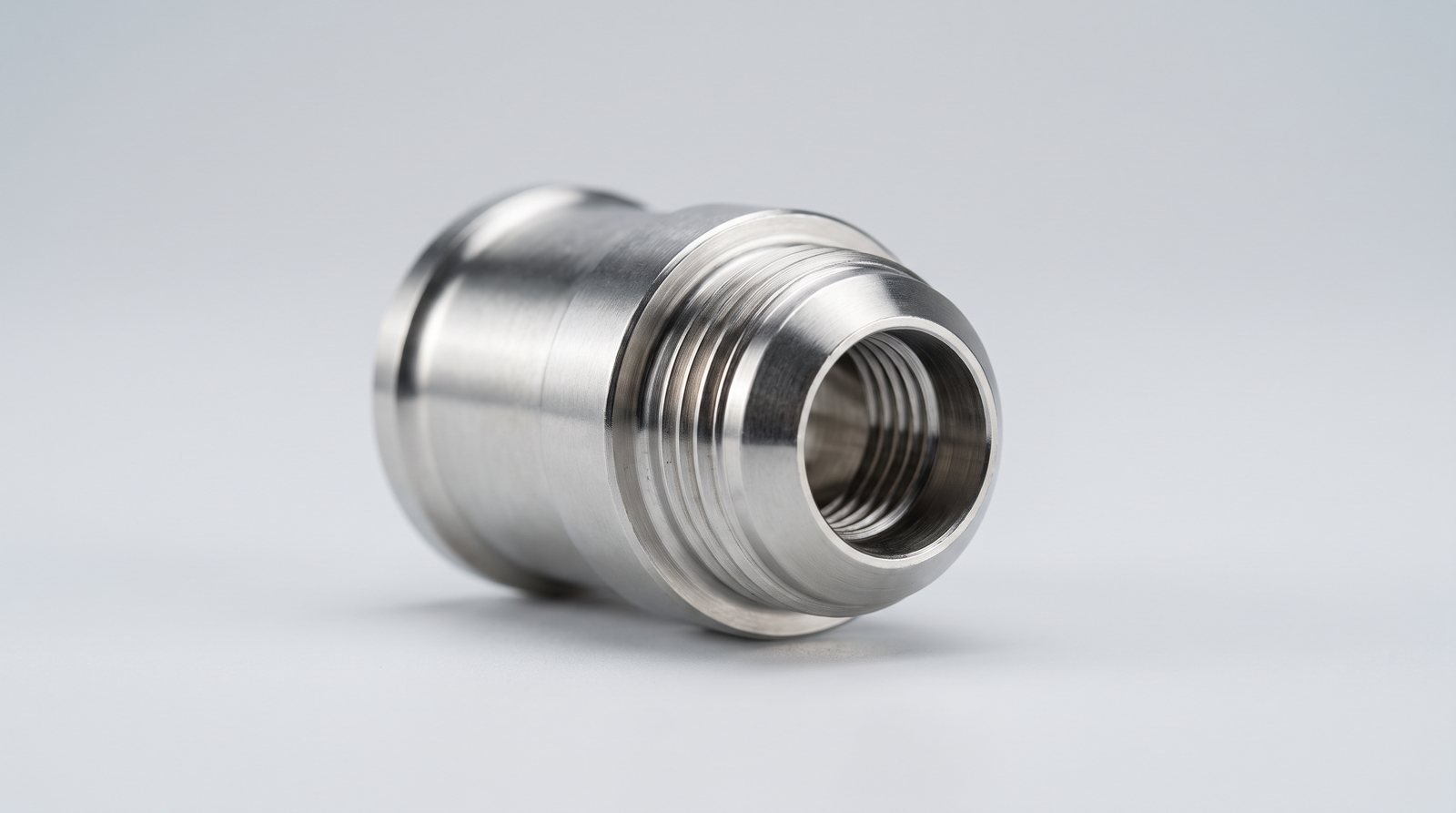
AN stands for Army-Navy, an aerospace-rooted standard now common in high-pressure fluid and hydraulic service. SAE J514 governs it, and the automotive and industrial world often calls the same 37-degree pattern JIC. Here is the split from pipe thread: AN does not seal on the threads at all. It seals on a 37-degree flared cone. You flare the tube end to 37 degrees, and the cone seats metal against metal into a matching 37-degree seat in the fitting. The threads only hold the parts and apply clamping force.
The flare seal earns AN fittings real strengths:
- No tape or sealant, since the cone does the sealing
- Clean reassembly, because you take the joint apart and remake it
- Strong service in high-pressure, high-vibration hydraulic lines
Watch one common trap. A 37-degree AN flare and a 45-degree flare (SAE J512, the HVAC and plumbing pattern) look almost identical and will not seal together. The smaller 37-degree cone needs less force to seat, which suits high pressure, while the wider 45-degree cone belongs on refrigeration and light plumbing. Confirm the flare angle before you mate any flared connection.
How do the three compare at a glance?
| Feature | NPT | BSPT | AN 37-degree Flare |
|---|---|---|---|
| Angle | 60-degree thread | 55-degree Whitworth thread | 37-degree flare seat |
| Seals on | Tapered threads | Tapered threads | Flared metal cone |
| Sealant needed | Yes, tape or dope | Yes, tape or dope | No |
| Governing standard | ASME B1.20.1 | BS 21 / ISO 7 | SAE J514 |
| Common region or use | North America | Europe, Asia | Aerospace, hydraulics |
| Mates with the others? | No | No | No |
How do adapters bridge two different standards?
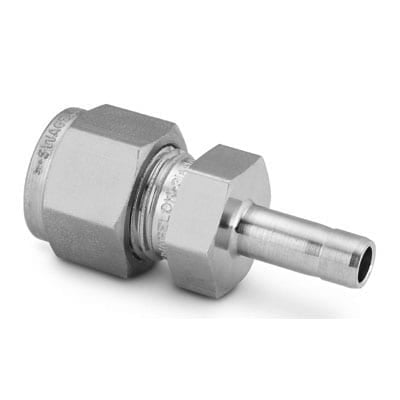
Sometimes your line runs NPT and your imported gauge runs BSPT. You will not thread one into the other, but a machined adapter joins the two cleanly. An adapter carries one standard on each end, so the NPT end seals into your line while the BSPT end seals into the gauge, each on its own correct geometry. The same logic covers a pipe-thread line feeding a flare fitting: a straight adapter presents NPT on one side and a 37-degree flare seat on the other, so each half seals the way it was built to. Order the adapter by naming both ends, the size, and the material, and you skip the forced fit which strips threads and ruins parts. Keep a few common NPT-to-BSPT and NPT-to-AN adapters on hand for the next surprise from an overseas skid, and you keep your crew off the phone during a shutdown.
How do you keep from ordering the wrong thread?
Before you buy, run a short check so the parts mate on the first try:
- Identify the existing connection standard on your equipment, not only the size
- Confirm the thread angle or flare angle, since size alone will fool you
- Check whether the equipment came from overseas, which often points to BSPT
- Note whether the joint seals on threads or on a flare, and match it exactly
- When two standards meet, order a proper adapter instead of forcing the fit
When the marking is worn off the part, measure the thread pitch and angle, then bring the details to a distributor who specs these connections every day. In our Baton Rouge warehouse we stock more than 300 fitting and adapter configurations across NPT, BSPT, and AN patterns, so a five-minute confirmation with our counter beats a failed pressure test on the rack. Browse our tube fittings and valves to see the patterns we keep on the shelf.
Frequently Asked Questions
Will an NPT fitting connect to a BSPT fitting?
No. NPT uses a 60-degree thread angle and BSPT uses a 55-degree Whitworth angle. They will not properly mate, so the joint leaks and strips. Use a correct NPT-to-BSPT adapter instead.
Does an AN 37-degree flare need thread sealant?
No. AN fittings seal on the 37-degree flared cone, not on the threads, so you skip the tape and dope. The threads only clamp the connection together.
How do you tell NPT from BSPT by looking?
You will not tell by eye alone, since both are tapered. Measure the thread angle and pitch, or check the equipment's origin. Imported gear often runs BSPT. Bring the measurements to our counter and we will confirm the standard.
Is a 37-degree flare the same as a 45-degree flare?
No. A 37-degree AN flare (SAE J514) and a 45-degree flare (SAE J512) look alike and will not seal together. Always confirm the flare angle before you mate flared fittings.
Which thread belongs on a US industrial instrumentation system?
NPT is the common default across North American refineries, plants, and utilities. Confirm the standard on your existing components before you order, and call us if you are unsure.
Where do I buy the right adapter between standards?
Reach an authorized distributor who stocks NPT, BSPT, and AN patterns together. Send us your two connection standards and we will match the adapter. See our contact page for the fastest route.
Order the right connection from Collins-Oliver
Stop losing shifts to threads which will not mate. Send us what you are joining, both standards and both sizes, and we will pull the right NPT, BSPT, or AN fitting, adapter, or valve from stock. No guesswork on the rack. Call (225) 922-9324 or (800) 247-5756 for a quote, or email info@collins-oliver.com, and we will get you the correct thread the first time.
About Collins-Oliver
Collins-Oliver, Inc. has distributed instrumentation tube fittings, valves, and tubing from Baton Rouge since 1986. As an authorized DK-LOK distributor, we supply NPT, BSPT, and AN 37-degree flare connections to Louisiana refineries, petrochemical plants, and power generation across the Gulf Coast. Call (225) 922-9324 or (800) 247-5756 and put our counter to work on your next spec.