TLDR: Your FITOK vs Swagelok comparison starts with the complete fitting, tubing requirements and installation procedure. You need matching material, end connections and service requirements before selecting an alternative brand. Collins-Oliver stocks FITOK and Bi-Lok, so send your exact part number for a stock-list check before requesting an alternative.
Before you switch from FITOK or Swagelok fittings, match your complete fitting’s material, connections, tubing requirements and installation instructions, then check the exact part’s stock status before requesting an alternative.
What should you check in FITOK vs Swagelok?
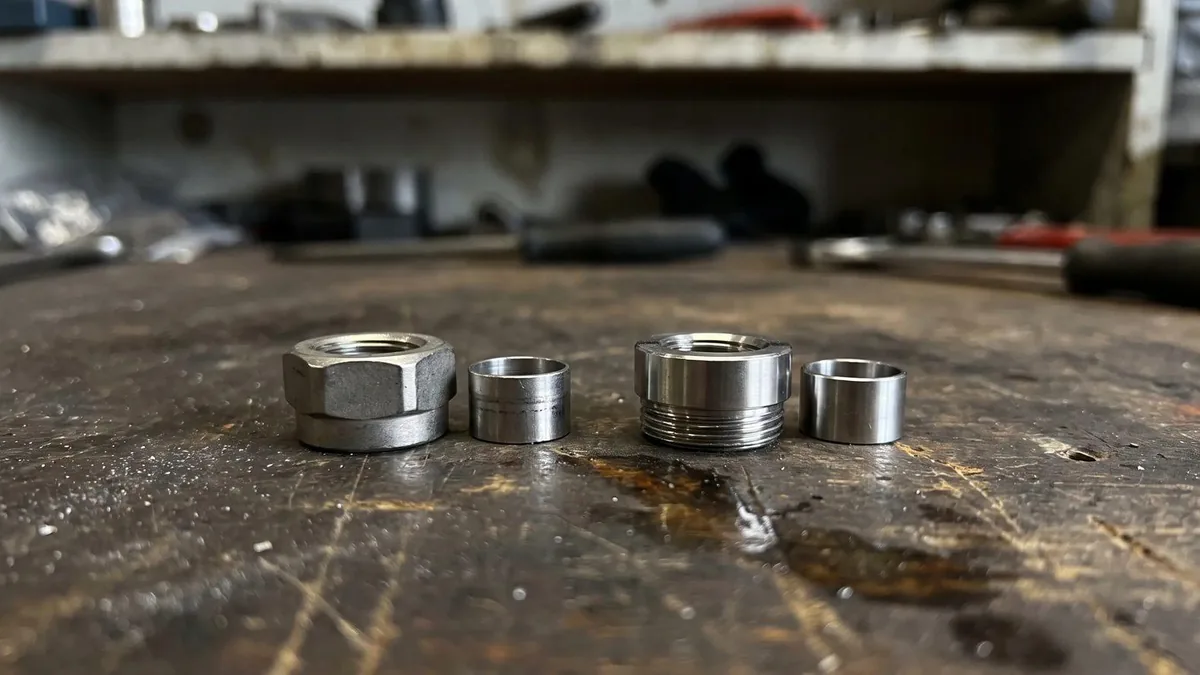
Start with your actual FITOK fittings. You need more than a brand name or a photograph of a hex nut. FITOK’s double-ferrule product page identifies its 6D series and describes size, material and heat-number markings on its fittings. Record those markings alongside the complete ordering code.
Keep your original suffixes intact. FITOK’s tube-fitting catalog and ordering guide separates material, fitting type, connection details, cleaning and special application options. Carry each specified option into the replacement request instead of shortening the code to its familiar characters. A partial number leaves part of the requirement behind.
Compare your connections by description. Write down tube outside diameter, thread type, thread gender and fitting shape before comparing catalog entries. Keep inch and metric descriptions explicit, and identify whether the job needs a union, connector, elbow or bulkhead arrangement. Give purchasing the connection description beside the part number.
The comparison should give you a reviewable match. You need the proposed manufacturer’s full ordering code and its own supporting document, with any differences identified beside the original requirement. Ask for dimensional drawings when installation space constrains the choice. Resolve each difference before releasing the order.
Separate your reason for switching from acceptance. State whether you need an available part for planned maintenance, a different stocking arrangement or a replacement for an incomplete bill of materials. Write the reason beside the technical requirement so the quotation addresses the actual purchasing problem. Availability belongs in the decision, alongside the documented match.
How does pressure affect FITOK vs Swagelok selection?
Include your tubing in the comparison. FITOK’s published pressure basis ties maximum working pressure at its tube ends, at ambient temperature, to the maximum working pressure of the FITOK tubing. You therefore need the tubing specification alongside the fitting specification. A brand name supplies neither.
Keep your Swagelok pressure review equally specific. Swagelok’s tube-fitting catalog rates tube-fitting ends to the working pressure of the tubing listed in its tubing data. Do not assign a standalone working-pressure figure to a Swagelok tube fitting. The tubing determines the tube-end rating.
Send your service conditions with the request. Identify the process fluid, required operating pressure, temperature range and tubing material and wall thickness in the comparison record. Ask for the proposed assembly’s documented suitability for those conditions, including its other end connection. Keep the application attached to the part number.
Use the table to organize your evidence. The table gives you a documented starting point for each brand, followed by the information to request for the actual job. These entries describe each manufacturer’s own product. They establish review tasks, not a universal replacement approval.
| Brand | Published product detail | Your buying check |
|---|---|---|
| FITOK | Double-ferrule fittings with size, material and heat-number markings | Send your exact FITOK number for a stock-list check first. |
| Swagelok | Tube-fitting ends rated to the tubing’s working pressure | Include your tubing specification in the pressure review. |
| Bi-Lok | Front ferrule seals fluid and back ferrule holds tubing | Send your exact Bi-Lok number for a stock-list check first. |
| Ham-Let Let-Lok | Double-ferrule compression fittings in multiple configurations | Specify your shape and connections for a stocked equivalent quote. |
Are you replacing the assembly or mixing components?
Define your replacement boundary first. Distinguish a complete fitting replacement from keeping an existing body and changing its nut or ferrules. Swagelok’s component-mixing guidance rejects mixing or interchanging its tube-fitting components with other manufacturers’ components. A cross-reference does not override those instructions.
Put your retained hardware on the request. Identify existing bodies, nuts, ferrules and tubing ends the maintenance plan expects to retain. Ask the reviewer to resolve the replacement scope before purchasing sends an order for individual pieces. Keep the scope visible through installation.
Treat twin-ferrule as a design description. You still need the selected brand’s installation instructions for your particular fitting and size. For purchasing context, see Collins-Oliver’s DK-LOK and Swagelok comparison, then attach the selected manufacturer’s instructions to the job package. Give the installer the documents for the supplied assembly.
What about bi-lok vs Swagelok and Let-Lok vs Swagelok?
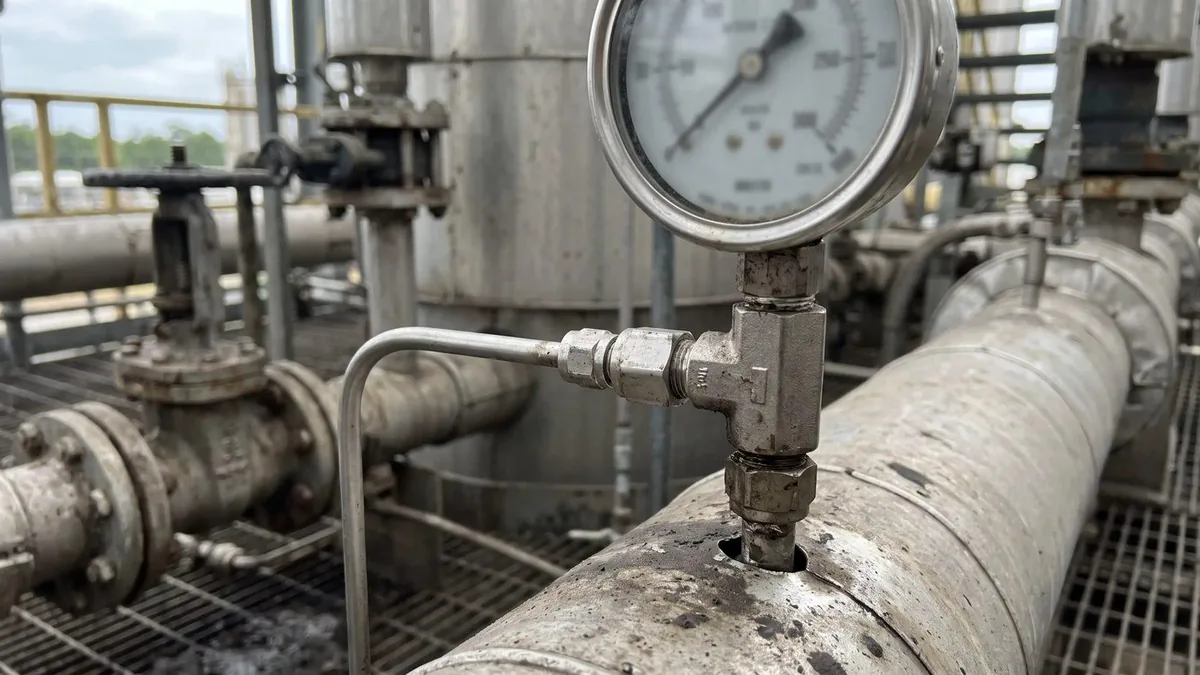
Your Bi-Lok comparison starts with identification. Ihara Science’s Bi-Lok description assigns fluid sealing to the front ferrule and tube holding to the back ferrule. You also get separate links for inch, metric and schedule-pipe dimensional tables. Select the relevant series before comparing an alternative.
Your Let-Lok comparison has a stocked-brand route. Ham-Let’s UCT Fluid Solutions catalog identifies Let-Lok as double-ferrule compression fittings and lists straights, bulkheads, elbows, tees and other configurations. Match the required configuration and connections to the proposed Let-Lok part. Collins-Oliver stocks both Ham-Let Let-Lok and Bi-Lok.
Keep your comparison questions consistent. You need each brand’s own product description, dimensions and installation requirements beside the application details. Similar descriptions do not complete the replacement review. Ask for a documented candidate, then check the complete assembly.
How do you get a stocked equivalent quoted?
Send your full FITOK, Bi-Lok or Swagelok number for a stock check first. Include a photograph of the label or legible fitting markings when the code is incomplete. State whether the request covers a new installation or replacement work on an existing connection. Make the starting condition clear.
A concrete example sharpens your request. FITOK SS-CM-FL4-NS4 is a 316 stainless steel male connector for 1/4 in. tube outside diameter and 1/4 in. male NPT, while Swagelok SS-400-1-4 lists the same material and connection sizes. You have matching catalog descriptors to start a quotation, with service and installation checks still to complete. Swagelok’s instructions prohibit mixing its tube-fitting components with other manufacturers’ components.
Build your request around the job. Send the following information together so purchasing and the person preparing the quote work from the same requirement. Mark missing information for follow-up instead of guessing. A complete request gives the proposed equivalent a clear basis.
- Your original manufacturer and complete part number, including every suffix.
- Your required material, tube outside diameter, connection types and fitting shape.
- Your tubing specification, process fluid, operating pressure and temperature requirements.
- Your replacement scope, including any existing connection components scheduled to remain.
- Your quantity, required date, pickup or shipping preference and plant restrictions on alternative brands.
- Your required drawings, product documentation and acceptance criteria.
Ask for your proposed equivalent by name when you want an alternative or the exact part is not on the stock list. Request its brand, full part number, available quantity and any differences from the requested item shown on the quote. Route the comparison through your plant’s normal approval process before substitution. Close the technical questions before closing the order.
Keep your request tied to its revision. If you change the tubing, required material or connection description after receiving a quote, return the revised requirement for another check. Do not let an earlier candidate remain attached to a different application through an unchanged spreadsheet row. The quoted part should answer the current request.
Check your delivery documents against the decision. Compare the received manufacturer’s number with the approved purchase-order line before releasing material to the job. Retain the product documentation with the replacement record so maintenance has the same reference purchasing approved. Carry the part identity through to installation.
Why bring your part number to Collins-Oliver?
Your search has a local starting point. Collins-Oliver carries over 19,000 part numbers, with same-day pickup in Baton Rouge and nationwide shipping. Stocked brands include FITOK, Bi-Lok, Ham-Let Let-Lok, Hy-Lok, DK-LOK and Tylok. Ask about the exact quantity needed for your job.
Keep your stock expectations precise. Collins-Oliver’s July 30, 2026 stock list includes 21 FITOK lines and 436 Bi-Lok lines. The team checks your exact part against the stock list first, then quotes a stocked Ham-Let Let-Lok, Hy-Lok, DK-LOK or Tylok option only if you want an alternative or the exact part is not listed. Browse the tube fittings catalog to identify the product category, then send the complete request for quotation. Collins-Oliver buys new and new surplus material.
Your part deserves a direct conversation. Ask to discuss the original number, proposed brand and required connections with the person preparing your quote. Bring the unresolved details from your comparison, including documentation needs and the planned installation date. Give the conversation a specific decision to resolve.
What else do buyers ask before switching fittings?
Does matching the connection size mean the fitting will fit the panel?
You still need dimensional clearance. Compare your available space with the proposed fitting drawing, including wrench access and the planned tubing route. Put any panel or bulkhead constraints on the request before a candidate is selected.
Should new Let-Lok fittings be disassembled before installation?
You receive Let-Lok fittings assembled and finger-tight, according to the manufacturer’s installation catalog. It cautions against disassembly before installation because dirt or particles could enter. Keep your preparation procedure aligned with those instructions.
Is a Swagelok gap gauge appropriate after reassembly?
You should not use the Swagelok gap inspection gauge on reassembled fittings. The Swagelok reassembly instructions expressly exclude this use. Put the correct reassembly procedure in your maintenance package.
What if a FITOK part number describes an unavailable combination?
You need confirmation of the actual catalog item. FITOK’s ordering-number guide explains its coding system and states not all combinations are available. Verify your full code before treating a constructed number as an orderable product. Send your exact FITOK or Bi-Lok number for a stock-list check before requesting an alternative.
What changes does the storeroom need after another brand is approved?
You should update your item record with the approved manufacturer’s full number and its supporting documents. Label bins by brand and part number, and record the approved replacement scope beside the cross-reference. Make the next maintenance request traceable to the same decision.
How should a quote with several alternative brands be handled?
You should review each proposed line separately. Give your approver the original requirement, the proposed code and unresolved differences for each candidate. Record the selected part explicitly so the purchase order identifies the approved assembly.
Have your full part number ready. Call (800) 247-5756 or request a quote for your fitting. Send your exact part number for a stock check, or request an alternative when needed.
Want more of this in your Google feed? Tap here and Google shows you our articles first.