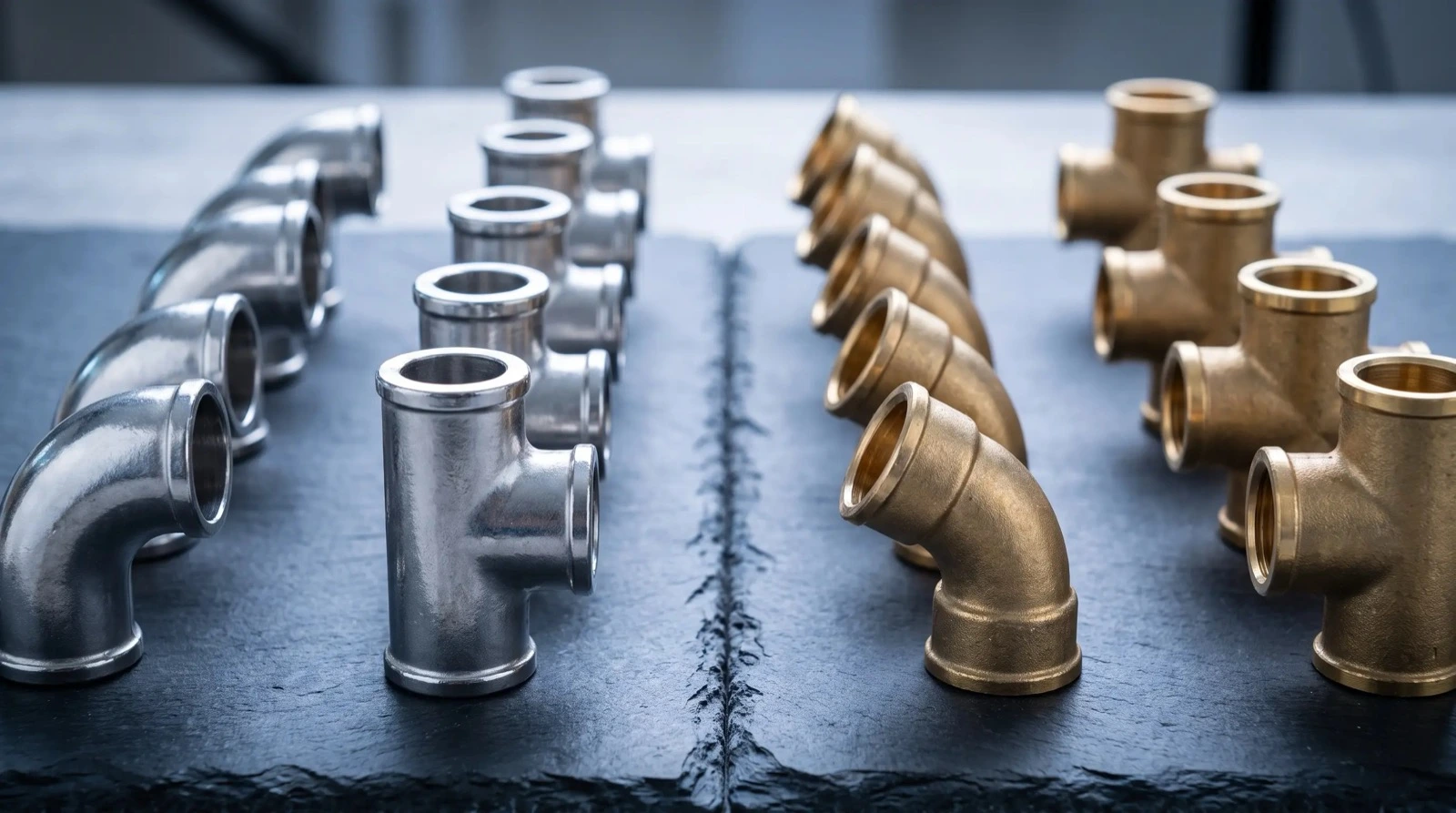
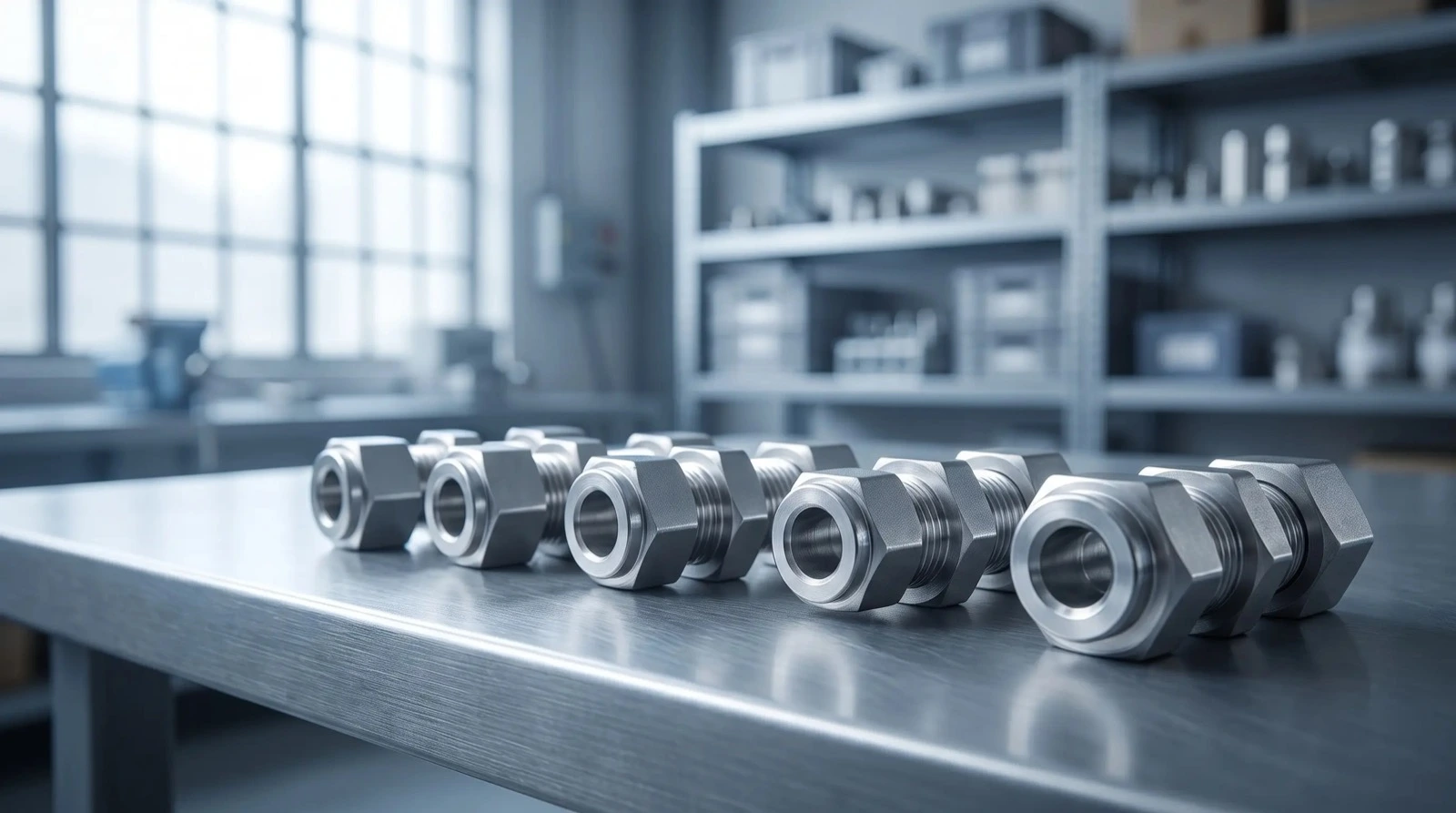
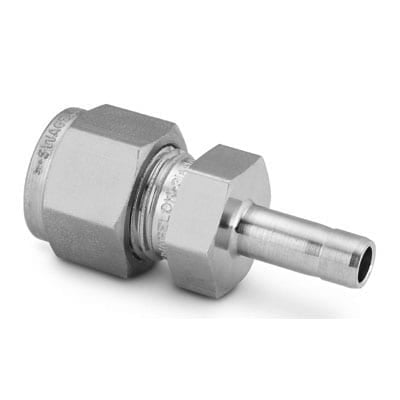
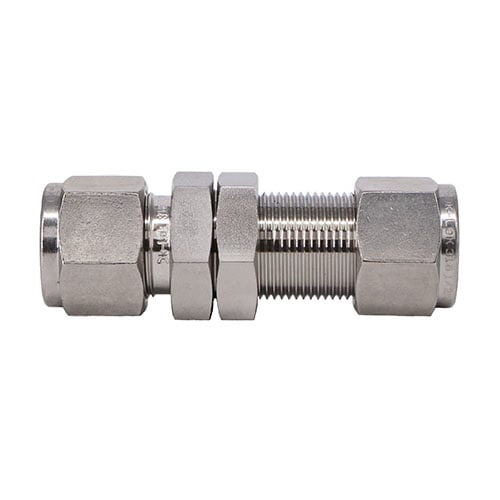
The DK-LOK vs Swagelok interchangeable question lands on almost every skid, panel, and process line in a Louisiana plant, and for good reason. Both brands build precision twin-ferrule tube fittings trusted across refineries, petrochemical units, and power generation. Both cost real money. So you want to know whether you will source one brand, pair it with the other, and still get a leak-free, warranted connection. The honest answer splits into two ideas: dimensional interchangeability and physical intermixing are not the same thing. This guide separates them so you buy with confidence.
TL;DR
- DK-LOK designs its twin-ferrule fittings to match Swagelok on thread size, make-up distance, bore, surface finish, and pressure rating, so a complete DK-LOK fitting drops into the same footprint as a complete Swagelok fitting.
- Interchangeability (swapping a whole fitting for a whole fitting) is different from intermixing (blending one brand's nut or ferrules onto the other brand's body).
- DK-LOK ran a formal intermix evaluation against ASTM F1387, witnessed by TUV Rheinland, across five tube sizes from 1/4 inch to 1 inch, and issued a global warranty letter on correctly assembled intermixed joints.
- Most engineers still keep every connection one brand, because mixing loose parts will void a competing maker's warranty and raises field leak rates.
- Buy genuine product from an authorized DK-LOK distributor so parts are matched, documented, and warranted.
Quick Answer
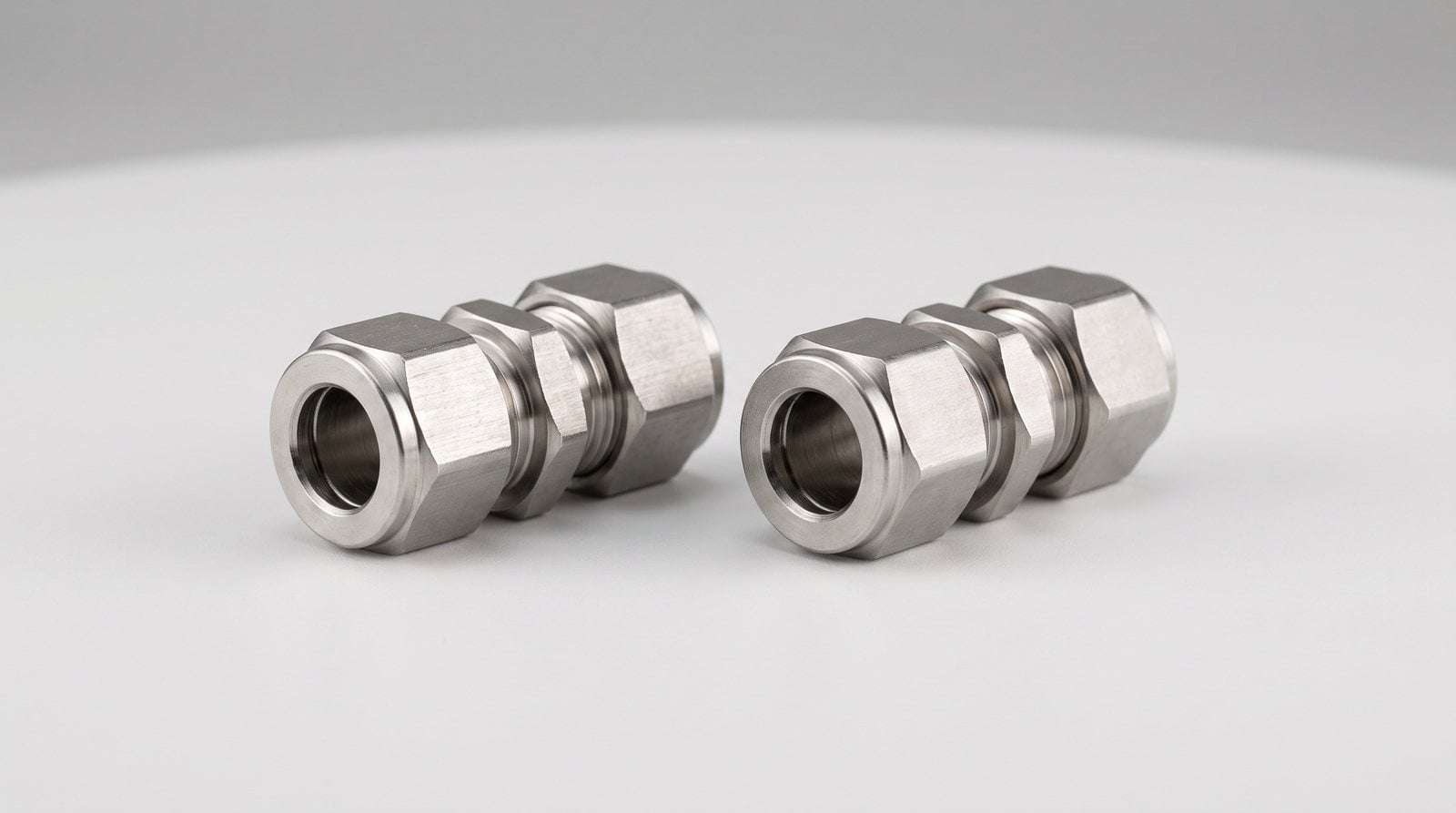
Complete DK-LOK twin-ferrule fittings are dimensionally interchangeable with Swagelok, so you will standardize a system on DK-LOK or replace fittings without redesigning your tubing. DK-LOK also proved through ASTM F1387 intermix testing, witnessed by TUV Rheinland, that correctly assembled mixed-brand joints seal leak-tight. Even so, the safe field practice is to keep each individual connection a single matched brand, because mixing loose components generally voids a competing manufacturer's warranty.
What does "interchangeable" mean for tube fittings?
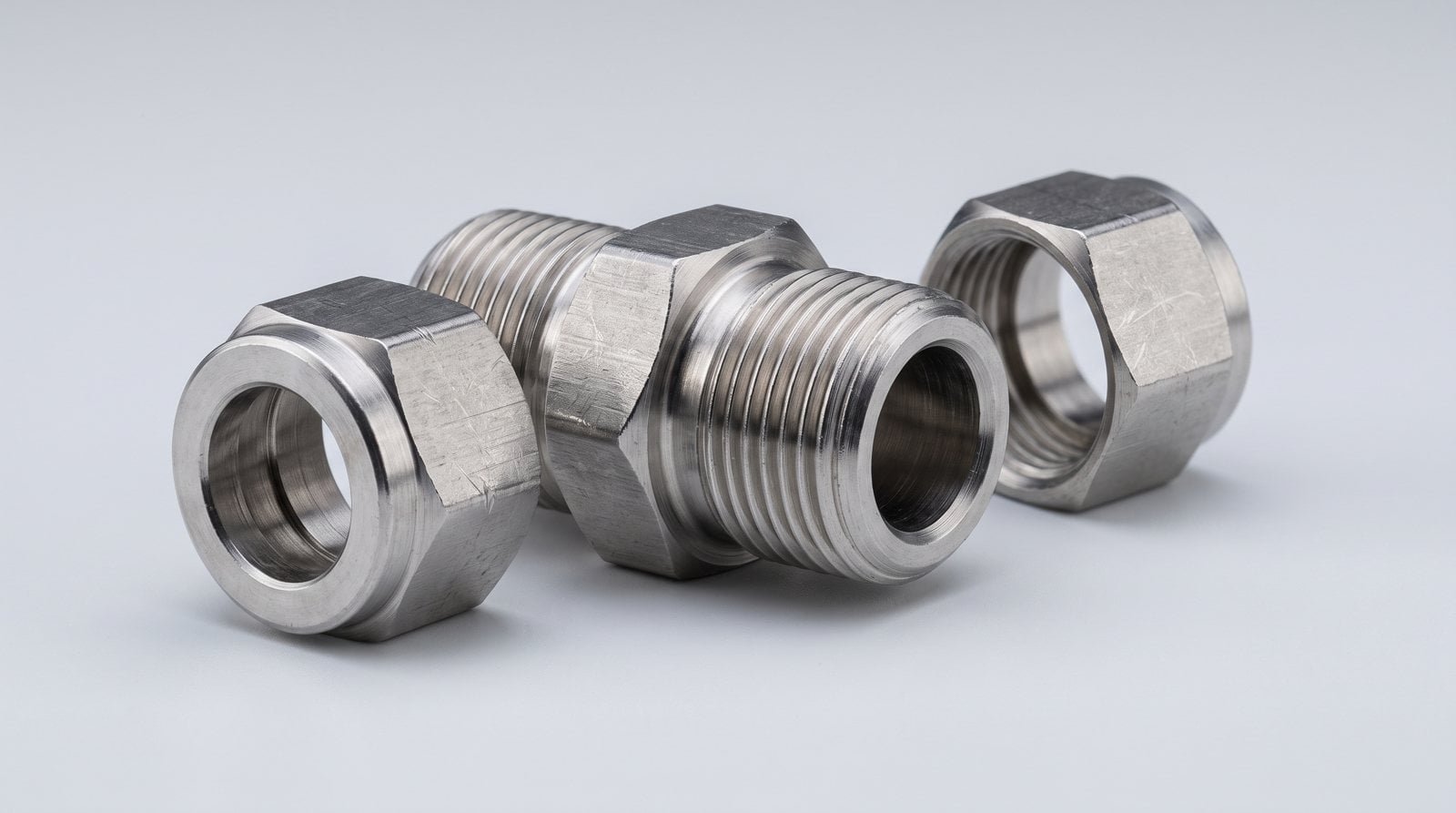
People stretch the word "interchangeable" across two different meanings, and the mix-up creates real trouble on the floor. Pull the two ideas apart and your buying decision gets simpler:
- Interchangeability means one brand's complete fitting replaces the other brand's complete fitting in the same space, with matching connection sizes, bore, and make-up distance.
- Intermixing means physically combining components from two brands inside one connection, such as one maker's nut and ferrules seated on the other maker's body.
You will favor one brand for full-fitting replacement without ever blending loose components inside a single joint. Keep the two ideas distinct and you protect both your budget and your warranty. When you shop our tube fittings catalog, you are choosing complete, matched assemblies, not a handful of mismatched parts.
Is DK-LOK dimensionally interchangeable with Swagelok?
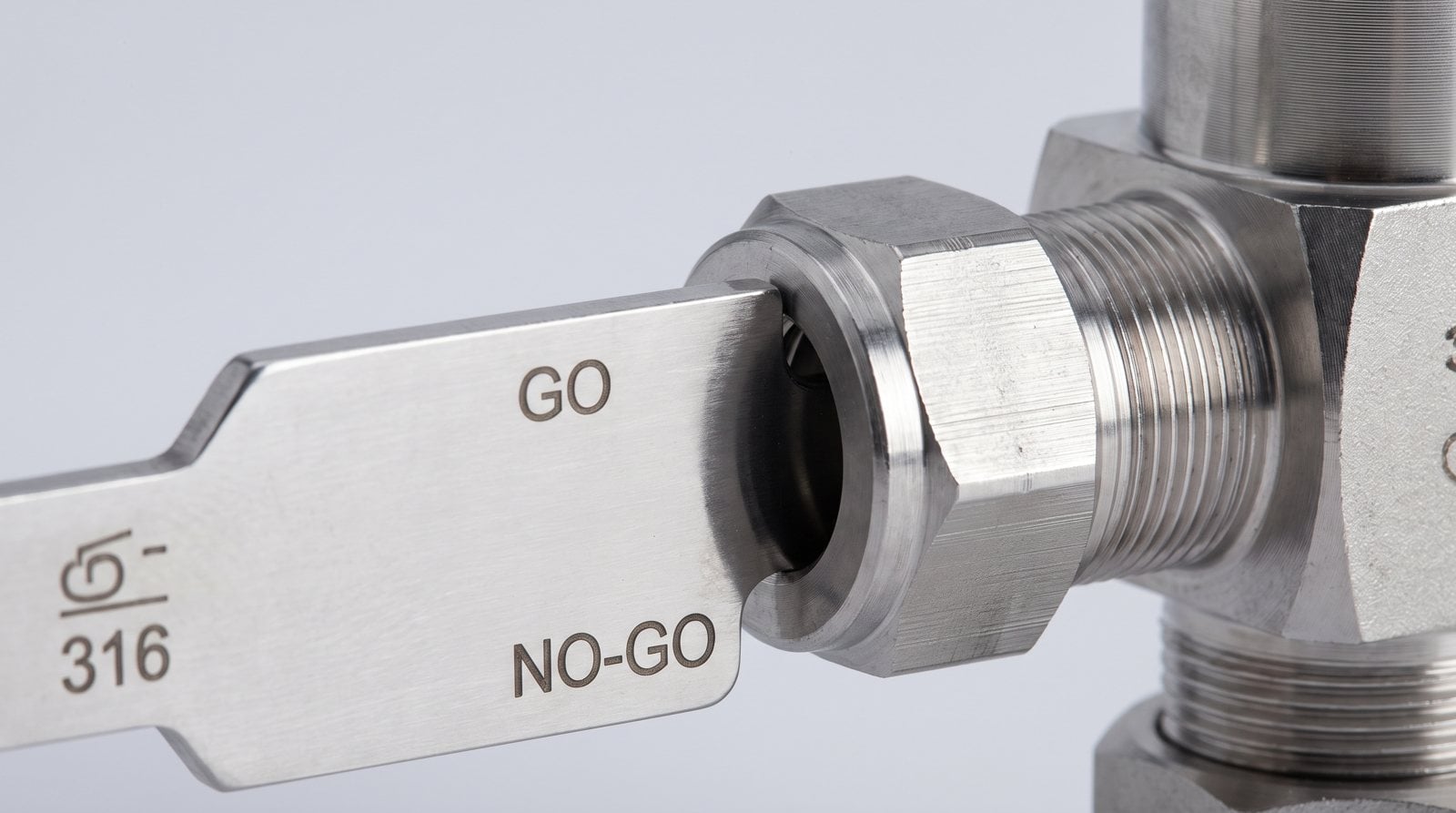
DK-LOK engineers its twin-ferrule tube fittings to match Swagelok on the dimensions that decide fit and function: thread sizes, make-up distance, bore, sealing surface, surface finish, geometry, and pressure ratings. In practice, a complete DK-LOK fitting occupies the same footprint a complete Swagelok fitting holds. So you will standardize a whole system on DK-LOK, or replace fittings one at a time, without reworking your tubing runs.
The dimensional match is the reason so many Gulf Coast plants qualify DK-LOK as a Swagelok alternative. You get the same twin-ferrule grip-and-seal performance in the same physical envelope. The payoff shows up in availability and price with no compromise on fit. That is also why our instrumentation valves and fittings line up cleanly with the tubing you already run.
What does DK-LOK's ASTM F1387 intermix testing show?
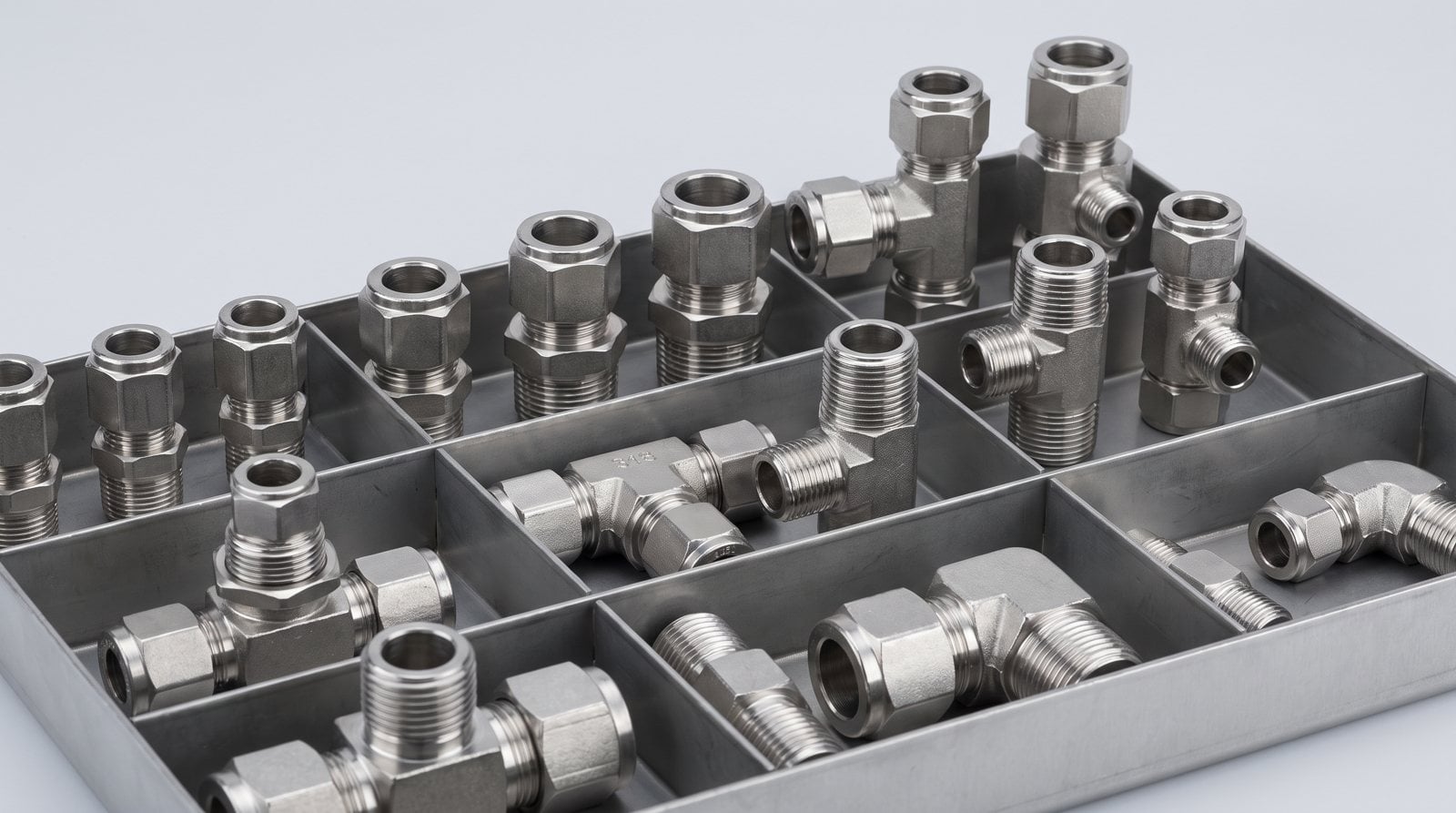
DK-LOK went further than most makers and put intermixing to a formal test. The company ran an intermix evaluation of DK-LOK and Swagelok components against ASTM F1387, the standard specification for performance of piping and tubing mechanically attached fittings, and had the work witnessed by TUV Rheinland. ASTM F1387 is no soft benchmark. It puts fittings through pneumatic and hydrostatic proof pressure, hydrostatic burst, tensile pull, rotary flex, flex fatigue, vibration, thermal cycling, and corrosion resistance.
The intermix program covered five tube sizes, 1/4 inch, 3/8 inch, 1/2 inch, 3/4 inch, and 1 inch, and swapped the four core parts of a twin-ferrule joint: body, nut, front ferrule, and back ferrule. DK-LOK reports 70 specimens tested in each section. After the positive results, DK-LOK issued a global letter of warranty covering the interchangeability and intermixability of correctly assembled fittings from both makers. You will read the details on the DK-LOK USA intermix test page. So the data exists, and it holds up. Read the next section before you decide to mix anything, because a manufacturer's test result and your own plant's warranty are two different conversations.
Should you mix DK-LOK and Swagelok components in one joint?
Here is the practical guidance most instrumentation engineers follow: do not casually intermix brands inside a single connection, even when a third-party test says a correctly assembled joint will seal. Two reasons drive the caution.
First, warranty. Swagelok and most manufacturers warrant their own complete systems, not connections built from a competitor's components. Blend brands in one joint and you will void the fitting maker's warranty, no matter what an outside test shows. If a claim ever lands on that joint during a turnaround, you want a clear, single-brand warranty standing behind it.
Second, real-world variability. Field data across the industry shows intermixed fittings leak at a higher rate than fittings kept all one system. Loose components get swapped, ferrules get reused wrong, and mixed geometry stacks up small tolerance errors. The clean move keeps every connection a single, matched system from one brand.
The smart standard: pick one brand for each connection and stay consistent. Use full-fitting interchangeability to standardize or replace at the fitting level, never to blend loose parts inside a joint. Our resources hub walks your team through correct make-up so every connection seals the first time.
How do you buy fittings to protect your system?
Turn all of this into a short purchasing rule set your team will follow every day:
- Standardize each connection on one brand, and keep nut, ferrules, and body a matched set.
- Use dimensional interchangeability to replace complete fittings, never to mix loose parts.
- Confirm your warranty position before you ever intermix components.
- Buy from an authorized distributor so you know the parts are genuine and correctly matched.
- When a specific combination worries you, call and confirm before anyone assembles the joint.
Buying genuine product from an authorized source removes the guesswork. You get the right components, the correct documentation, and a warranty you will stand behind. In our Baton Rouge warehouse we keep more than 5,000 DK-LOK line items on the shelf across all five common tube sizes, from 1/4 inch to 1 inch, so you rarely wait on a lead time to keep a system single-brand and clean.
Frequently Asked Questions
Are DK-LOK and Swagelok fittings interchangeable?
DK-LOK designs its twin-ferrule fittings to match Swagelok dimensionally, including thread size, make-up distance, bore, and pressure ratings, so complete fittings share the same footprint. Swapping a whole DK-LOK fitting for a whole Swagelok fitting is different from mixing loose components inside one joint.
Will mixing DK-LOK and Swagelok parts in one connection work?
DK-LOK's intermix testing against ASTM F1387, witnessed by TUV Rheinland, shows correctly assembled combinations will seal. Still, most engineers keep each joint one brand, since mixing typically voids the competing manufacturer's warranty and raises the field leak rate.
Does mixing brands void the warranty?
Generally yes. Manufacturers warrant their own complete systems, not connections built from a competitor's components. Confirm the warranty position before you intermix, and keep each joint a matched set to stay protected.
Why choose DK-LOK as a Swagelok alternative?
DK-LOK delivers twin-ferrule performance in the same physical envelope as Swagelok, often with stronger availability and better value. You will standardize a system on DK-LOK without redesigning your tubing layout.
What is ASTM F1387?
ASTM F1387 is the standard specification for the performance of piping and tubing mechanically attached fittings. It grades a fitting through proof pressure, burst, tensile pull, rotary flex, flex fatigue, vibration, thermal cycling, and corrosion testing, so a pass carries real weight.
Where do you buy genuine DK-LOK fittings in Louisiana?
Buy from an authorized DK-LOK distributor so you receive genuine, correctly matched components and a warranty you will rely on. Collins-Oliver is an authorized DK-LOK distributor in Baton Rouge, stocking fittings, valves, and stainless tubing for Gulf Coast plants.
Buy genuine DK-LOK from Collins-Oliver
Standardize your system with confidence. Collins-Oliver is your authorized DK-LOK distributor in Baton Rouge, stocking genuine twin-ferrule tube fittings, valves, and stainless tubing for refineries, petrochemical plants, and power generation across the Gulf Coast. Tell us what you run today, and we will match you to the right DK-LOK product. Call (225) 922-9324 or (800) 247-5756 for a quote, or reach our team through the contact page.
About Collins-Oliver
Collins-Oliver, Inc. has distributed instrumentation tube fittings, valves, and tubing from Baton Rouge, Louisiana since 1986. As an authorized DK-LOK distributor serving Gulf Coast refineries, petrochemical units, and process plants, our team matches the right connection to your operating conditions and backs it with genuine, documented product. Call (225) 922-9324 or (800) 247-5756.