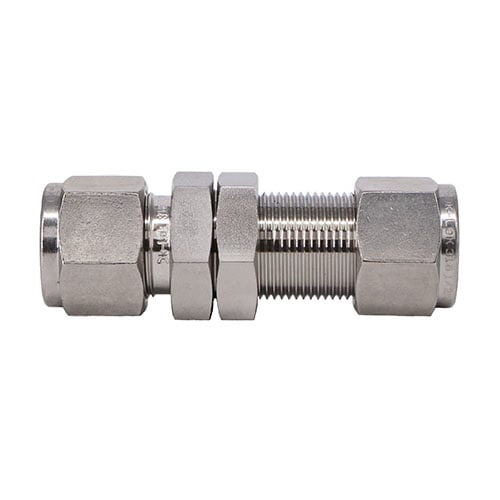
Preventing leaks in instrumentation tubing systems protects your product, your people, and your plant's uptime. One weeping fitting on a transmitter or analyzer line wastes media, throws off your readings, and turns hazardous fast. Here is the good news: most tubing leaks trace to a short list of avoidable errors you control at the bench and in the field. This field guide walks you through the practices which keep your connections tight, from the first cut to the final inspection.
TL;DR
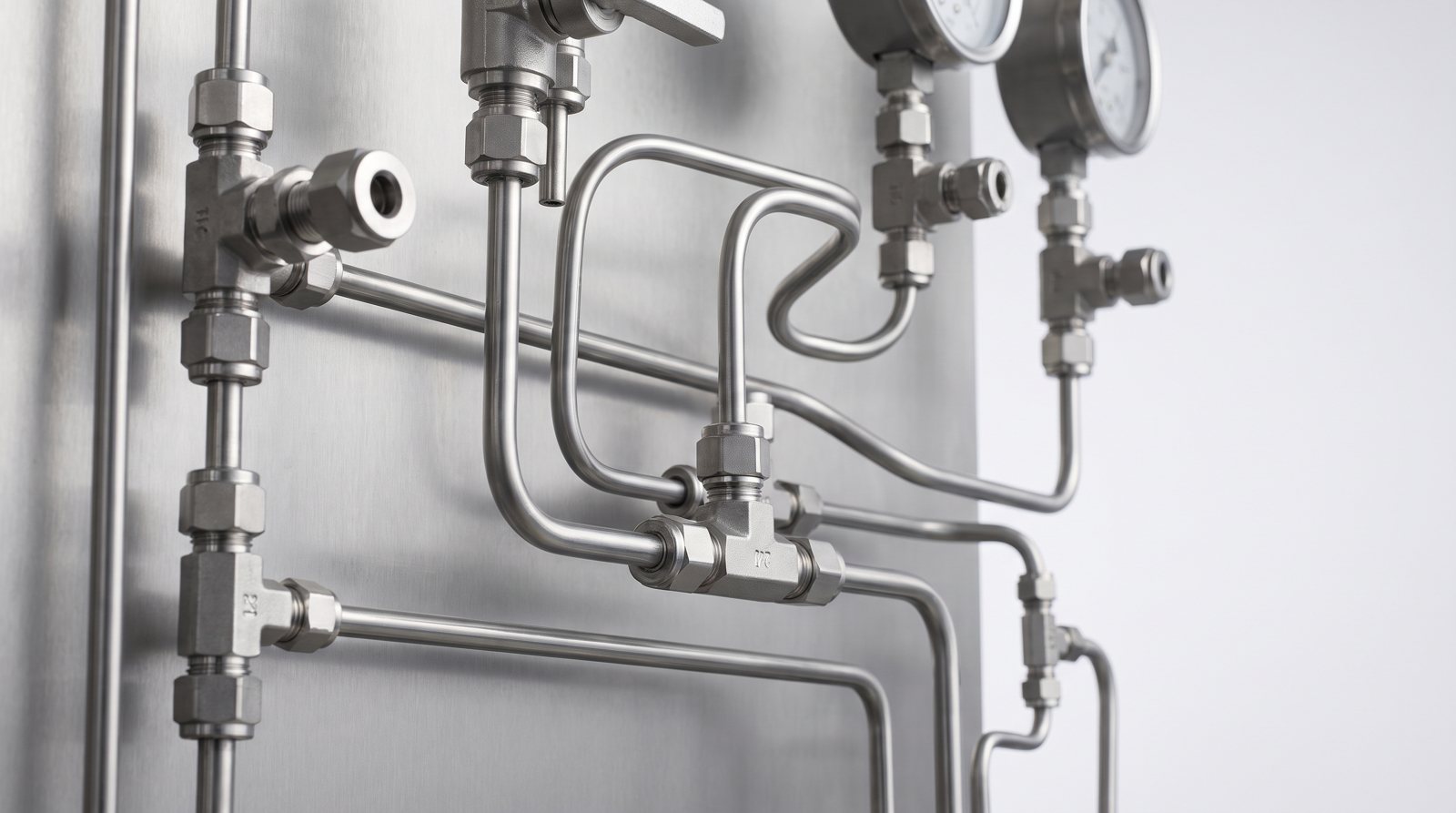
- Most instrumentation tubing leaks start at assembly, from a bad cut, wrong make-up, mixed brands, or poor support.
- Cut the tube square, deburr the inside and outside, and wipe it clean before you insert it.
- Bottom the tube in the fitting, then follow the maker's make-up: finger-tight plus 1-1/4 turns on most twin-ferrule sizes.
- Verify pull-up with the manufacturer's gap gauge; a properly tightened fitting rejects the gauge between the nut and body.
- Keep every connection one brand and one design, support your runs, and pressure-test before you trust the line.
Quick Answer
You prevent leaks in instrumentation tubing systems by controlling four things: a square, deburred, clean tube end; correct make-up to the manufacturer's turn count; matched, single-brand twin-ferrule components; and verified pull-up with a gap gauge. Support the tubing well and pressure-test every joint before startup. Do these steps and you remove the root cause of most field leaks.
What causes most tubing leaks in the field?
Leaks rarely show up out of nowhere. They start with small mistakes at assembly and grow under pressure and vibration. The usual culprits:
- Bad tube cuts which leave burrs, ovality, or an angled end
- Wrong make-up, either under-tightened or over-tightened
- Mixed components from different brands or fitting designs
- Scratched, dented, or dirty ferrules and tube ends
- Poor tube support, letting vibration work a joint loose
- The wrong material for the media, opening the door to corrosion
Fix these at the source and you remove the large majority of leaks before the system ever sees pressure. Every practice below targets one of these root causes.
How do you prepare the tube for a leak-free connection?
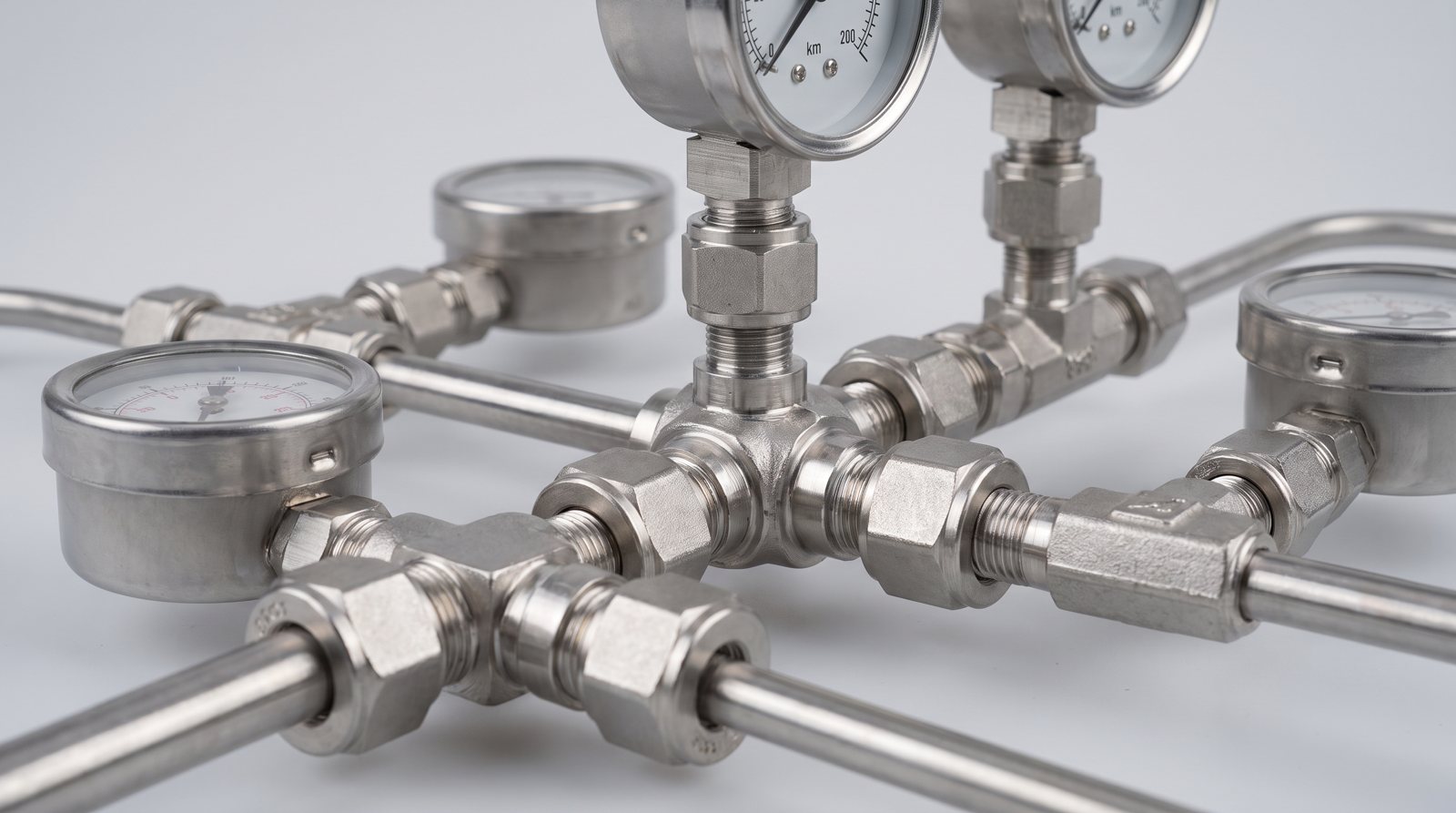
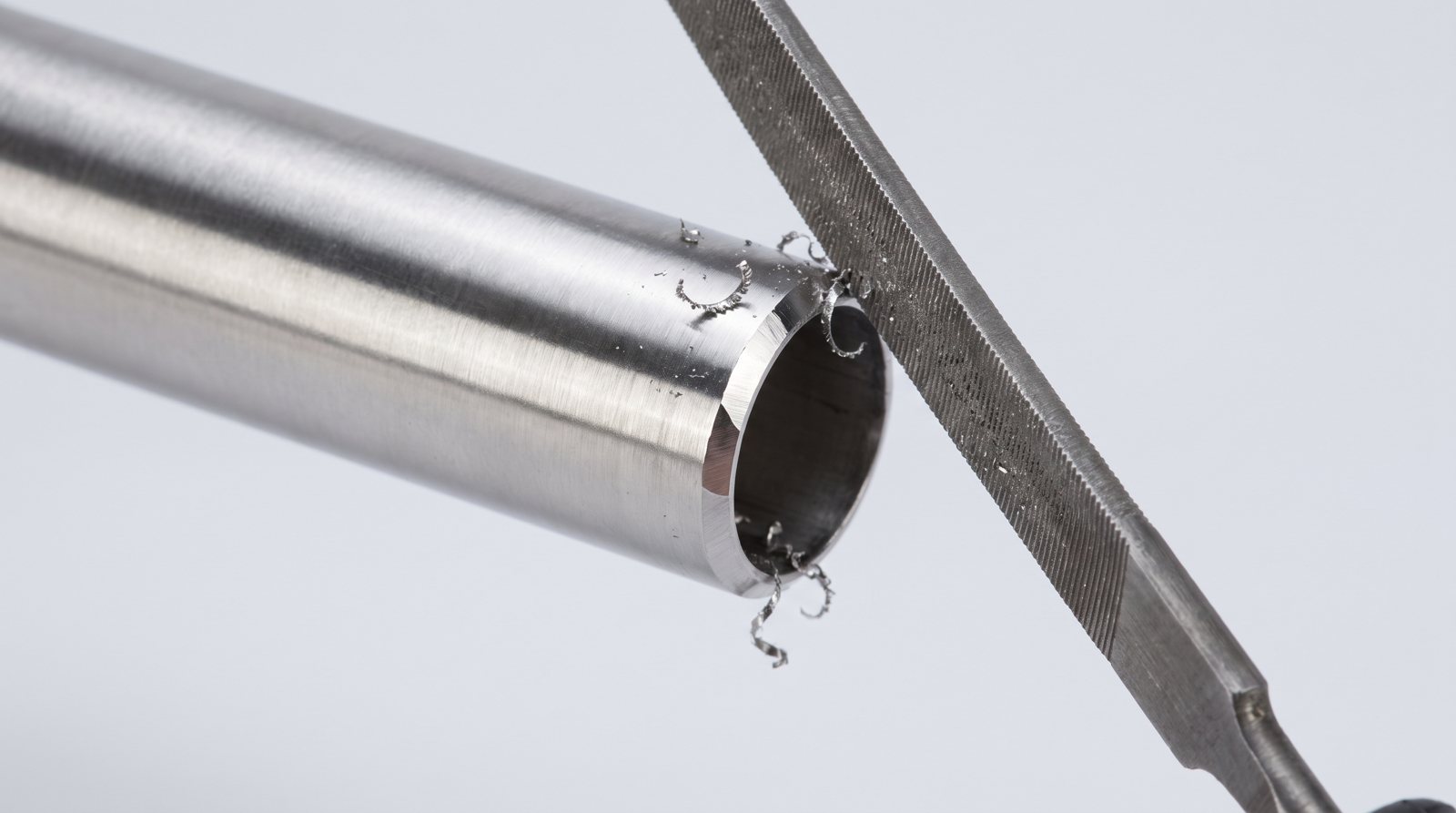
The seal starts with the tube, not the fitting. Cut the tube square, since an angled cut keeps the ferrule from biting evenly all the way around. Reach for a proper tube cutter over a hacksaw whenever you get the choice. Then deburr the inside and outside of the cut so no metal shaving interferes with the seal or contaminates the line. An outside burr blocks the ferrule from sliding into position, and an inside burr restricts flow and throws off your reading.
Work through these steps for clean tube prep:
- Cut the tube square and true, with no angle
- Deburr the inside and outside edges fully
- Wipe the tube end free of chips, oil, and grit
- Inspect for scratches, dents, and ovality, and reject damaged tube
- Confirm the tube wall and hardness suit the fitting and the pressure
A clean, square, undamaged tube end gives the ferrule the smooth surface it needs to grip and seal. Skip this and no amount of tightening rescues the joint. Start with quality stainless tubing and the prep gets easier.
What is the right way to make up a tube fitting?
Make-up is where most installers win or lose the seal. Insert the tube fully into the fitting so it bottoms against the shoulder, then hold it there while you tighten. Let the tube back off during assembly and the ferrule bites in the wrong spot, so the seal suffers.
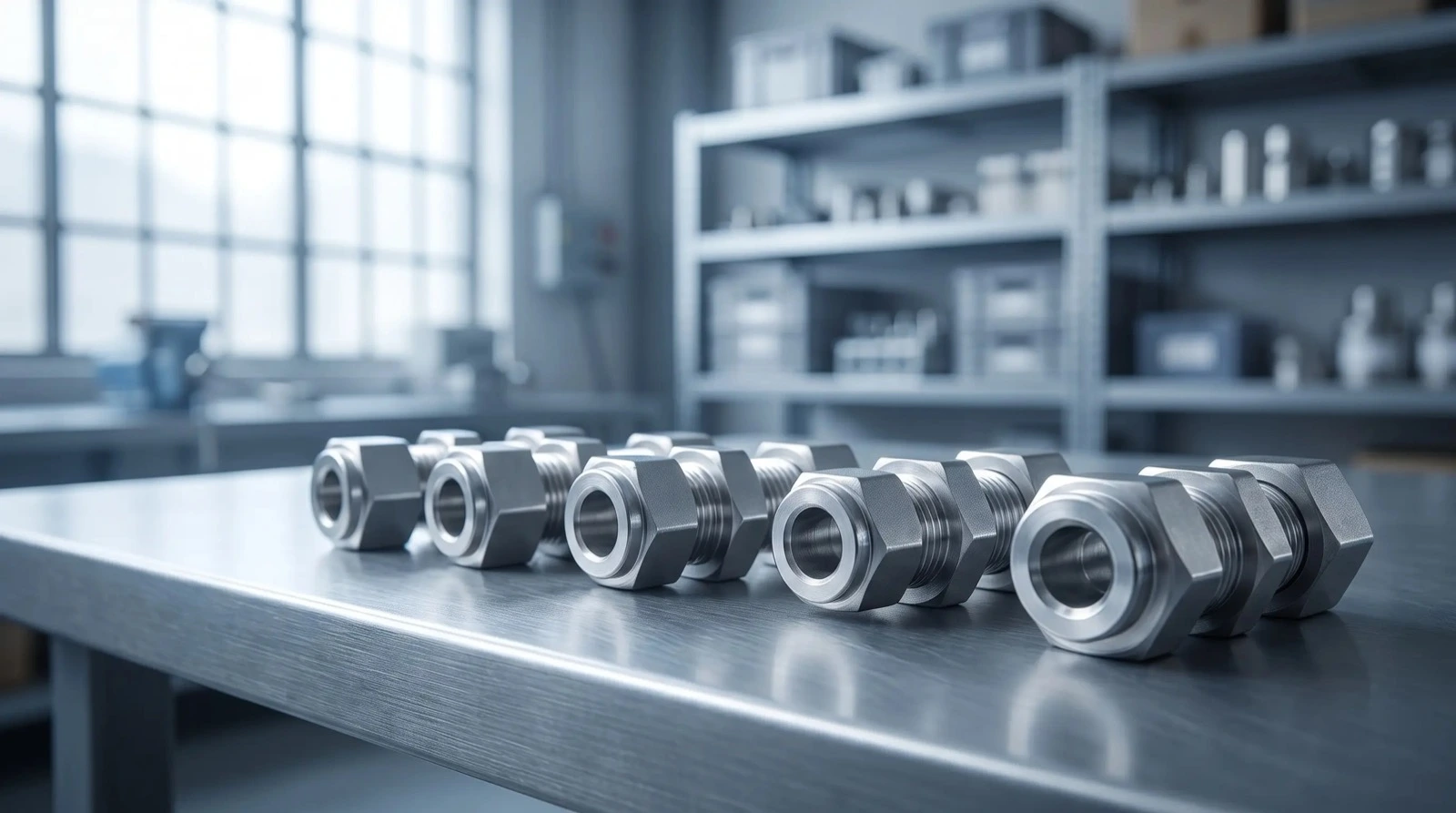
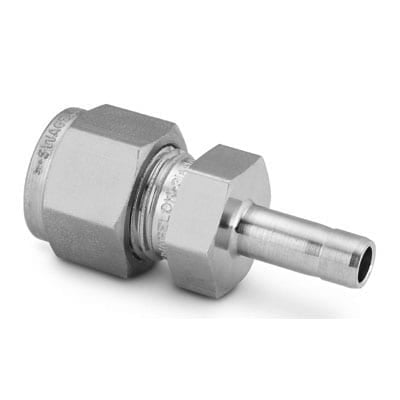
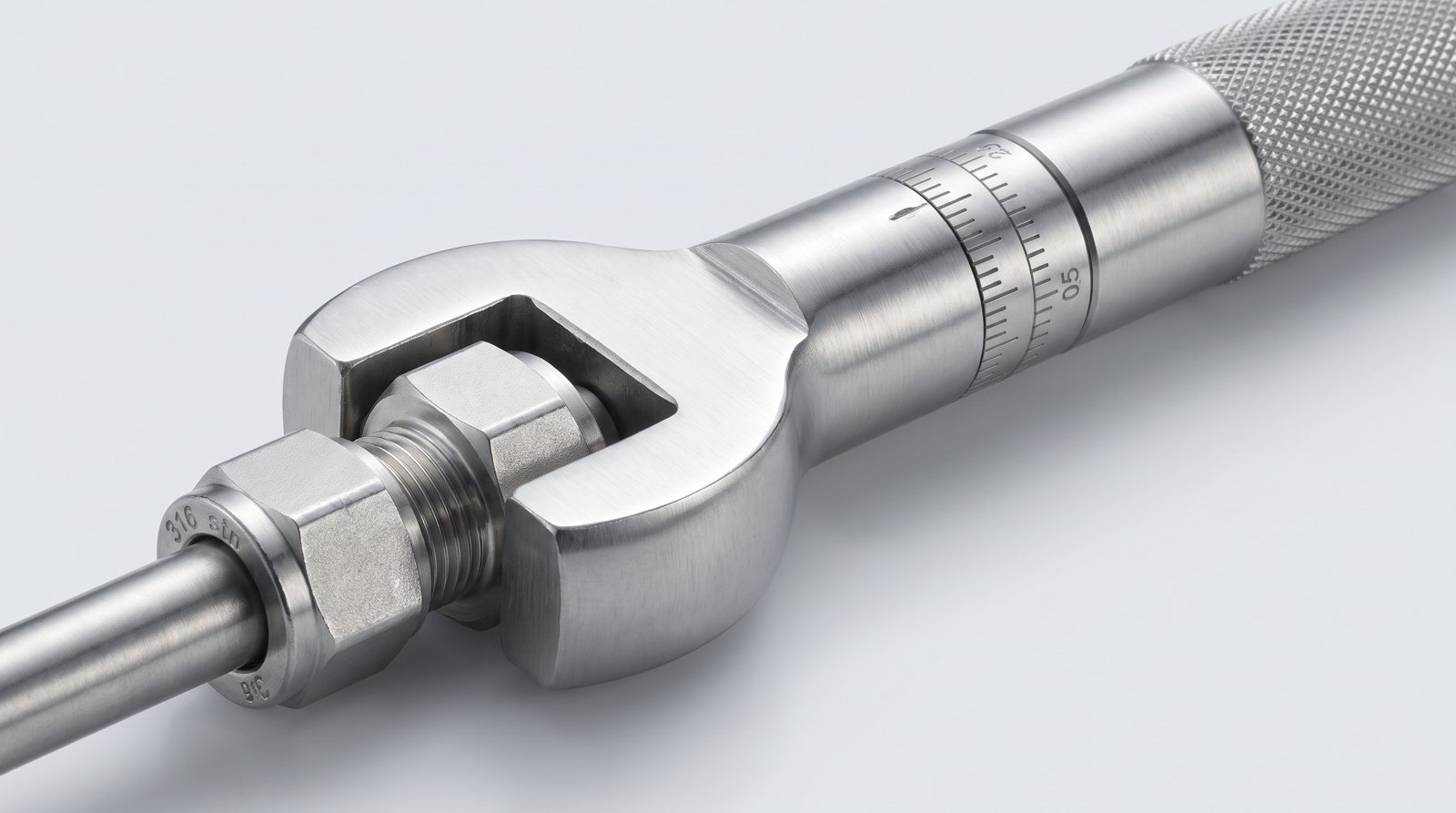
Follow the manufacturer's installation instructions to the letter. Leading twin-ferrule fittings call for finger-tight plus a defined turn count, most often 1-1/4 turns on sizes of 1/4 inch and up, with a smaller turn on the smallest tubing. Mark the nut at the finger-tight point so you see the turn clearly. Hold the fitting body with a second wrench while you turn the nut. Over-tighten and you crack a ferrule or deform the tube; under-tighten and the ferrule stops short of a full bite. Neither seals.
Verify pull-up with the maker's gap inspection gauge. Slide the gauge next to the gap between the nut and body hex: a properly tightened fitting refuses the gauge, while a loose one lets it slip in and tells you to keep turning. Parker's tube fitting installation manual lays out the turn counts and gauge steps, so keep the sheet at the bench.
Why does mixing brands and designs cause leaks?
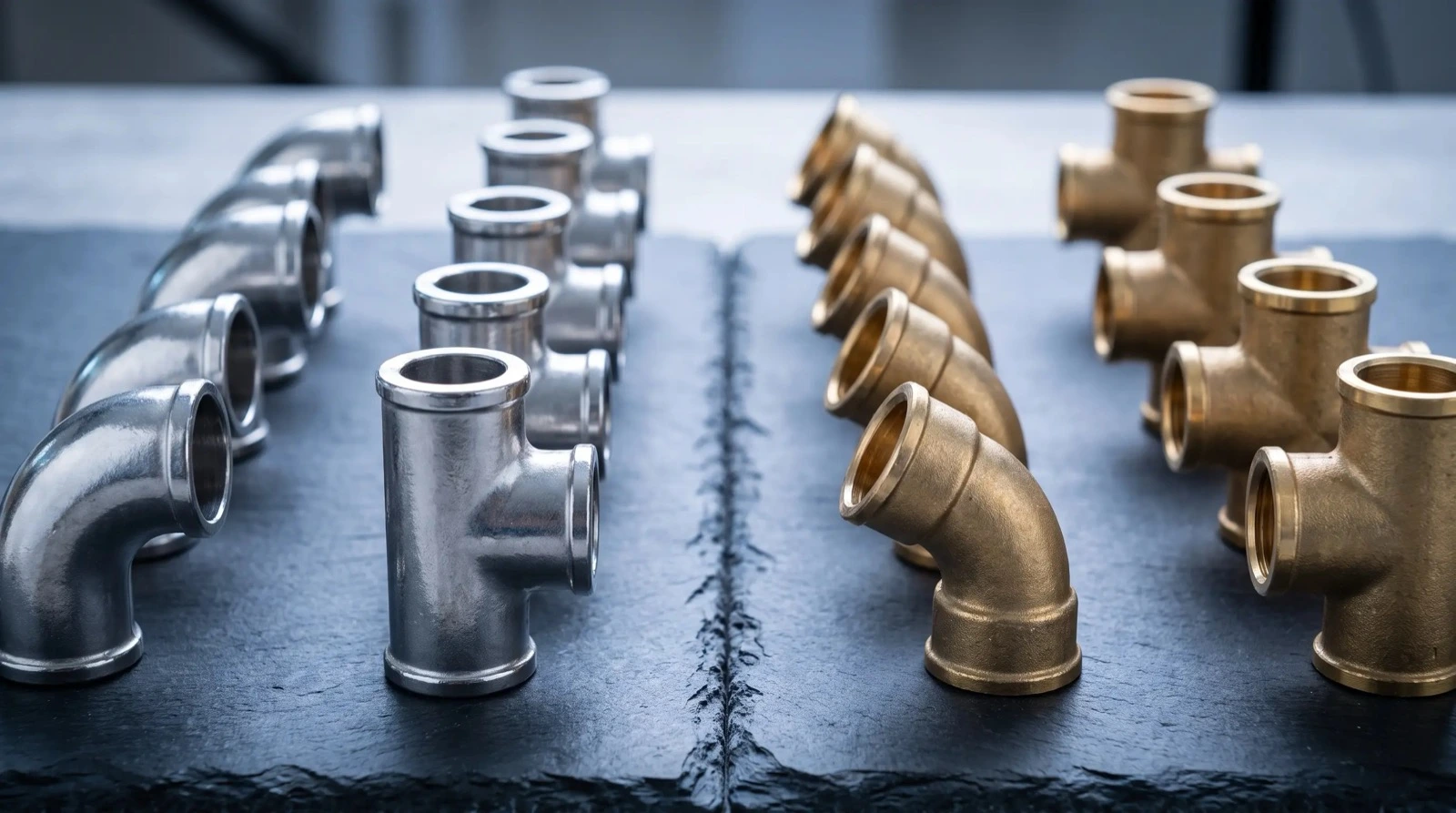
Every twin-ferrule fitting relies on precise geometry between the nut, the ferrules, and the body. Mix components from different manufacturers or different designs and the geometry no longer lines up. Field experience shows intermixed fittings leak at a higher rate than fittings kept all one system, and mixing also voids the manufacturer's warranty. In our Baton Rouge warehouse we keep more than 300 configurations of stainless tube fittings, ferrules, and instrument-grade tubing on the shelf, so a matched set ships without a special order. Keep every connection a matched set from one brand, and buy from an authorized distributor so you know the parts belong together. Our tube fittings and valves ship as matched DK-LOK systems for this reason.
How does system design keep joints tight?
Good assembly holds a joint. Good design keeps it held. Support your tubing with clamps at sensible intervals so vibration and weight never load the fittings. Route your runs to allow for thermal growth and contraction, and steer clear of sharp bends which strain the connection. Pick the right fitting material for your media and environment so corrosion never eats the seal from the inside or the outside. Each of these choices lifts load off the fitting and stretches its leak-free life.
Which tube material holds up best against corrosion?
The wrong material lets corrosion eat a seal from the inside or the outside, so match the tube and fitting to your media. Type 316 stainless steel handles most process and instrument service across the Gulf Coast, since it resists chlorides and sour gas better than 304. For salt air and offshore duty, step up to a higher alloy when your spec calls for it. Keep the tube hardness below the ferrule hardness so the ferrule bites into the tube, not the reverse. Clean, fully annealed, high-quality tube takes a seal and holds it, while hard or thin-wall tube fights the ferrule and weeps. Confirm the tube grade, wall thickness, and hardness against your pressure rating before you buy, and call us when the media runs aggressive.
How do you test and inspect for leaks?
Never assume a joint is tight. Prove it. After assembly, pressurize the system and check each connection with an approved leak-detection method, such as a leak-detection fluid rated for your service. Watch for bubbles, pressure drop, or weeping. Inspect ferrule pull-up with the gauge where one applies. Walk the system again after the first thermal and pressure cycles, since a joint which passed cold will loosen once it heats and vibrates. Steady inspection turns a good assembly into a reliably tight system. Our resource library collects the install and inspection sheets you will reach for.
Frequently Asked Questions
What is the single most common cause of tubing leaks?
Wrong make-up, usually under-tightening or over-tightening, paired with poor tube prep. Cut the tube square, deburr it, bottom it in the fitting, and tighten to the manufacturer's spec to stop most leaks.
Will over-tightening a tube fitting cause a leak?
Yes. Over-tightening cracks a ferrule or deforms the tube, which ruins the seal. Follow the maker's finger-tight-plus-turns method and verify with a gap gauge. Tighter is not better.
Why does mixing fitting brands cause leaks?
Twin-ferrule fittings depend on exact geometry between nut, ferrules, and body. Mixing brands or designs breaks the match, raises the leak rate, and voids the warranty. Keep every connection one system.
How do you check a finished connection for leaks?
Pressurize the system and apply an approved leak-detection fluid to each joint. Watch for bubbles and pressure drop, verify ferrule pull-up with a gauge, and re-inspect after the first pressure and temperature cycles.
Does tube support truly affect leaks?
Yes. Unsupported tubing lets vibration and weight work a joint loose over time. Clamp your runs at sensible intervals and allow for thermal movement to hold fittings tight for the long haul.
How many turns past finger-tight should I go?
Most twin-ferrule fittings of 1/4 inch and larger call for 1-1/4 turns past finger-tight, with a smaller turn on the smallest tubing. Always confirm the exact count in your manufacturer's manual, and use the gap gauge to verify.
Build tight systems with Collins-Oliver
Reliable instrumentation starts with quality fittings and the right guidance. Tell us your media, pressure, and tube size, and we will match the fittings, ferrules, and tubing your line needs. Call (225) 922-9324 or (800) 247-5756 for a quote, or email info@collins-oliver.com, and we will help you build tubing systems which hold.
About Collins-Oliver
Collins-Oliver, Inc. has distributed instrumentation tube fittings, valves, and tubing from Baton Rouge since 1986. As an authorized DK-LOK distributor, we supply matched twin-ferrule fittings and stainless tubing to Louisiana refineries, petrochemical plants, and power generation across the Gulf Coast. Call (225) 922-9324 or (800) 247-5756 and put our counter to work on your next tubing spec.